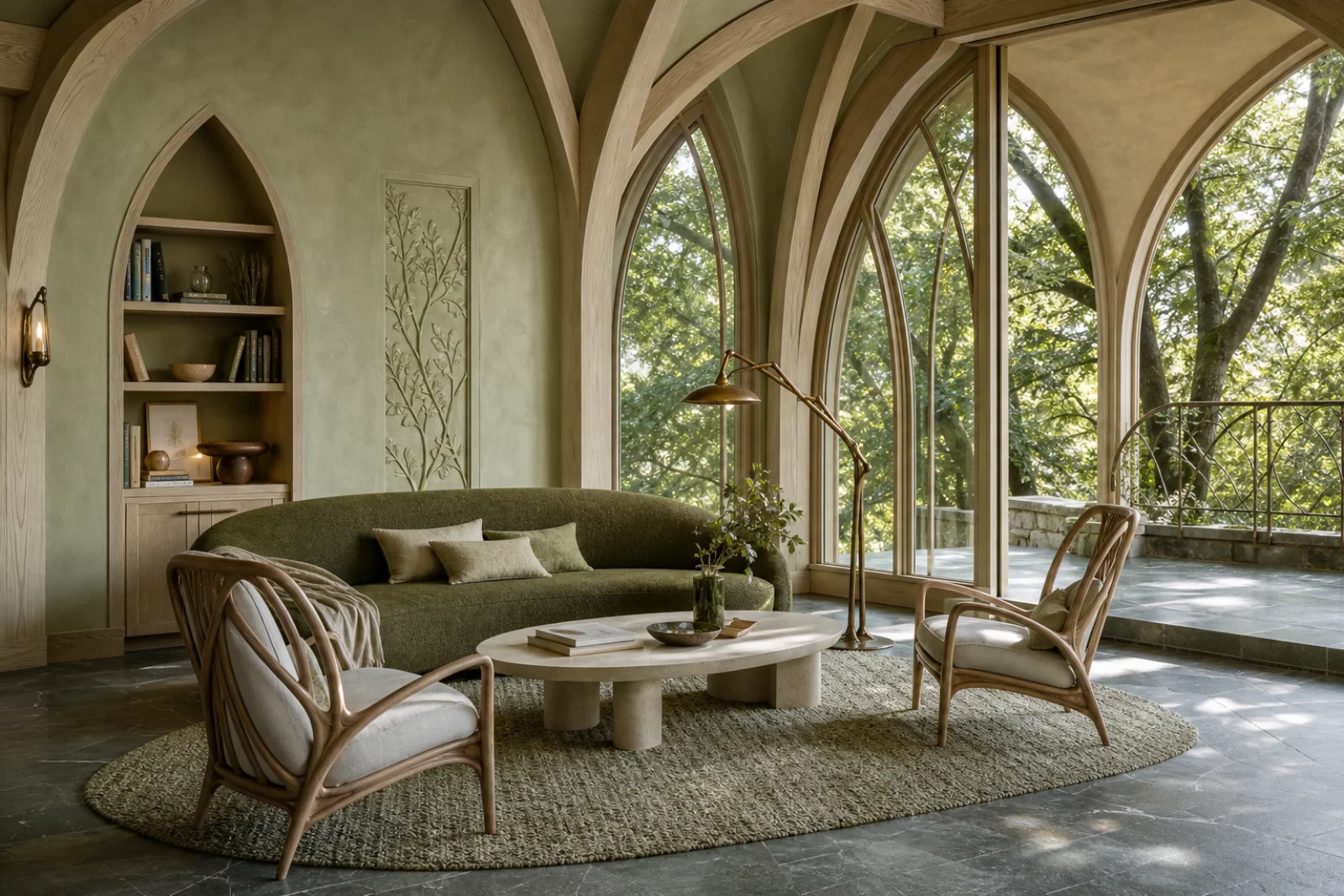
Curved supportive sofa
Check seat support, access route, fabric durability and whether the curve strengthens conversation instead of consuming floor area.
Abstract the woodland into arches, grain, filtered light and quiet bronze detail—never into a room full of borrowed fantasy props.
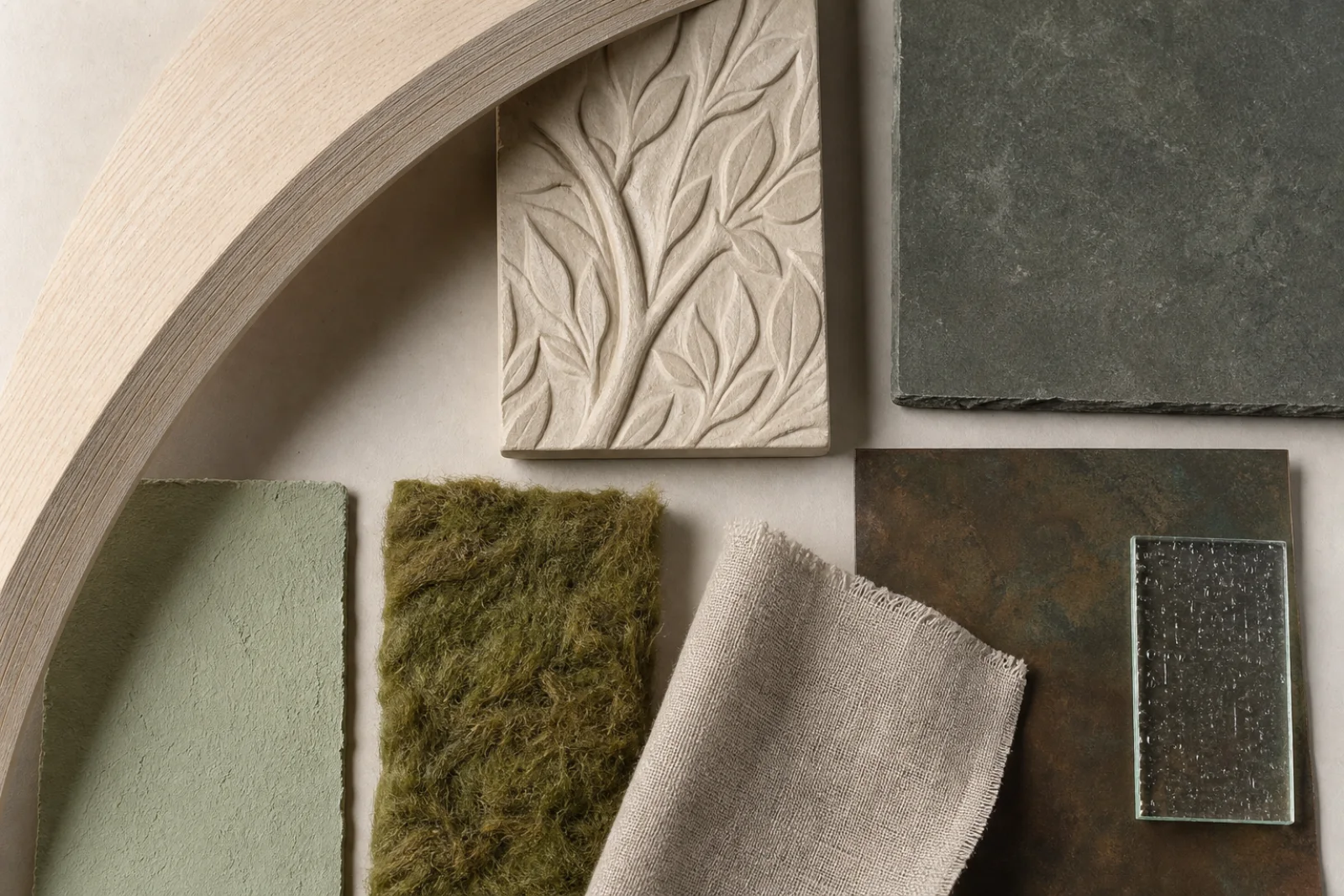
Elven Fantasy interior design is an imaginative, nature-led language rather than a historical style. Slender arches, branching lattices, pale timber, mineral walls and filtered landscape views suggest an ethereal woodland culture without requiring characters, heraldry or replicas from an existing fictional world. The strongest rooms feel like original architecture, not a film set.
Translate the idea into buildable layers. Curved ribs can be laminated or steam-bent by a qualified fabricator; botanical relief can stay shallow enough to clean; lime plaster and slate need assemblies suited to the actual climate. Keep kitchens, bathrooms, glazing, wiring and circulation fully contemporary. One crafted gesture per view is more convincing—and more maintainable—than vines, faux roots and symbols on every surface.
Decide whether the woodland appears through silhouette, material or carving, then stop before all three compete at full intensity.
Test one full-size rib, junction and finish sample so radius, grain, shadow and fixing strategy can be judged together.
Custom-shaped windows still require tested glazing, drainage, structure, insulation and safe cleaning access.
Repeated ribs pull the eye upward while their pale finish prevents the room from becoming Gothic or heavy.
Branching lattice and shallow relief reference growth without copying literal trunks, leaves or fictional symbols.
Clear framed views contribute changing color and movement, reducing the need for themed decoration.
Bronze lamps reveal grain and plaster after dark without relying on glowing fantasy objects.
Use one clear arch rhythm, keep seating genuinely supportive and leave the forest view free of competing plants and ornament.
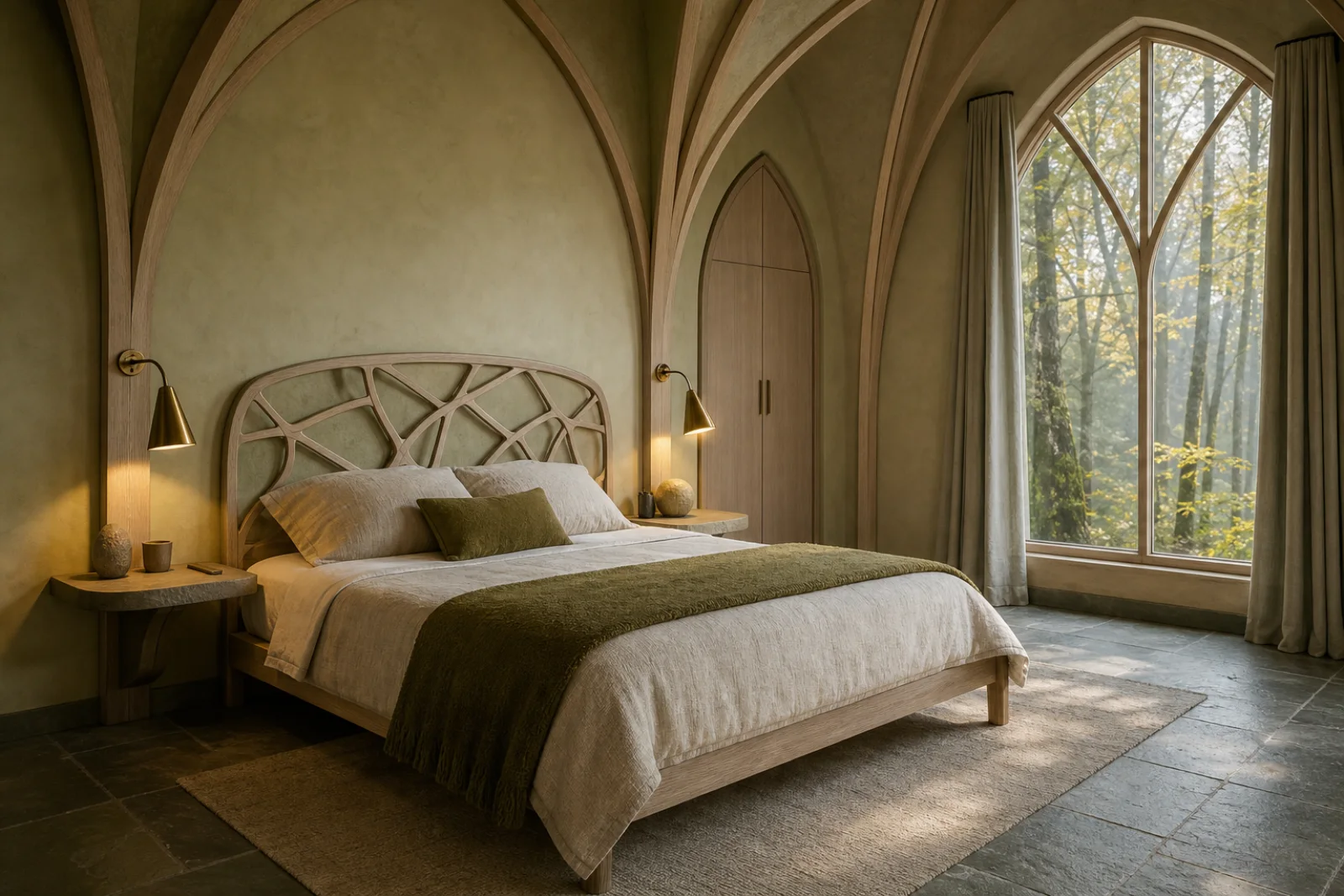
Limit branching detail to the headboard or wardrobe profile, add full light control and preserve clear access on both sides of the bed.
Allow adequate chair pullback, use acoustic wool on seats and place a shielded branching light where it illuminates faces rather than dazzling them.
Position the screen across the window, not against it; pair a crafted desk with a truly adjustable chair and concealed cable route.
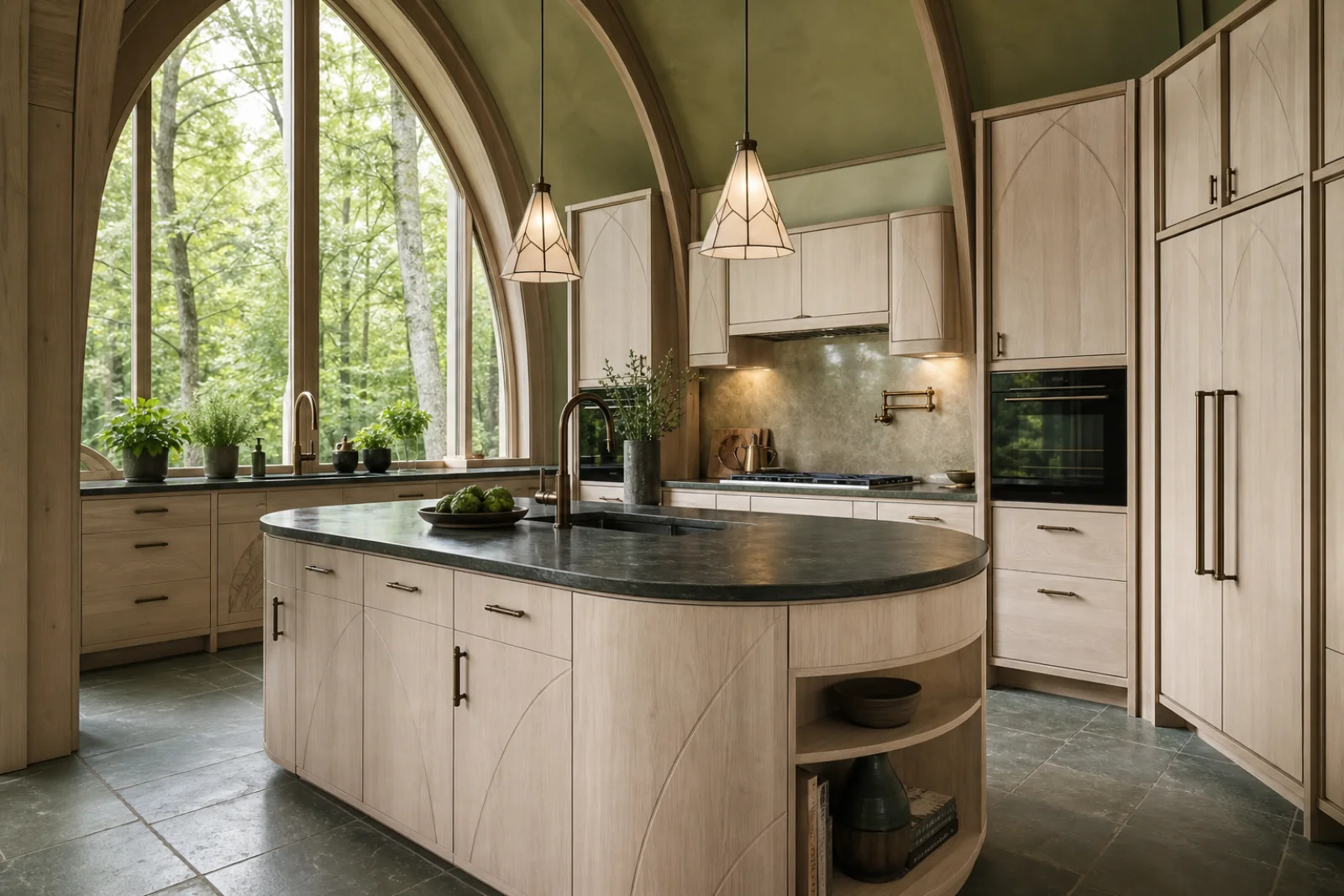
Put fantasy into cabinet profiles and a curved island end while worktops, backsplash, extraction and appliance clearances remain conventional.
Use slate, a proper mat, boot tray and closed coat storage so woodland mud and moisture never become part of the theme.
Let pale ash and lichen carry most of the light, sage define the envelope and slate ground the floor. Moss belongs to one or two tactile surfaces; bronze should trace details rather than turn the room golden. Keep the real woodland visible as the most saturated green.
A light structural wood tone that makes repeated ribs feel fine rather than cavernous.
A breathing-looking mineral green for broad wall fields, always specified for the real substrate.
A durable grounded plane for floors and thresholds with tested slip resistance.
A tactile upholstery anchor deeper than the walls but quieter than emerald.
A pale textile bridge that keeps the green palette luminous and restful.
A warm low-sheen line for lights, hooks and select joinery details.
Specify species, moisture, radius, lamination lines, spring-back, joint tolerances and the finish on a full-scale sample.
Coordinate substrate and repair method, then keep carved depth low enough to dust without fragile edges.
Test floor slip and sealing while wool adds acoustic and thermal comfort where bodies actually touch.
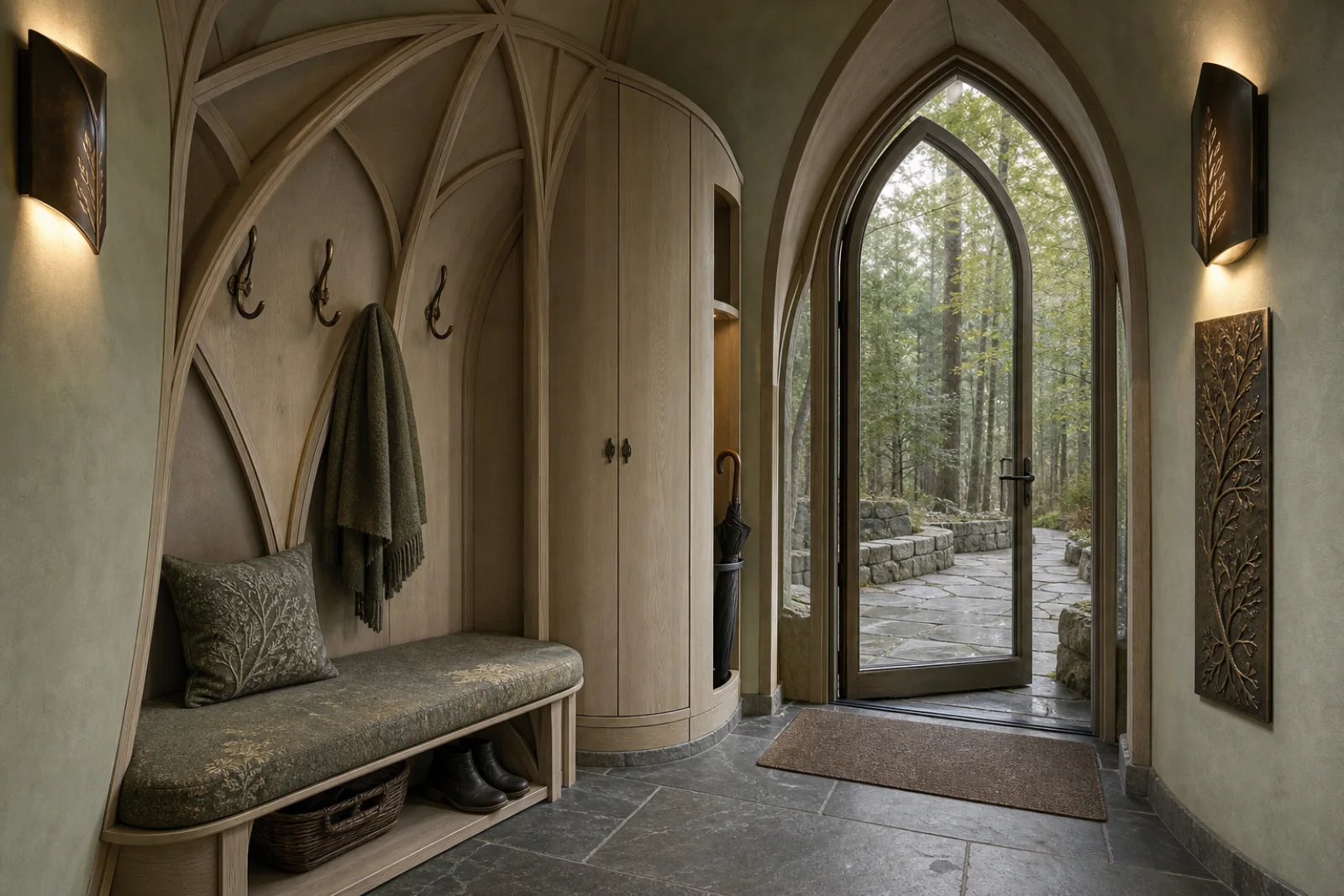
Use protected low-sheen metal and safely rated glass in small details, not as imitation enchanted artifacts.
Begin with one architectural gesture and a disciplined material system. The fantasy becomes more credible when every curve has a structural, spatial or lighting purpose.
Choose two ideas—such as branching structure and filtered light—that will carry the woodland reference through the home.
Use one family of radii and junctions for openings, ribs and joinery rather than inventing a new curve in every room.
Resolve glazing, ventilation, wet areas, lighting, cleanability and accessible paths before decorative carving.
Mock up timber, plaster, slate, textile and light together, then remove any element that makes the composition literal or dark.
When the room feels wrong, change the underlying decision before adding more decor.
Increase pale ash, lichen textile and clear daylight; keep deep moss to a few touch surfaces.
Reserve botanical work for one headboard, screen or relief per view and leave adjacent planes quiet.
Frame healthy exterior landscape and keep indoor planting limited to species the light and humidity can support.
Hide or diffuse sources, provide dimming and direct task light to actual reading, cooking and work surfaces.
Elven Fantasy can borrow curves from Art Nouveau and verticality from Gothic, but it should not collapse into either. Its specific task is original world-building through light, slender craft and an unusually close—but still buildable—relationship with woodland.
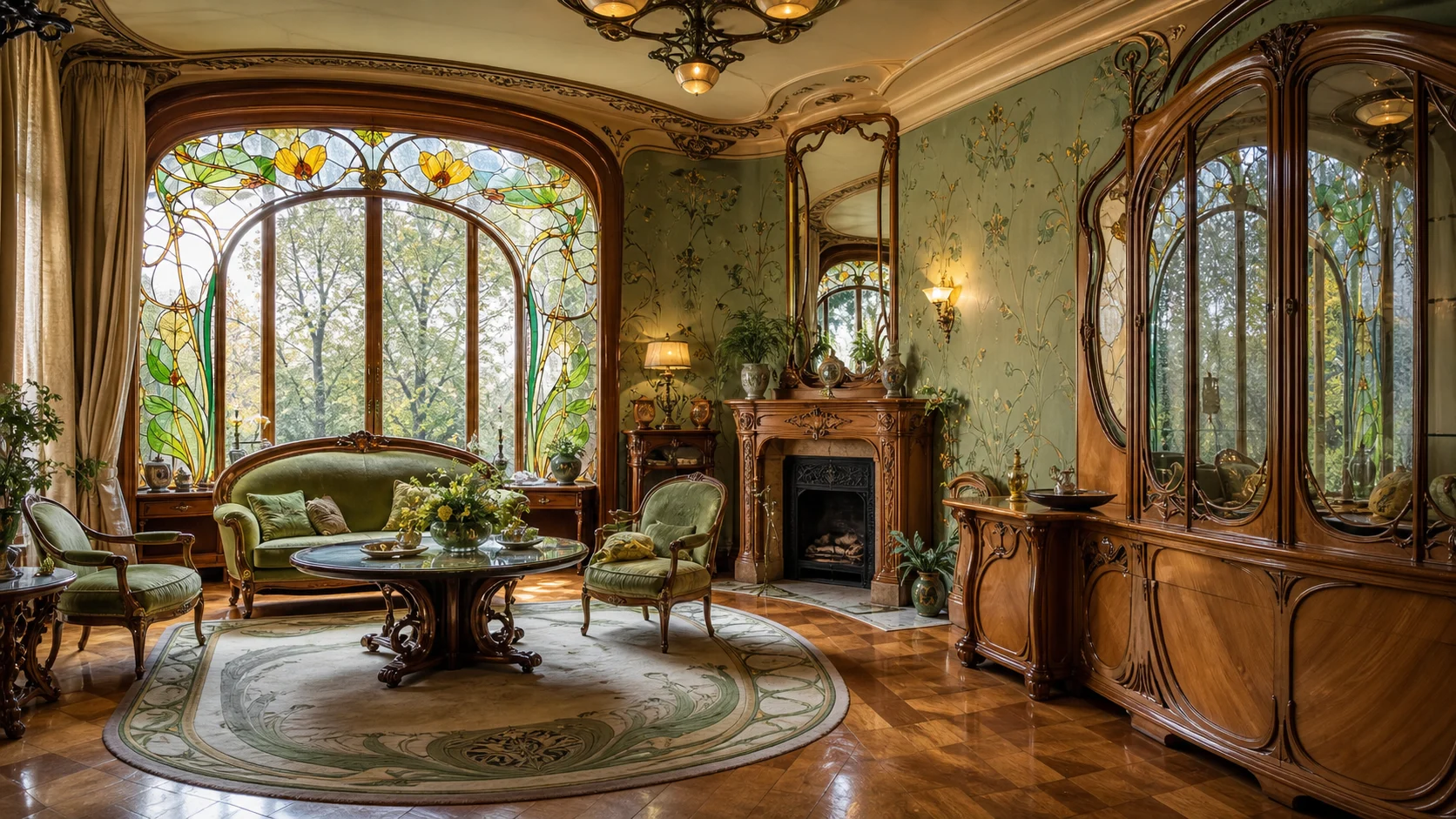
A documented historical movement with whiplash curves, floral ornament, stained glass and period-specific craft traditions.
Choose Elven Fantasy for an invented woodland world, lighter structural ribs and fewer historically fixed motifs.
World-building replaces period authenticity.
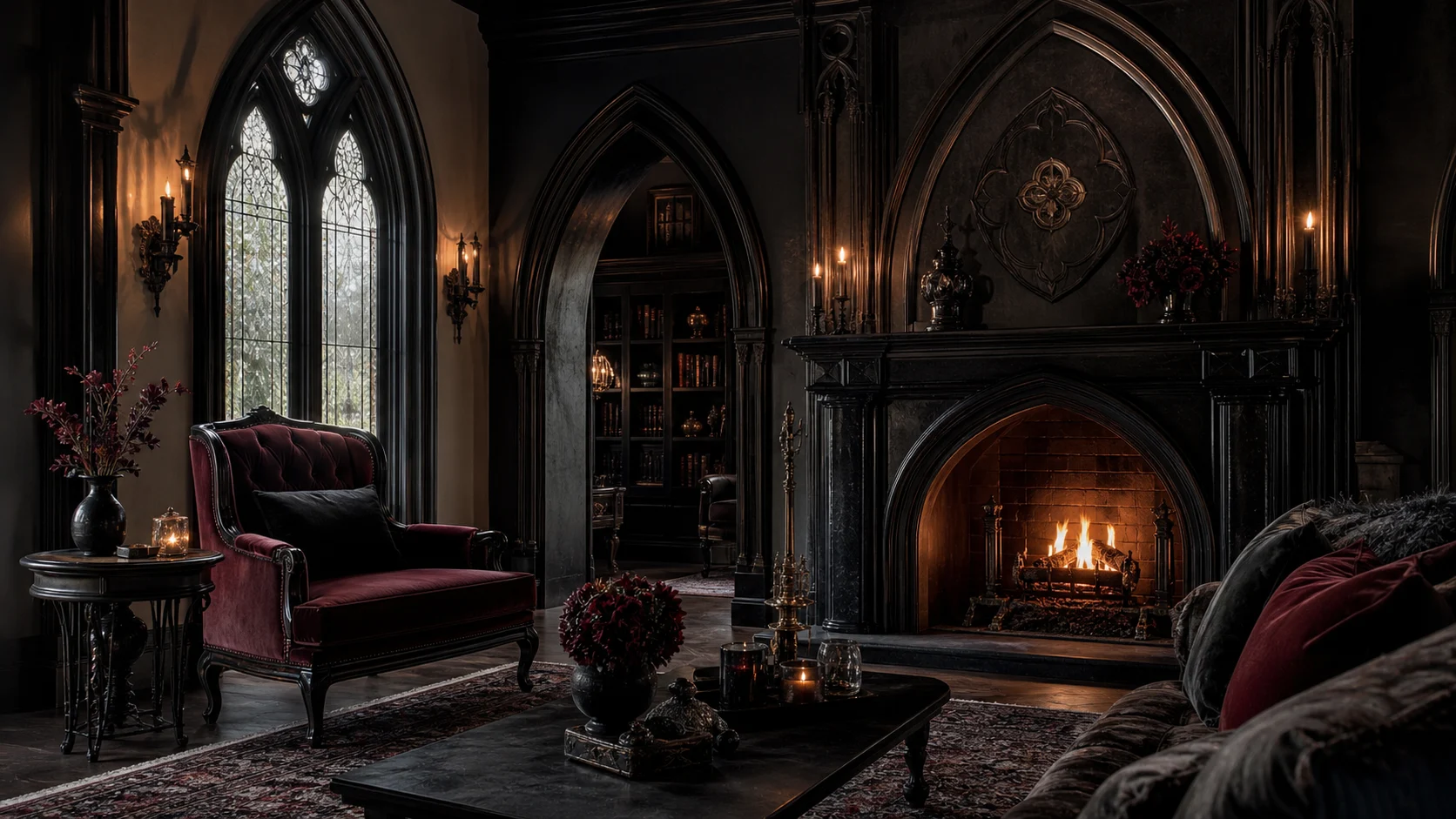
More vertical, masonry-led and shadowed, using pointed arches, tracery and medieval ecclesiastical associations.
Choose Elven Fantasy for pale timber, botanical abstraction, lower visual weight and brighter landscape connection.
Woodland luminosity replaces stone solemnity.
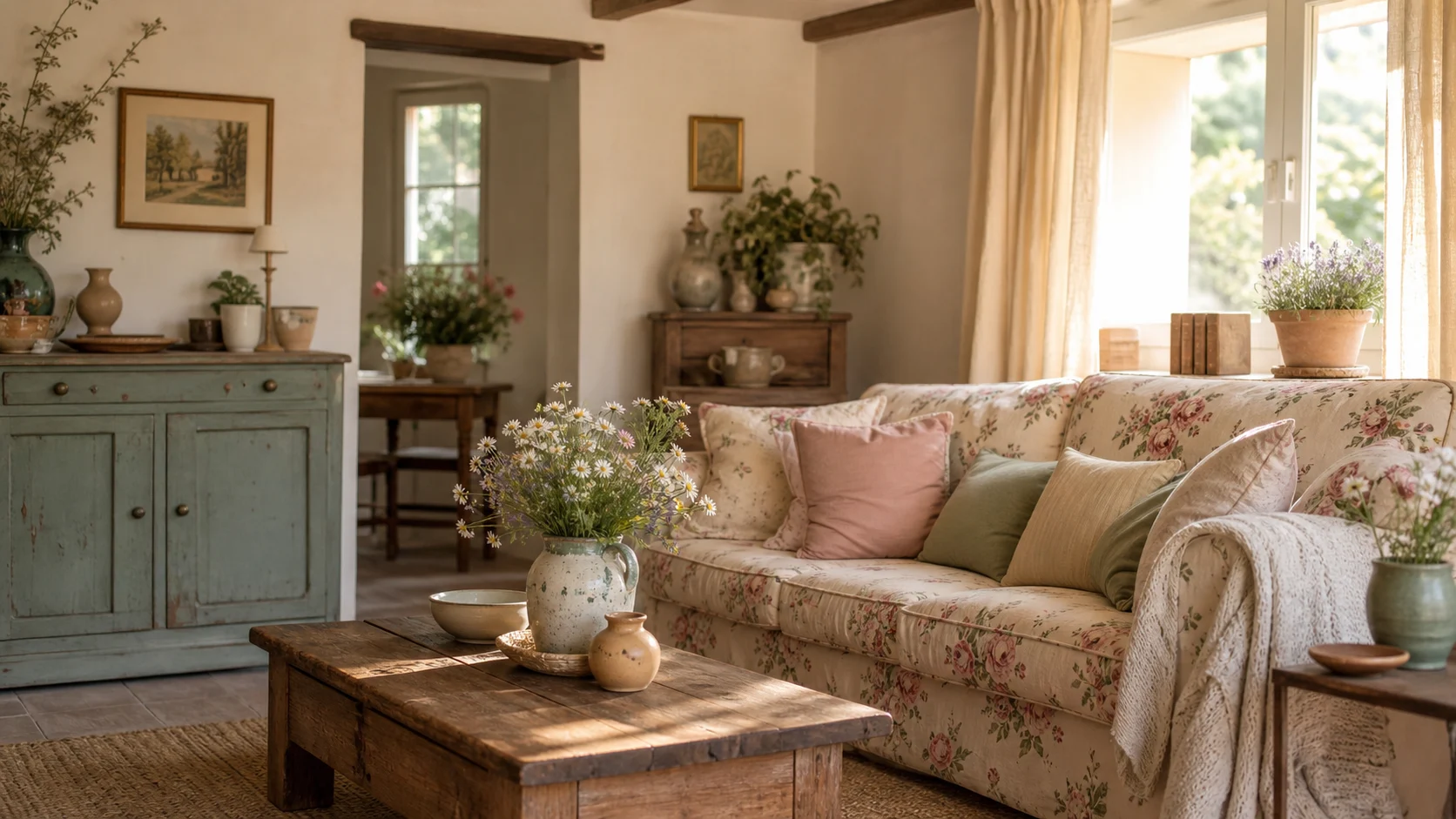
Domestic and nostalgic, built from rural craft, florals, gathered objects, painted furniture and everyday pastoral life.
Choose Elven Fantasy when architecture and invented craft should feel elevated rather than cozy and collected.
Ethereal structure replaces rural nostalgia.
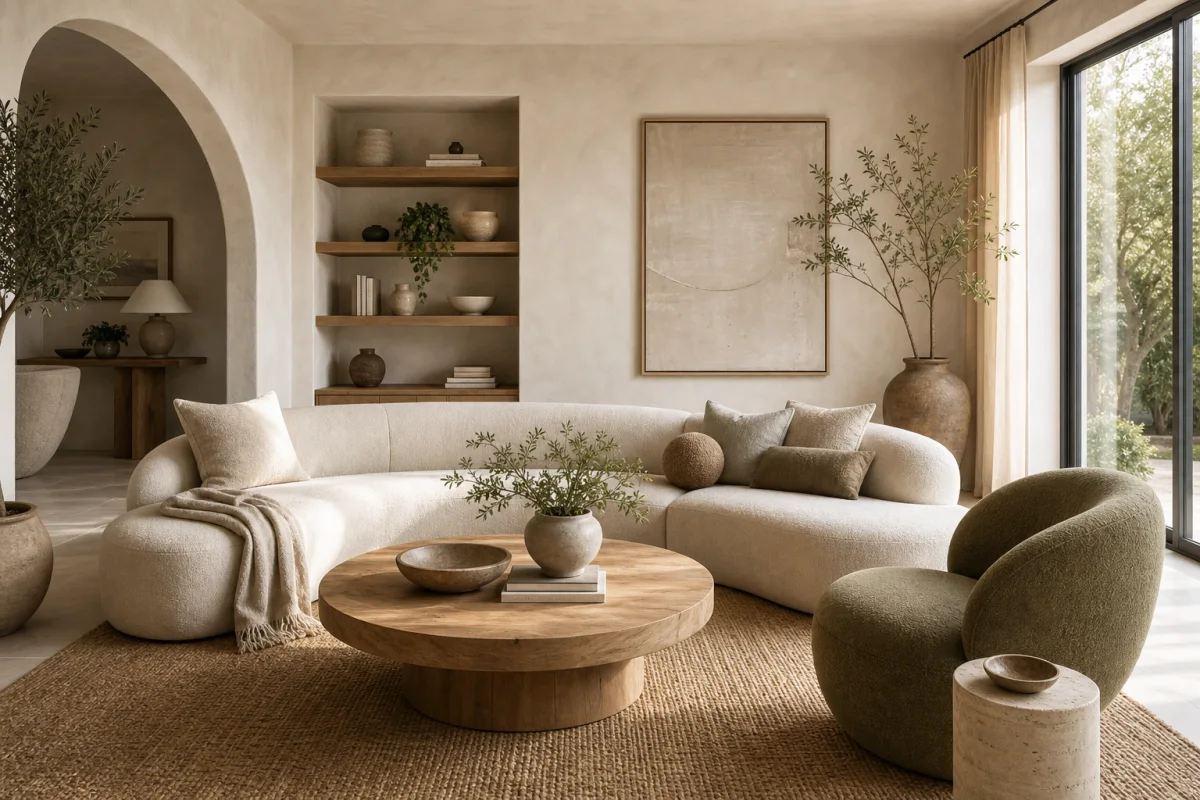
Broadly nature-led and contemporary, favoring soft forms and natural materials without narrative fantasy or symbolic craft.
Choose Elven Fantasy when repeated arches and botanical joinery should construct a distinct imagined culture.
Narrative geometry replaces neutral biophilia.
Most of the character comes from commissioned or carefully adapted elements, not themed accessories. Ask fabricators for mock-ups and engineers for tested assemblies; buy furniture only after the spatial rhythm is established.
Check seat support, access route, fabric durability and whether the curve strengthens conversation instead of consuming floor area.
Use smooth cleanable edges, secure fixings and a motif abstract enough to avoid literal tree scenery.
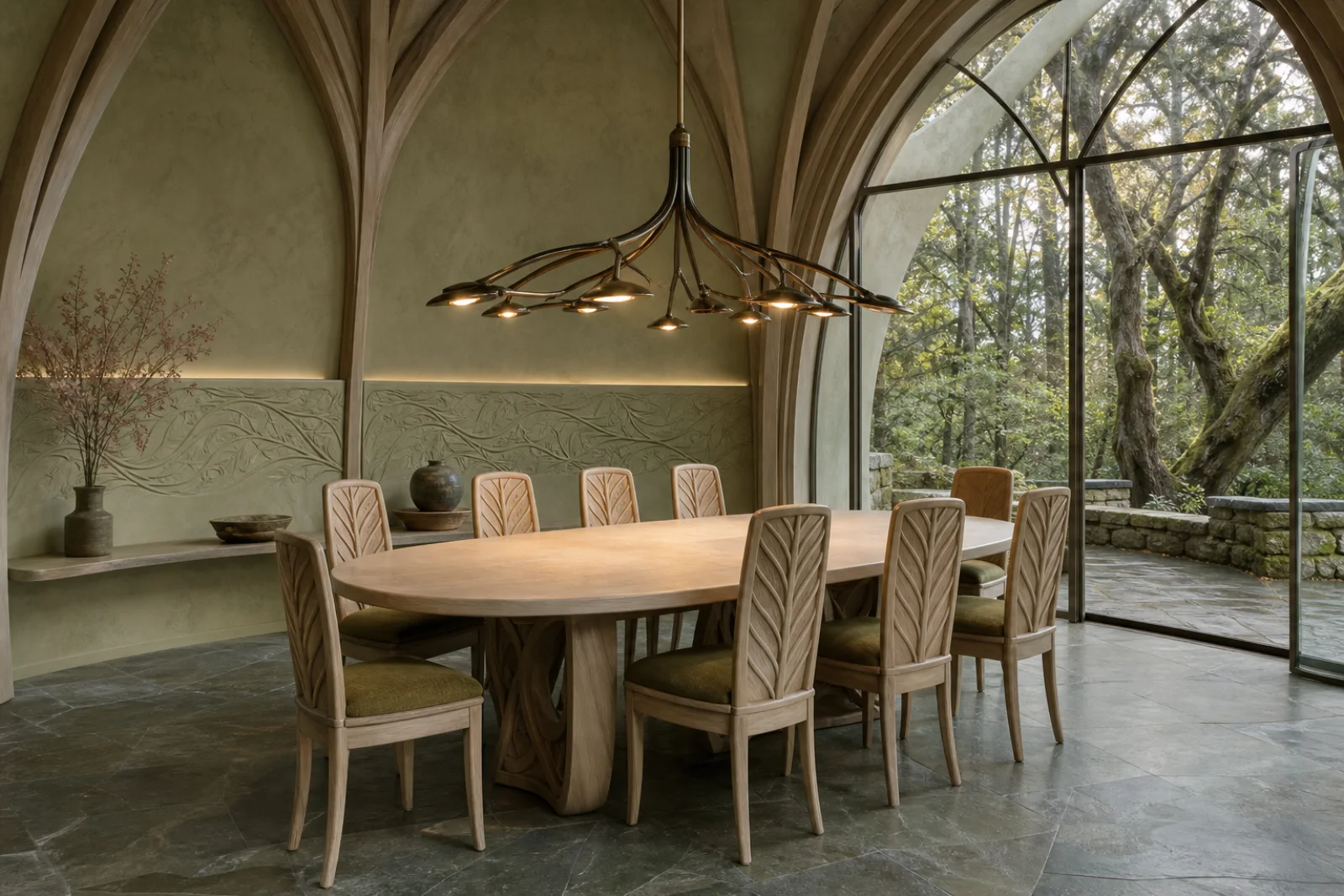
Review base stability, knee space, edge comfort and the full footprint of eight pulled-back chairs.
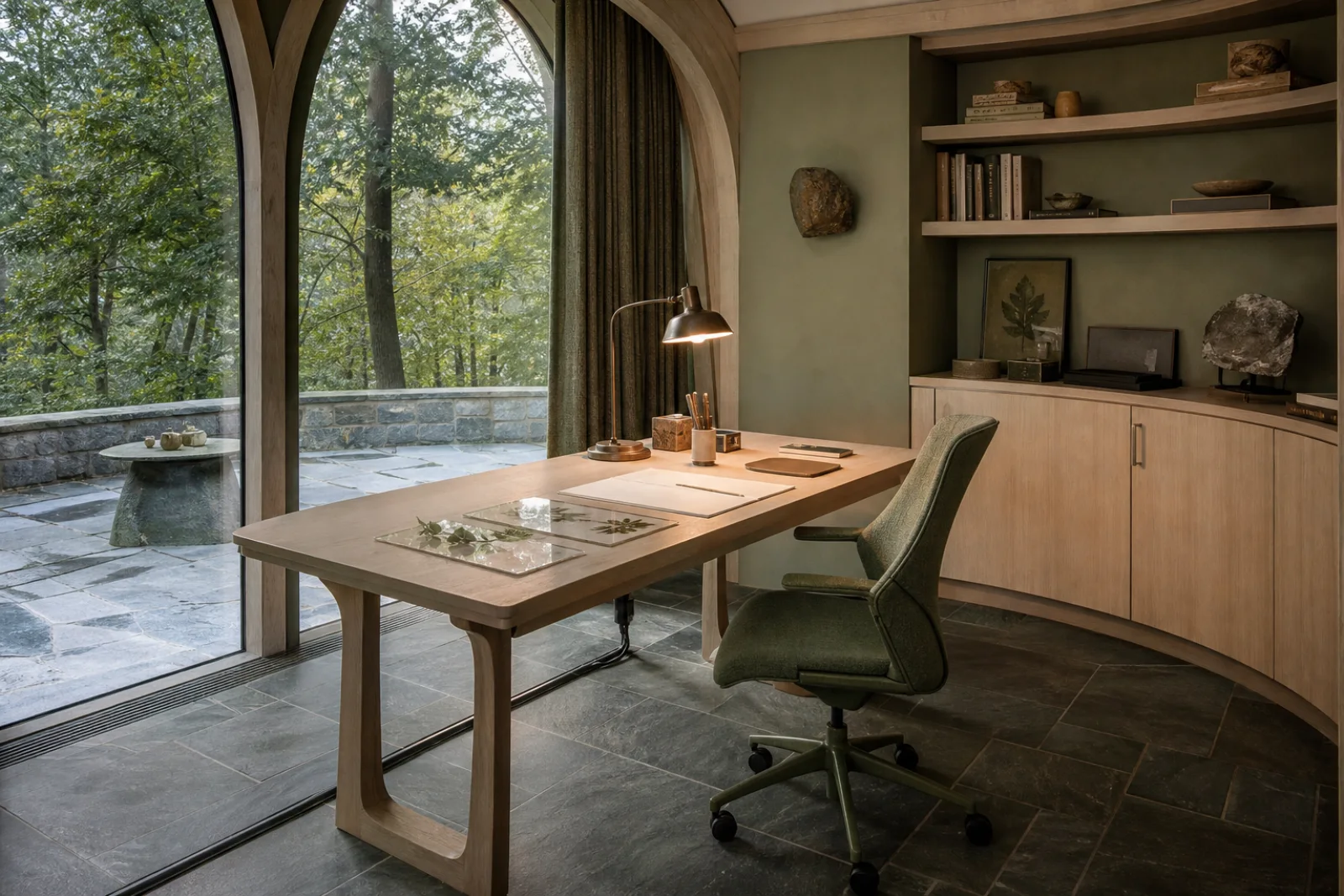
Specify warm dimmable output, glare control, replaceable components and a stable adjustable arm.
Confirm frost, water and slip performance, grout or joint strategy and safe transition height.
Review bent ash, relief, lime plaster, slate, moss wool, linen, bronze and seeded glass under real day and evening light.