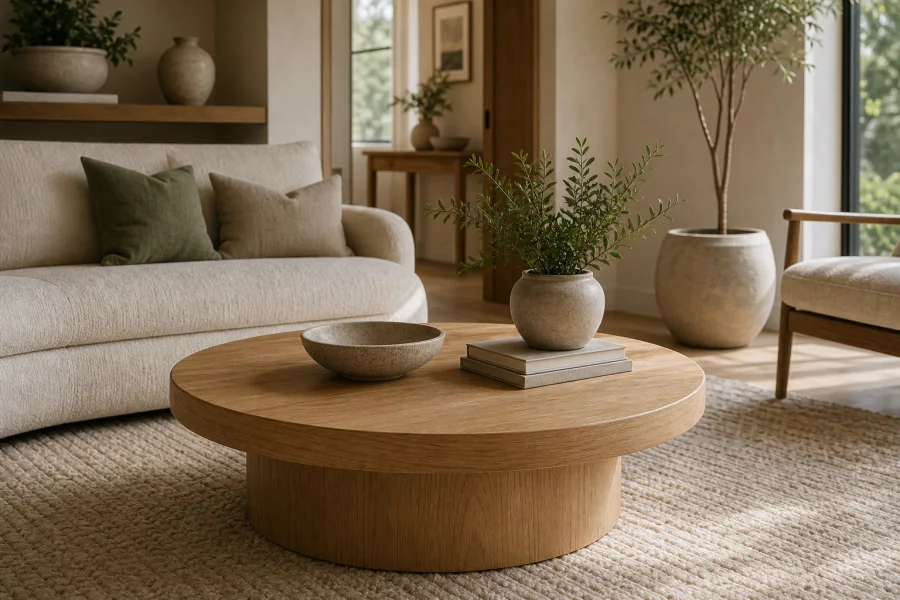
Round wood table
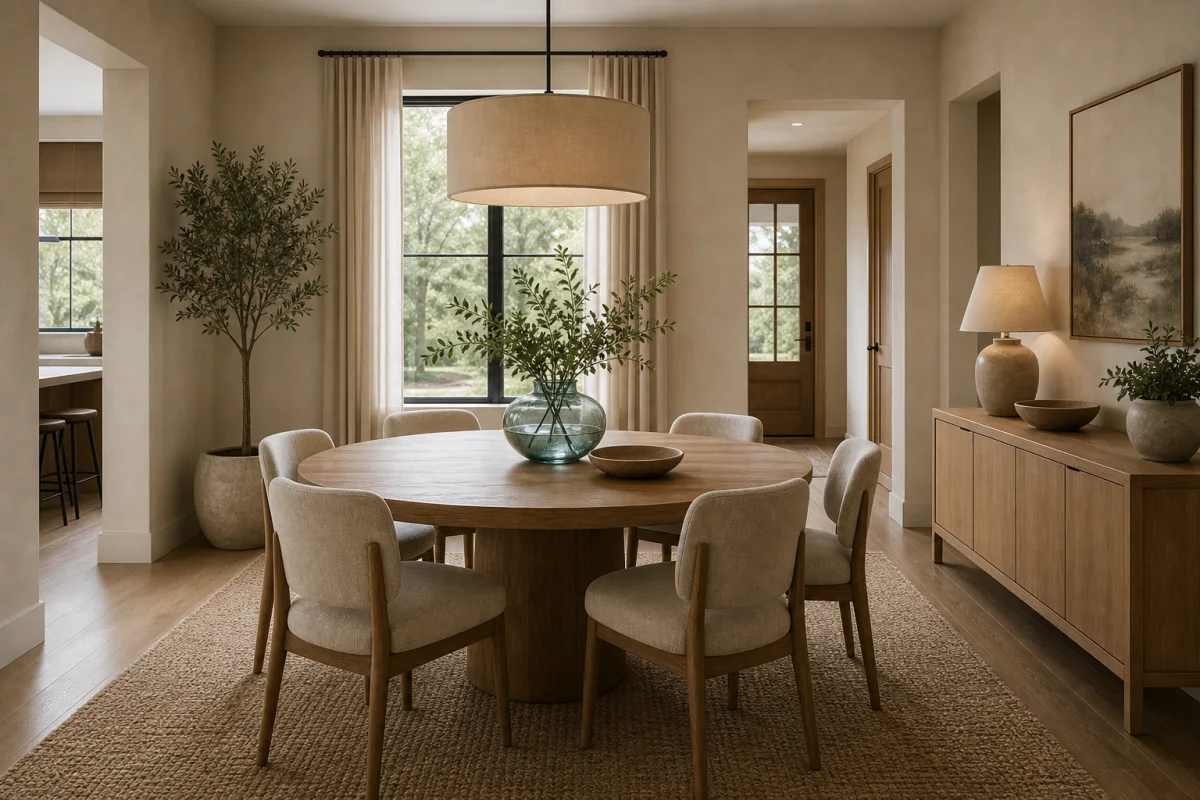
Rounded tables improve movement in tight seating zones and reduce visual sharpness.
Practical room planning for better flow: clear paths, supportive furniture placement, natural light, healthy plants and balanced materials that make a home feel easier to live in.
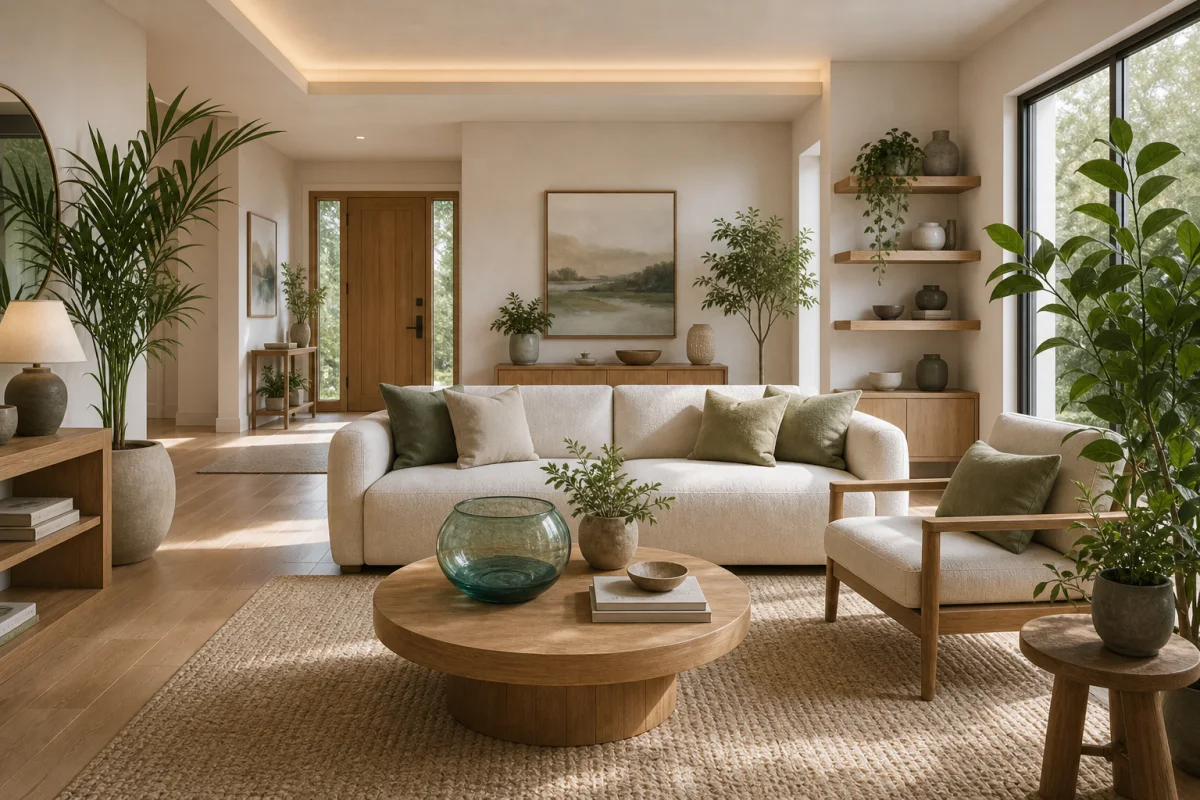
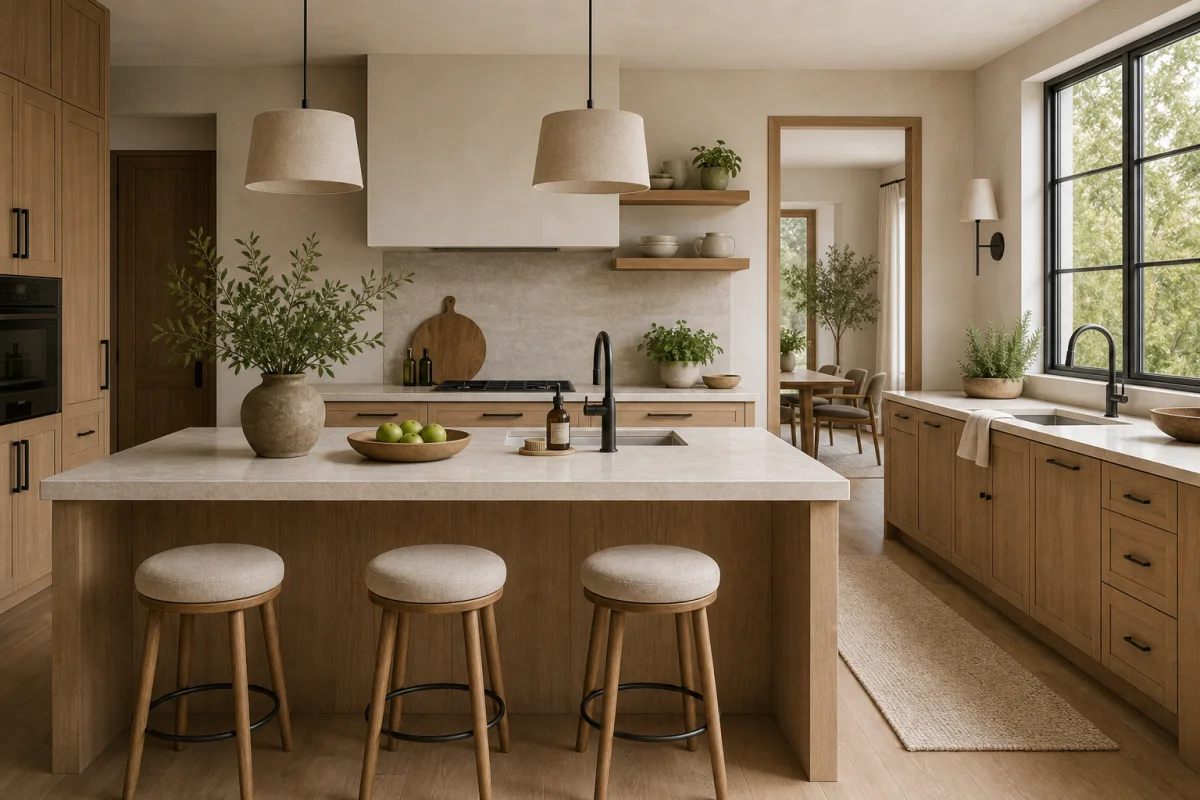
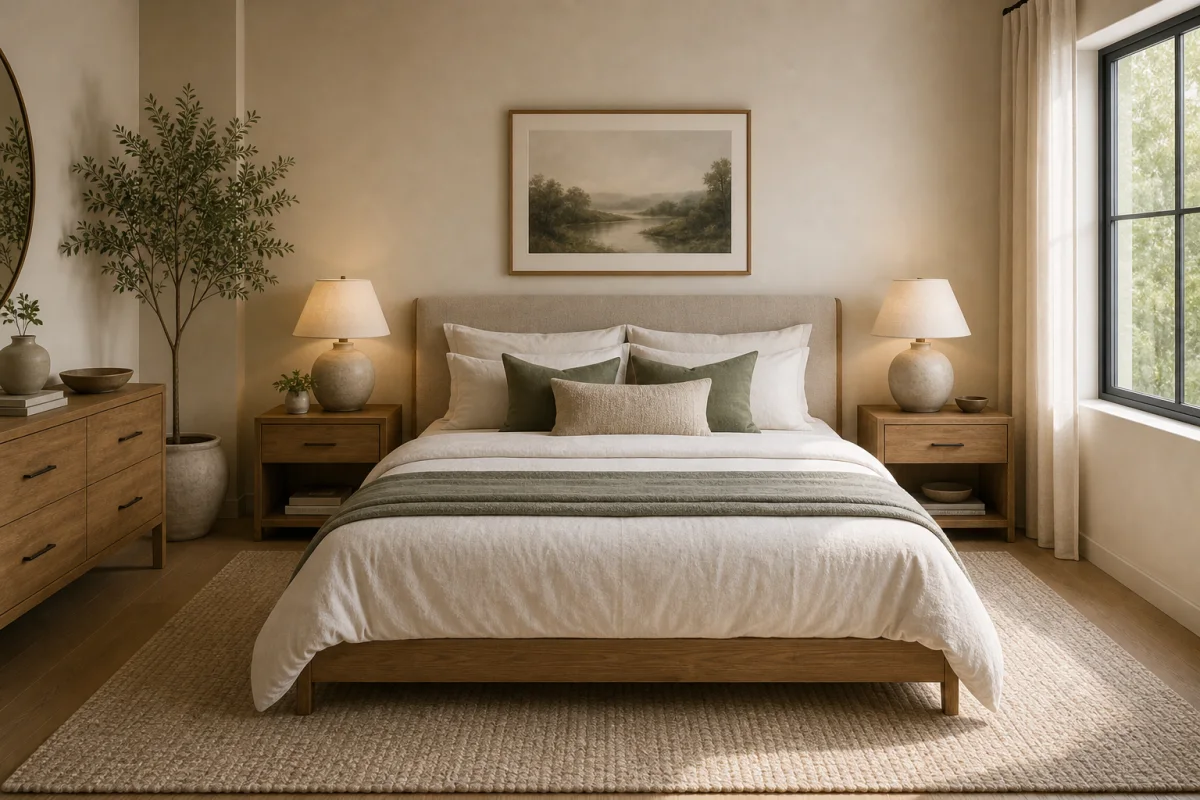
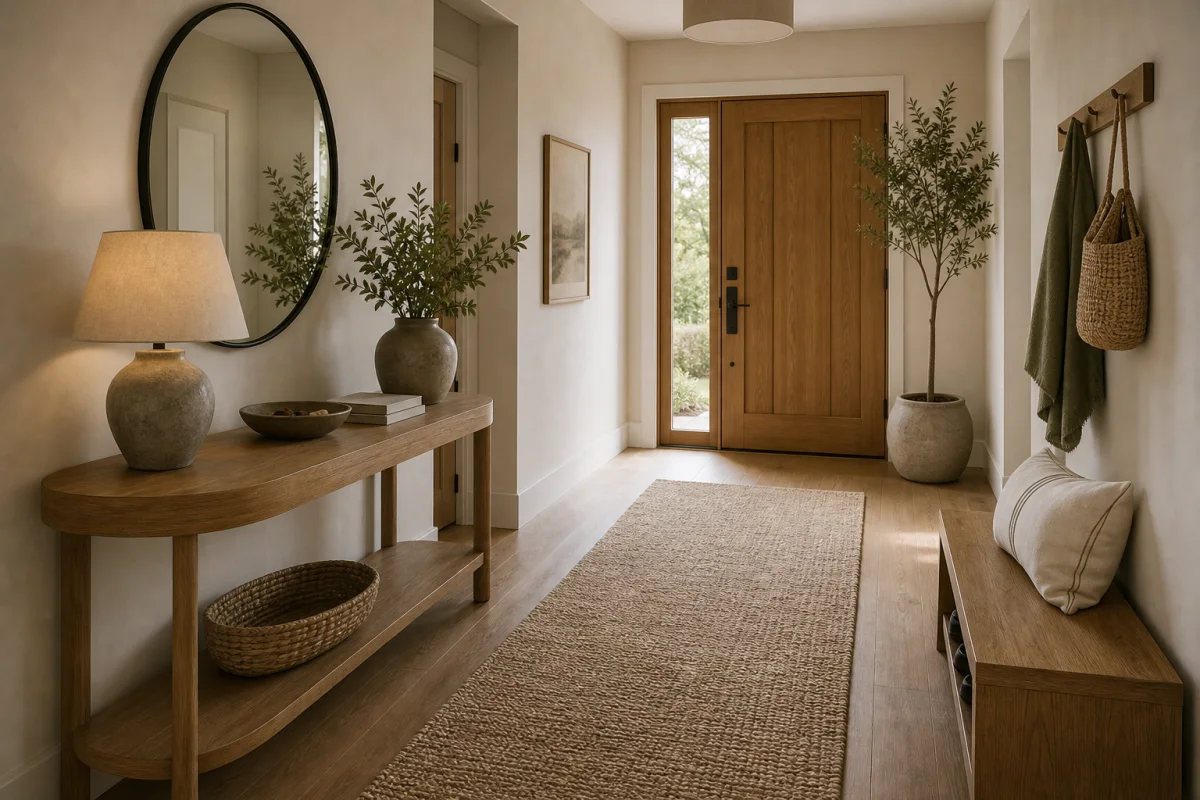
Feng Shui interior design is a way of arranging a home so the rooms feel clear, supported and balanced. In practical terms, that means open circulation, furniture that does not block doors, strong resting positions for beds and desks, healthy light, natural materials and fewer objects competing for attention.
The most useful version is not about filling a room with symbols. It is about noticing how a space behaves: where you enter, what you see first, whether you can move easily, whether seating feels protected, whether a bedroom feels restful and whether the room has enough life, softness and grounding.
Doors, walkways and the center of a room should feel easy to move through before you add decor.
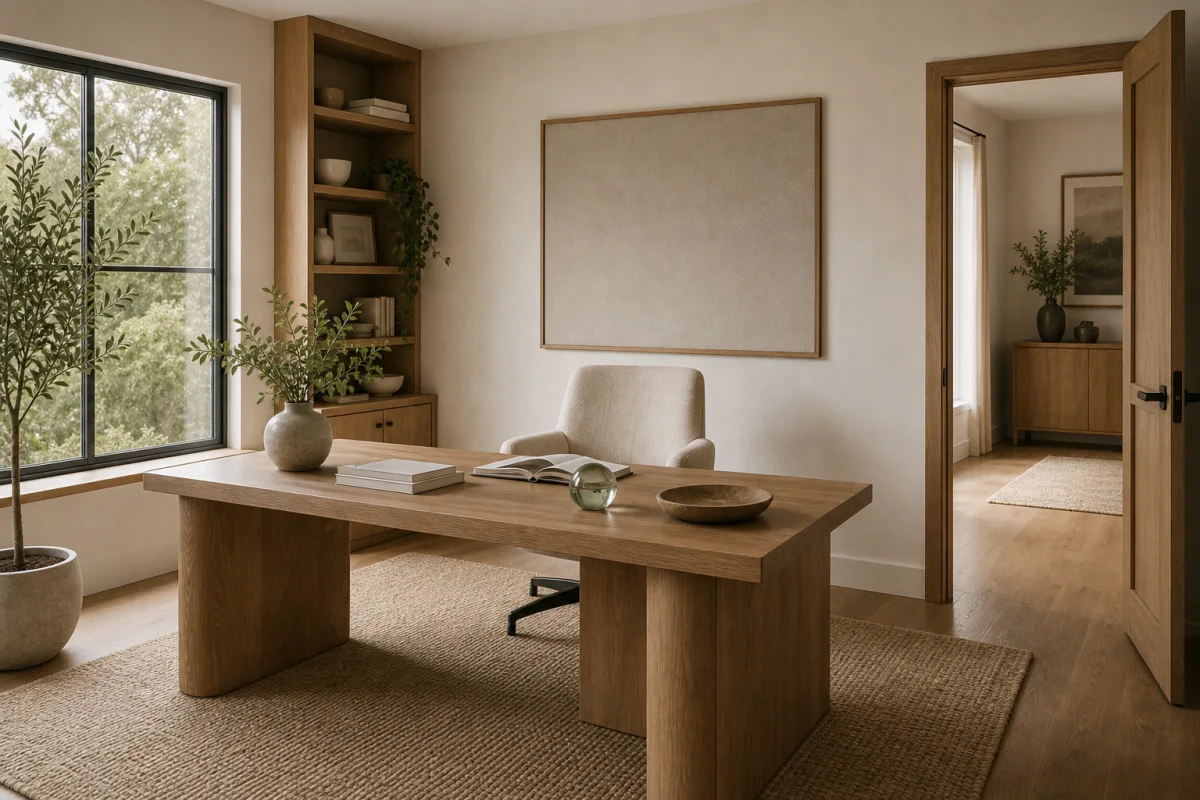
A bed, sofa or desk usually feels better when it has a solid backing and a view of the room rather than feeling exposed.
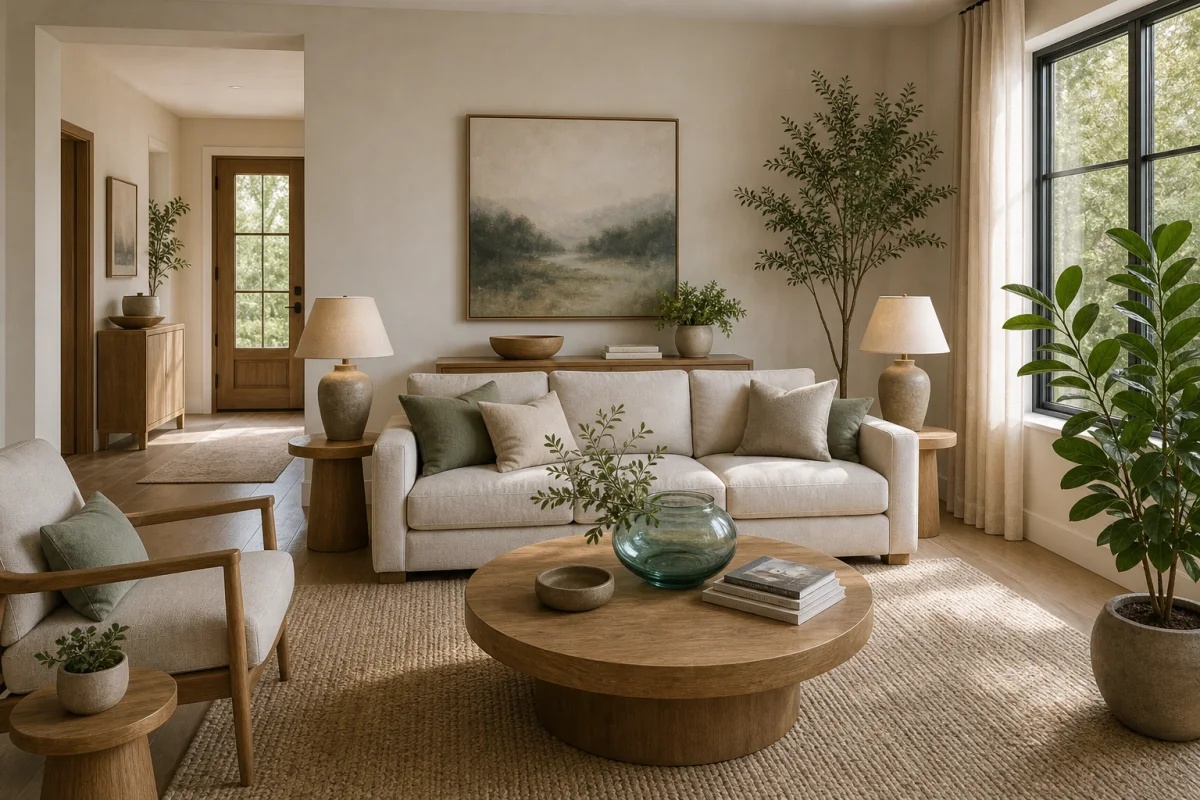
Wood, plants, earth tones, soft textiles, reflective glass and good lighting can make a room feel complete without becoming themed.
The best Feng Shui rooms leave doors, walkways and seating zones easy to enter and move through.
Beds, desks and main seating should feel supported, ideally with a view of the door and a solid wall or anchor behind them.
Wood, earth, water-like glass, soft fire through lighting and restrained metal accents keep the room from feeling flat.
Storage, trays, lamps, plants and rugs work better than symbolic decor when the goal is everyday calm.
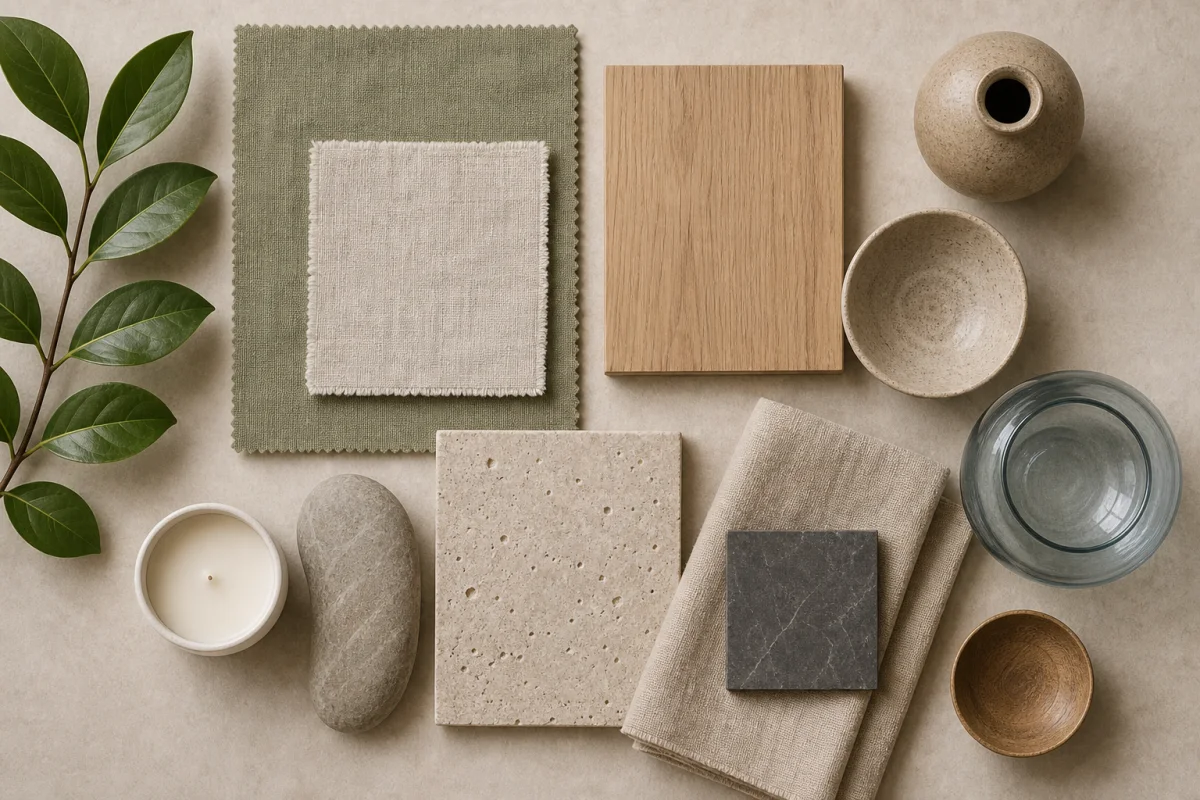
A useful Feng Shui palette should support the room function. Bedrooms need quiet warmth, offices need clarity, entries need freshness and living rooms need enough grounding to feel social but not busy.
A calm base for walls and ceilings that keeps rooms bright without feeling sharp.
Use through furniture, floors and frames to add growth, warmth and stability.
A plant-like accent for textiles, art, cabinets or actual greenery.
Best in small reflective or soft accents such as glass, art, pillows or ceramics.
Grounds rugs, stone, pottery and upholstery so the room feels settled.
Adds warmth, growth and visual support through tables, consoles, shelving and frames.
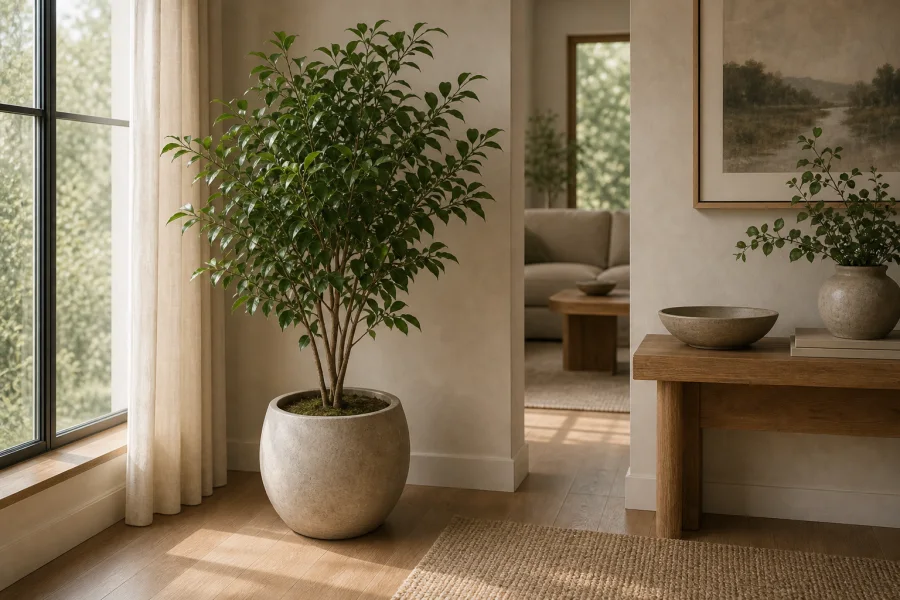
Bring life to corners and windows, but work best when they are healthy and scaled to the room.
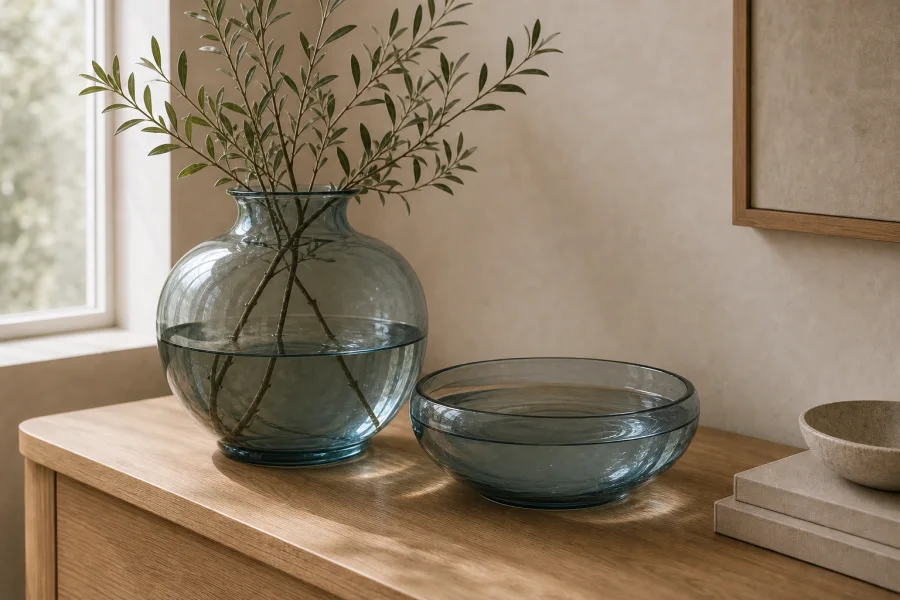
Small reflective pieces can soften a space without turning it into a theme.
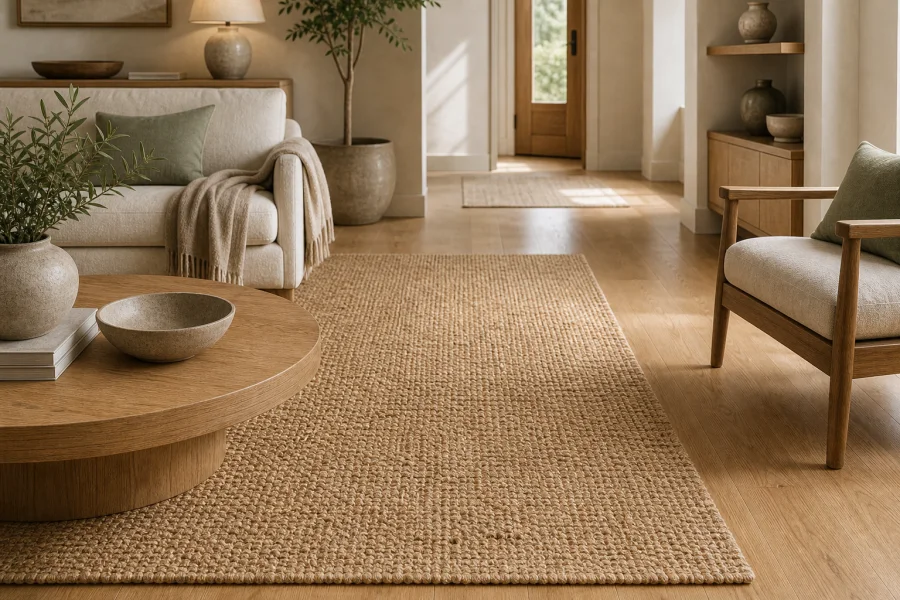
Rugs, linen and wool ground furniture zones and calm hard surfaces.
Feng Shui can share visual cues with calm natural styles, but its real value is spatial: how furniture placement, entry points, light and clutter change the way a room feels.
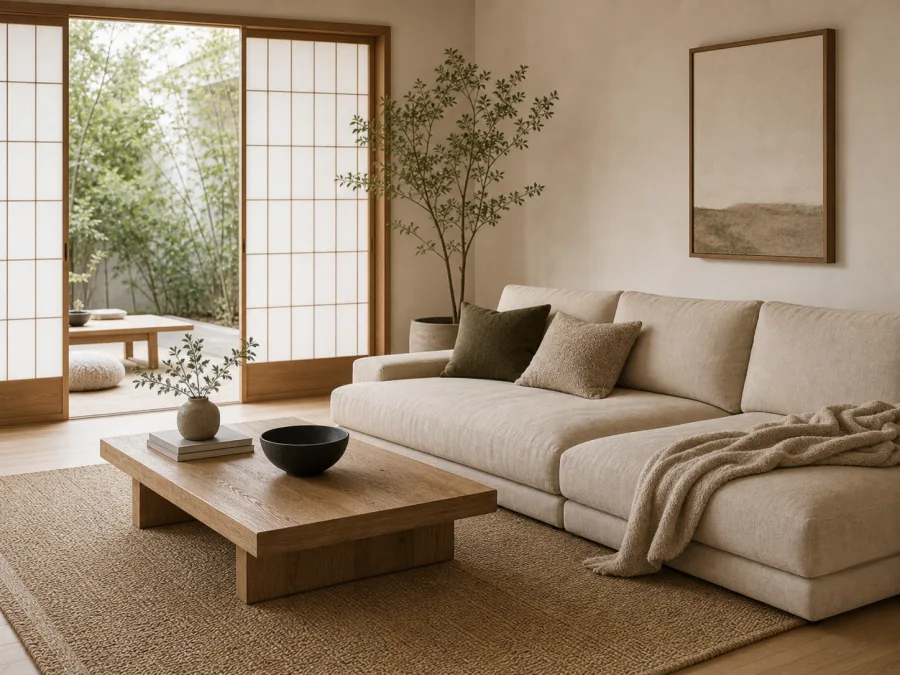
Quiet, minimal and furniture-led.
Choose Feng Shui if your main question is how the room should be arranged, not only how calm it should look.
Focus on door views, clear paths, bed placement and balanced zones before choosing low furniture.
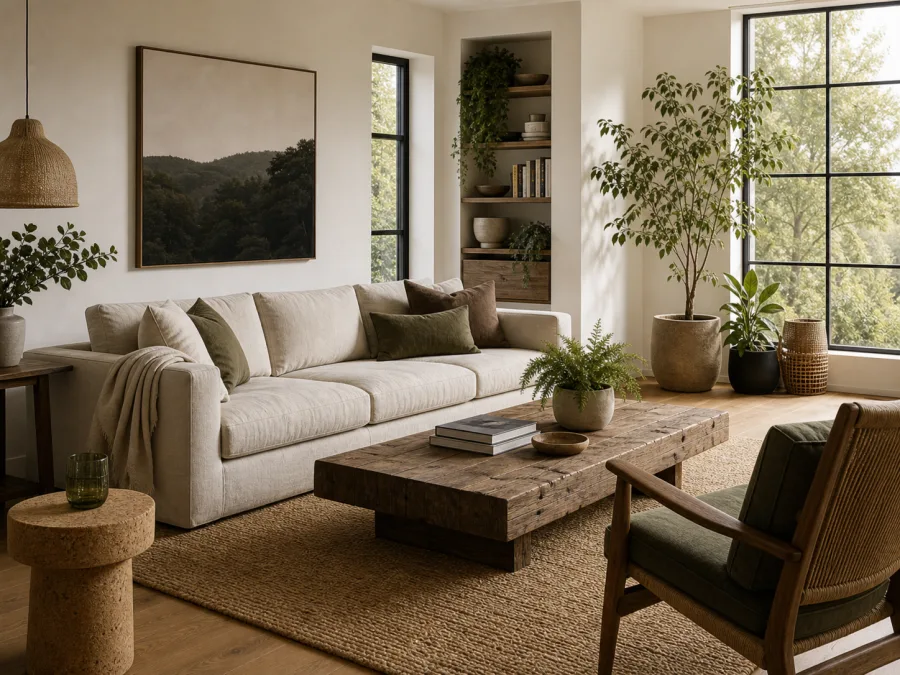
Natural, durable and material-conscious.
Choose Feng Shui if you want a room to feel better through layout, light and flow as much as through material choices.
Keep natural materials, then check circulation, clutter and whether key seats feel supported.
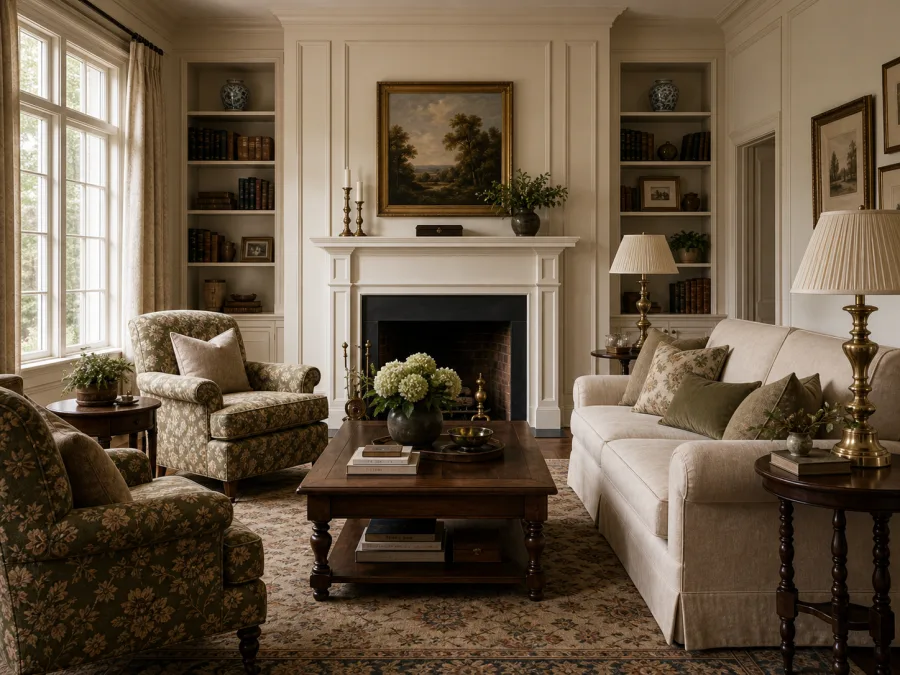
More formal, symmetrical and classic.
Choose Feng Shui if symmetry is useful but the priority is comfort, movement and emotional ease rather than formality.
Use pairs and anchors where they help, but keep the room lighter and less ceremonial.
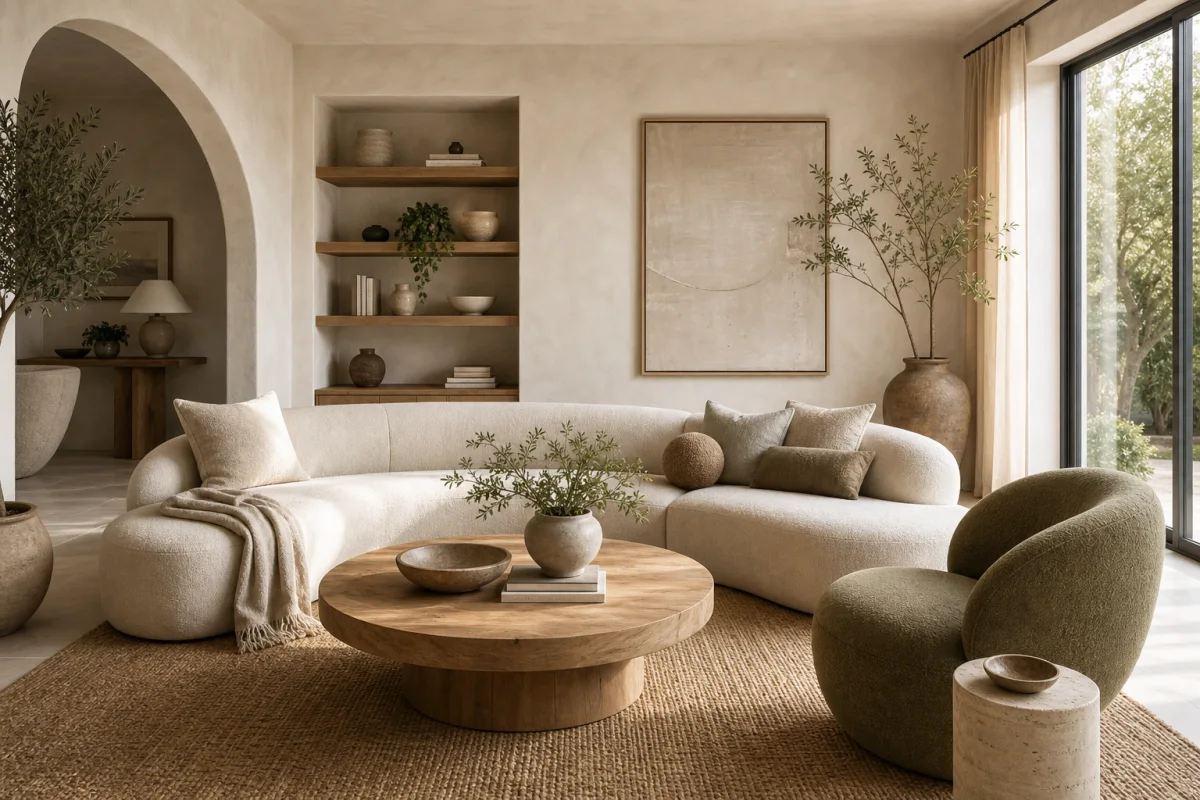
Softer, curvier and more aesthetic-led.
Choose Feng Shui if you want the same softness guided by practical placement rules.
Use curves and natural texture, then make sure the entry, bed, desk and seating positions feel secure.
The best Feng Shui pieces solve a room problem: they soften sharp corners, support symmetry, bring life, define a zone or hide visual noise.
Rounded tables improve movement in tight seating zones and reduce visual sharpness.
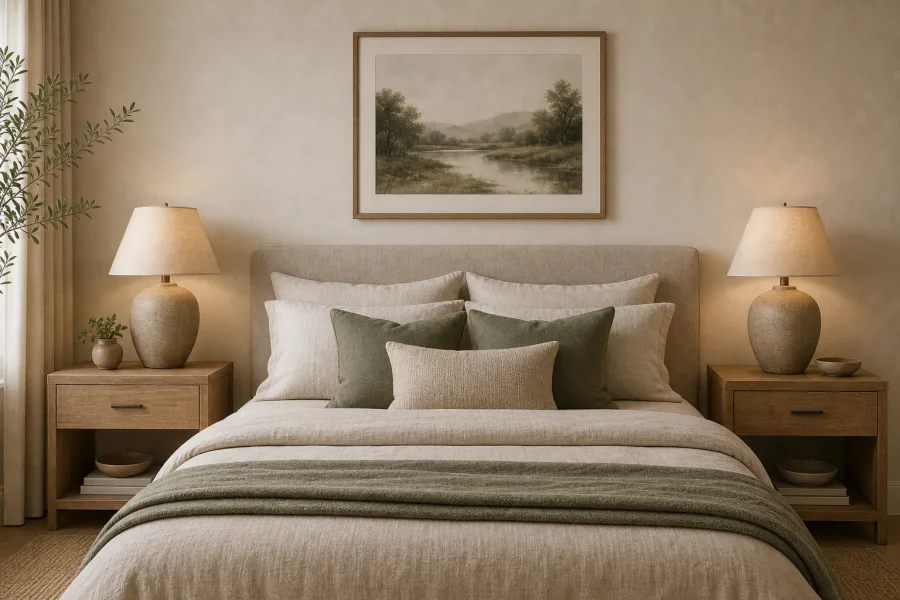
A pair of lamps helps a bedroom feel balanced and gives both sides of the bed equal support.
A well-scaled plant adds life and softens corners better than small cluttered objects.
Use a quiet reflective accent where a room needs softness, not a literal theme.
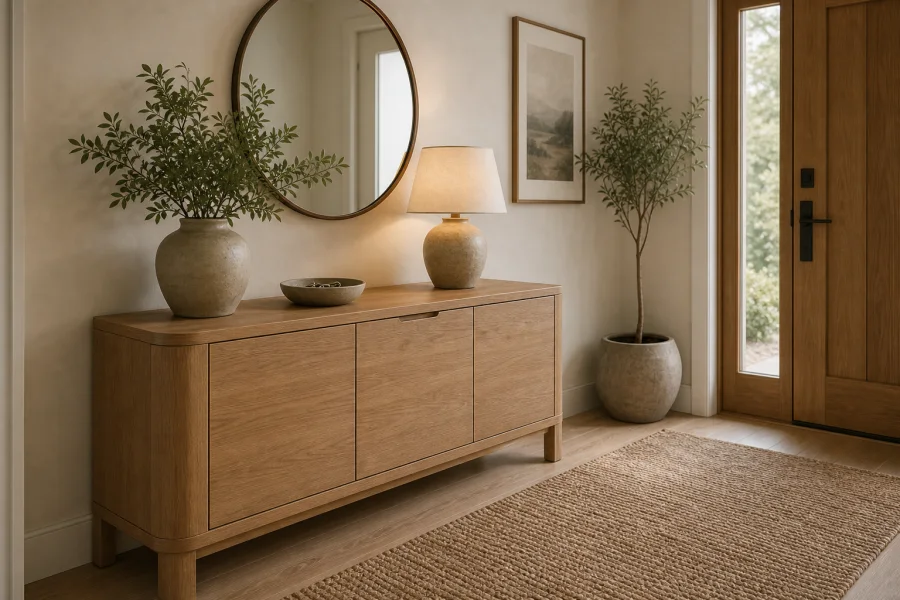
Closed storage keeps entries and living rooms clear without removing daily function.
A rug grounds seating or work zones and makes circulation feel intentional.