French Country Interior Design
Provincial forms, mineral surfaces and faded textiles create elegance that feels softened by ordinary life.
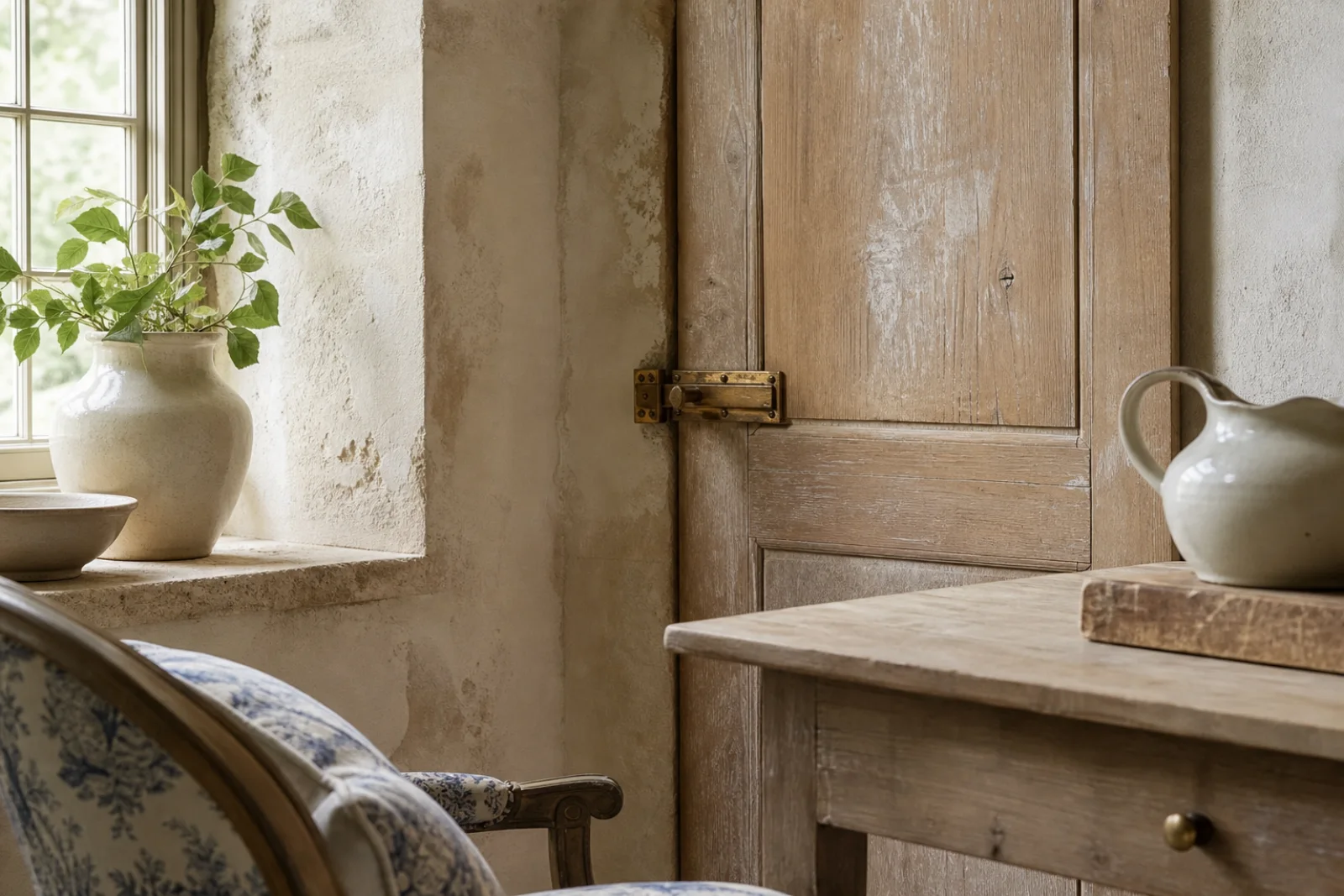
What is French Country interior design?
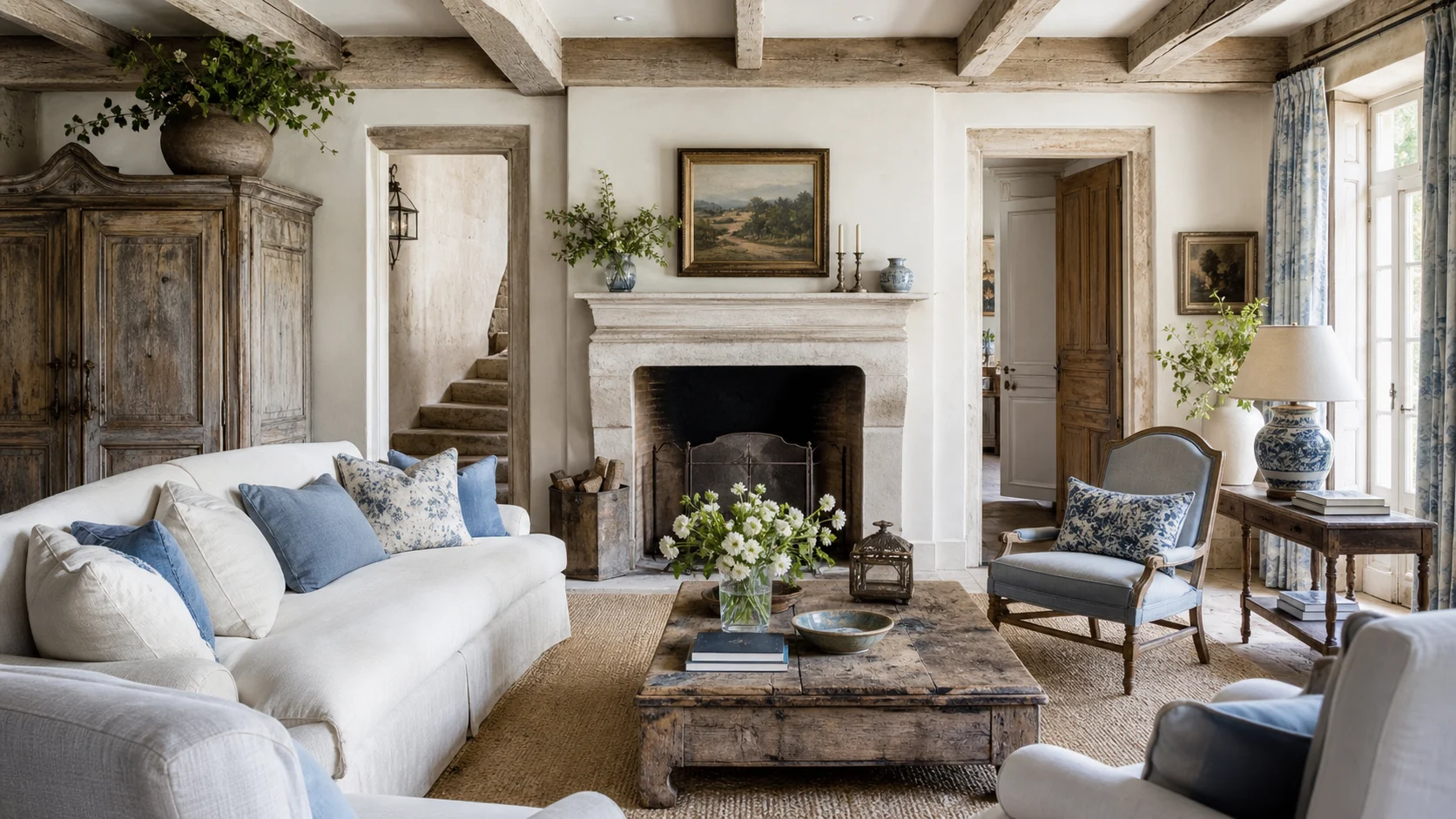
French Country design translates provincial French homes through pale mineral architecture, practical yet shapely furniture and color softened by sun and use. Lime plaster, limestone, fruitwood, rush seats, forged iron and faded printed linen give the room depth without requiring ornate decoration.
Its distinction lies in the balance between rustic substance and graceful outline. A stone floor may support a curved walnut table; a plain plaster wall may frame a blue-grey armoire. Unlike general Country style, the silhouettes and architectural details feel more specifically French, while editing keeps the room from becoming a staged Provence theme.
Use warm plaster and stone as the quiet background before adding pattern or painted furniture.
A bateau bed, oval table or cabriole bench supplies grace without filling the room with ornament.
Blue-grey, ochre and indigo should feel mineral and softened rather than bright or sugary.
Key features of french country interiors
Lime plaster and worn limestone reflect light softly and give decorative furniture a calm setting.
Curved beds, oval tables, armoires and rush chairs add recognizable French proportion.
Blue-grey, ochre and faded indigo appear on one cabinet or textile plane at a time.
Fruitwood, brass and stone show age at working edges without artificial distressing.
French Country room ideas
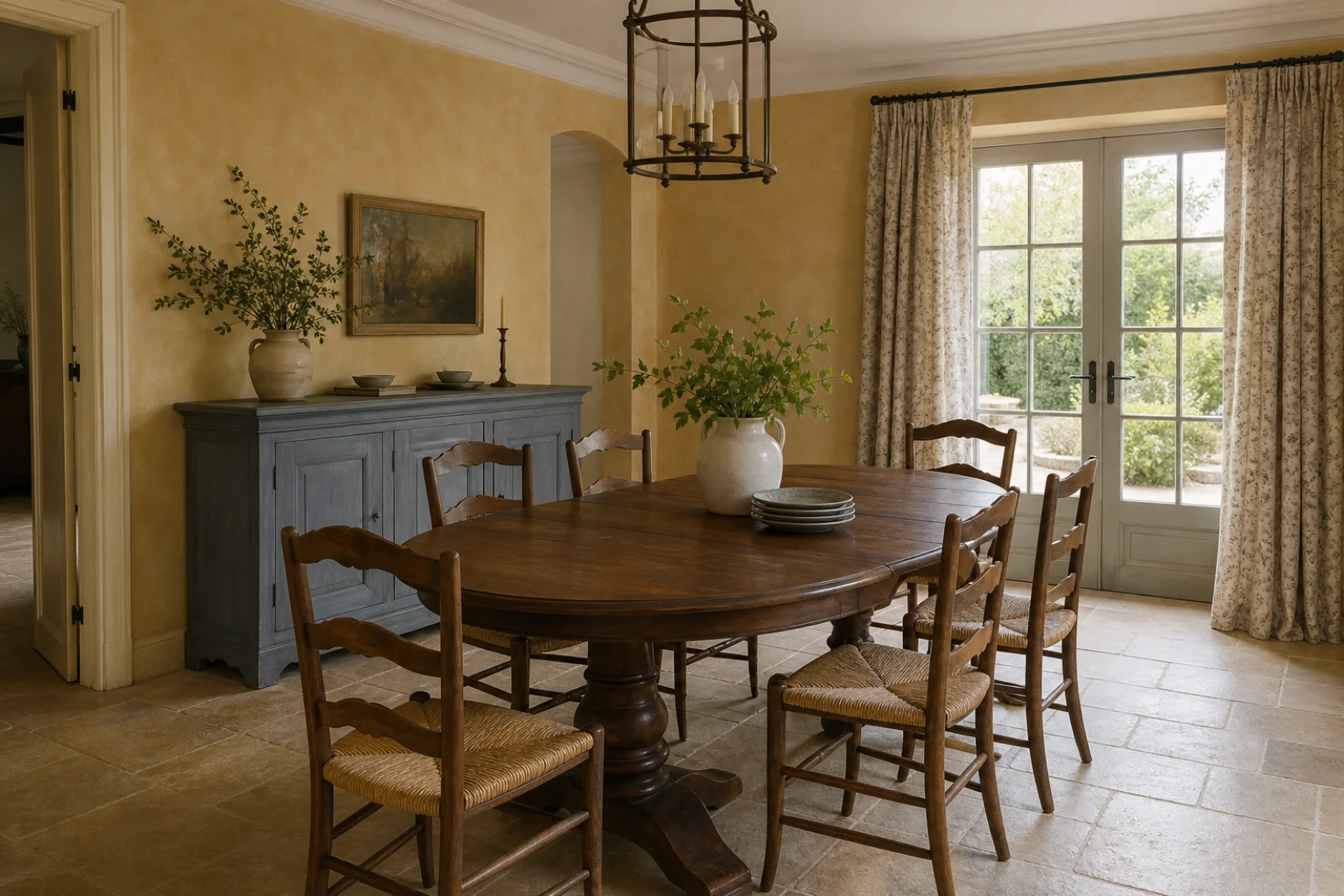
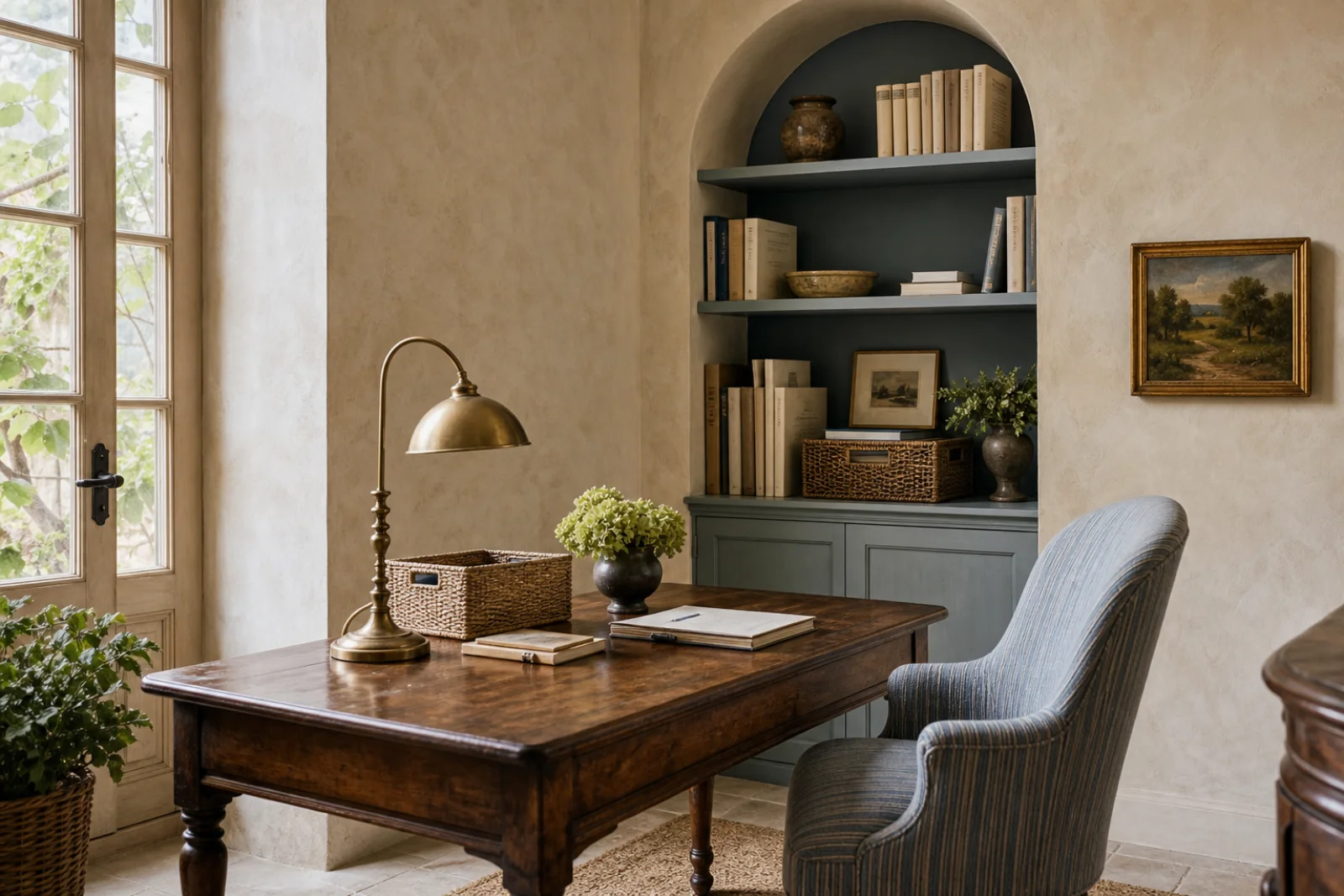
Balance one carved armoire or low rustic table with plain linen seating and a quiet limestone or wool floor.
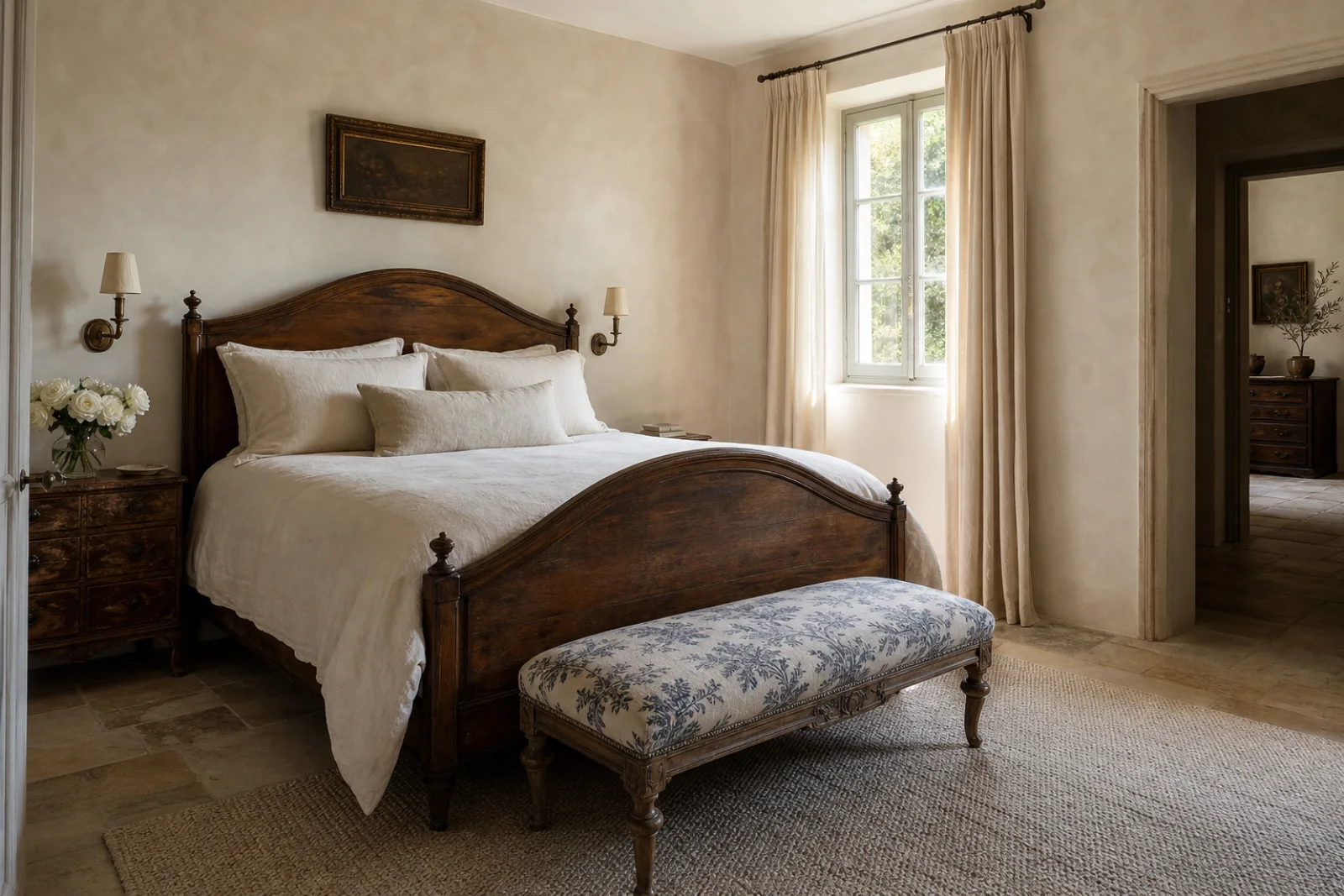
Let a curved fruitwood bed lead; keep bedding plain and place toile on one bench or cushion only.
Pair an oval walnut table with rush chairs and one forged lantern, leaving the stone floor visibly open.
Use an antique desk with a supportive striped chair and concentrate books inside one arched niche.
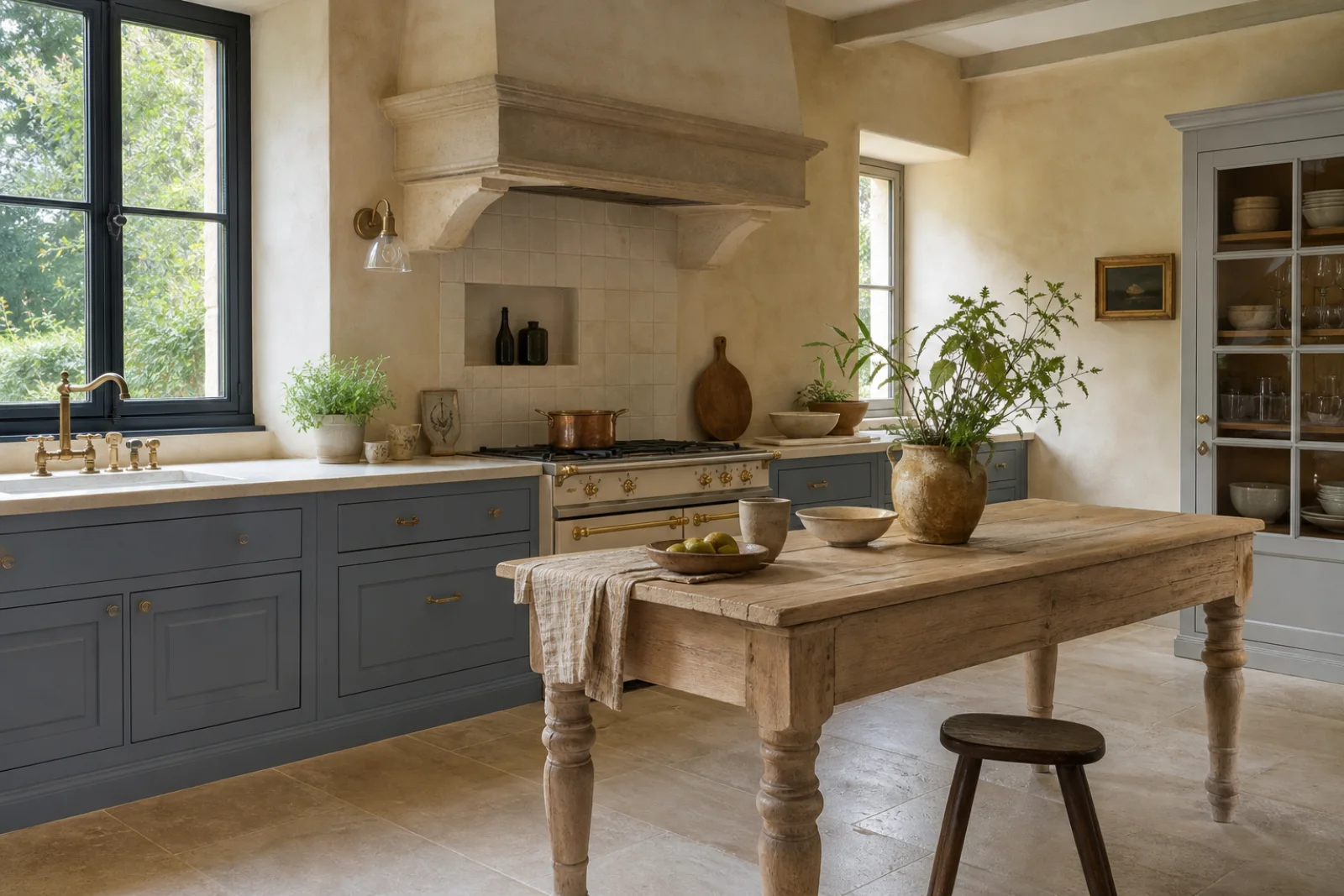
Combine blue-grey cabinetry with a freestanding oak worktable and reserve limestone for heat- and water-tolerant surfaces.
Use an armoire for closed storage, a narrow console and one curved bench while preserving a clear route from the door.
Palette and materials
Let chalk and limestone occupy most of the room, then use blue-grey on one furniture volume. Add ochre or indigo only through a narrow textile or painted detail.
Color roles
Warm mineral background for walls and large architectural surfaces.
Defines one armoire, cabinet bank or textile without turning coastal.
Adds sun-warmed depth through plaster, stripes or small upholstery.
Grounds pale stone through curved tables, desks and beds.
A restrained pattern color for toile and block-printed linen.
Texture roles
Hand movement creates soft depth without decorative wall treatment.
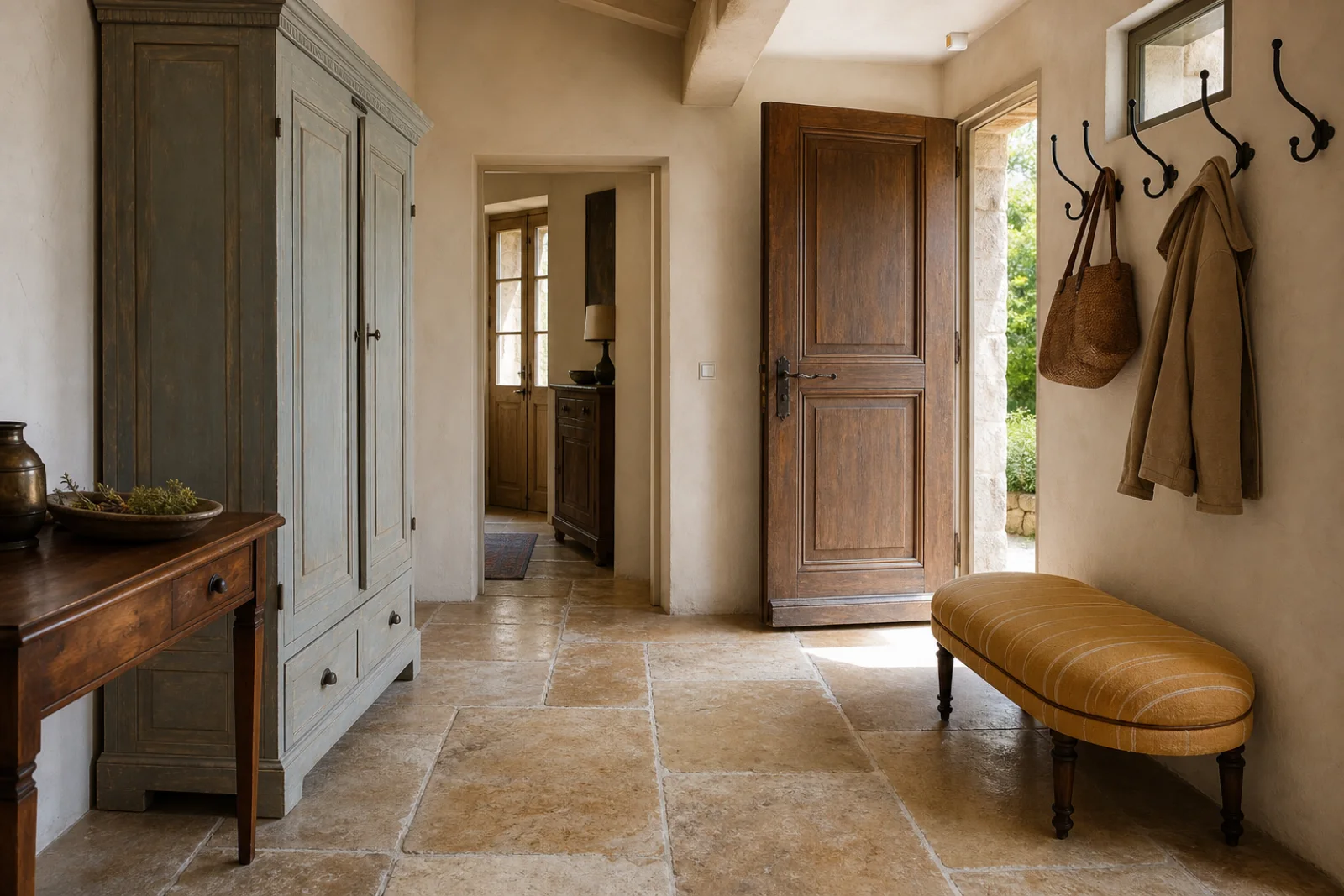
Irregular mineral tone supports daily wear and cools warm timber.
Warm dense grain suits furniture whose curved profile carries the room.
Use a single blue print as punctuation rather than covering every upholstered surface.
A practical starting plan
Establish a pale mineral room, choose one graceful provincial form and add color through a single faded textile or painted cabinet.
Choose plaster, stone and chalk tones before selecting furniture.
Use one armoire, curved bed or oval table as the main French signal.
Assign blue-grey or ochre to one cabinet or textile plane.
Keep useful ceramics and regional craft; omit lavender bundles, roosters and souvenir motifs.
Common mistakes, corrected
When the room feels wrong, change the underlying decision before adding more decor.
Keep plaster and one cabinet light, then add intact walnut or fruitwood for depth.
Remove lavender, rooster and script motifs; rely on stone, proportion and faded color.
Choose one shaped anchor and keep surrounding upholstery and storage simpler.
Add rush, wool, linen and warm directional light at body-contact areas.
French Country vs similar styles
French Country is defined by a specific balance: provincial French silhouettes bring grace, while plaster, limestone and restrained patina keep the room grounded.
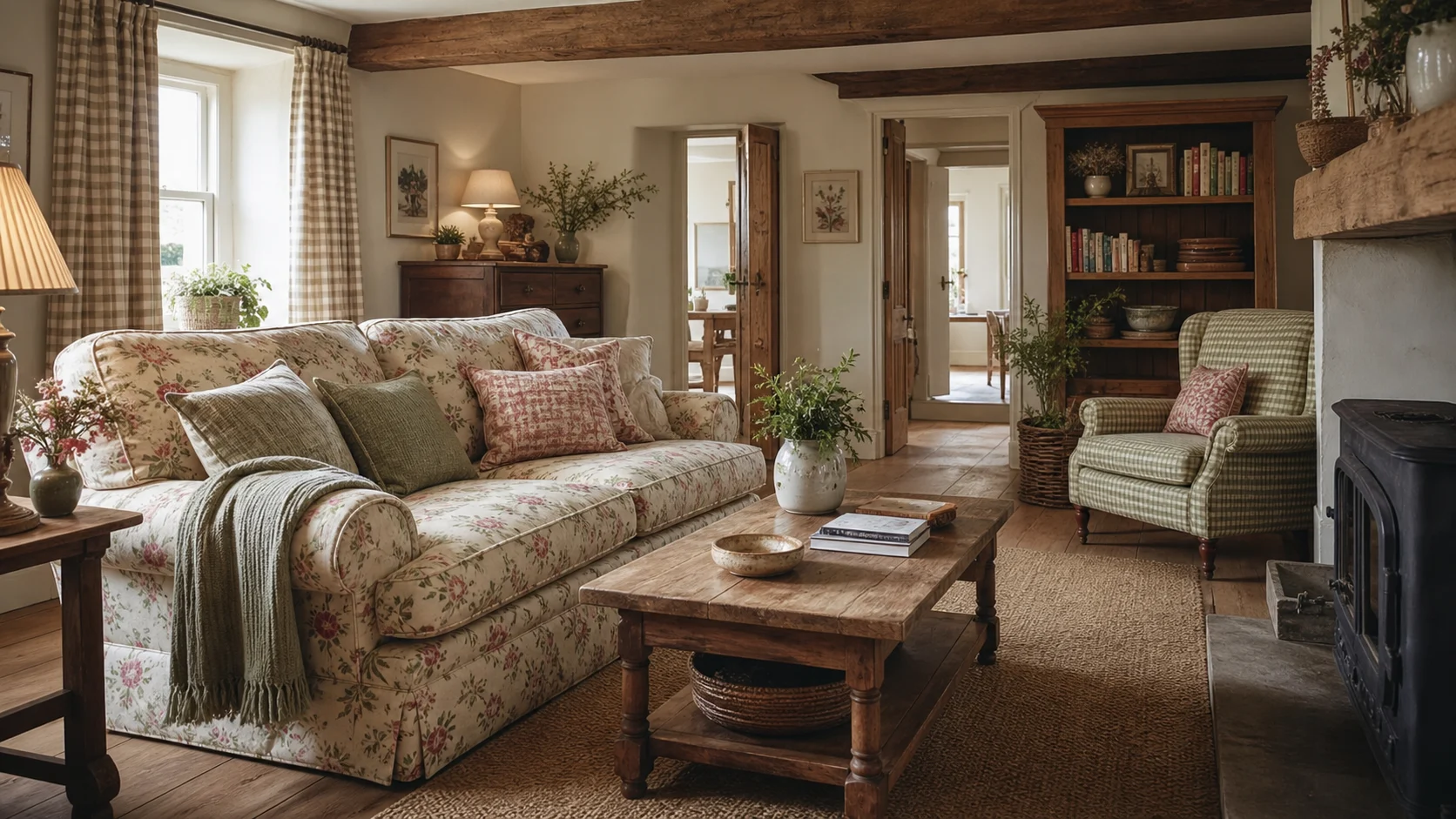
Broader and more pattern-led, mixing regional furniture and soft domestic decoration.
Choose French Country for mineral architecture, French provincial profiles and a more formal sense of proportion.
Limestone and curved fruitwood replace the broader mixed-country vocabulary.
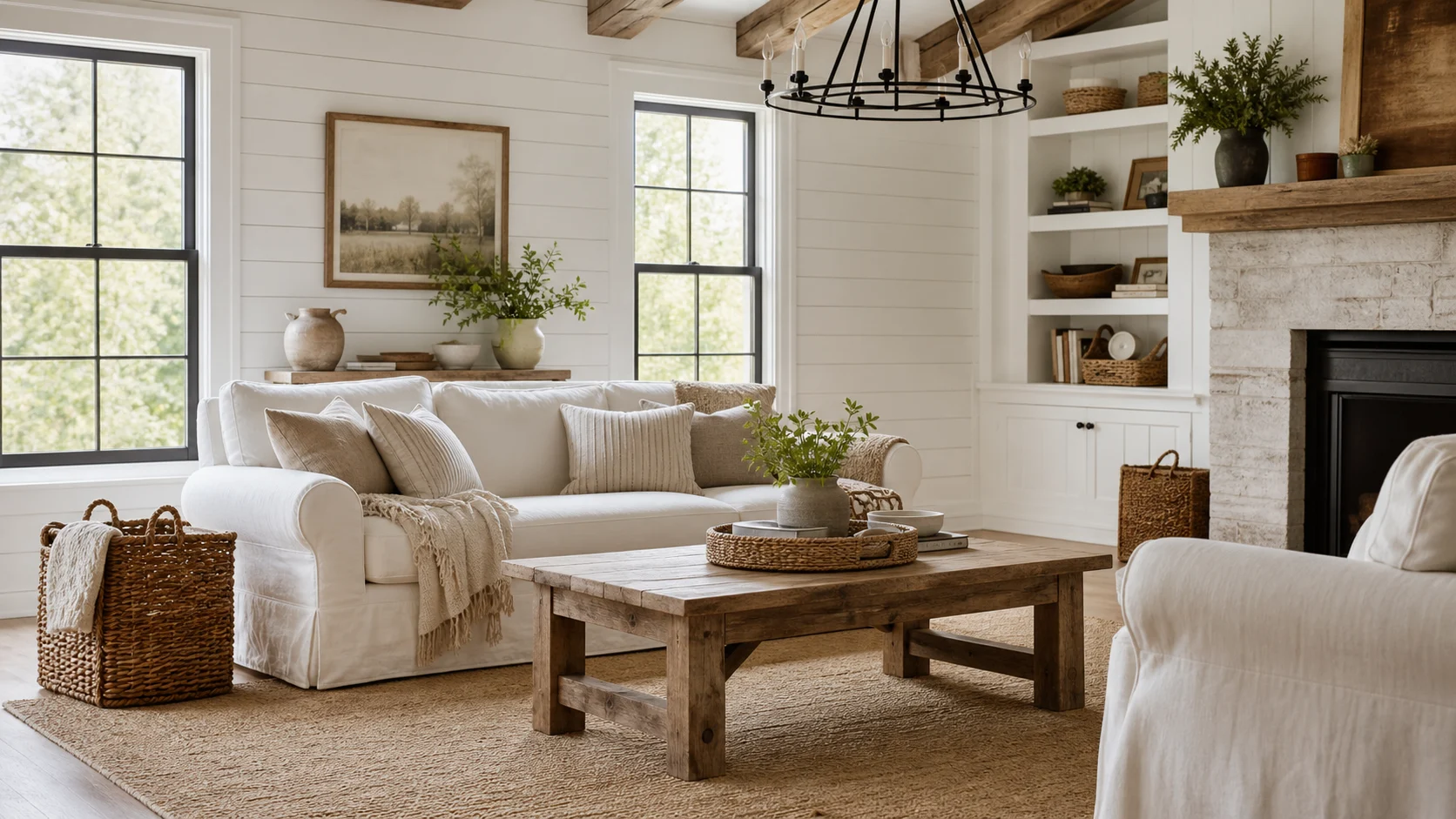
More utility-led, with worktables, painted storage and layouts shaped by household tasks.
Choose French Country when graceful silhouettes and architectural finish should matter as much as utility.
Bateau beds and armoires replace task-first furniture.
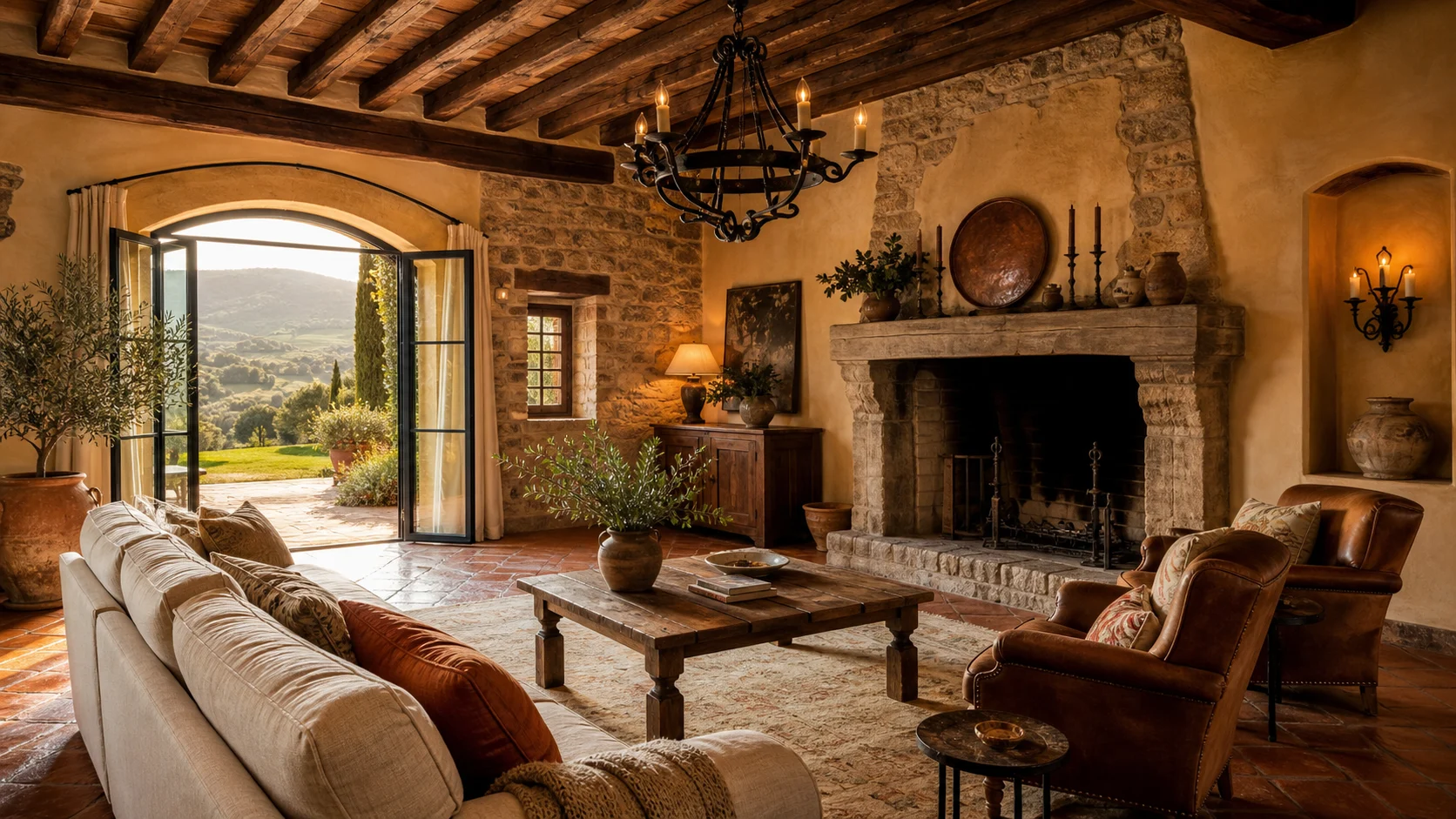
Darker and earthier, with terracotta, heavy timber, iron and a stronger Mediterranean warmth.
Choose French Country for paler limestone, faded blue and lighter furniture profiles.
Chalk and blue-grey replace rust, red clay and heavy ochre.
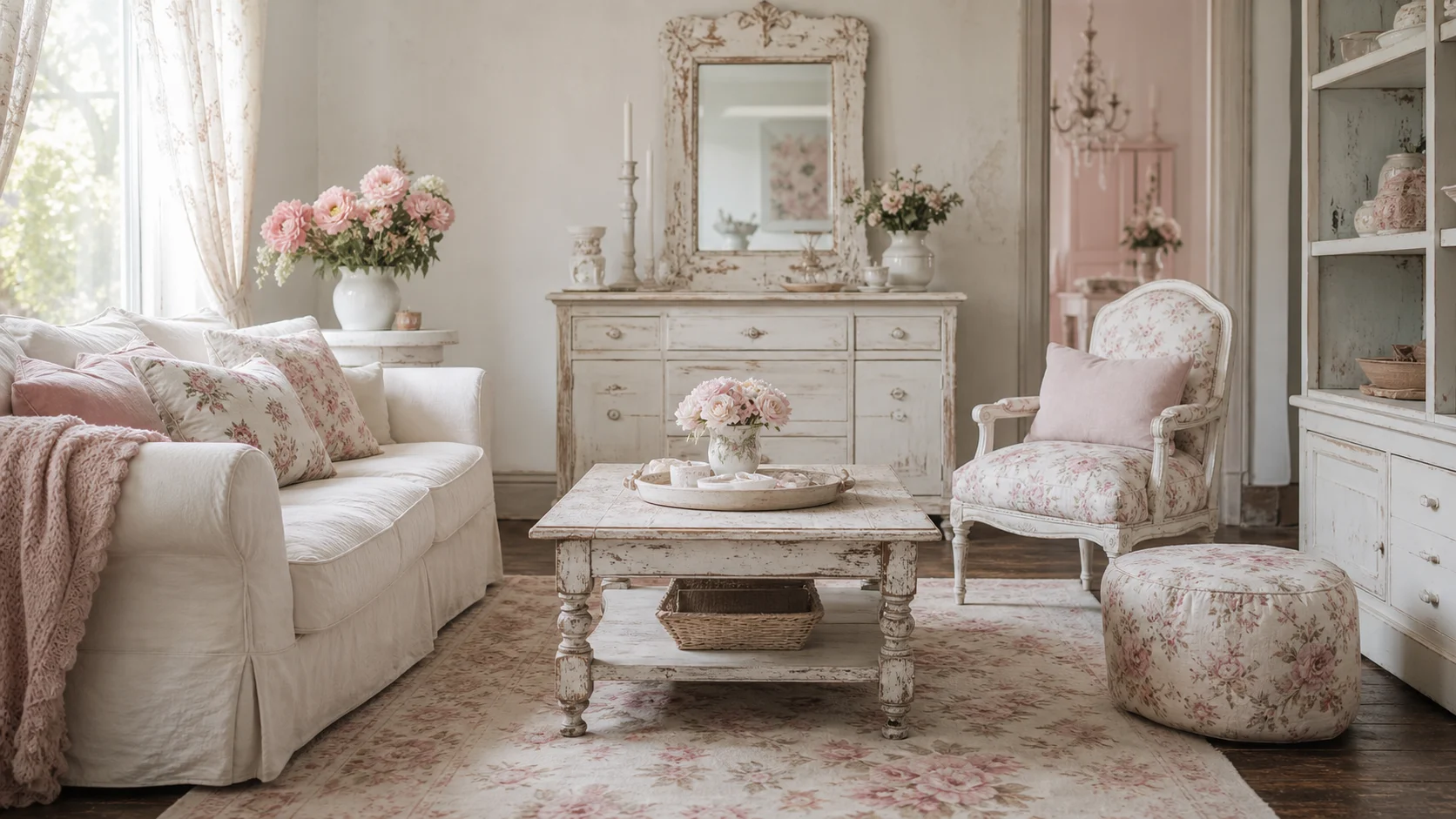
Softer and more romantic, using whitewashed furniture, florals and visibly distressed finishes.
Choose French Country for sound antiques, mineral structure and less feminine decoration.
Authentic fruitwood and stone replace whitewashed decorative wear.