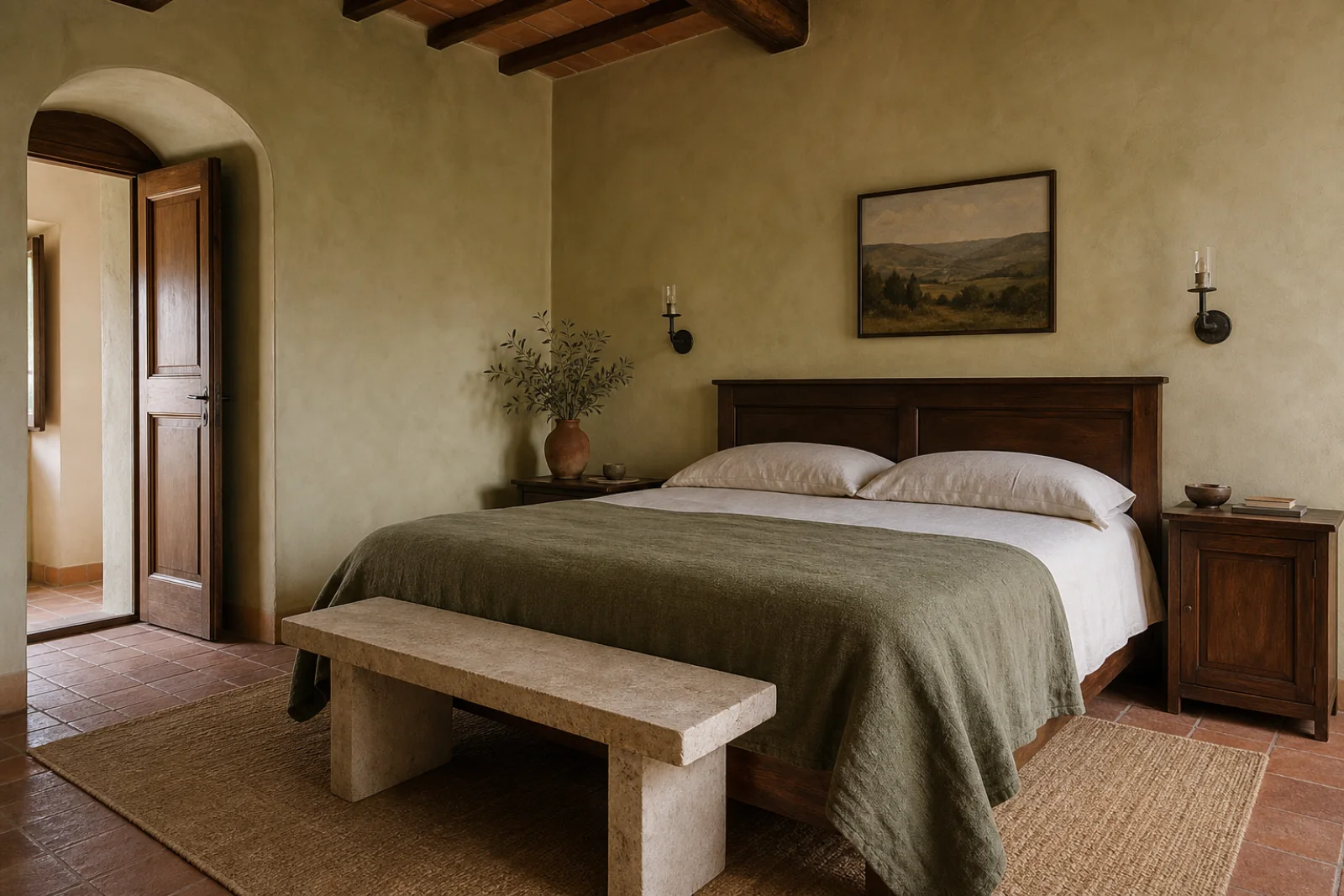
Walnut panel bed
Look for a clear substantial frame and pair it with plain linen rather than ornate coordinating furniture.
Earth-baked floors, mineral walls and dark timber create warmth balanced by light, space and a disciplined material palette.
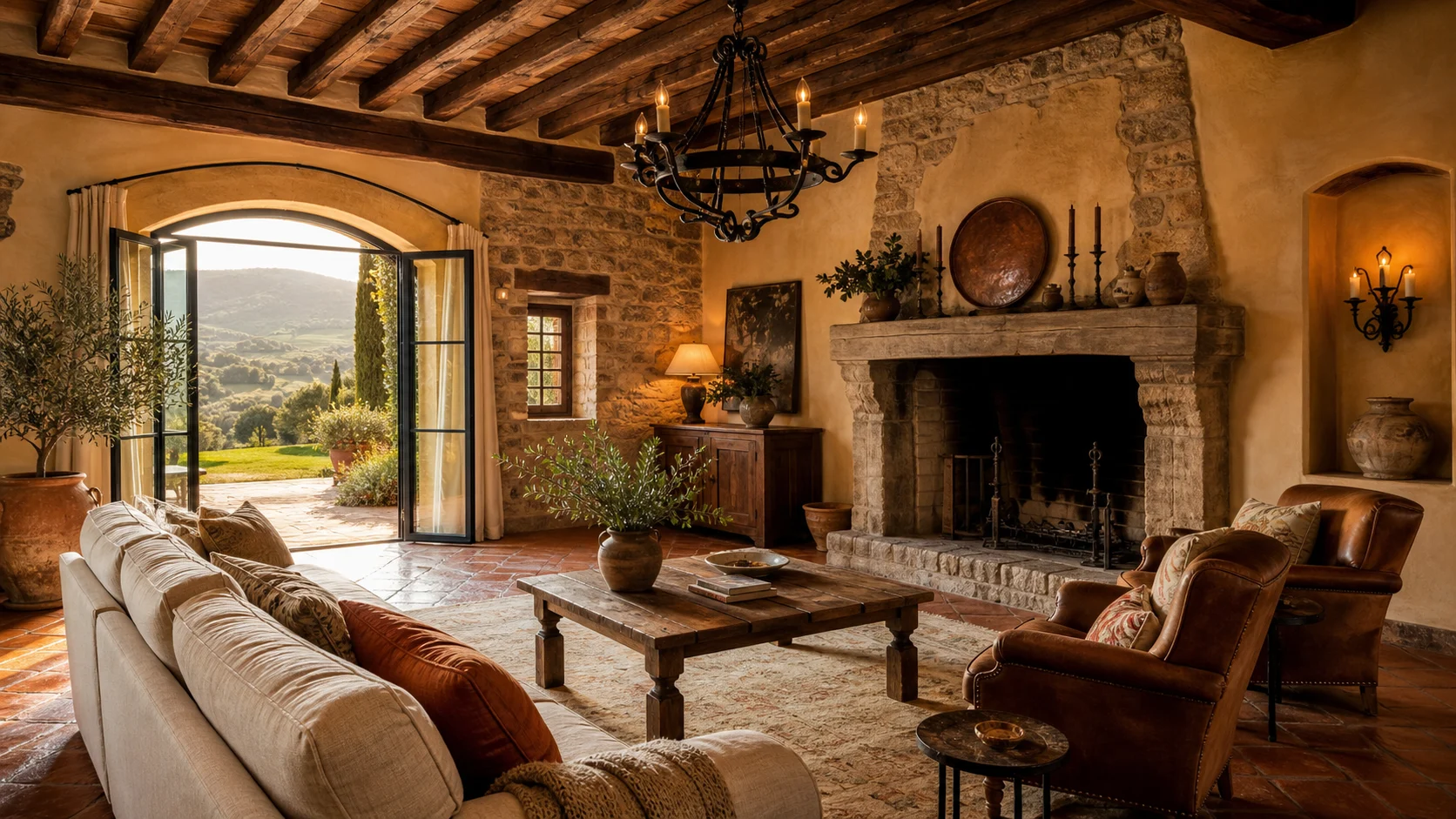
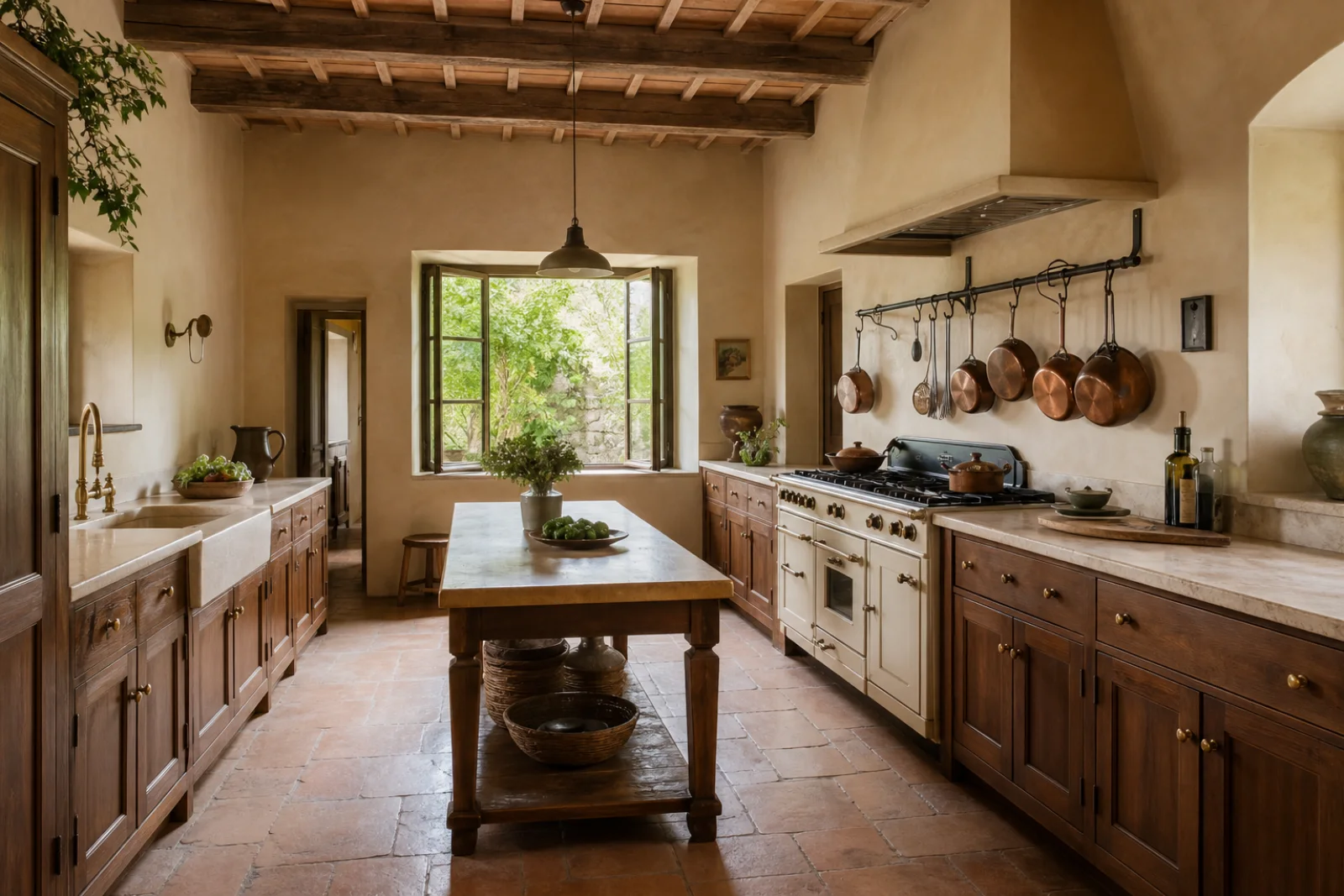
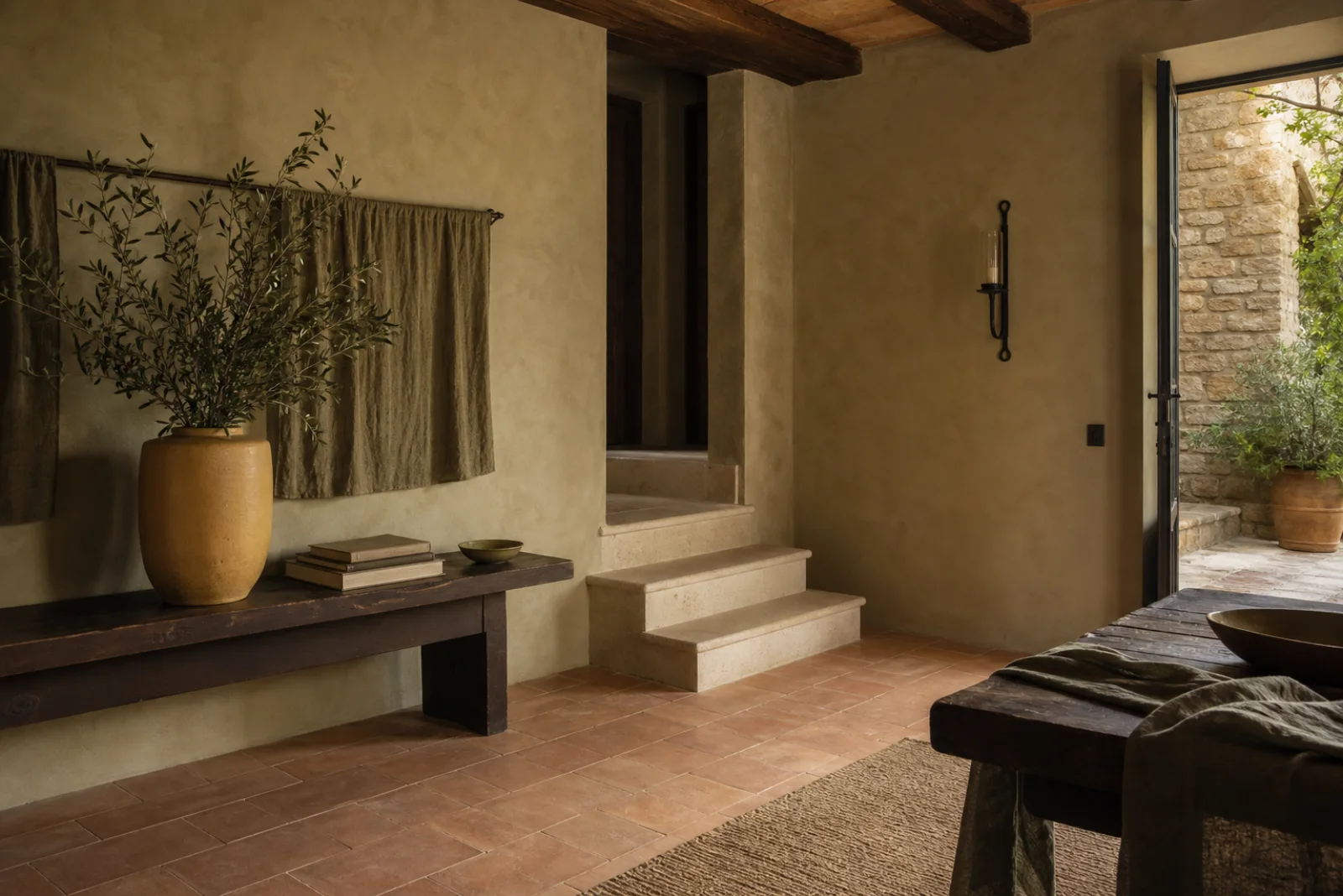
Tuscan design reflects central Italian rural houses through materials that moderate heat and age visibly: lime plaster, handmade terracotta tile, local stone, dark walnut, linen and forged iron. Arches and deep openings shape the space, but the strongest rooms rely on material proportion rather than ornamental “Old World” effects.
The key challenge is temperature. Cotto, ochre and walnut can make every surface feel orange or heavy, so pale plaster, travertine, daylight and muted olive provide relief. This grounded contrast separates Tuscan interiors from the paler elegance of French Country and from the brighter coastal references of broader Mediterranean style.
Let cotto or dark timber provide the main warm field; do not repeat both at maximum intensity everywhere.
Warm limewash reflects daylight and gives heavy wood and iron enough breathing room.
Choose one pendant, rail or set of hooks with simple forged geometry instead of scrollwork on every object.
Variation in cotto tile creates movement underfoot without requiring patterned surfaces.
Lime plaster, travertine and stone openings make the architecture feel protective and cool.
Walnut tables, doors and storage anchor pale walls through clear, substantial forms.
Forged lighting and rails add fine dark lines while avoiding decorative excess.
Use stone and cotto as the architectural base, then choose simpler linen seating and one dark timber table.
Pair a plain walnut bed with pale linen and a muted olive coverlet; keep iron lighting compact.
Let a substantial walnut table lead, with rush chairs and one low ceramic bowl rather than a styled tablescape.
Place a clear walnut desk against pale plaster and use a supportive leather chair plus one closed storage niche.
Keep the work route simple, using travertine near water and heat while a freestanding table handles preparation.
Combine a narrow table, closed olive storage and durable cotto, preserving the path between door and stair.
Allow cotto to provide the warm base, then use lime and travertine across larger vertical surfaces. Keep walnut concentrated and introduce olive as the cooling accent.
Reflects daylight and keeps warm floors from making the room visually dense.
The earthen anchor for floors, used with natural variation rather than uniform orange.
Cools terracotta through one textile, cabinet or ceramic accent.
Adds structural depth to doors, tables and work furniture.
A quieter stone note for benches, worktops and thresholds.
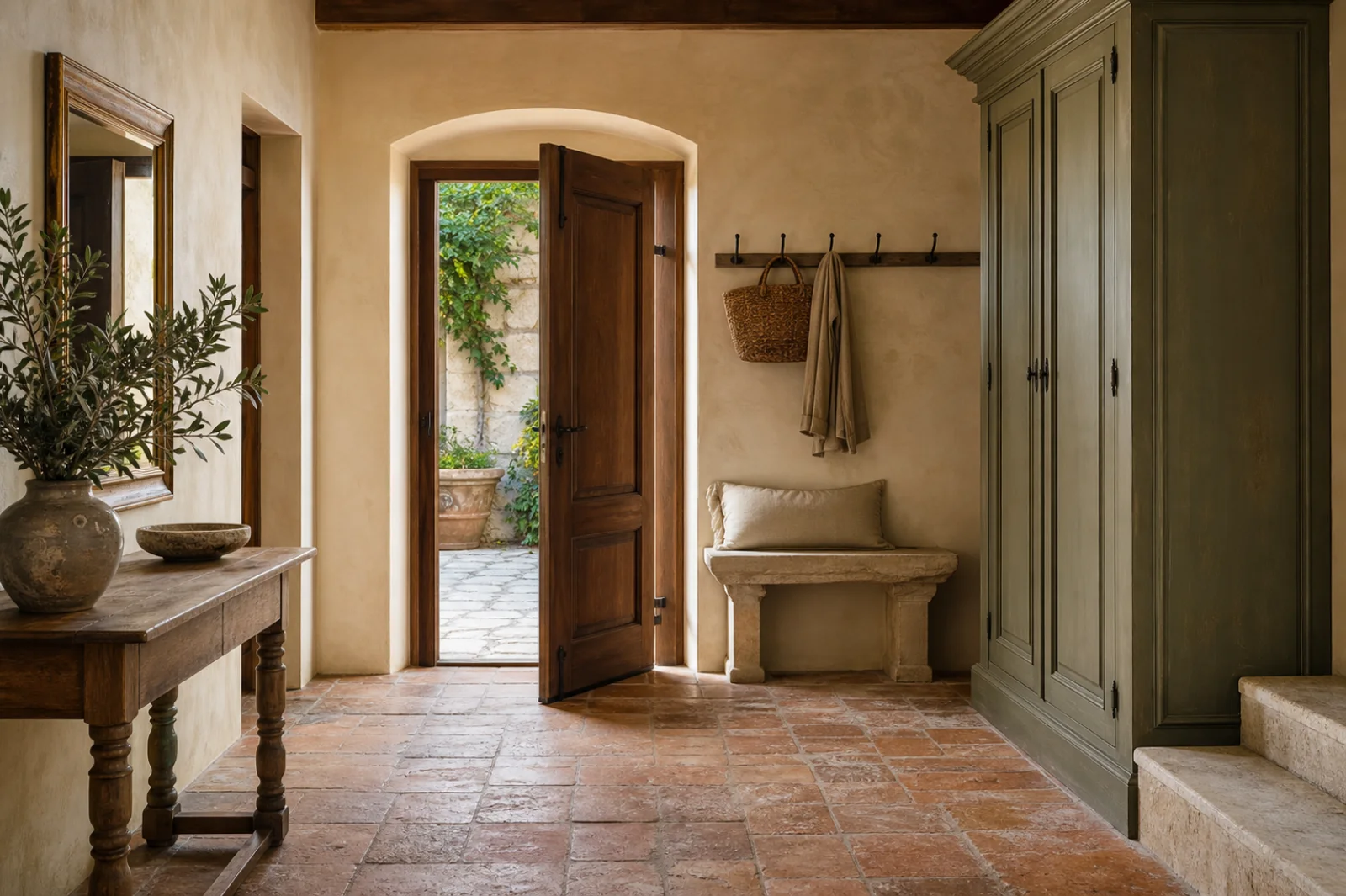
Uneven edges and firing variation create depth; use a breathable matte seal appropriate to the room.
Soft variation catches daylight while allowing walls to remain visually quiet.
Dense grain provides permanence when limited to a few substantial pieces.
Honed mineral texture balances cotto and timber without adding another strong color.
Choose one earthen floor, one pale mineral wall finish and one concentrated timber family before adding iron or decorative objects.
Decide whether cotto or walnut will be the dominant warm field.
Use lime plaster and travertine to balance the darker materials.
Introduce one muted green textile, cabinet or ceramic piece.
Keep useful pottery and iron; omit wine barrels, grapes and faux frescoes.
When the room feels wrong, change the underlying decision before adding more decor.
Lighten walls, reduce dark timber and add travertine plus muted olive.
Keep one simple forged fixture and remove scrollwork from secondary objects.
Remove wine and grape motifs; rely on real cotto, plaster and proportion.
Retain one substantial table or bed and verify clear paths around it.
Tuscan interiors are regionally specific: earthen floors, limewashed mass, walnut and olive tones express the inland Italian landscape more clearly than generic Old World decoration.
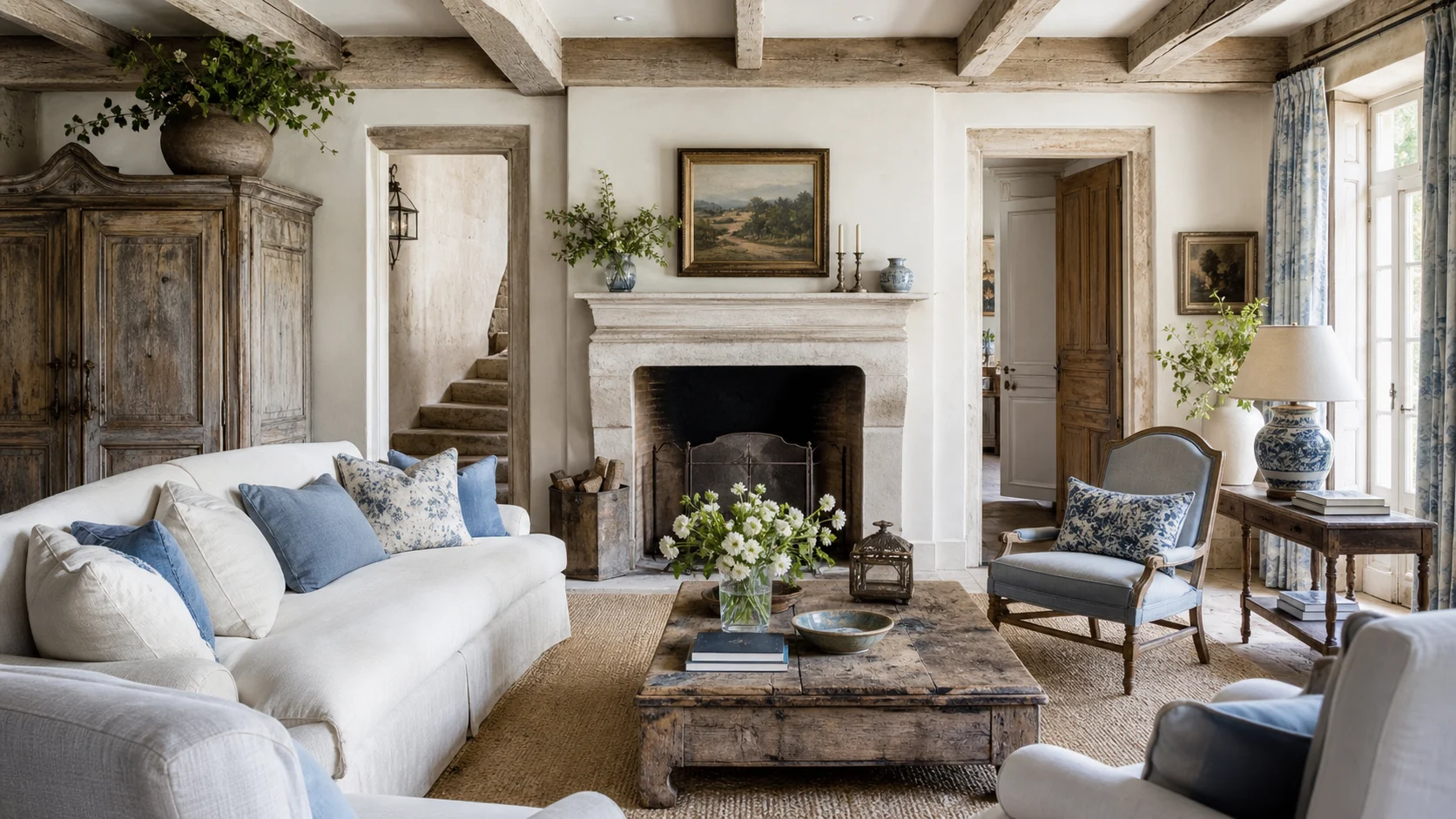
Paler and more graceful, with blue-grey paint, curved provincial furniture and faded printed linen.
Choose Tuscan for stronger earthen color, heavier walnut and central Italian mineral architecture.
Cotto and olive replace chalk, faded blue and shapely fruitwood.
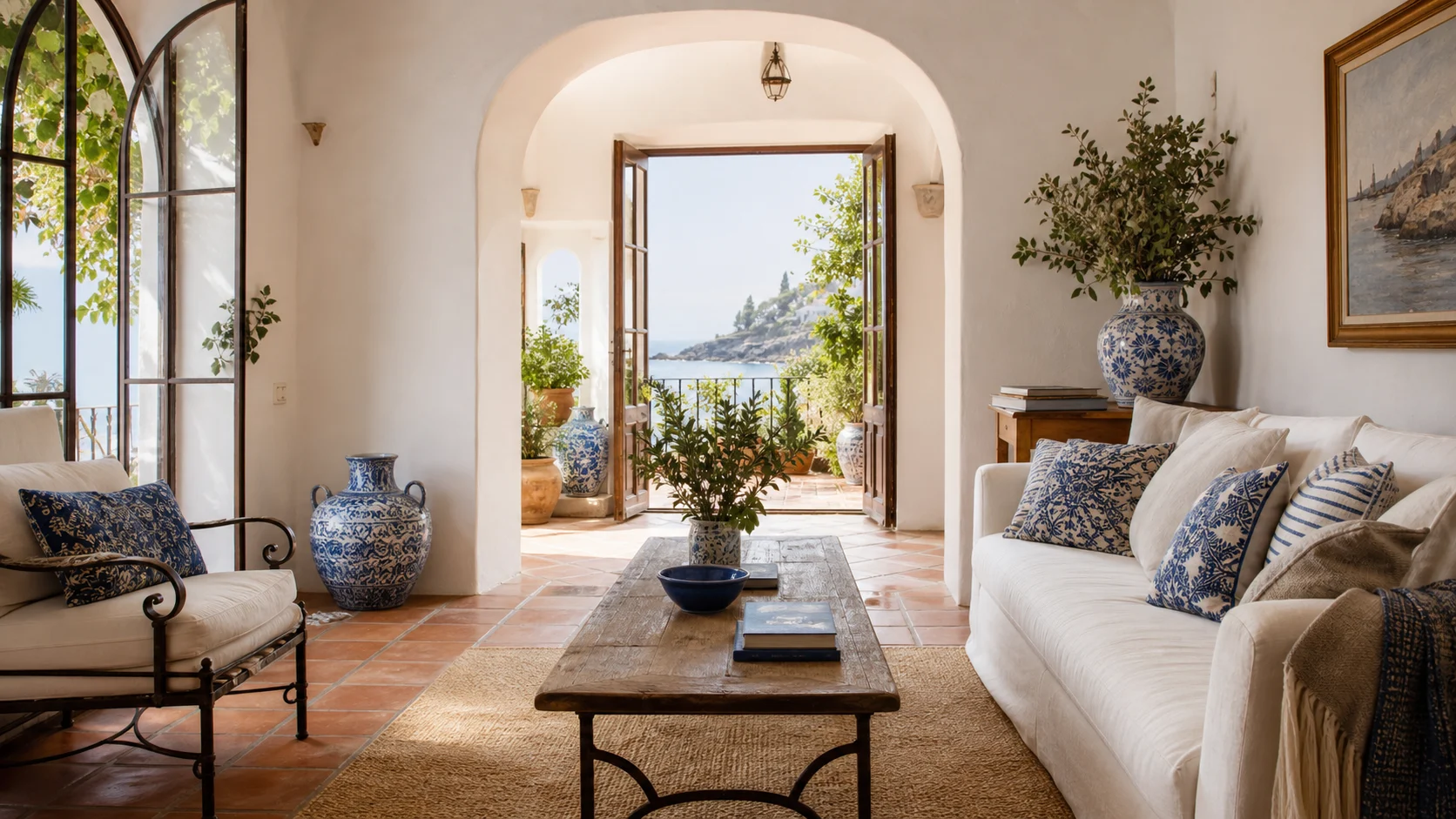
Broader and often brighter, including coastal white, blue, patterned tile and influences from several regions.
Choose Tuscan for a landlocked, earthier palette and more concentrated timber weight.
Walnut and handmade terracotta replace coastal blue and white.
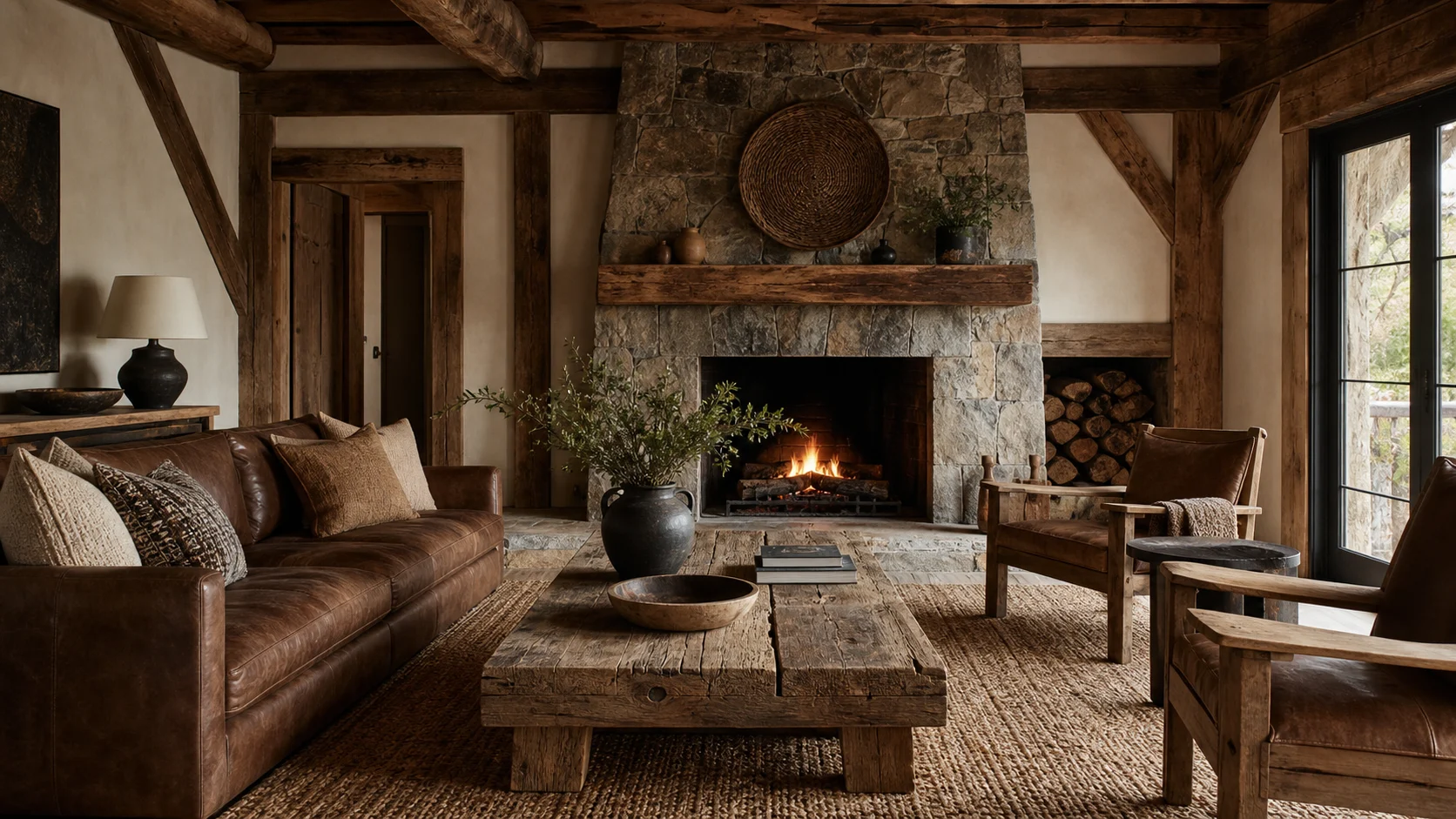
More universal and rough-hewn, emphasizing exposed structure, fieldstone and visible construction.
Choose Tuscan for limewashed enclosure, Italian cotto and a warmer, region-specific material balance.
Plastered arches and cotto replace exposed rugged structure.
More ornate and theatrical, mixing European references, carved furniture, tapestries and heavier decoration.
Choose Tuscan for regional clarity and a quieter relationship with age.
Useful regional materials replace generalized historic opulence.
Choose materials and furniture for durability and regional clarity rather than theatrical age. One good cotto floor or walnut table carries more character than themed accessories.
Look for a clear substantial frame and pair it with plain linen rather than ornate coordinating furniture.
Confirm working height and aisle clearance; use a surface that can be maintained rather than protected from use.
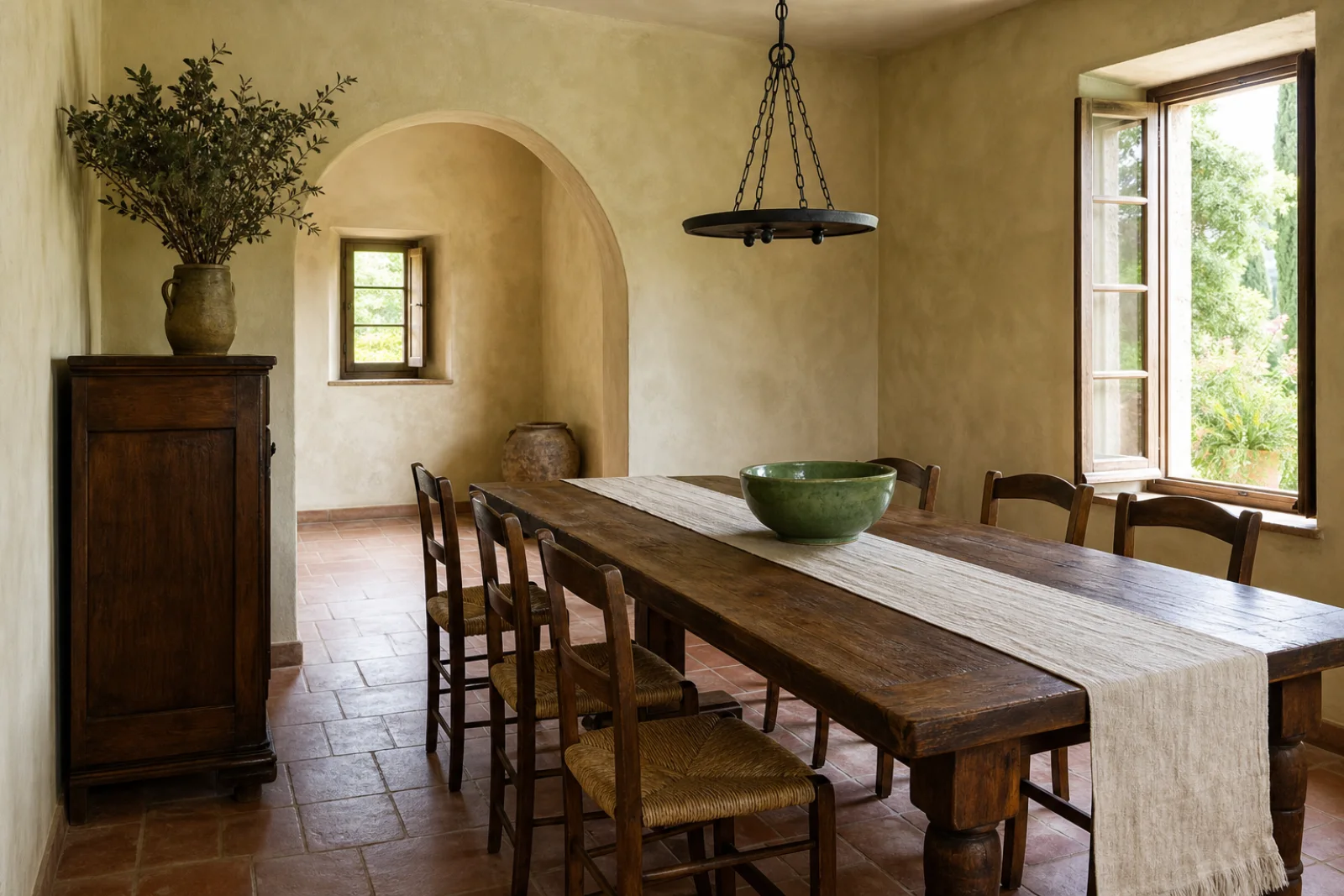
Choose a strong simple frame and replaceable woven seat with comfortable table clearance.
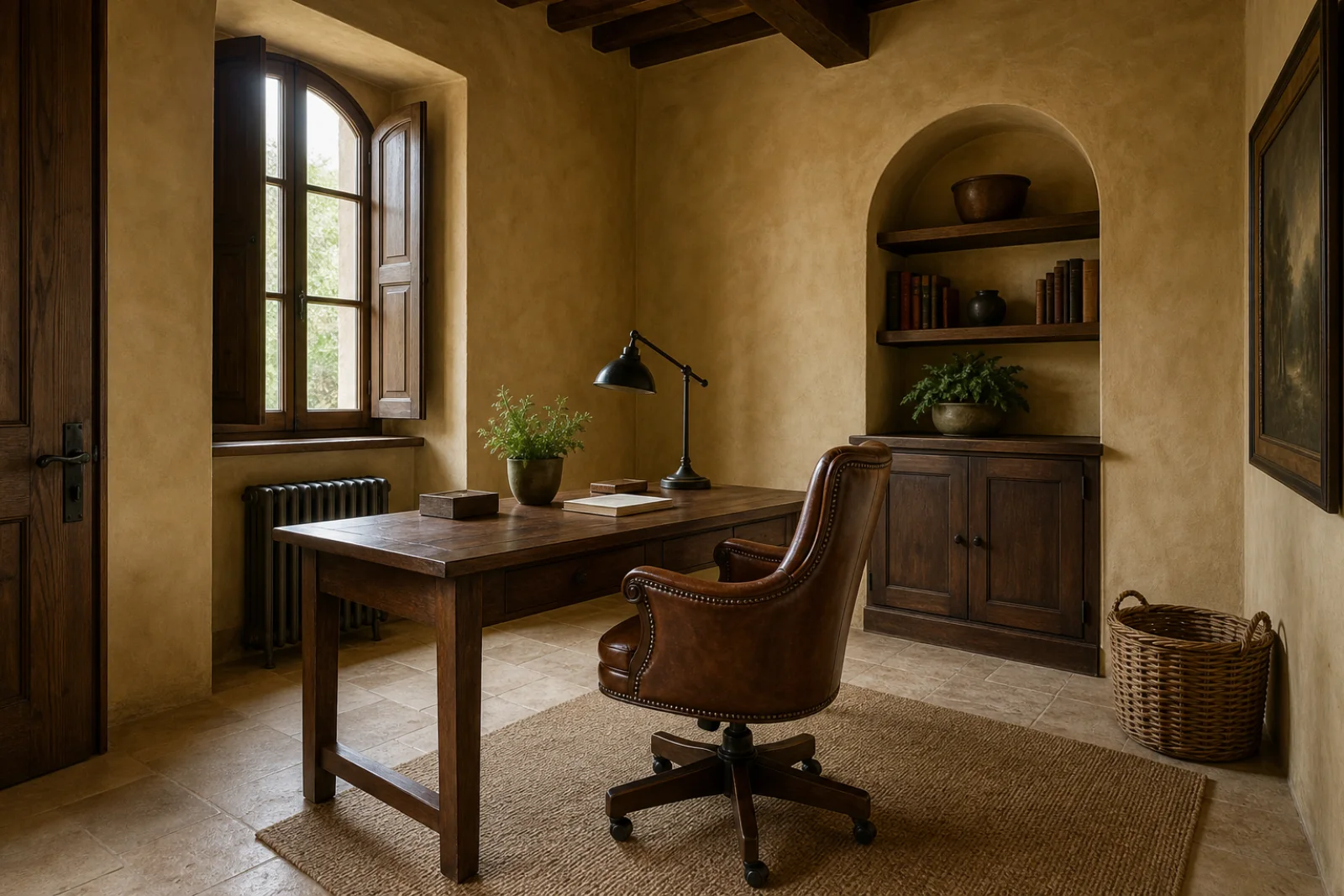
Prioritize knee space and a repairable top, then add a genuinely supportive working chair.
A muted painted finish cools cotto while closed storage keeps the entry visually calm.
Inspect fill quality and choose an appropriate seal for water, food or frequent contact.