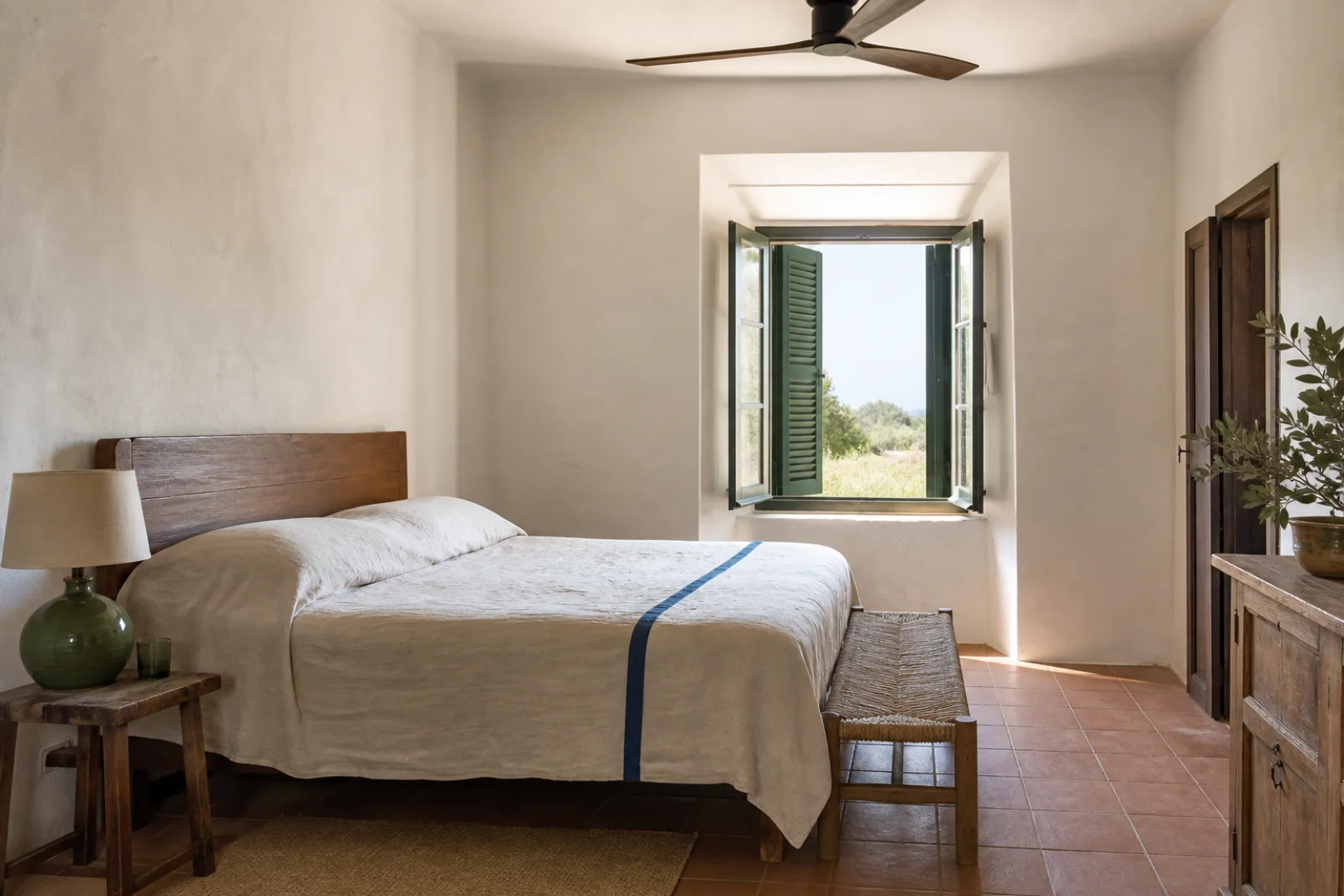
Chestnut platform bed
Choose simple solid joinery, standard mattress support and enough floor clearance for a cool uncluttered room.
Choose one regional anchor, design for sun and airflow, then let lime, clay and timber express the climate without resort clichés.
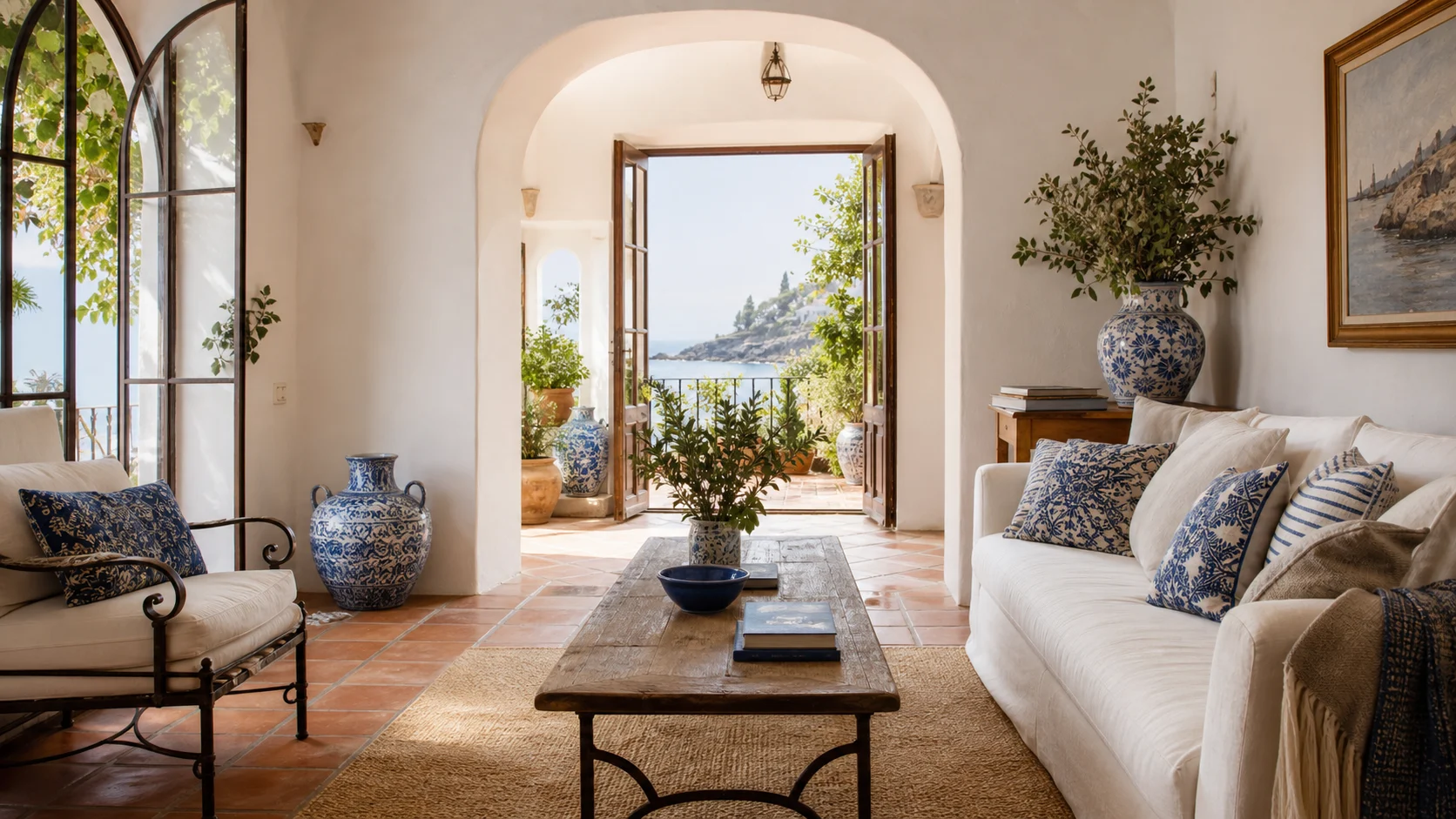
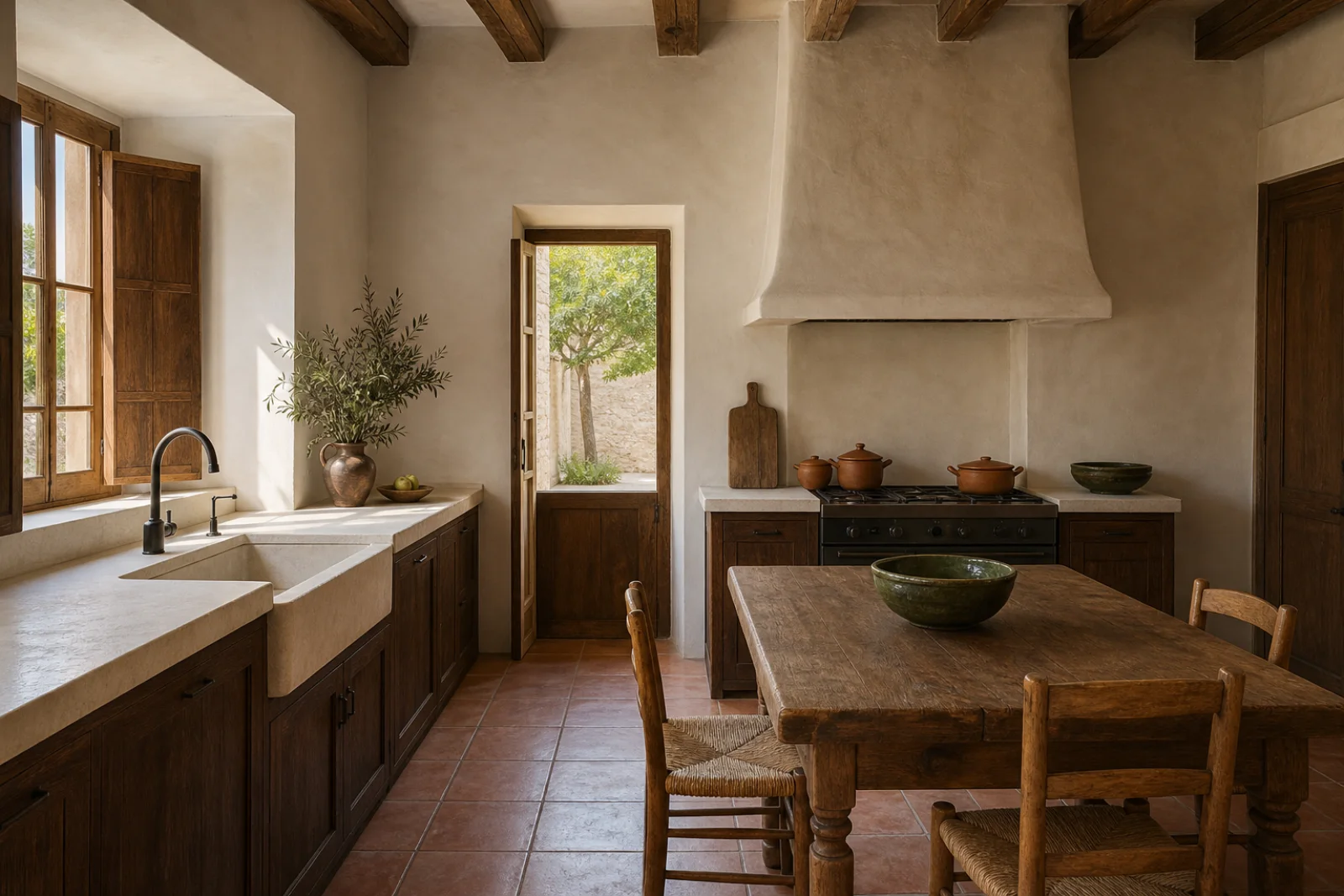
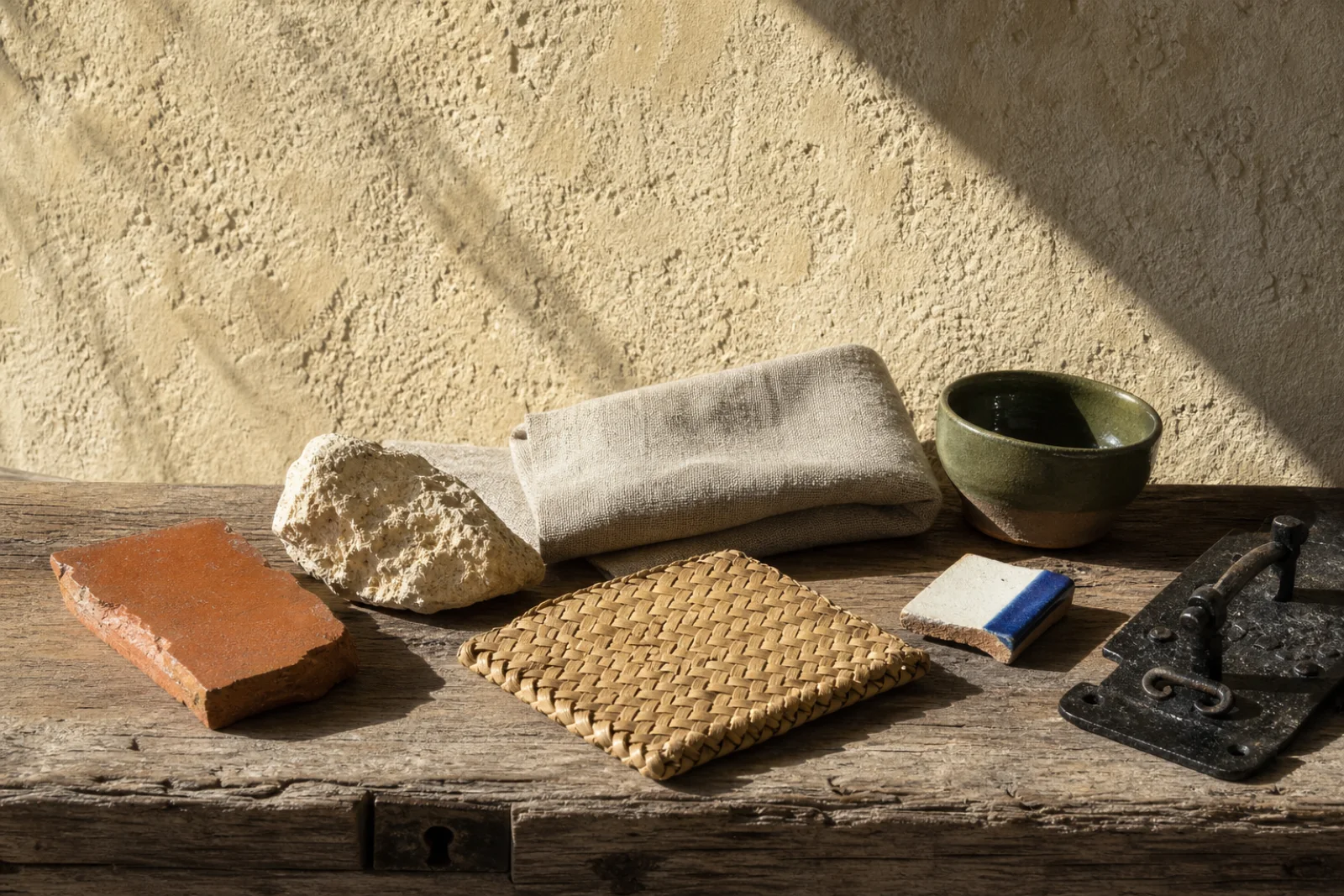
Mediterranean interior design is a broad family of regional traditions shaped by hot dry summers, strong sunlight and life between interior rooms, courtyards and terraces. Thick mineral walls, shutters, tile floors, timber and shaded openings are not decorative effects alone; they manage heat, glare, airflow and hard daily use.
Because the Mediterranean spans distinct places across Southern Europe, North Africa and the eastern basin, coherence begins with a regional anchor rather than a collage. A Balearic scheme might emphasize lime plaster, terracotta, chestnut and rush; another location will have different stone, joinery, ceramics and color. Borrow the climate logic and research the regional materials instead of combining every arch, tile and blue motif.
Name one place or material tradition and let it guide joinery, floor, pottery and color choices.
Use shutters, deep reveals, exterior shade and curtains before relying on dark glass or heavy cooling.
Specify compatible lime-based finishes where the wall construction requires vapor movement.
Deep openings and transitional halls make intense exterior light comfortable indoors.
Stone, terracotta and lime moderate temperature while giving the room tactile depth.
Shutters, opposing openings and ceiling fans support ventilation before decorative styling.
Clay, timber and plant green lead; cobalt or another local accent appears in small amounts.
Keep main upholstery pale and washable, preserve shaded openings and let clay flooring and timber provide most of the warmth.
Use shutters, breathable linen and a quiet ceiling fan; reserve blue for one narrow textile or ceramic accent.
Place the table near a shaded courtyard threshold and choose rush seating that stays comfortable in warm weather.
Position the screen away from direct glare, retain adjustable shutters and add a fan before relying on decorative mood.
Use durable stone and tile in work zones, quiet integrated appliances and only a few everyday terracotta vessels.
Treat the hall as a thermal and visual transition with a clear path, built-in bench and controlled view toward daylight.
Let lime, clay and chestnut dominate the envelope. Use olive where the room meets planting, and keep cobalt to a stripe, cup, painted edge or single artwork rather than repeating blue everywhere.
A soft mineral white that reflects daylight without producing a cold, glaring interior.
The principal floor and pottery note, naturally varied rather than uniformly orange.
A substantial joinery tone for shutters, doors, tables and kitchen cabinetry.
A shaded green for one wall, glaze or textile connection to courtyard planting.
A narrow cooling accent, strongest when it appears only once or twice.
Match the finish system to the substrate; avoid sealing traditional walls beneath incompatible impervious coatings.
Expect tonal variation and specify the right finish, sealing and slip performance for each room.
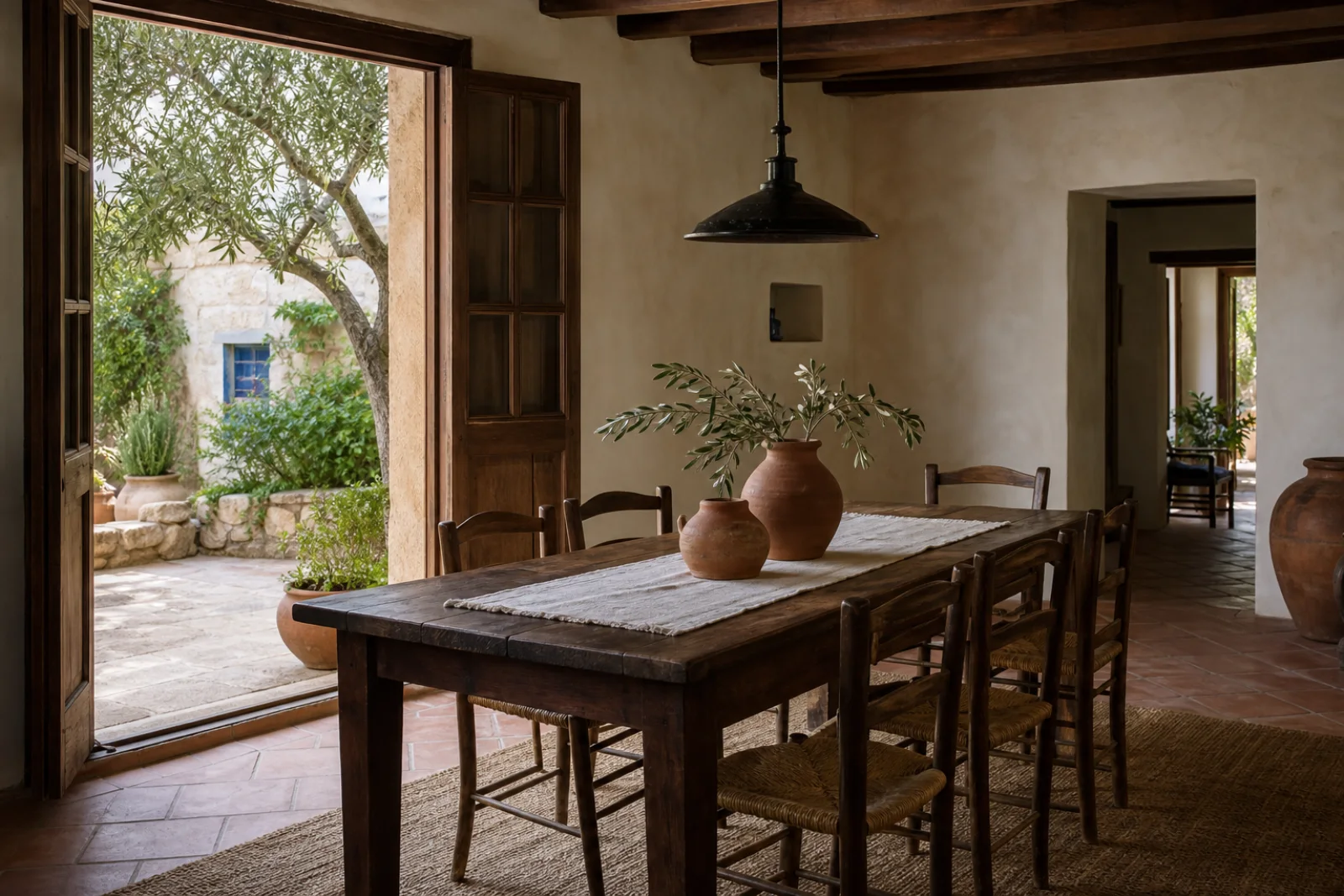
Durable regional furniture materials add warmth without requiring ornate silhouettes.
Use local stone broadly, glaze selectively and blackened iron only where hardware needs definition.
Select the regional reference, map sun and airflow, then choose the wall and floor assemblies. Furniture and color should reinforce those decisions rather than simulate a holiday villa.
Track direct sun, prevailing breeze and the hottest openings before specifying furniture or color.
Research one place’s plaster, floor, joinery and everyday craft instead of mixing landmarks.
Specify compatible wall, floor and stone finishes with the required moisture and slip performance.
Use olive, cobalt or another regional color in a limited, repeatable role.
When the room feels wrong, change the underlying decision before adding more decor.
Return large surfaces to lime, clay and timber; keep blue on one textile or ceramic family.
Choose one geographic anchor and research its architecture, joinery and everyday materials.
Add exterior shading, operable shutters, cross-ventilation and fans before styling the windows.
Specify sealing, food safety, slip resistance and cleaning needs for tile, stone and pottery.
Mediterranean design is best understood through climate and region, not a universal white-and-blue look. Its coherence comes from one material geography and the way rooms mediate heat, light and outdoor life.
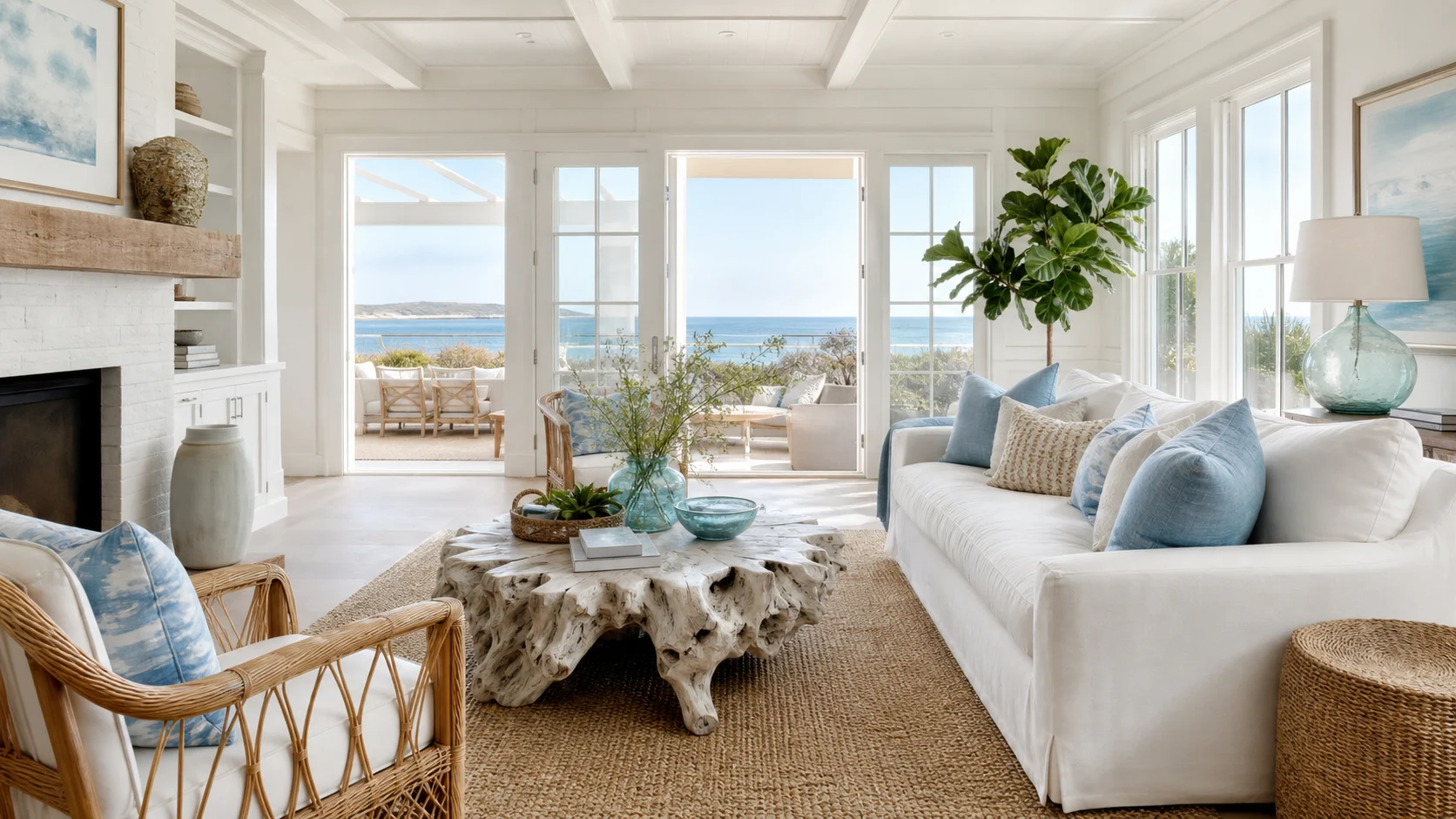
More broadly seaside and relaxed, often using pale timber, blue-grey textiles and references to water without a specific hot-climate building tradition.
Choose Mediterranean when mineral mass, shade, courtyards and regional materials should lead.
Climate-responsive masonry replaces general seaside lightness.
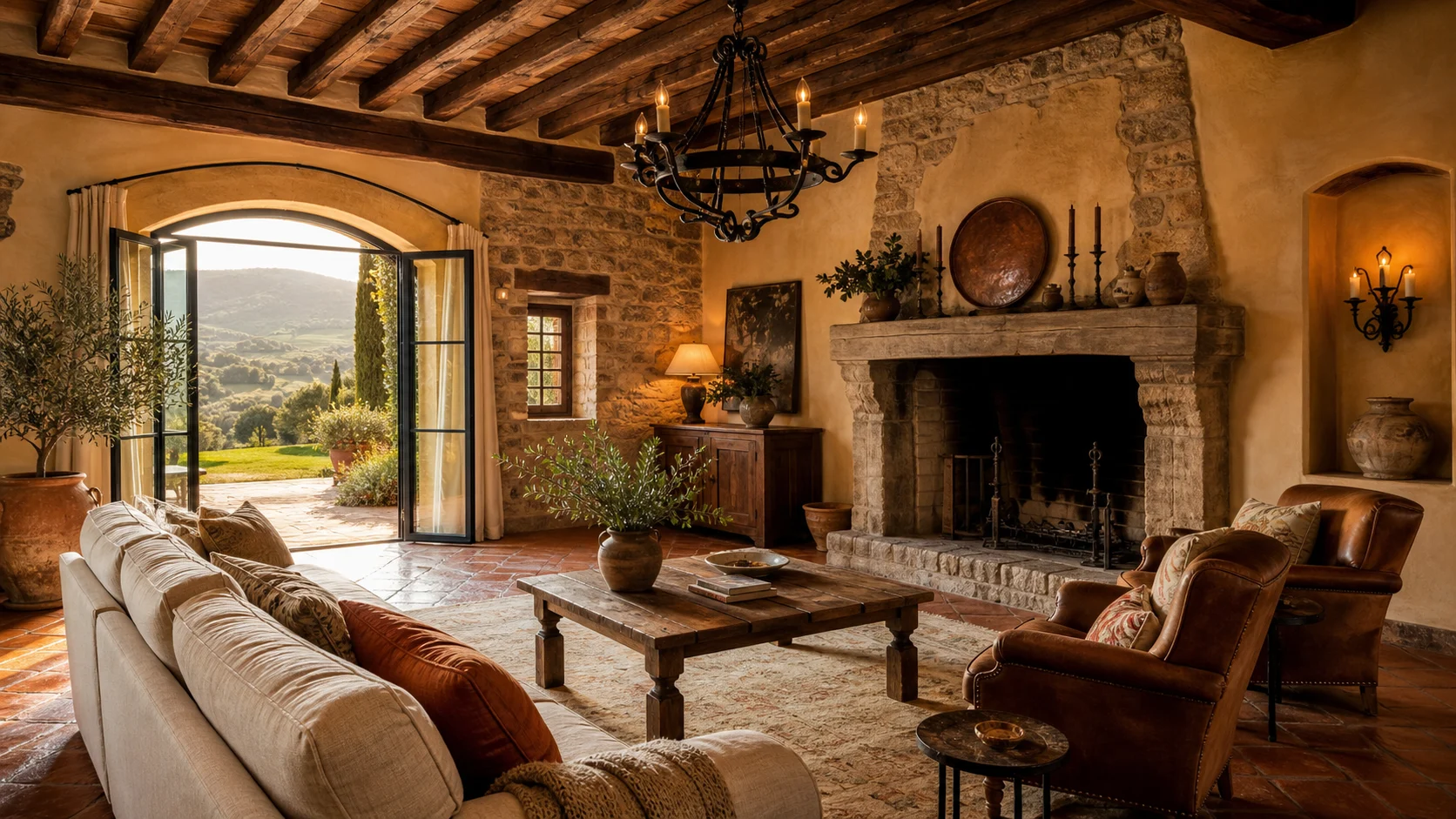
A more specific central-Italian expression with heavier timber, ochre plaster, aged stone and robust rustic furniture.
Choose Mediterranean for a broader umbrella that can be lighter and anchored to another coastal region.
Regional flexibility replaces Tuscan specificity.
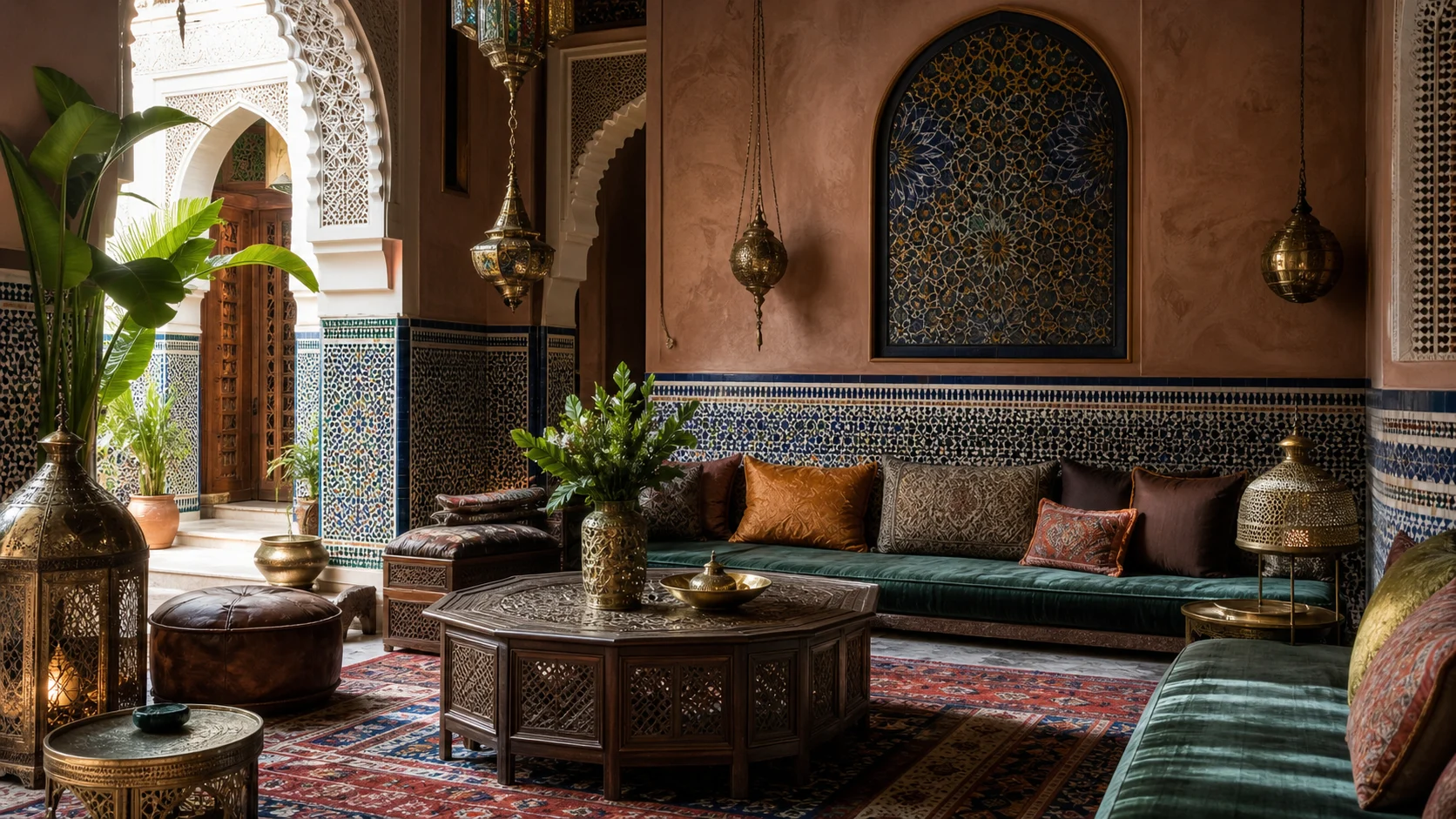
A distinct North African tradition with its own spatial customs, plasterwork, tile, carved timber and metal craft.
Choose Mediterranean as an umbrella only when you are not attempting to reproduce Moroccan design without its context.
Shared climate logic replaces one cultural vocabulary.
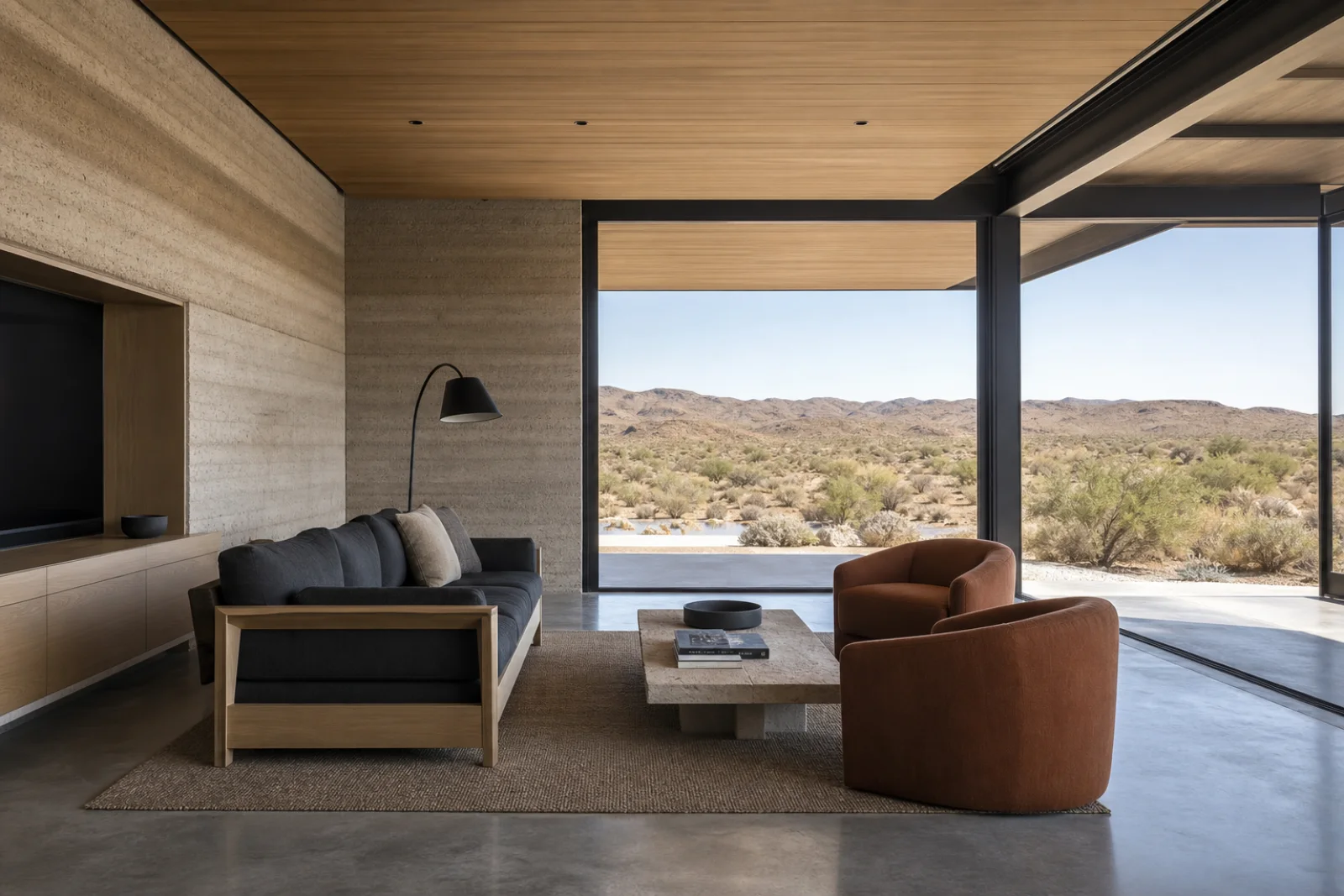
More contemporary and reduced, using stark volumes, controlled glazing and desert-toned materials with minimal historical reference.
Choose Mediterranean for visible regional craft, shaded thresholds and older courtyard relationships.
Layered regional continuity replaces abstract reduction.
Prioritize material suitability over decorative effect. Ask where stone and clay come from, how finishes breathe, whether tiles slip and how timber or metal will age in strong sun.
Choose simple solid joinery, standard mattress support and enough floor clearance for a cool uncluttered room.
Verify porosity, sealing, edge durability and maintenance rather than selecting stone by rustic appearance alone.
Check frame joints, seat height and replaceability of the woven seat for long-term everyday use.
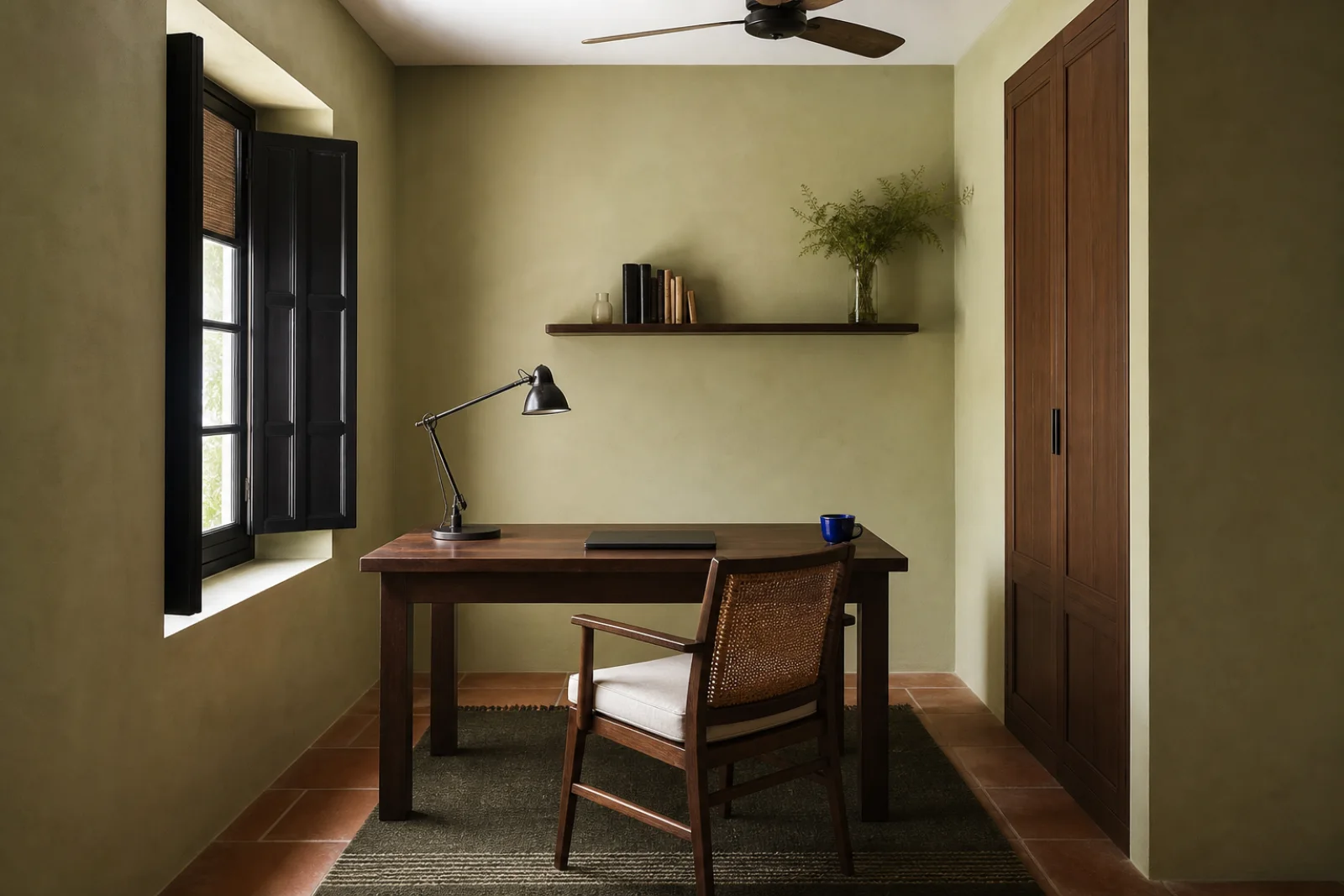
Specify operable louvers and suitable exterior finish so light and airflow can be tuned through the day.
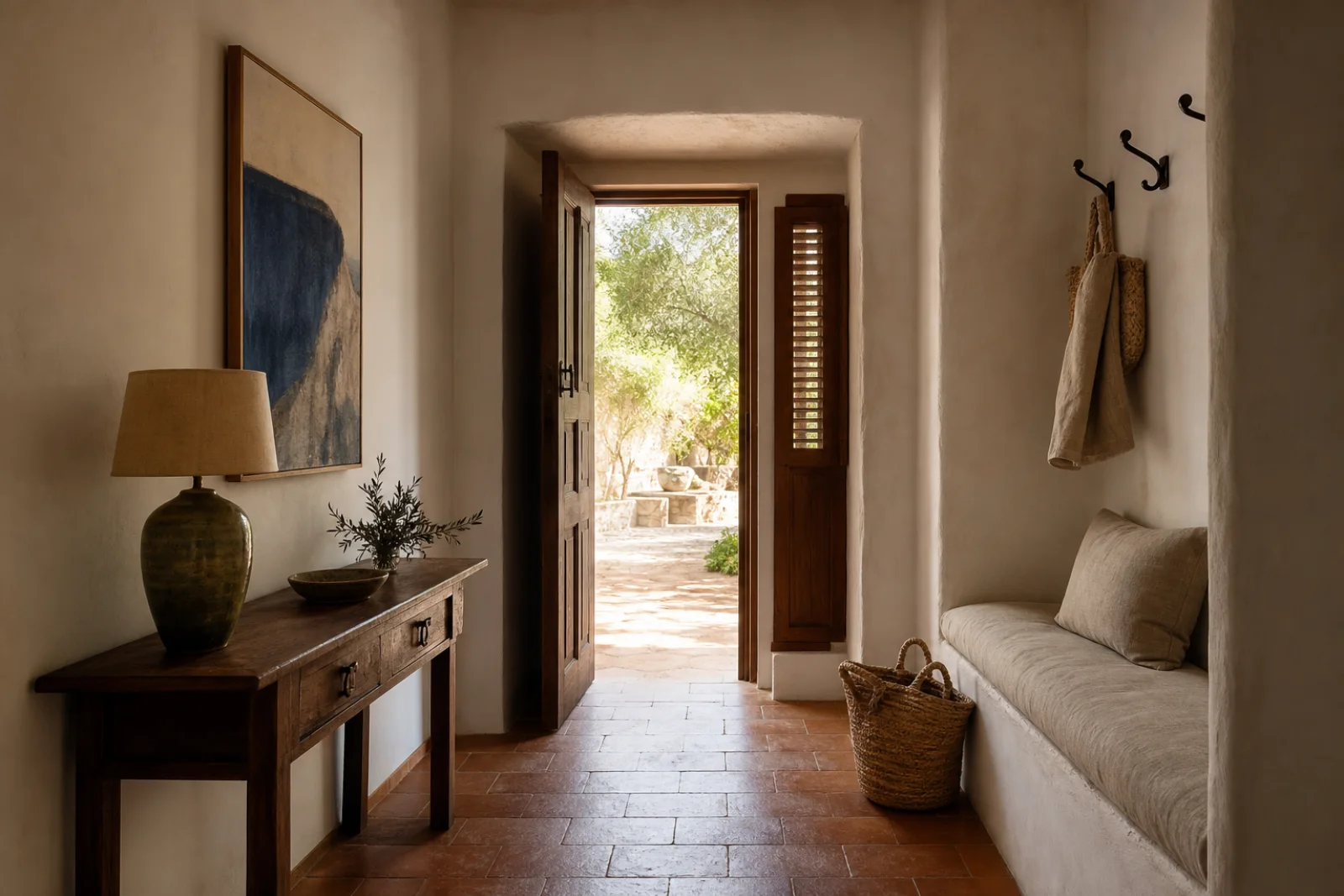
Confirm slip resistance, installation bed and sealing for the transition between exterior dust and interior use.
Compare plaster, tile, stone, rush, glaze and iron together before committing to a mixed supplier palette.