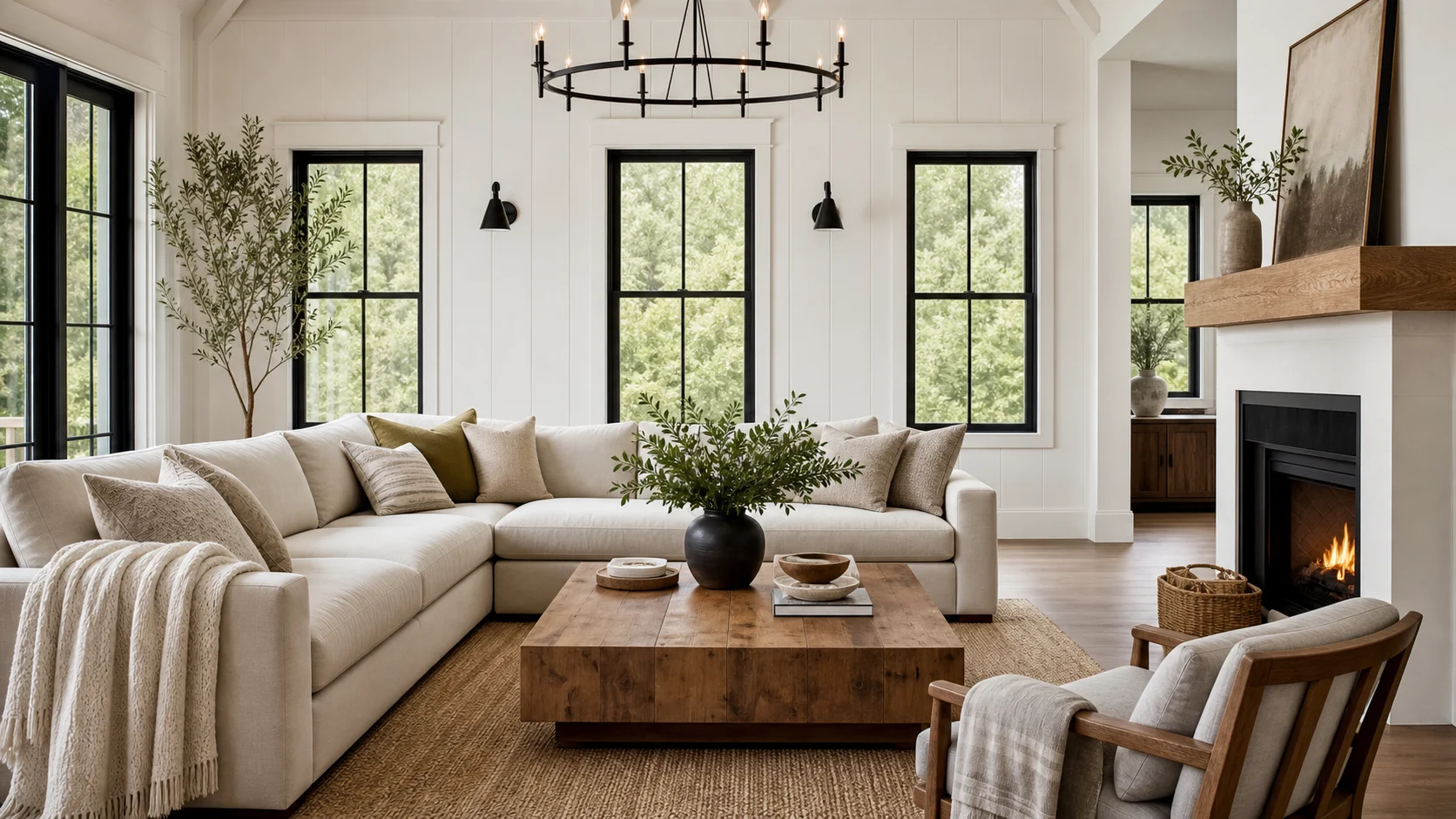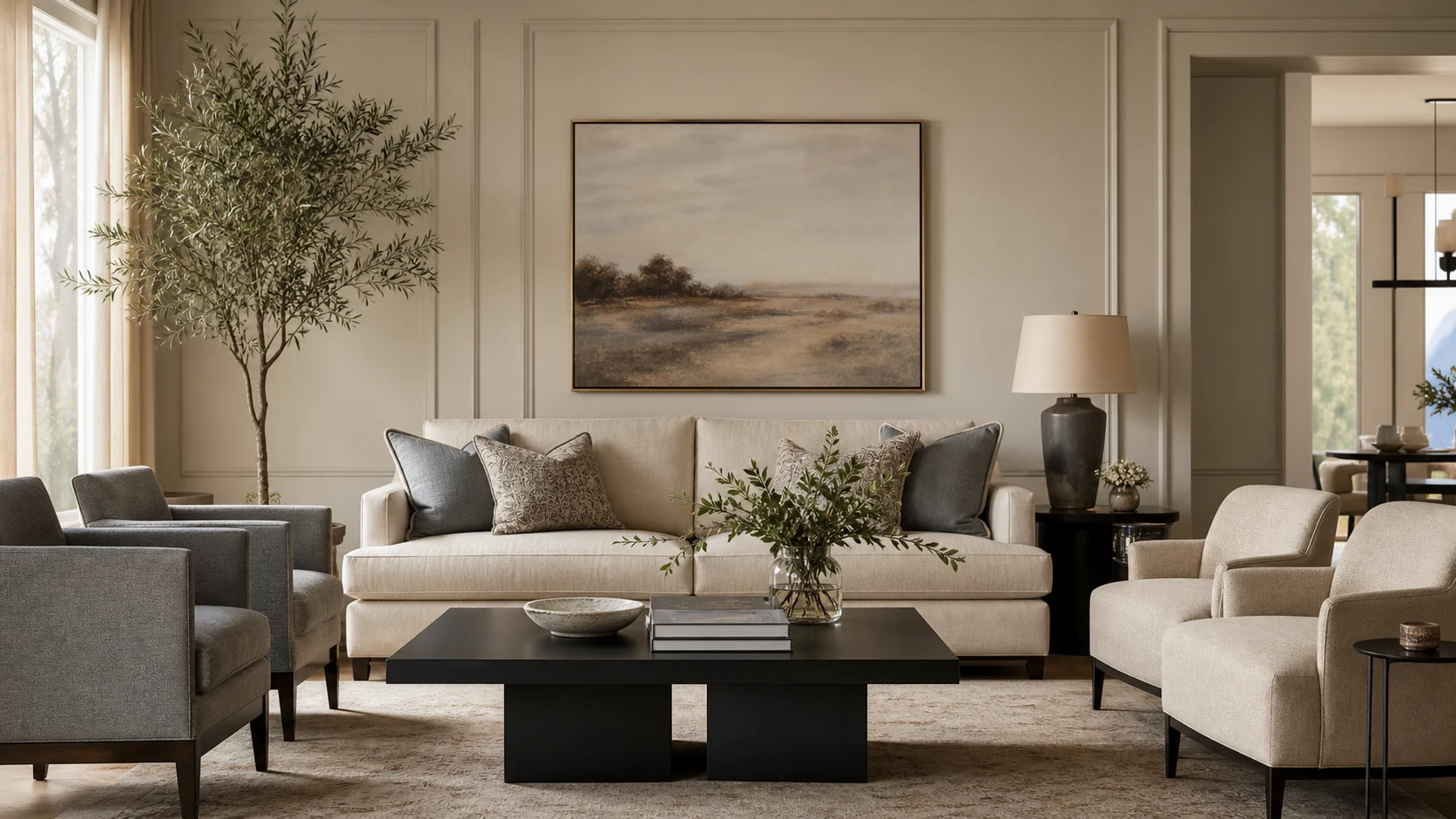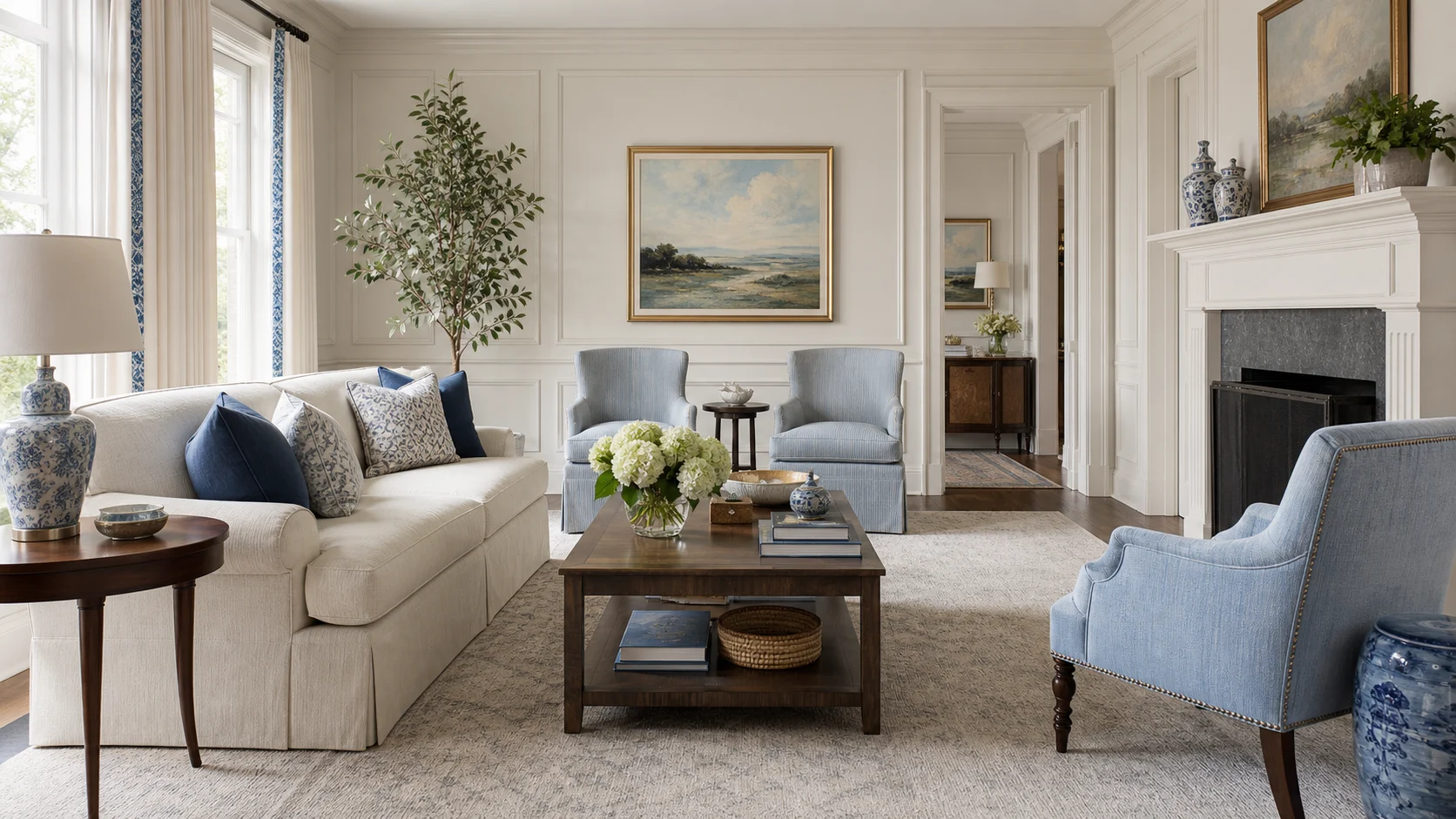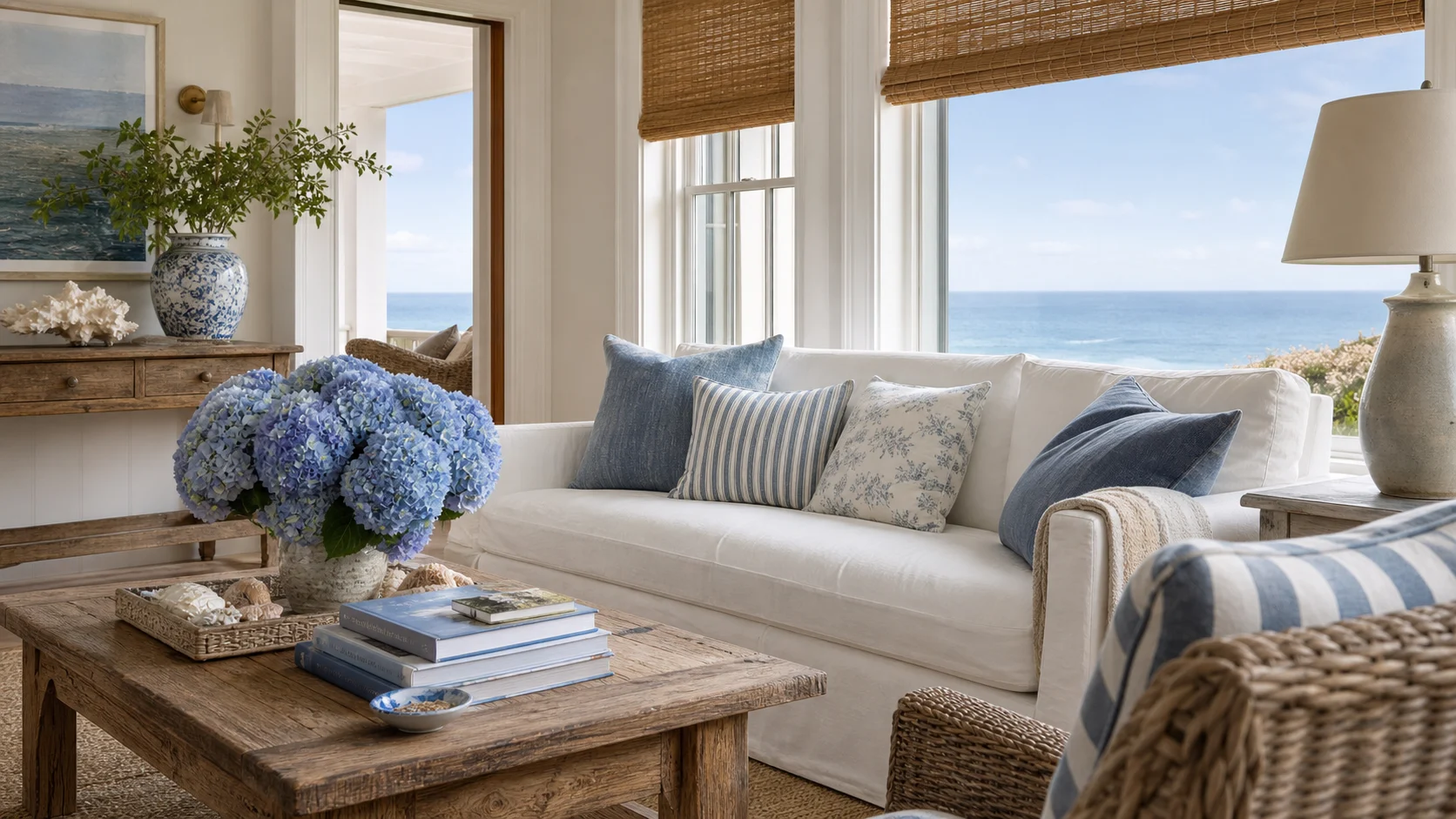
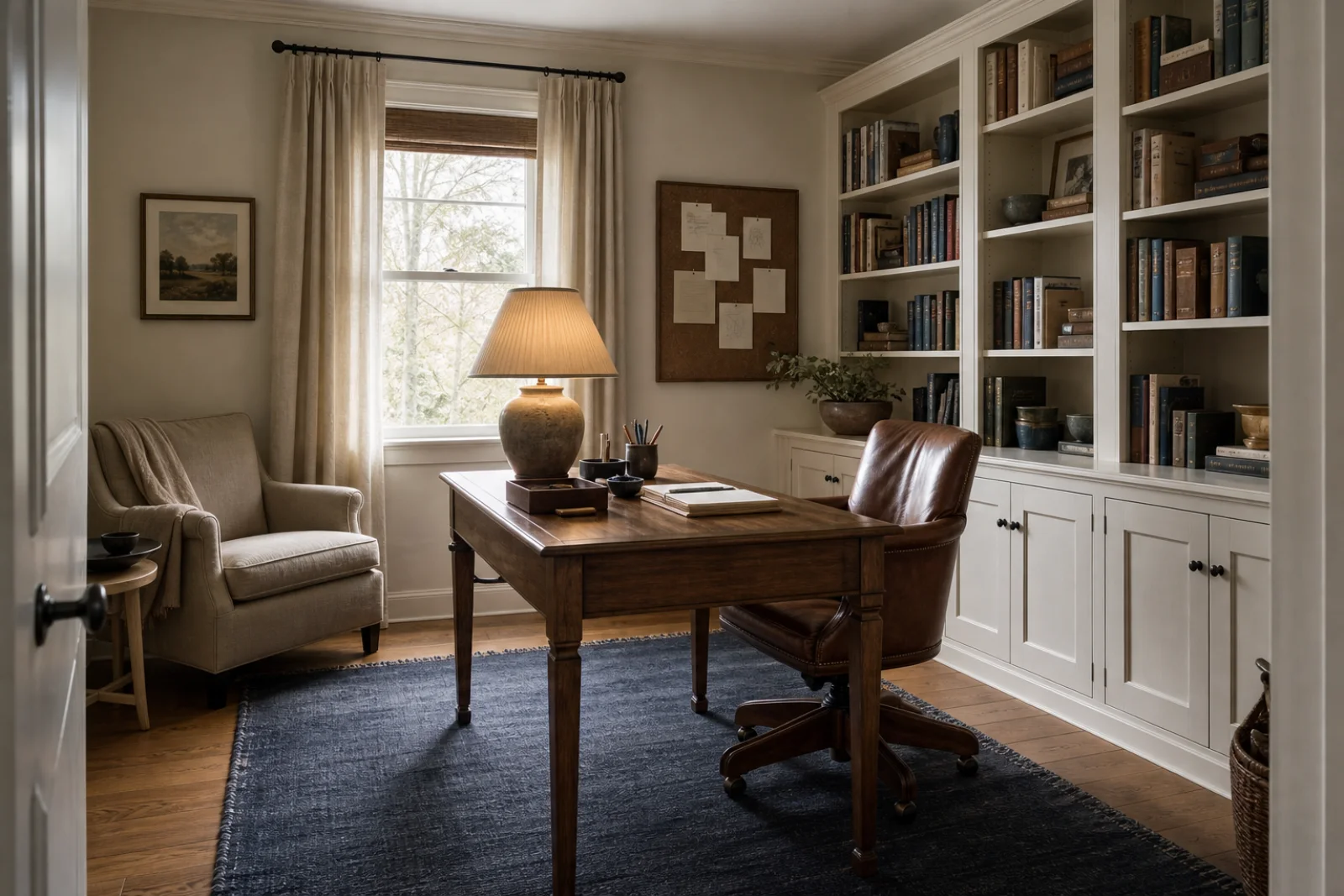
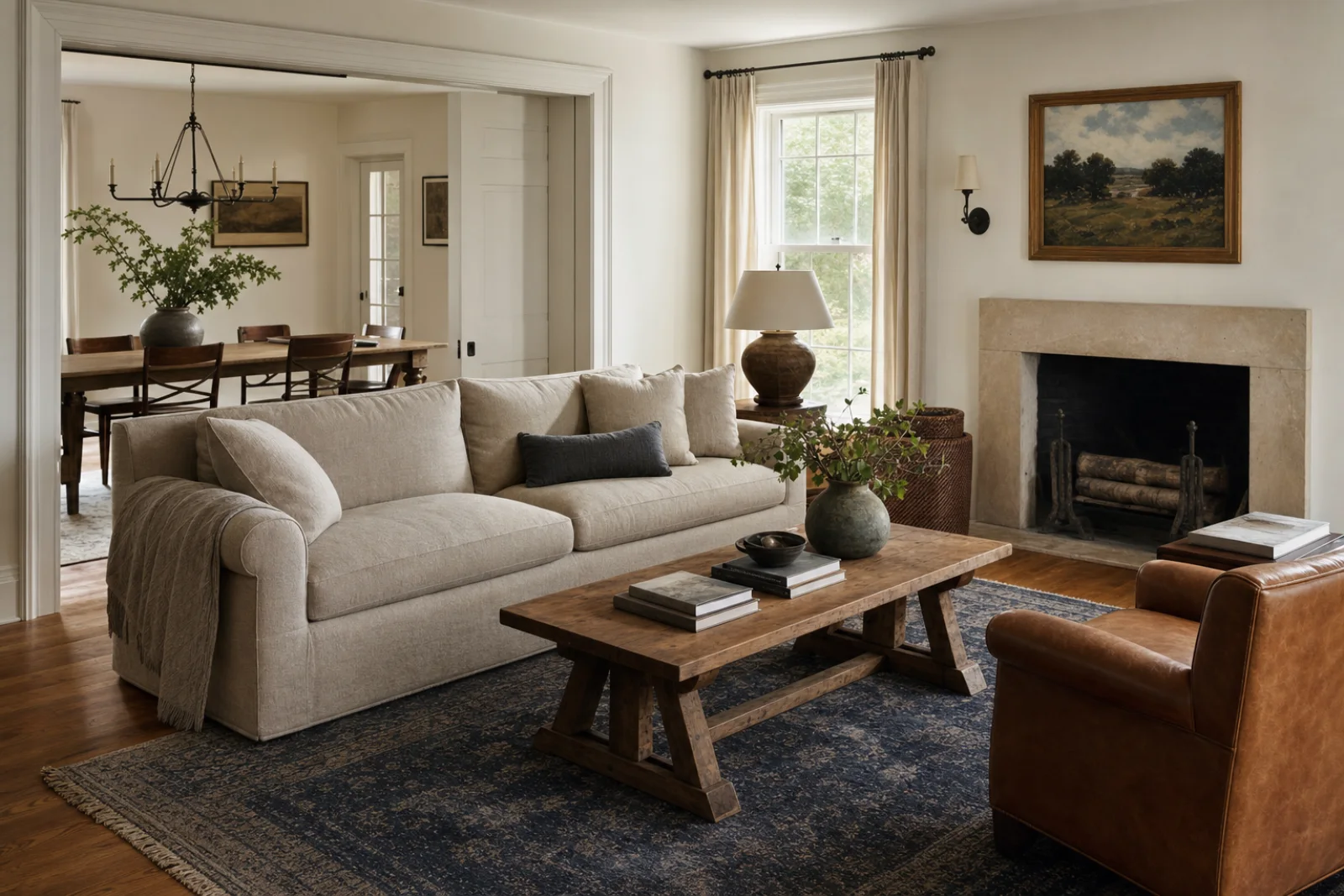
Deep but measured sofa
Check frame joinery, seat depth, cushion recovery, removable-cover access and whether delivery can clear every turn.
Start with one generous comfort piece, leave room around it and let oak, linen, leather and faded navy acquire character slowly.
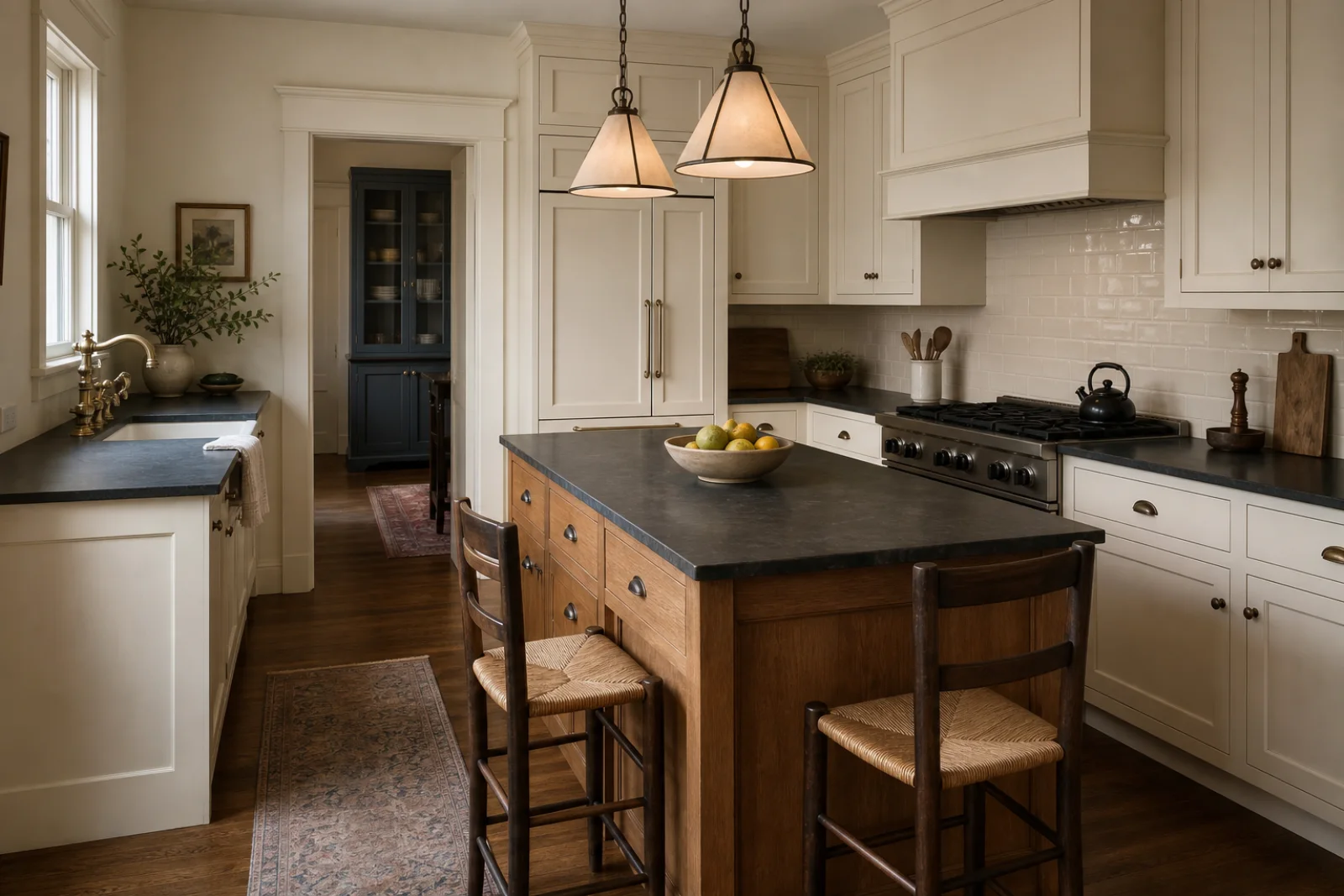
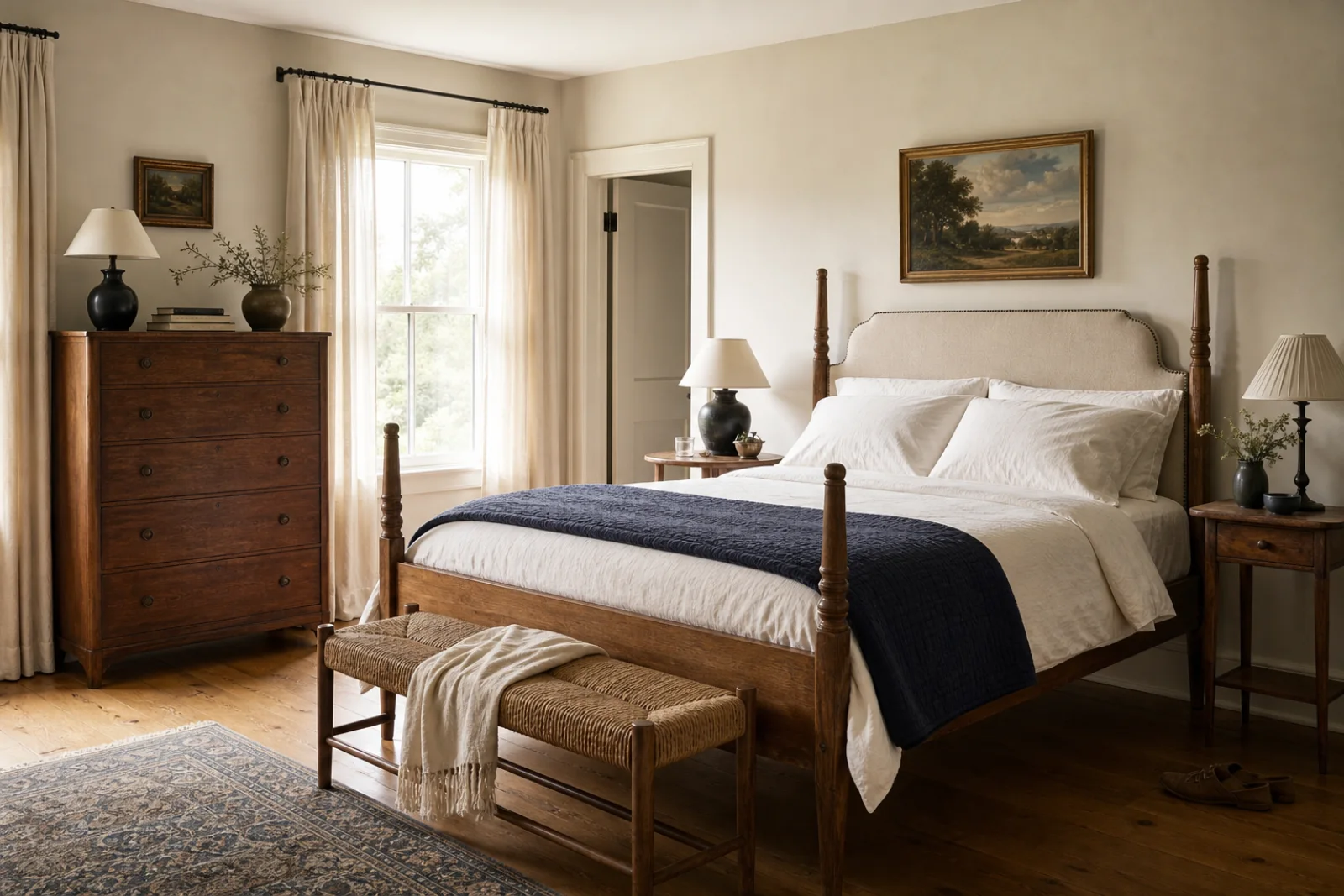
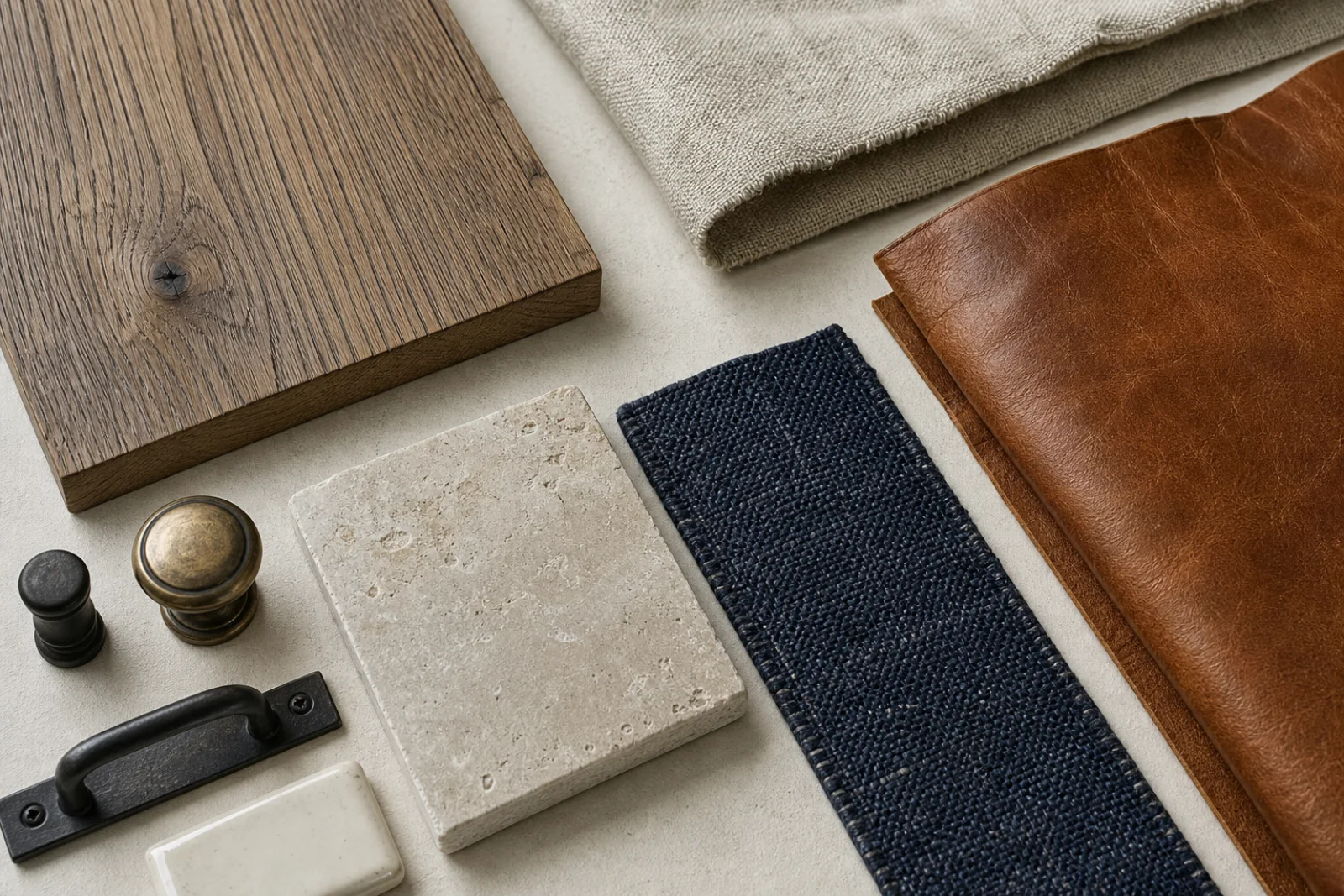
Pottery Barn-inspired design is a relaxed American classic look built from generous seating, familiar furniture forms, warm timber and quiet natural textiles. The room feels established but not formal: a deep sofa may sit beside an older leather chair, a sturdy oak table and a faded rug rather than a perfectly matched suite. This is an independent editorial guide and is not affiliated with or endorsed by Pottery Barn.
Scale is the real discipline. Rolled arms, deep seats and substantial casegoods can overwhelm an average room, so measure the fully furnished footprint and preserve circulation before choosing color. Spend on the sofa frame, cushion resilience, upholstery performance and frequently handled hardware. Then introduce patina with vintage wood, real leather, wool and ceramic rather than simulated distressing across every surface.
Mark the sofa, chair and table on the floor, including recline, drawers and the space needed to walk or pull out a seat.
Match fiber, weave, cleaning code, seam placement and cushion fill to children, pets, sunlight and actual daily use.
Combine one genuinely worn or vintage piece with simpler new furniture instead of applying the same artificial distress to everything.
Generous cushions and familiar arms feel inviting, but the frame remains composed rather than overstuffed.
Oak tables, chests and consoles add weight through grain and proportion, not ornate carving.
Washed linen, wool and muted navy create depth without sharp pattern contrast.
Ceramic table lamps, shaded pendants and discreet sconces make large furniture feel warmer after dark.
Center the plan on conversation, not the fireplace alone; keep 16–18 inches between sofa and coffee table and a clear route past the seating.
Pair a substantial bed with lighter bedside tables or open floor around it, then use washable bedding and one dark textile layer for contrast.
Allow roughly 36 inches behind occupied chairs where circulation continues and use a rug large enough to keep chair legs on it.
Balance a weighty wood desk with closed lower storage, an adjustable chair and task light aimed below eye level.
Reserve aged wood for the island or one cabinet zone, while durable counters, sealed joints and reliable hardware carry the daily workload.
Use a shallow drawer console, proper shoe landing and a runner with low pile; the passage should remain visually and physically open.
Keep walls and the largest upholstery warm ivory, let tobacco oak establish the middle value and use faded navy near the floor. Cognac and iron work as smaller, harder accents; avoid turning every surface brown or every textile beige.
A softly reflective wall and upholstery base that keeps heavy wood from darkening the room.
A mid-depth brown with visible grain for one or two substantial furniture anchors.
A quiet grounding color for a wool rug, quilt or small group of accessories.
A warm, aging surface best used on one chair or desk seat rather than a complete set.
A restrained line for lighting and hardware that sharpens the soft palette.
Look for real grain, stable joinery and a finish that can tolerate rings, cleaning and future touch-ups.
Request a large sample, rub and cleaning data, then test it against denim transfer, pets and direct sun.
Natural patina and dense fiber bring age and acoustic softness without printed vintage effects.
Use honed stone and living-metal accents where wear can look intentional, but confirm maintenance and sealers first.
Build from scale and use rather than a catalog image. One correctly sized comfort anchor, a durable rug and a measured lighting plan do more than a room full of coordinated accessories.
Place sofa and chairs within comfortable speaking distance, then preserve the route to doors and adjacent rooms.
Let the sofa, table or bed carry the greatest scale; keep neighboring pieces lighter or more open.
Compare upholstery, cushion, finish and hardware performance against the household’s real spills, pets and sunlight.
Add a vintage chest, personal art, ceramic lamp and faded textile slowly instead of buying one matching set.
When the room feels wrong, change the underlying decision before adding more decor.
Reduce seat depth or remove a chair; preserve the main path before adding side tables.
Keep one substantial oak anchor and mix in painted, open-legged or genuinely older pieces.
Create value contrast with navy, cognac and iron, then vary weave, grain and sheen.
Remove signs, shiplap and repeated rustic props; retain tailored upholstery and straightforward traditional forms.
Pottery Barn-inspired rooms share traditional DNA with several adjacent styles, but their center of gravity is distinct: generous comfort, approachable American forms and finishes that can look better after ordinary use.
More architectural and rural, often using black-and-white contrast, utilitarian forms and explicit farmhouse references.
Choose Pottery Barn-inspired for deeper seating, richer timber and a more broadly American classic room.
Upholstered comfort replaces rural shorthand.
Cleaner and more edited, blending traditional proportions with smoother finishes and fewer visibly aged surfaces.
Choose Pottery Barn-inspired when patina, generous scale and a collected family-room feeling matter more.
Relaxed weight replaces polished balance.
More tailored and pattern-aware, with historical references, antiques and stronger decorative composition.
Choose Pottery Barn-inspired for simpler motifs, softer seating and lower formality.
Casual familiarity replaces decorative precision.
Lighter and breezier, using coastal blues, slipcovers, pale woods and an explicitly seaside ease.
Choose Pottery Barn-inspired for tobacco oak, leather and greater visual weight without a coastal story.
Inland warmth replaces seaside lightness.
Judge the large pieces by scale, construction and care before color. The strongest room can come from a few well-specified anchors, vintage additions and personal objects rather than a coordinated branded set.
Check frame joinery, seat depth, cushion recovery, removable-cover access and whether delivery can clear every turn.
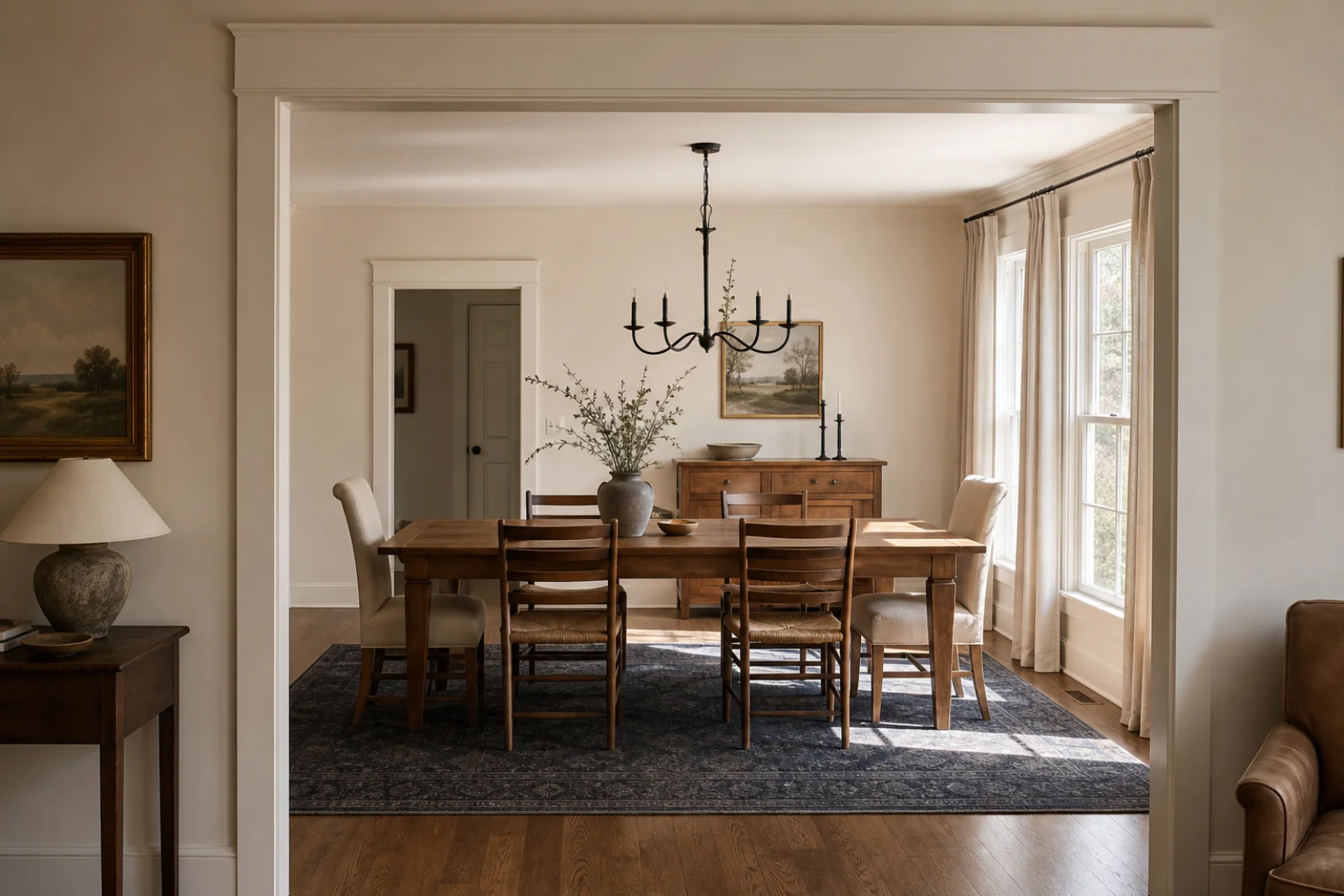
Inspect grain, extension hardware, leg clearance and finish repairability; avoid fake distress repeated by machine.
Confirm mattress fit, slat support, side clearance and how fabric near the headboard will be cleaned.
Size it to connect the furniture, then compare pile, shedding, pad needs and spot-cleaning behavior.
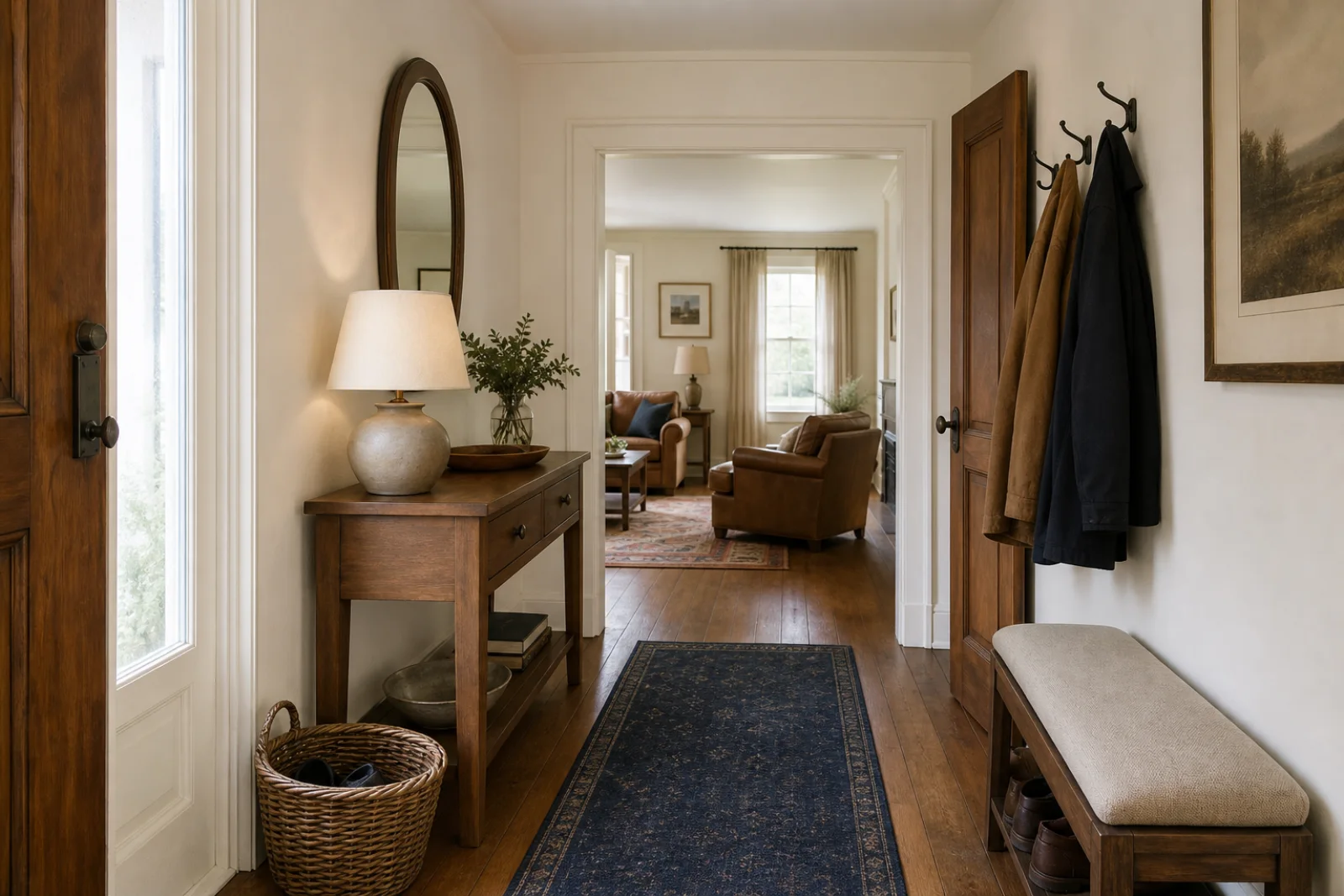
Use lamps to place warm light at seated eye level and verify shade scale, switch access and cord route.
Review oak, linen, leather, navy wool, stone and metal together in both daylight and evening light.