Supportive woven chair
Check frame joints, seat tension and repair options; use plain fiber unless a patterned work has clear provenance.
Deep shade, thermal mass and regional materials create comfort first; desert color follows from the building rather than themed décor.
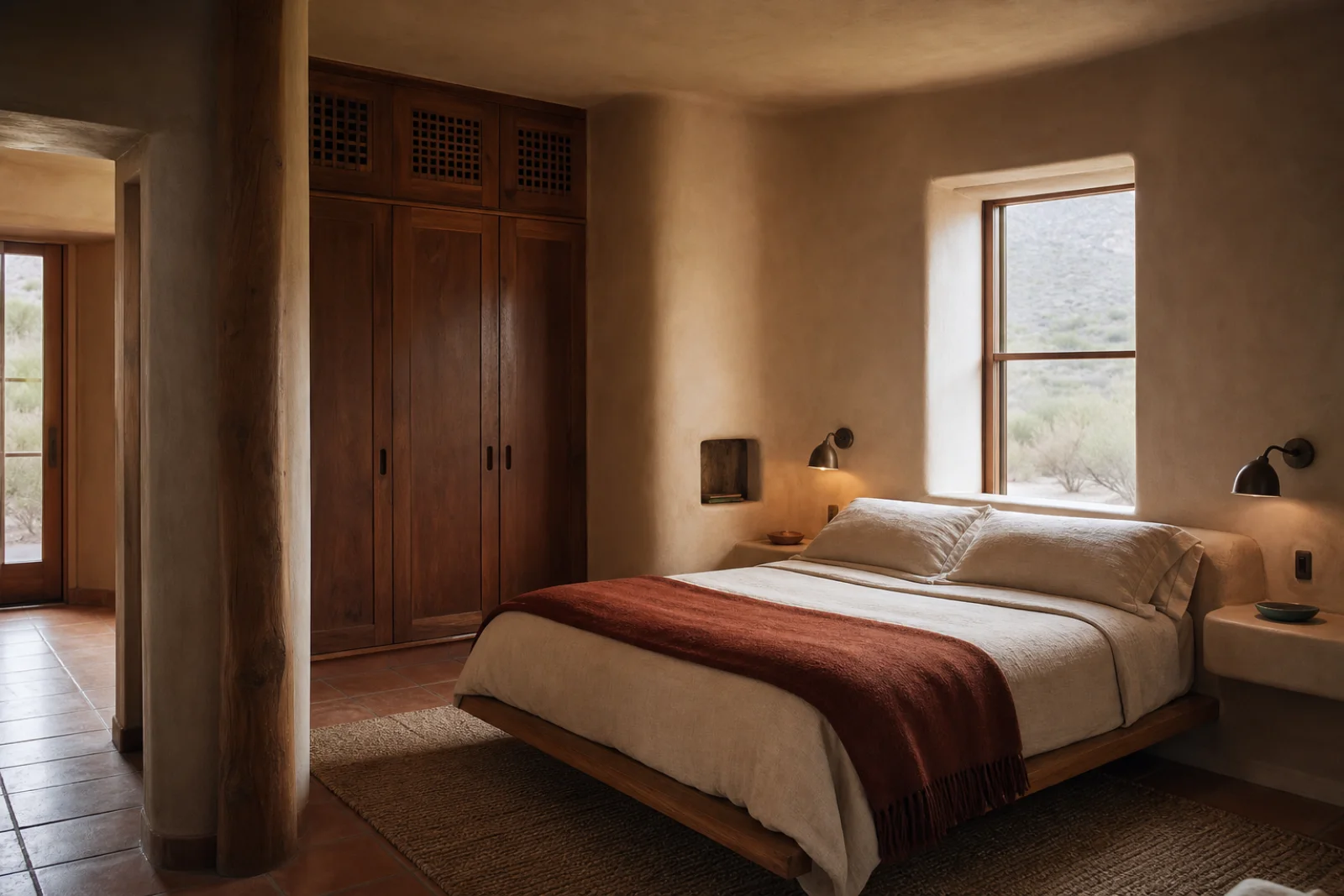
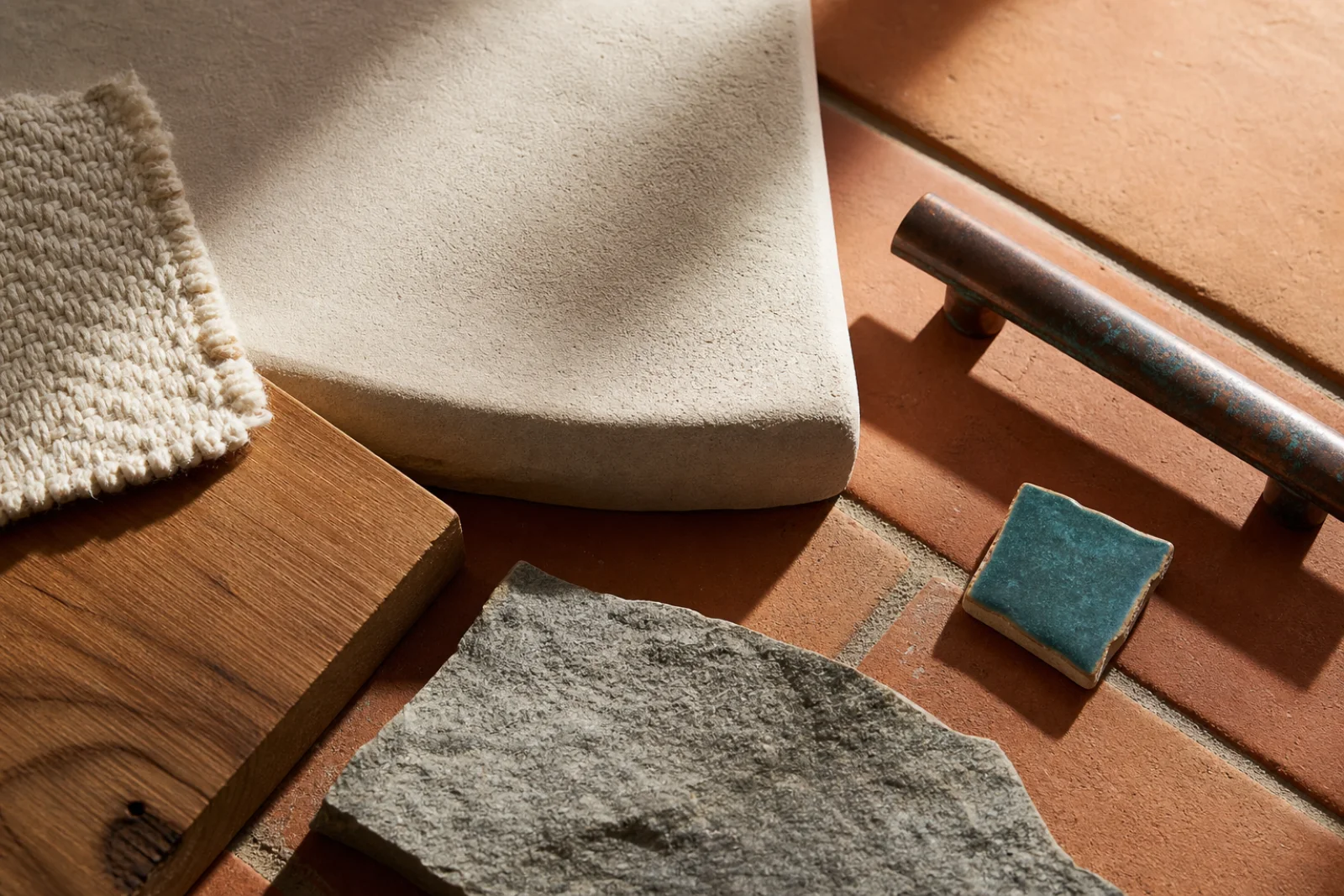
Southwestern interior design is a broad regional category shaped by the dry landscapes and layered building cultures of the American Southwest and northern Mexico. It should not be reduced to one Indigenous pattern, a cactus and turquoise accessories. For a clear working example, this guide uses a contemporary Sonoran Desert home near Tucson, where deep shade, thick mineral surfaces and sheltered outdoor rooms manage intense sun and daily temperature swings.
Earth-toned plaster, clay tile, mesquite, local stone and wool make a tactile base, but each material needs technical judgment. Earthen and lime finishes must suit the wall assembly and rainfall exposure; tile needs appropriate slip and sealing performance; timber should be responsibly sourced. Indigenous textiles and pottery belong only when maker, Nation or community, technique and source are known—not as anonymous style shorthand.
Sonoran, Chihuahuan and high-desert environments differ in plants, temperature, rainfall and material traditions.
Use deep eaves, ramadas, shutters or exterior screens before relying on interior curtains to stop heat.
For Indigenous work, seek the artist, Nation or community, material, technique and an accountable selling source.
Recessed entries and covered courts create a gradual thermal and visual transition indoors.
Compatible plaster and masonry moderate temperature while shaping light without added ornament.
Mesquite or another suitable local wood gives doors, tables and storage durable visual weight.
Rust wool and one blue-green glaze sharpen a base of plaster, clay, timber and stone.
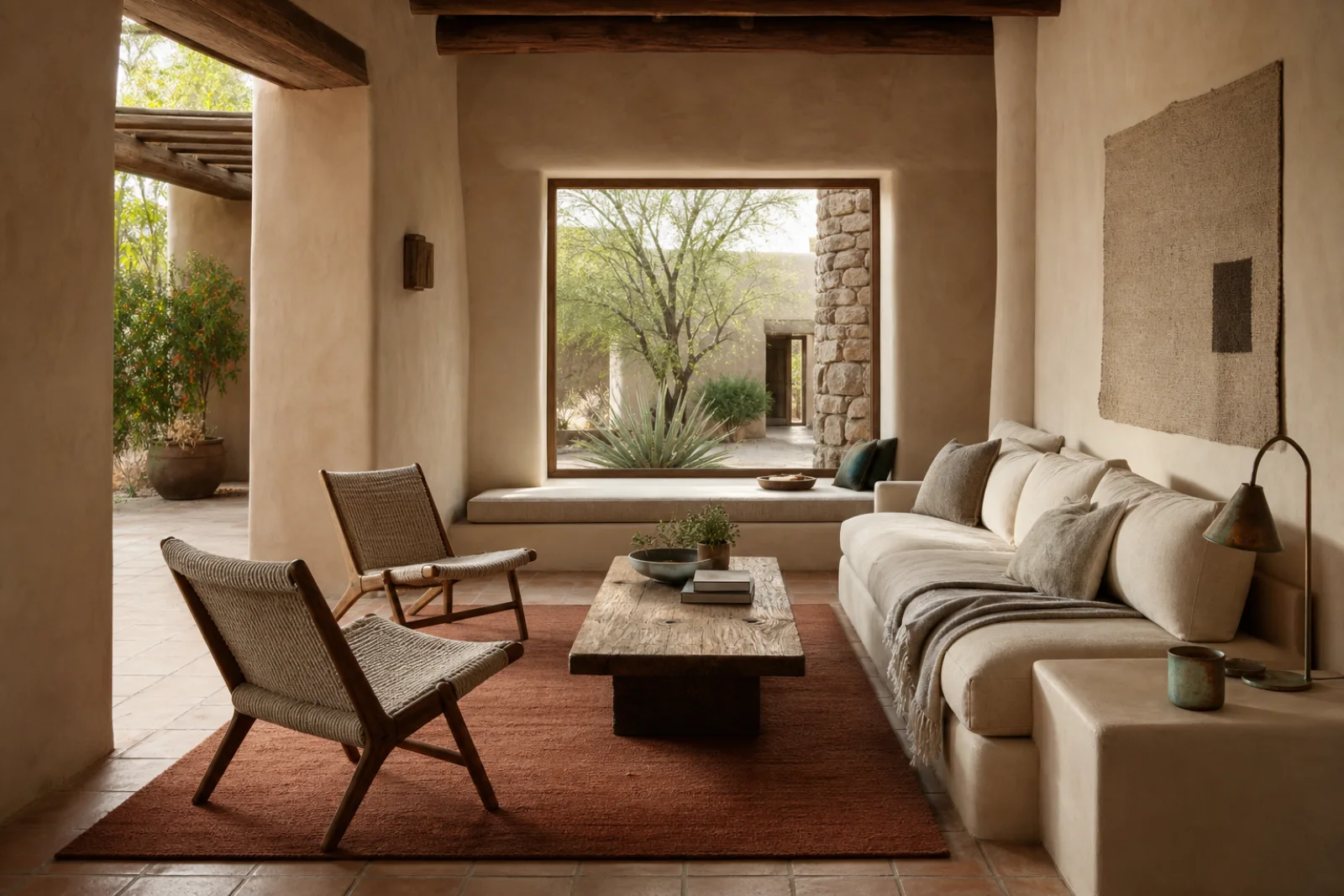
Protect the main glazing with exterior shade, keep the center path clear and let one plain wool rug soften the clay floor.
Use a deep shaded opening, breathable linen and closed mesquite storage; keep strong rust to one blanket.
Connect the table to a covered outdoor room and allow a direct service route without exposing chairs to hard western sun.
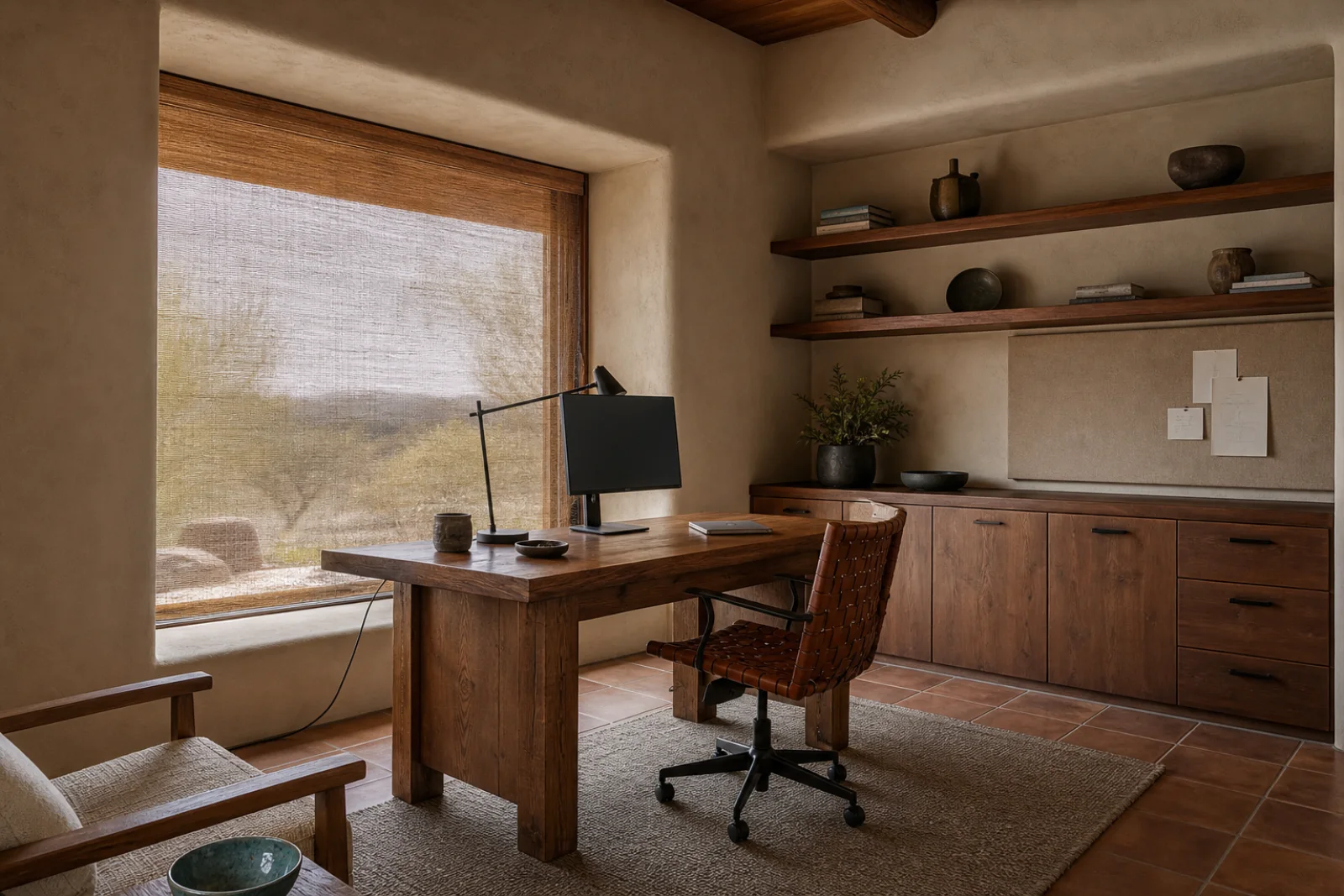
Set the monitor perpendicular to the window, use exterior shade and close away papers and equipment in built-in storage.
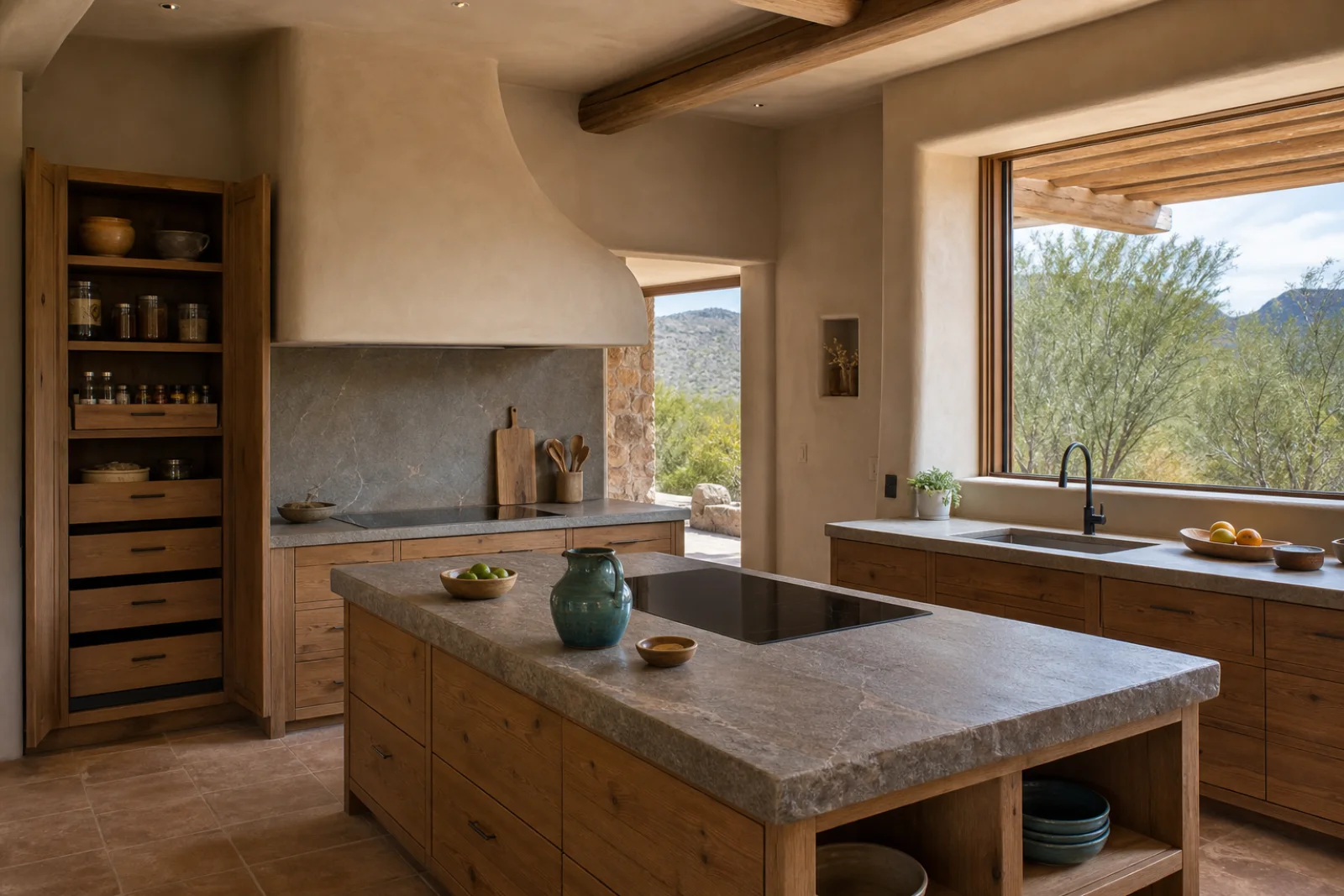
Choose durable stone and deep drawers, integrate extraction and reserve glazed color for one useful vessel.
Make the recessed threshold a cooling pause with a bench, closed storage and a clear view toward the shaded court.
Build the room from adobe chalk, clay and mesquite, with stone in hard-working zones. Add rust through one plain wool piece and keep blue-green glaze to a single vessel or narrow ceramic moment.
A warm mineral wall color that reflects harsh daylight without becoming stark white.
A naturally varied floor and textile note, muted rather than uniformly orange.
A dense grounding tone for doors, cabinets, tables and structural timber.
A cool counterweight for worktops, thresholds and exterior retaining walls.
A small ceramic accent that works best once, not as a room-wide turquoise theme.
Match the finish to substrate, vapor behavior, splash exposure and maintenance instead of applying a synthetic adobe effect.
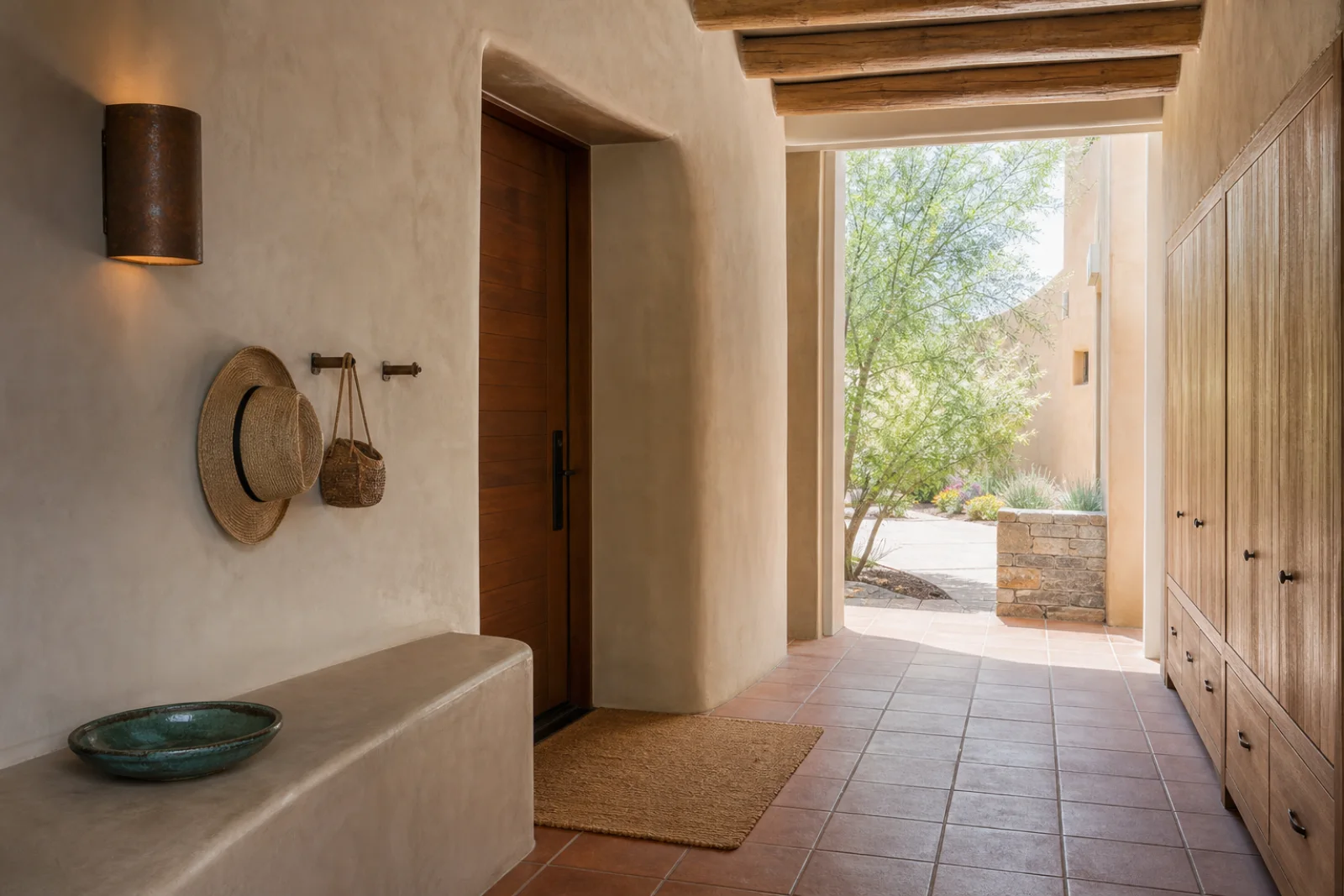
Approve variation, grout, sealing and slip resistance for each indoor or sheltered exterior location.
Use responsibly sourced timber and plain traceable fiber before adding patterned craft.
Let local stone lead, allow copper to patinate and restrict blue-green glaze to a precise accent.
Study sun, shade and temperature before choosing color. Define the regional frame, specify the wall and floor systems, then add furniture and documented craft only where daily use calls for it.
Record the hottest windows, useful winter gain and the outdoor areas that need permanent shade.
Name the desert and research its climate, ordinary building materials and contemporary local practice.
Coordinate shading, insulation, thermal mass, ventilation and compatible mineral finishes.
Choose a documented textile, ceramic or metal work and leave enough quiet material around it.
When the room feels wrong, change the underlying decision before adding more decor.
Return walls and furniture to plaster, clay and timber; keep blue-green to one ceramic family.
Remove skulls, saddles and saloon objects; develop place through shade, material and landscape.
Buy directly or through accountable sellers and retain the maker, Nation or community and technique.
Improve exterior shade, glazing, roof performance and night ventilation before changing interior finishes.
Southwestern design is strongest when it names a landscape and responds to its heat, light and material supply. It differs from a generic earthy interior through climate performance, regional building knowledge and accountable craft sourcing.
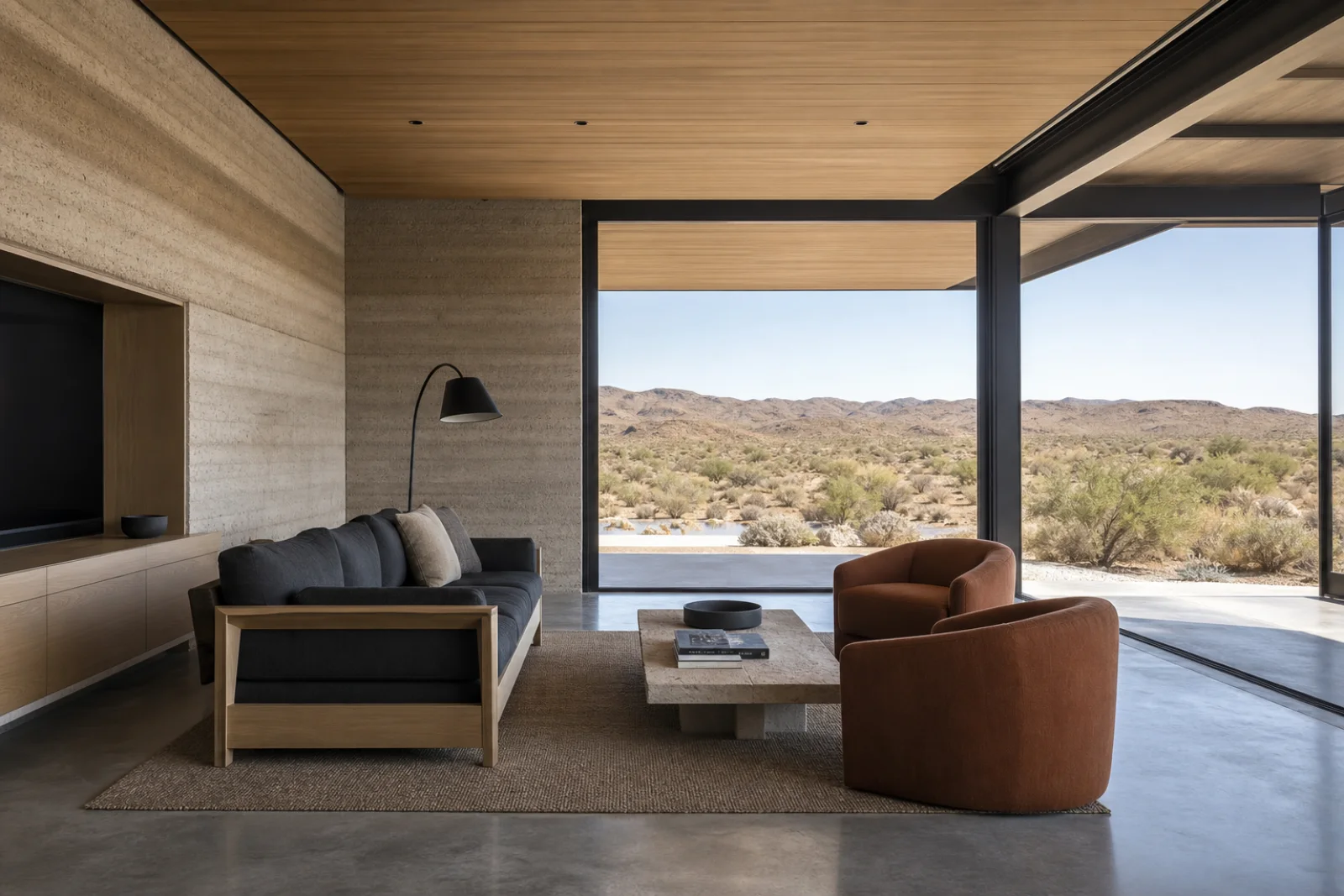
More abstract and reduced, using planar volumes, broad glazing and a neutral mineral palette with fewer historical references.
Choose Southwestern when regional craft, clay floors, mesquite and shaded vernacular transitions should remain visible.
Layered regional continuity replaces abstract desert minimalism.
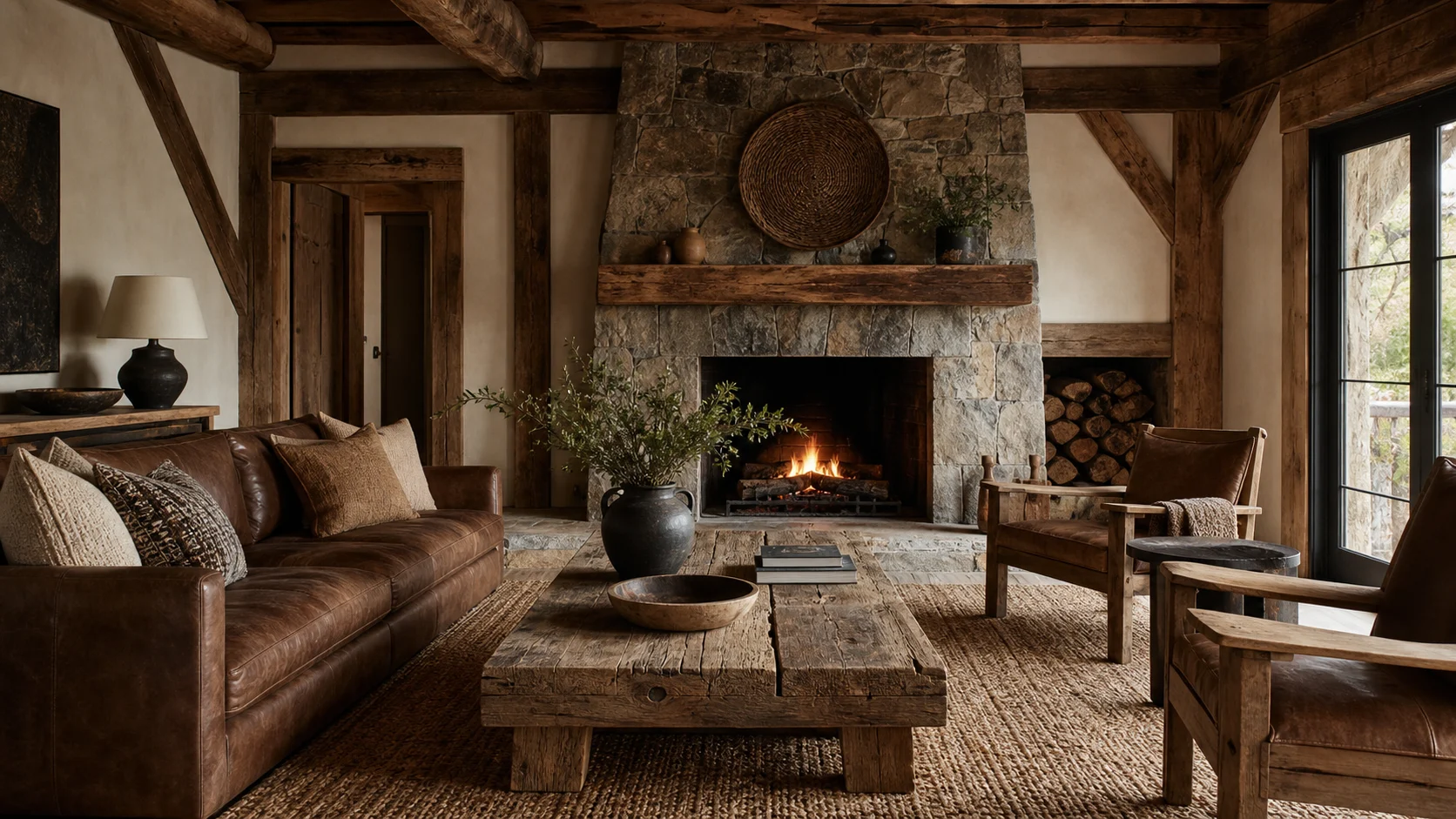
A broad material-first style centered on aged timber, stone and robust furniture without a particular desert climate.
Choose Southwestern when solar control, earth construction and desert-specific thresholds should guide the room.
Climate specificity replaces general rural roughness.
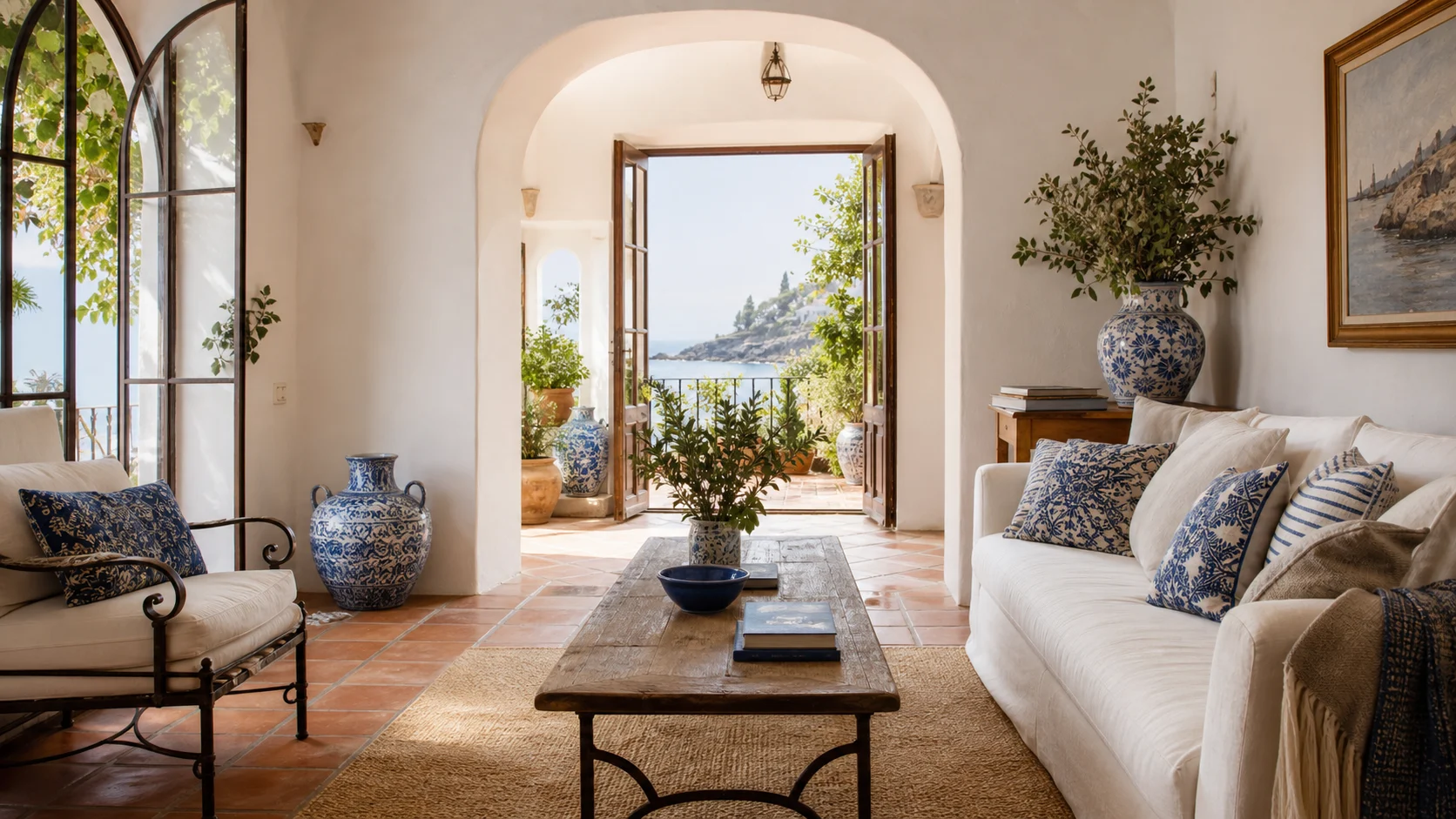
Shares mineral mass, shade and indoor-outdoor living but draws from distinct coastal regions, materials and craft traditions.
Choose Southwestern for the landscapes and building cultures of the American Southwest and northern Mexico.
Desert regional context replaces a Mediterranean coastal frame.
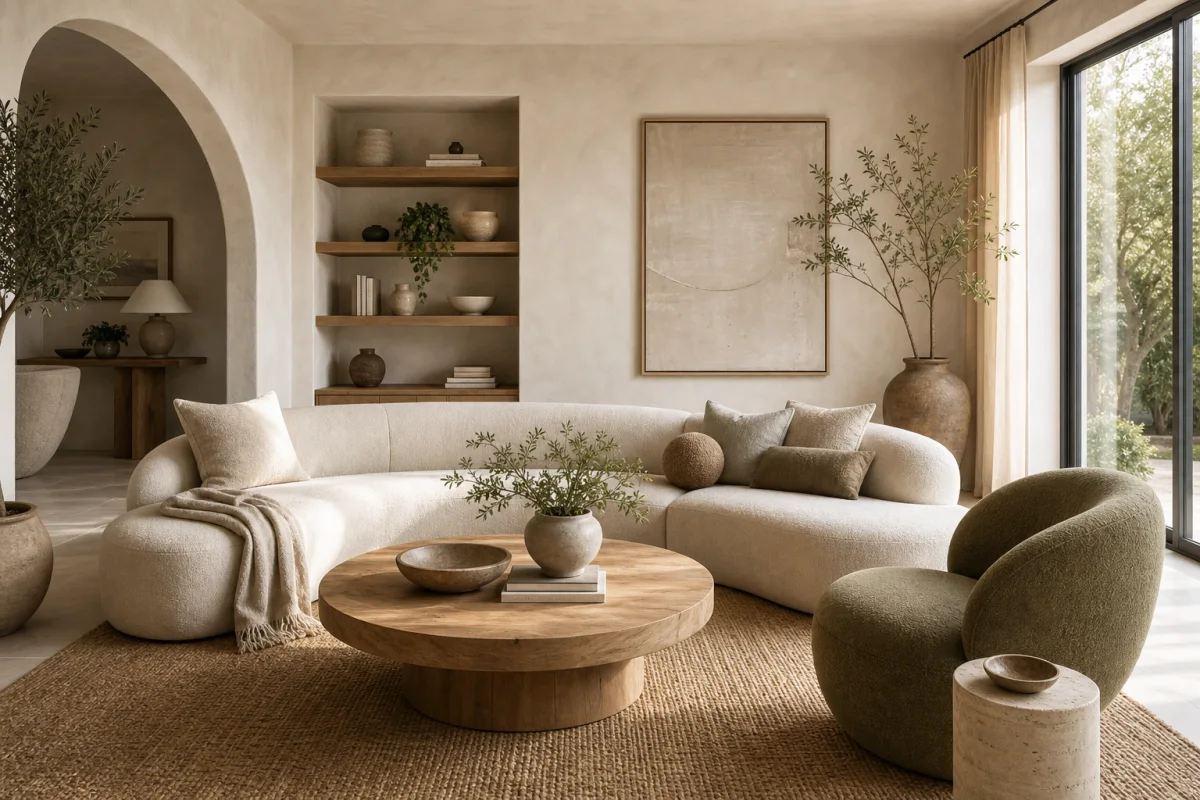
Uses smooth contemporary forms and natural materials in a broadly place-neutral, softly minimalist composition.
Choose Southwestern when local climate and regional construction should be legible rather than simply natural-looking.
Place-based performance replaces universal organic calm.
Ask where materials come from and how they perform. For Indigenous work, provenance is essential; for plaster, tile, stone and timber, installation and maintenance matter as much as appearance.
Check frame joints, seat tension and repair options; use plain fiber unless a patterned work has clear provenance.
Verify responsible timber source, mattress ventilation, stable joinery and enough clearance around the bed.
Test porosity, sealing, heat response and edge durability using the actual stone batch.
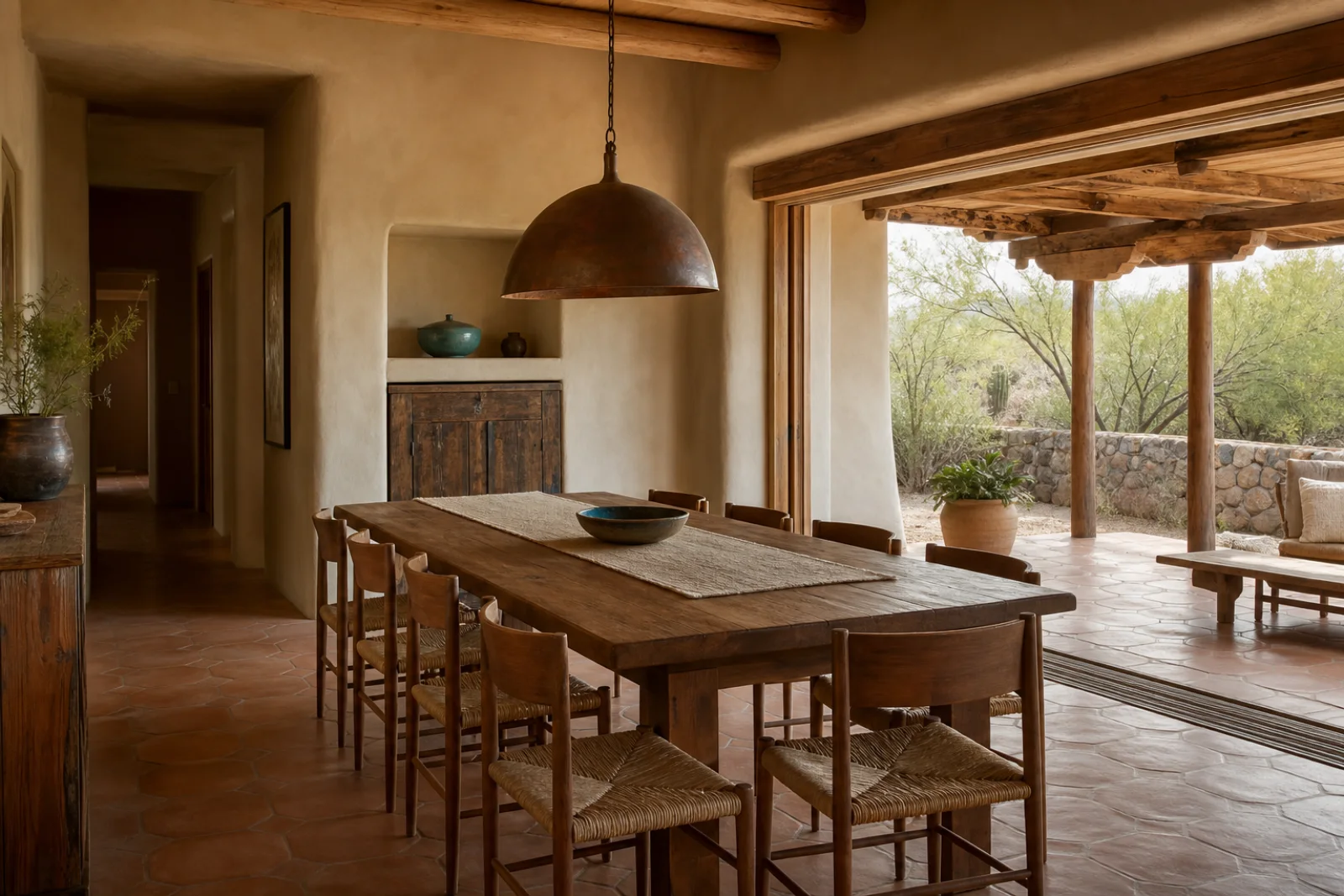
Choose a comfortable back and replaceable seat suited to dust, dry air and frequent use.
Size for boots, hats and outdoor gear, with ventilation and a durable base beside the clay floor.
Review plaster, clay, mesquite, wool, stone, copper and one glaze together in hard midday light.