01
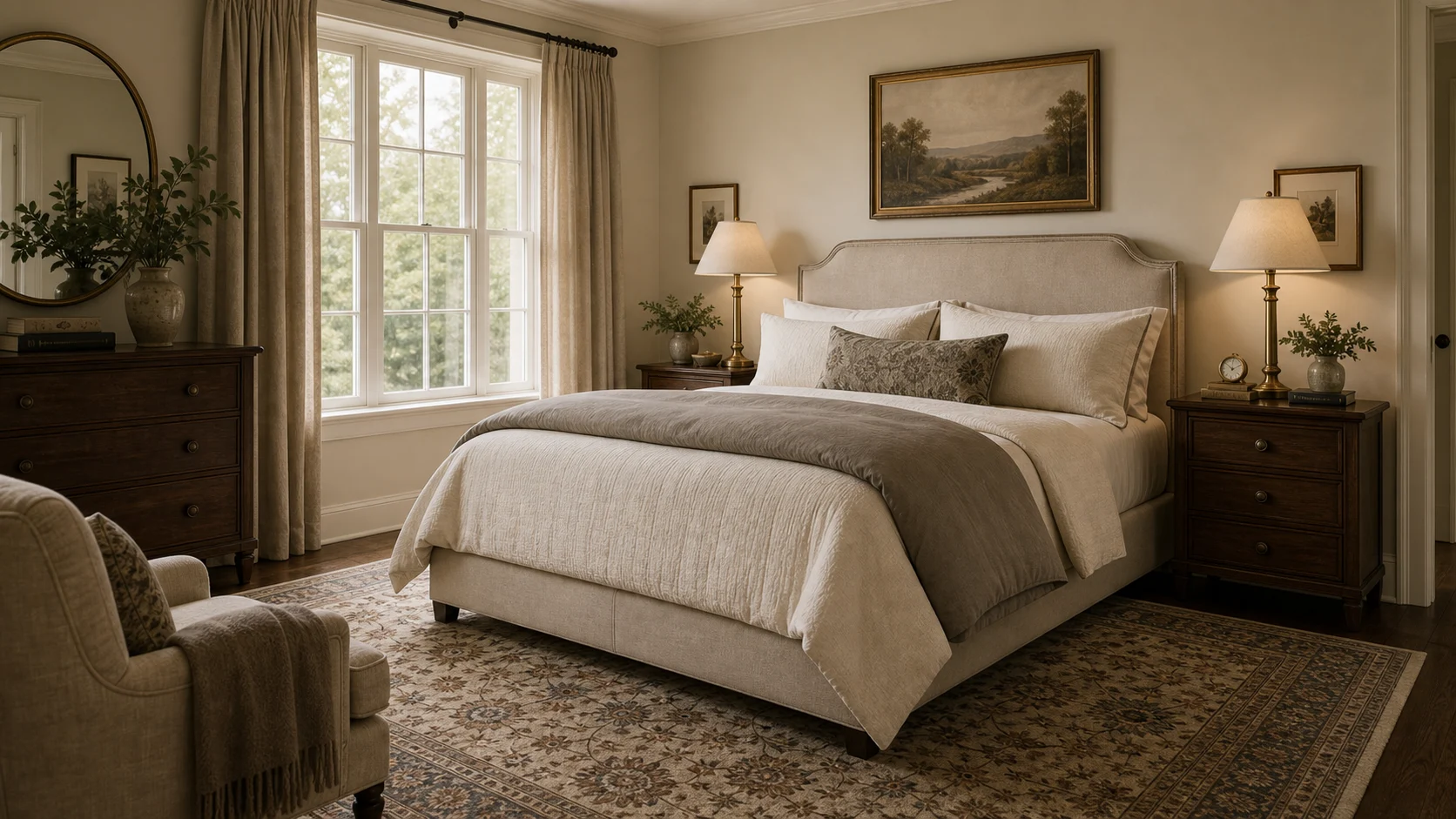
Layered classic bedroom
A shaped bed, lamps and soft textiles create a calm traditional foundation.
Ideas, layouts, colors and materials for a traditional bedroom — plus the pieces that make the look work.
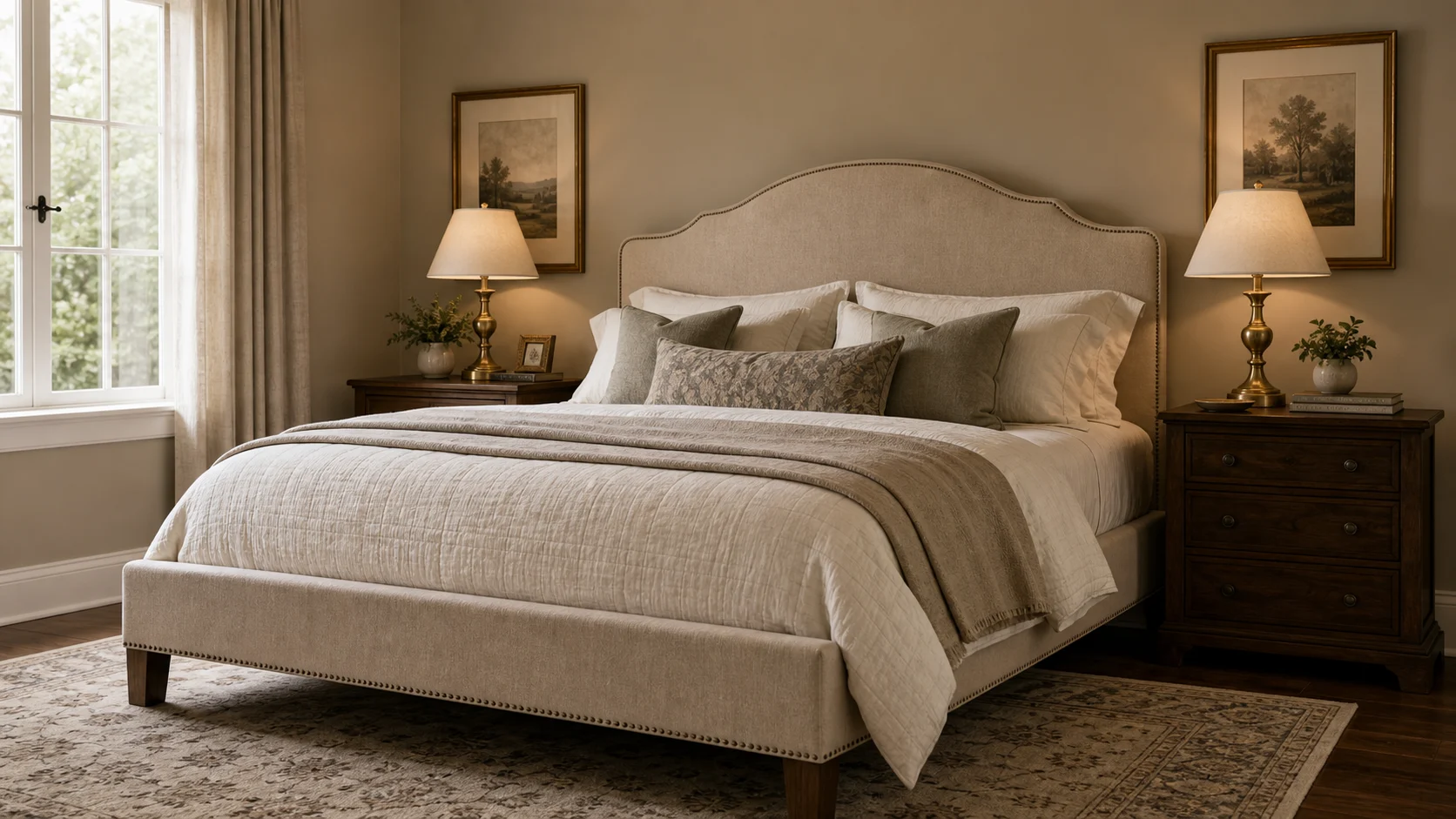
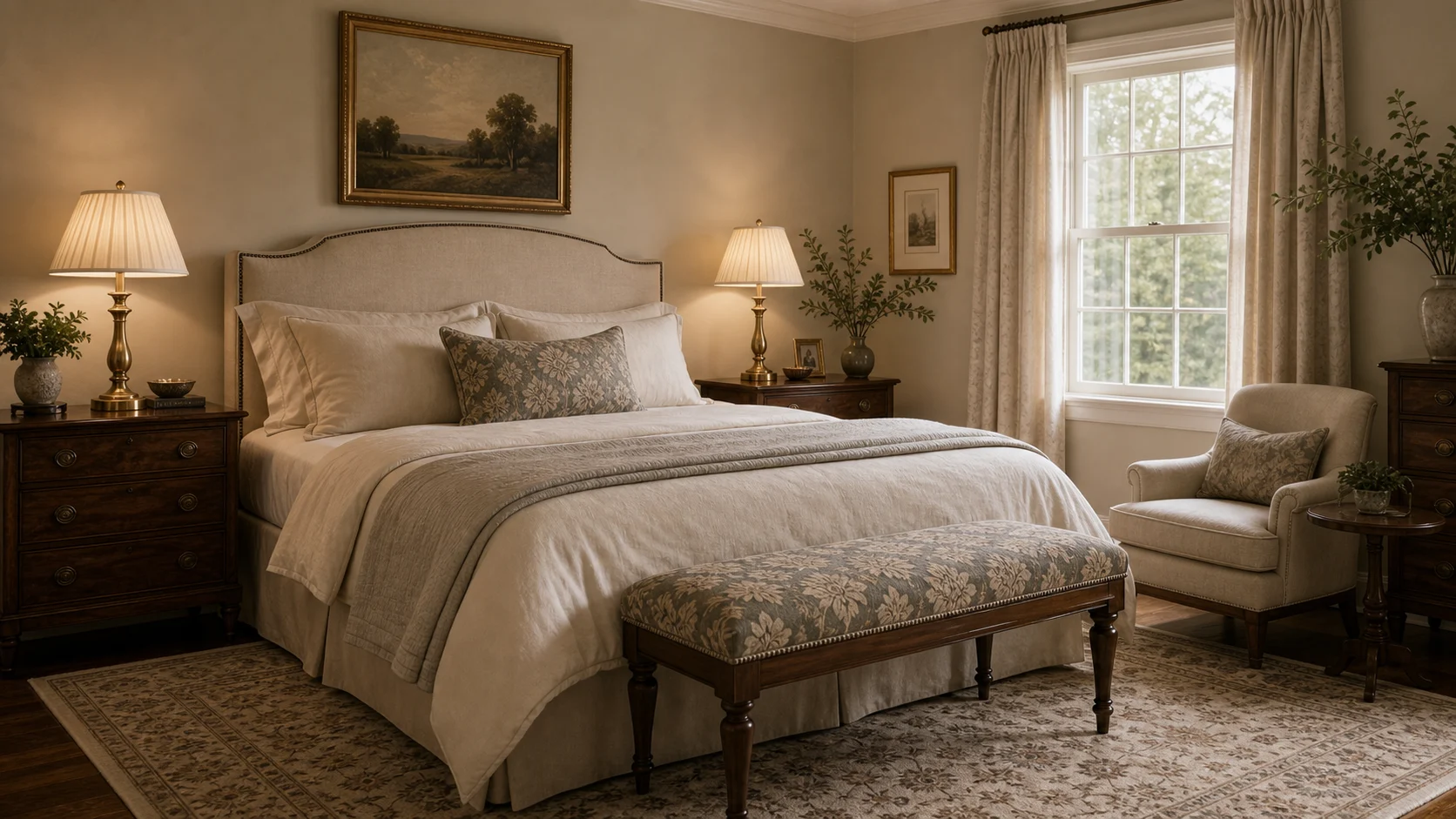
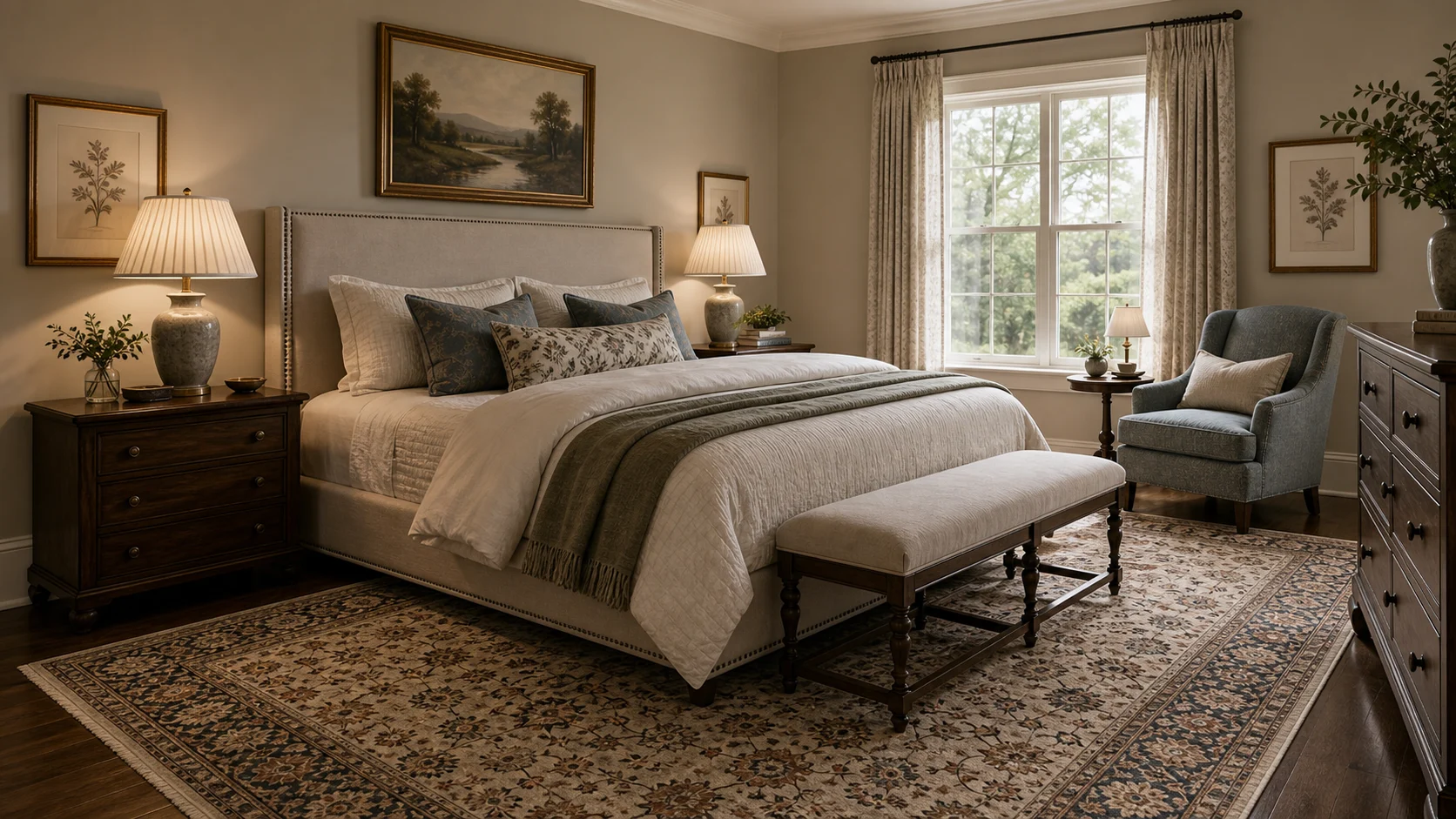
A traditional bedroom should feel restful, layered and quietly ordered. The bed is the main architectural shape, while nightstands, lamps, rug and curtains build comfort around it.
Use symmetry gently, choose soft textiles and repeat wood or metal finishes. The room should feel collected, not crowded with matching furniture.
Use these examples to choose the version of the style that fits your architecture, light and square footage.
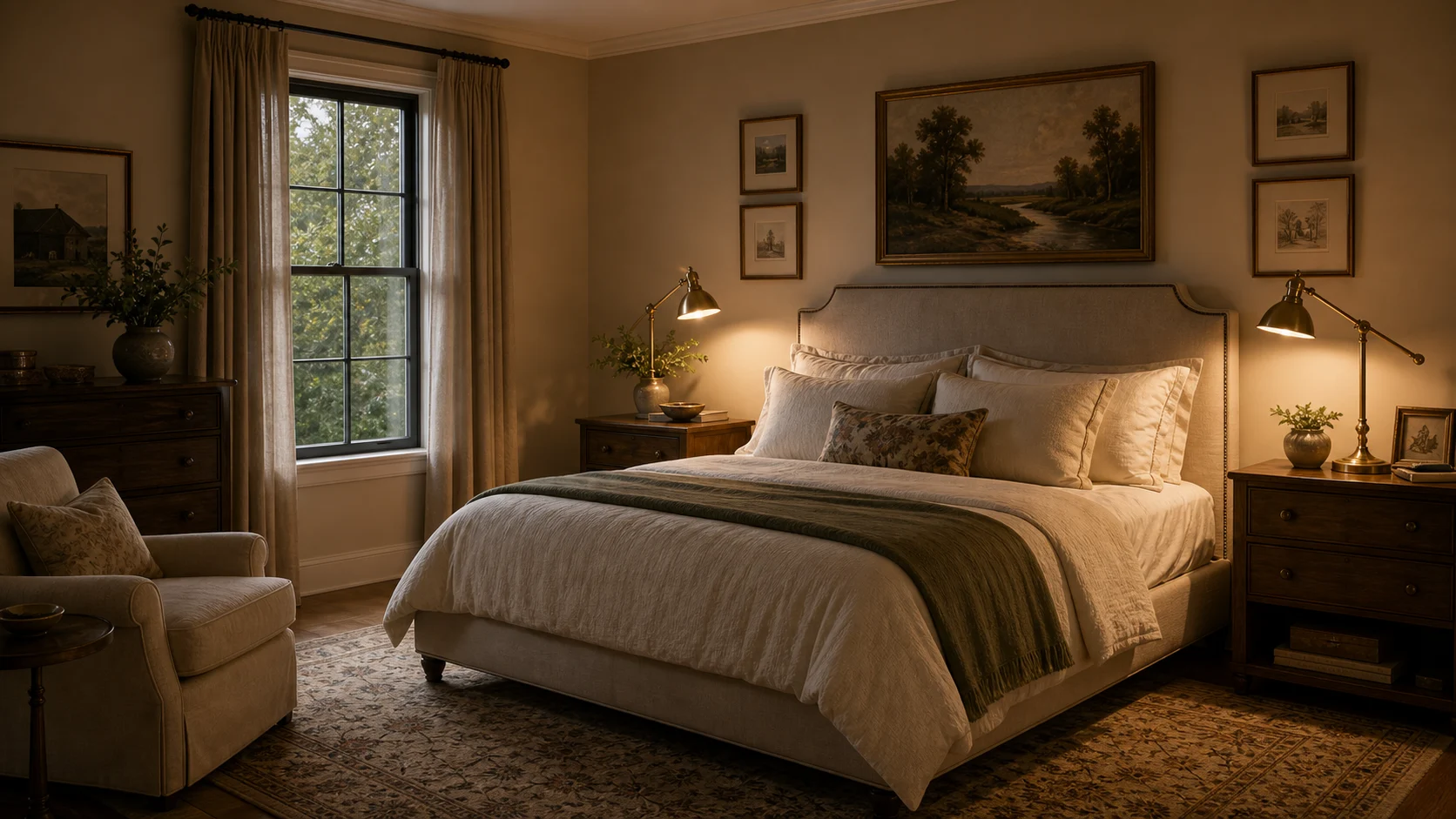
Use the style where it helps the room work: seating, circulation, focal point and material balance.
The bed should feel like the main composition, with balanced space on both sides when possible.
Matching or related lamps and nightstands help the room feel settled.
Soft surfaces make traditional bedrooms feel comfortable rather than stiff.
A heavy bed plus heavy dressers can make the room feel overfilled.
Traditional rooms work best when the palette feels layered but controlled. Start with warm neutrals, add wood depth, then use muted accent colors through textiles, art and ceramics.
Use it for walls, trim or large upholstery so wood and pattern have a calm background.
The anchor tone for tables, casegoods, frames and library pieces.
A classic accent for pillows, ceramics, art or drapery when the room needs softness.
Best in lamps, hardware, frames and small details. It warms the palette without shouting.
Use sparingly in rugs, books or upholstery trim for depth and heritage.
Cream, ivory, taupe and warm gray make classic bedroom furniture feel softer.
Walnut, cherry or medium oak works best when repeated in small, consistent ways.
Muted blue, sage, dusty rose, burgundy or tobacco can appear in rugs, pillows or curtains.
Brass or bronze lamps add warmth without visual heaviness.
For this room, a few strong choices can carry the style better than adding more decor.
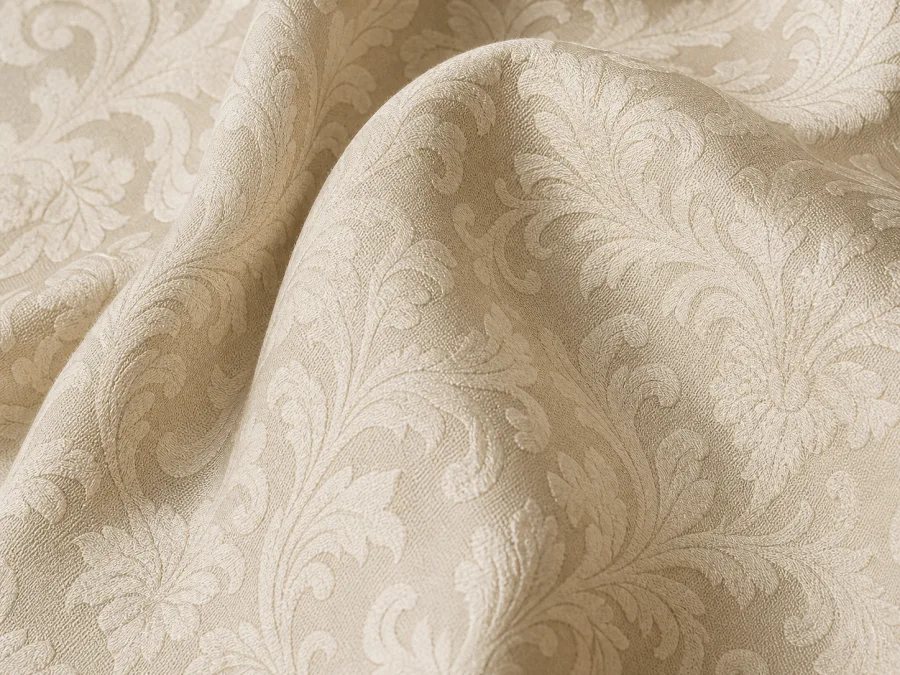
Classic pattern works best in pillows, curtains or a single upholstery moment.
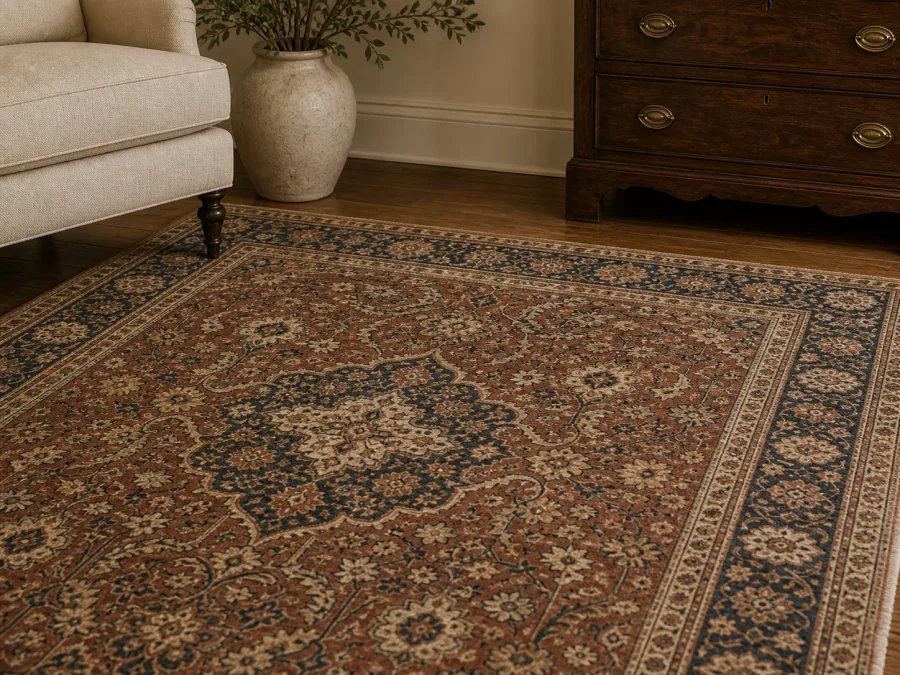
Softens the bed area and brings muted color underfoot.
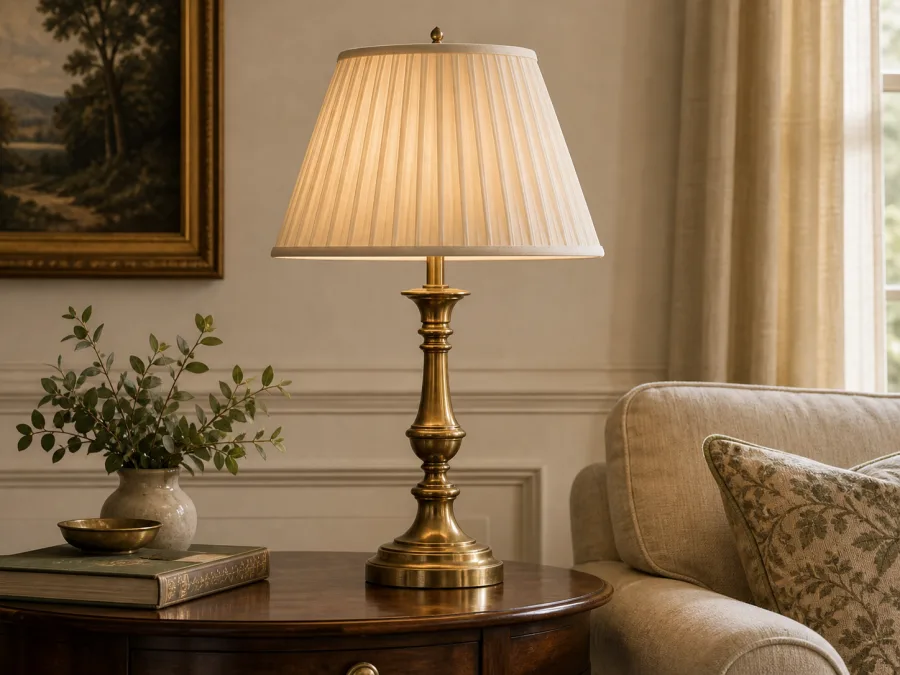
Gives the nightstand a warm, useful layer.
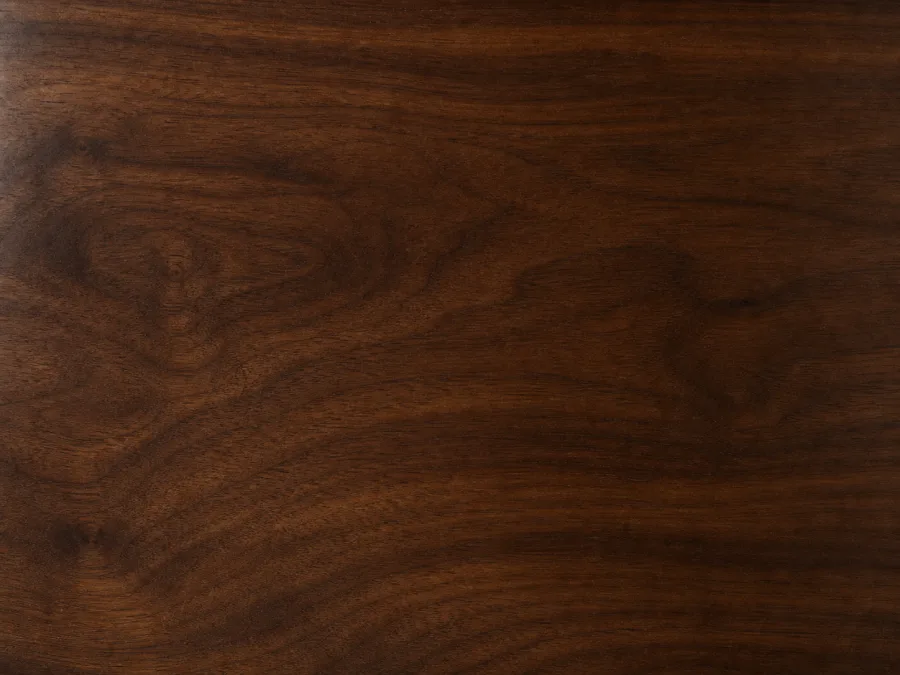
Adds depth through nightstands, frames or a dresser.
Use these checks to keep the traditional character clear without compromising how the bedroom works.
Use related pieces instead of buying every item from the same furniture line.
Balance wood with upholstery, curtains, rug and lighter walls.
Let one textile carry pattern and keep the rest calmer.