01
Built In Library
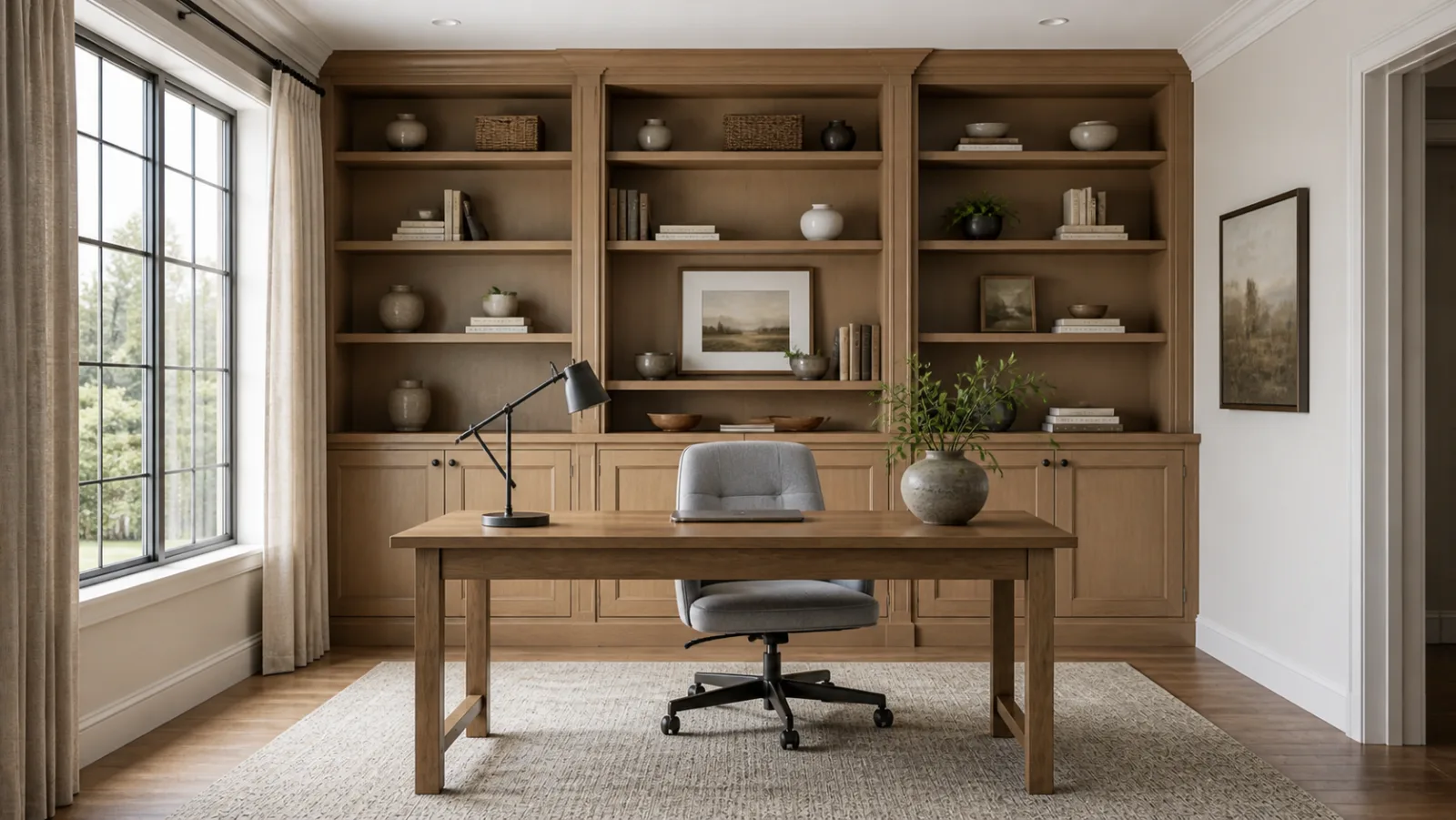
A substantial architectural or furniture anchor establishes the room hierarchy. Check desk depth, side daylight and cable storage before treating the composition as finished.
Five materially and spatially different transitional approaches to the home office, including a compact plan and an evening lighting study.
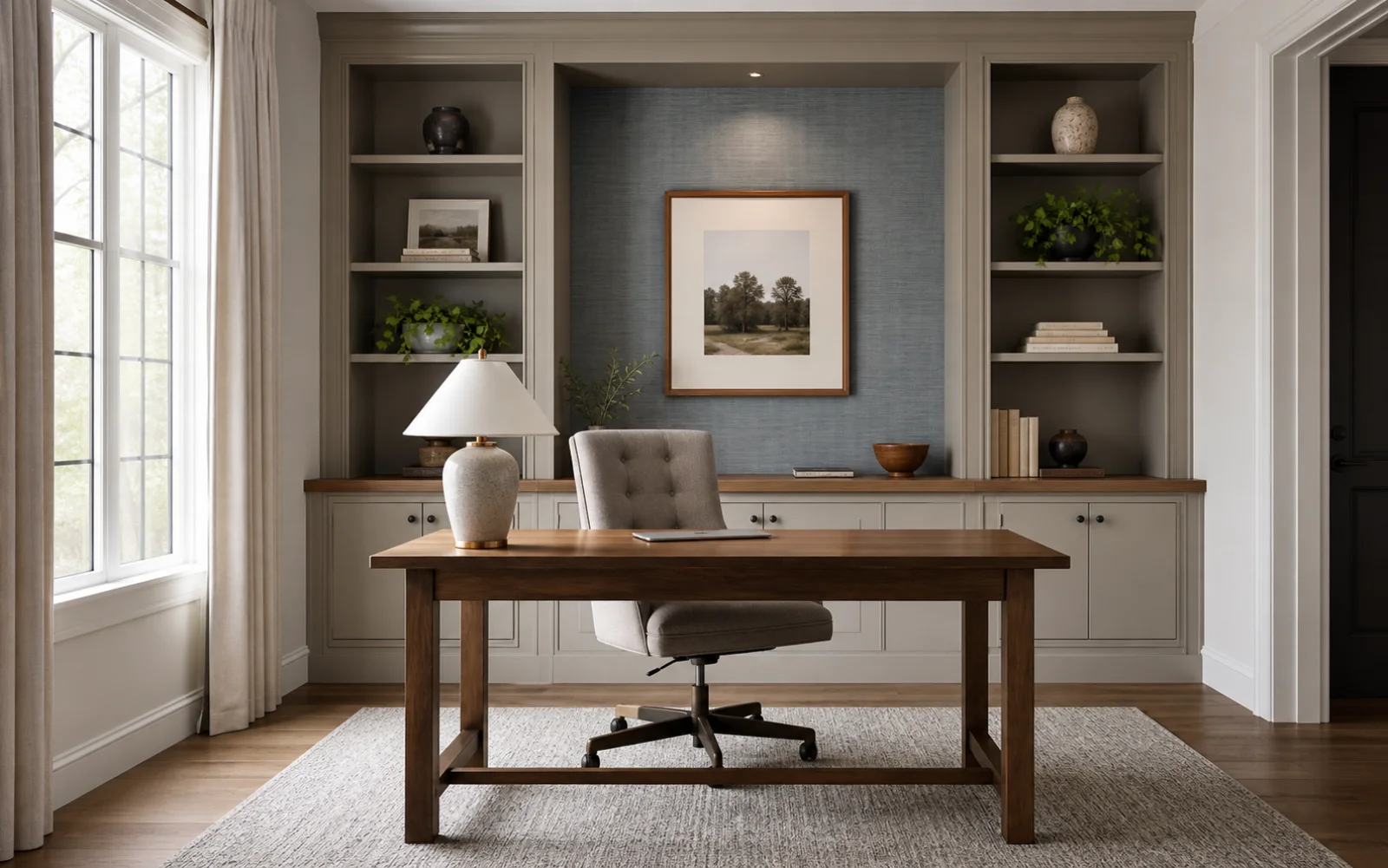
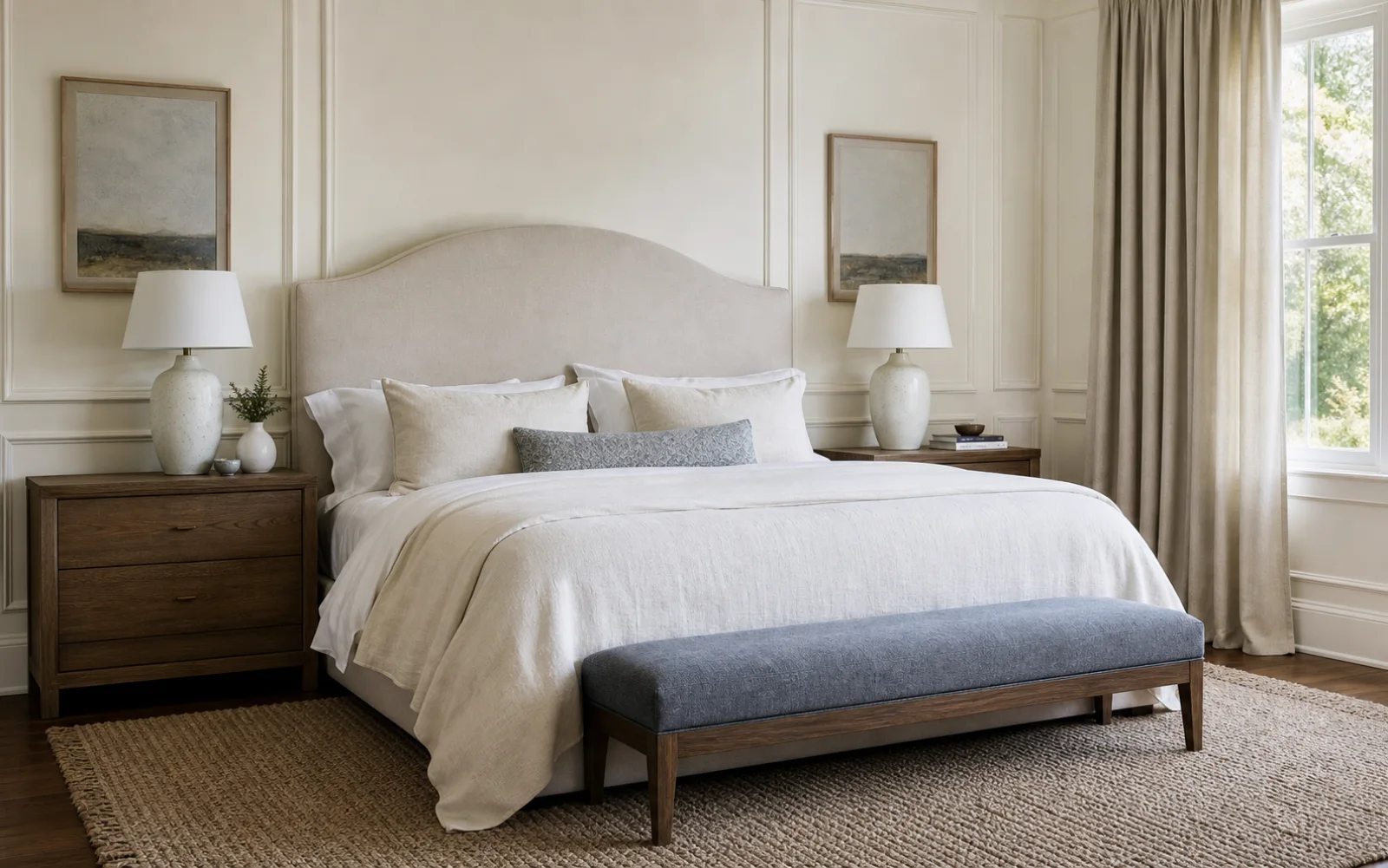
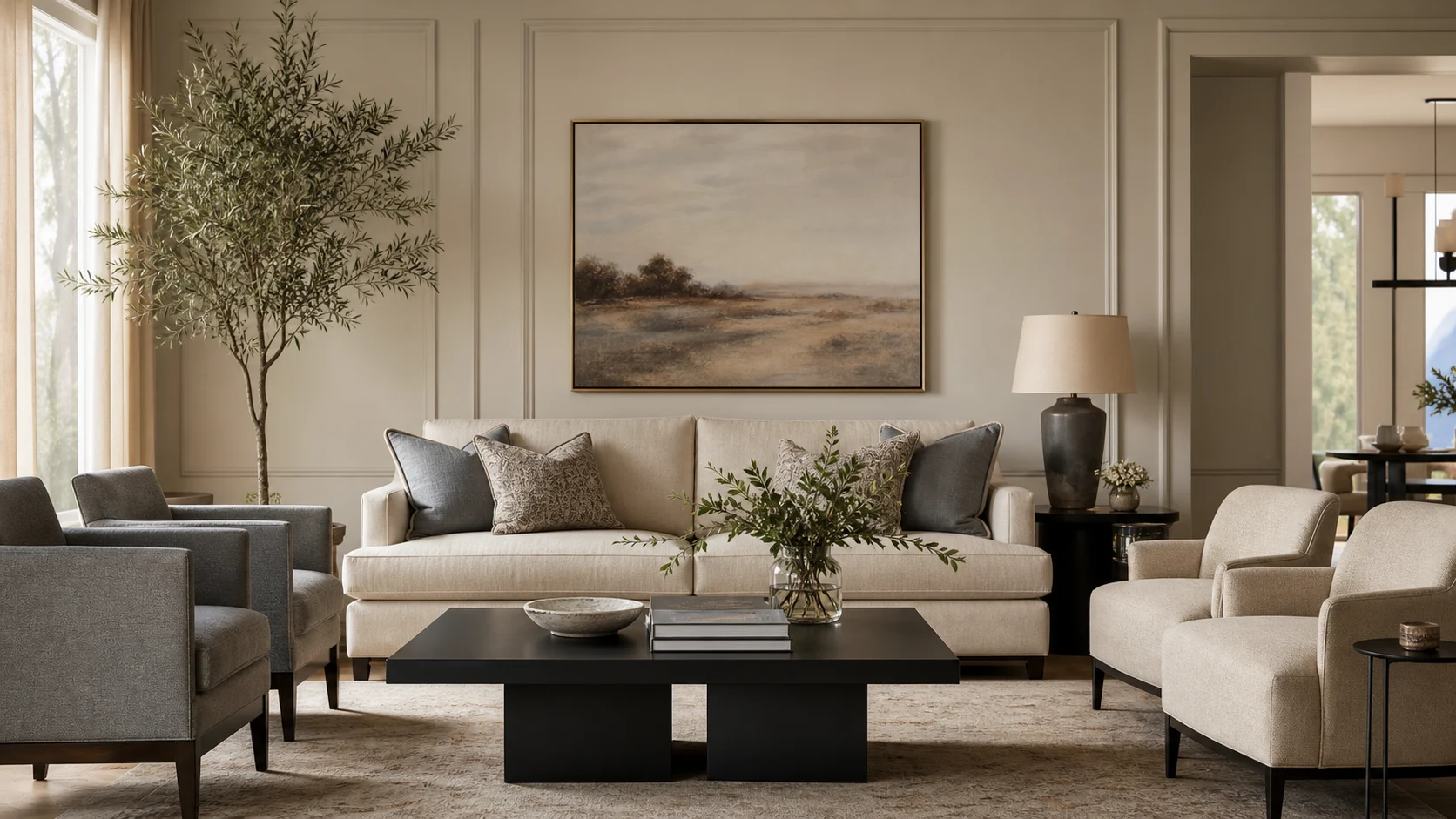
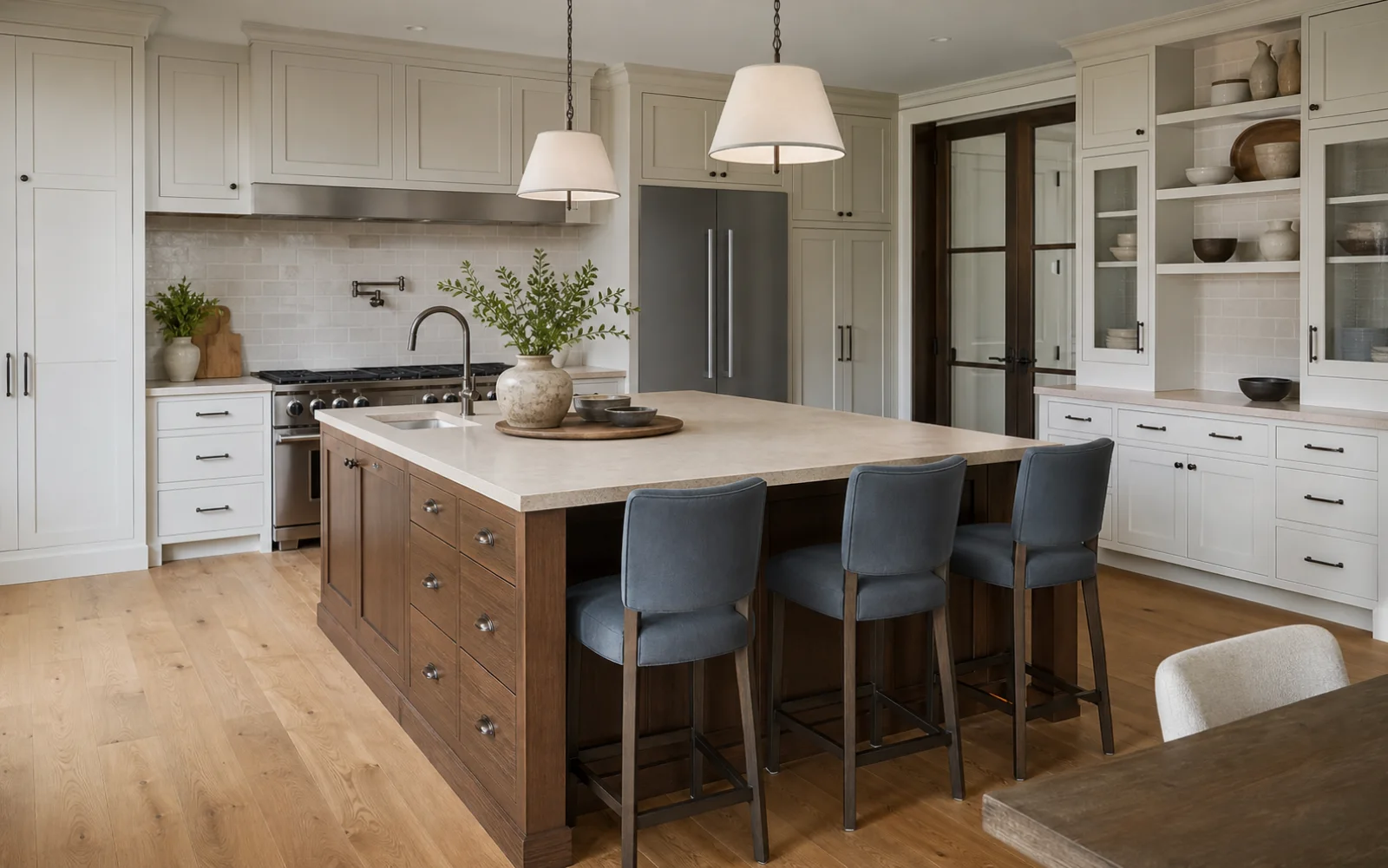
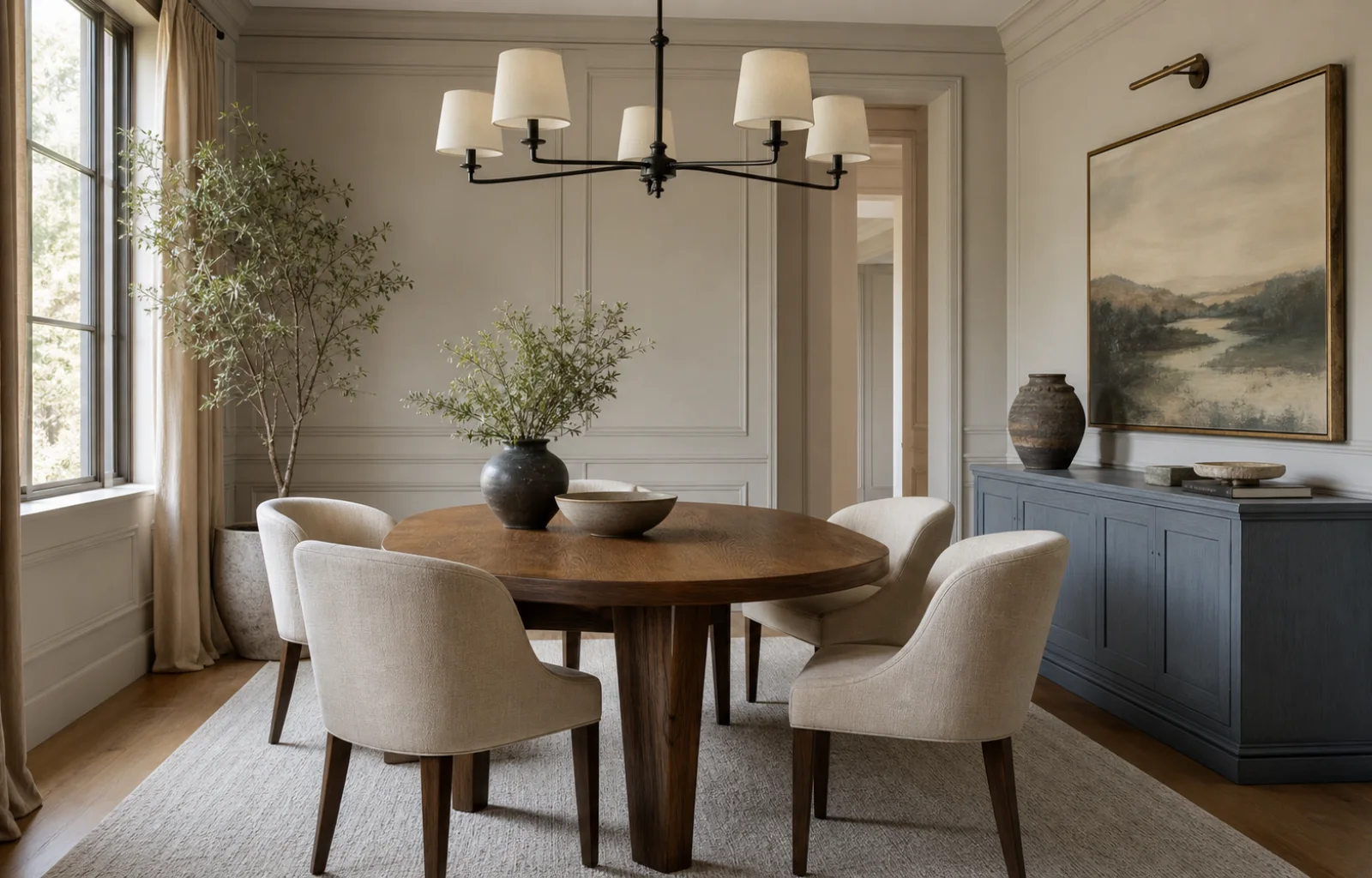
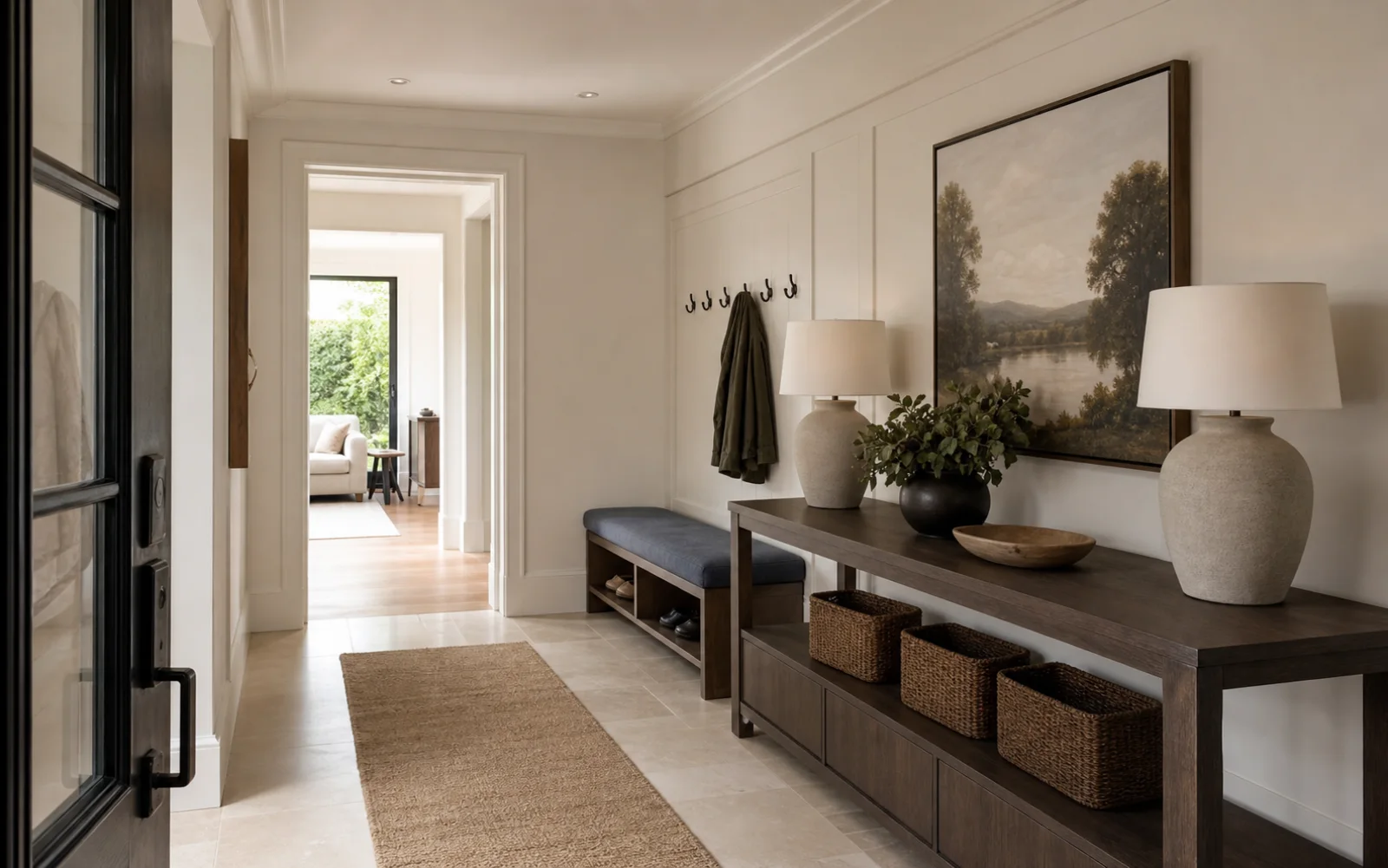
Transitional pairs classic architectural proportion with cleaner contemporary furniture, consistent timber, matte textiles and restrained color. In the home office, that identity must still support focused work, ergonomic support and storage that controls visual noise.
Combine a practical workstation and concealed storage with shallow molding or oak casework, keeping equipment visually quiet. Repeat one timber family and let comfort, circulation and material continuity connect different furniture silhouettes; avoid matching suites and decorative shine.
Use these examples to choose the version of the style that fits your architecture, light and square footage.
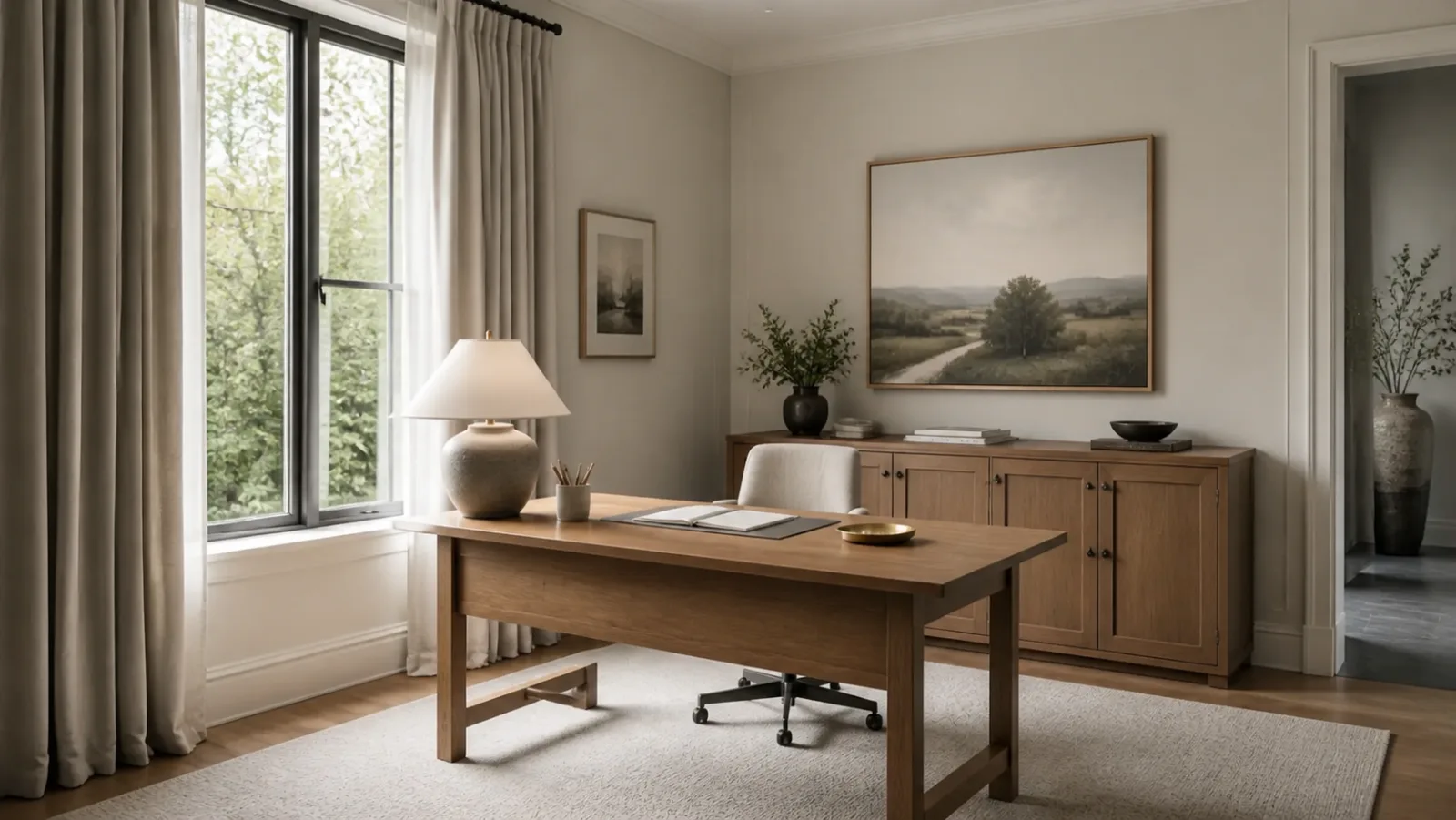
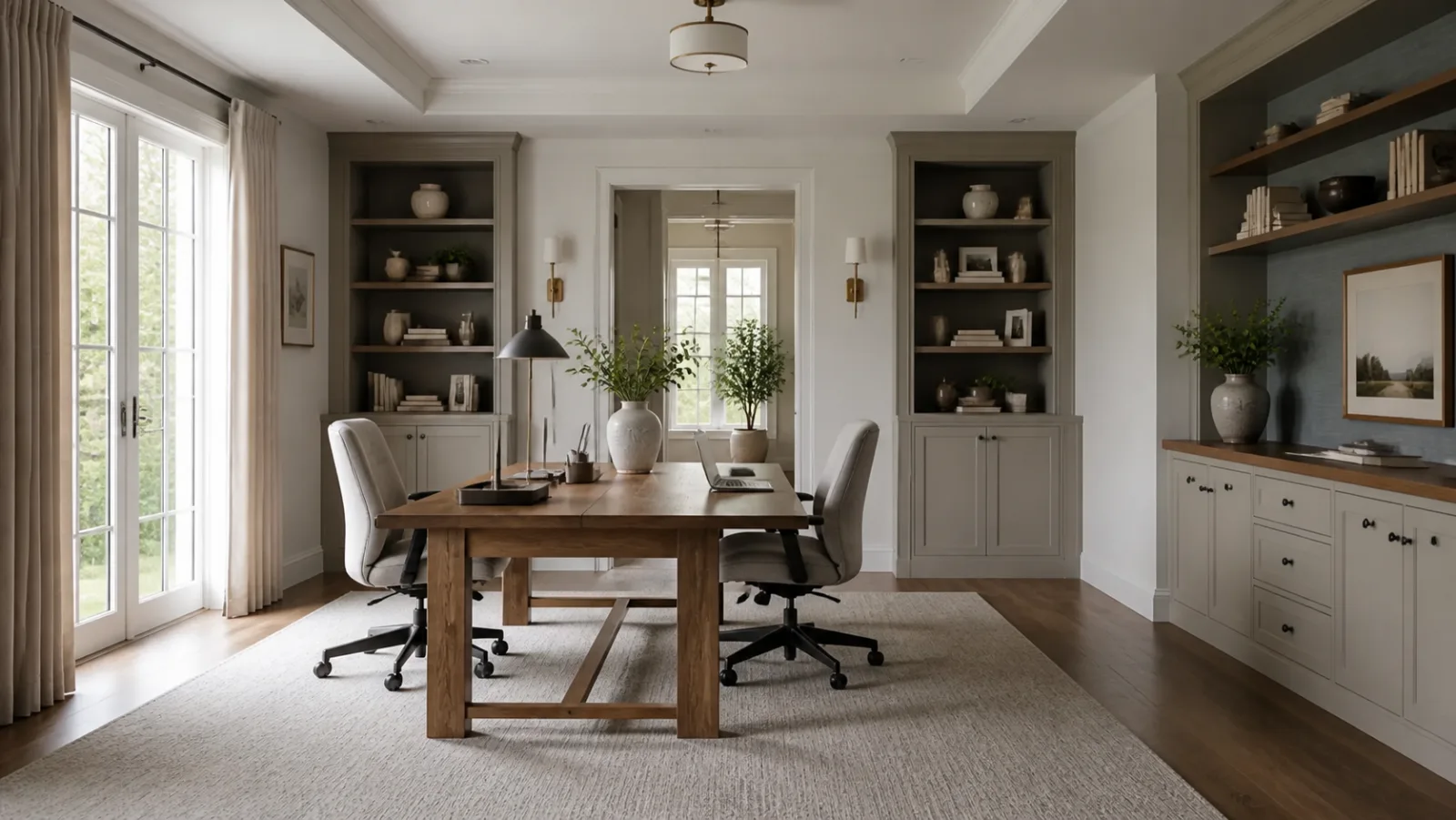
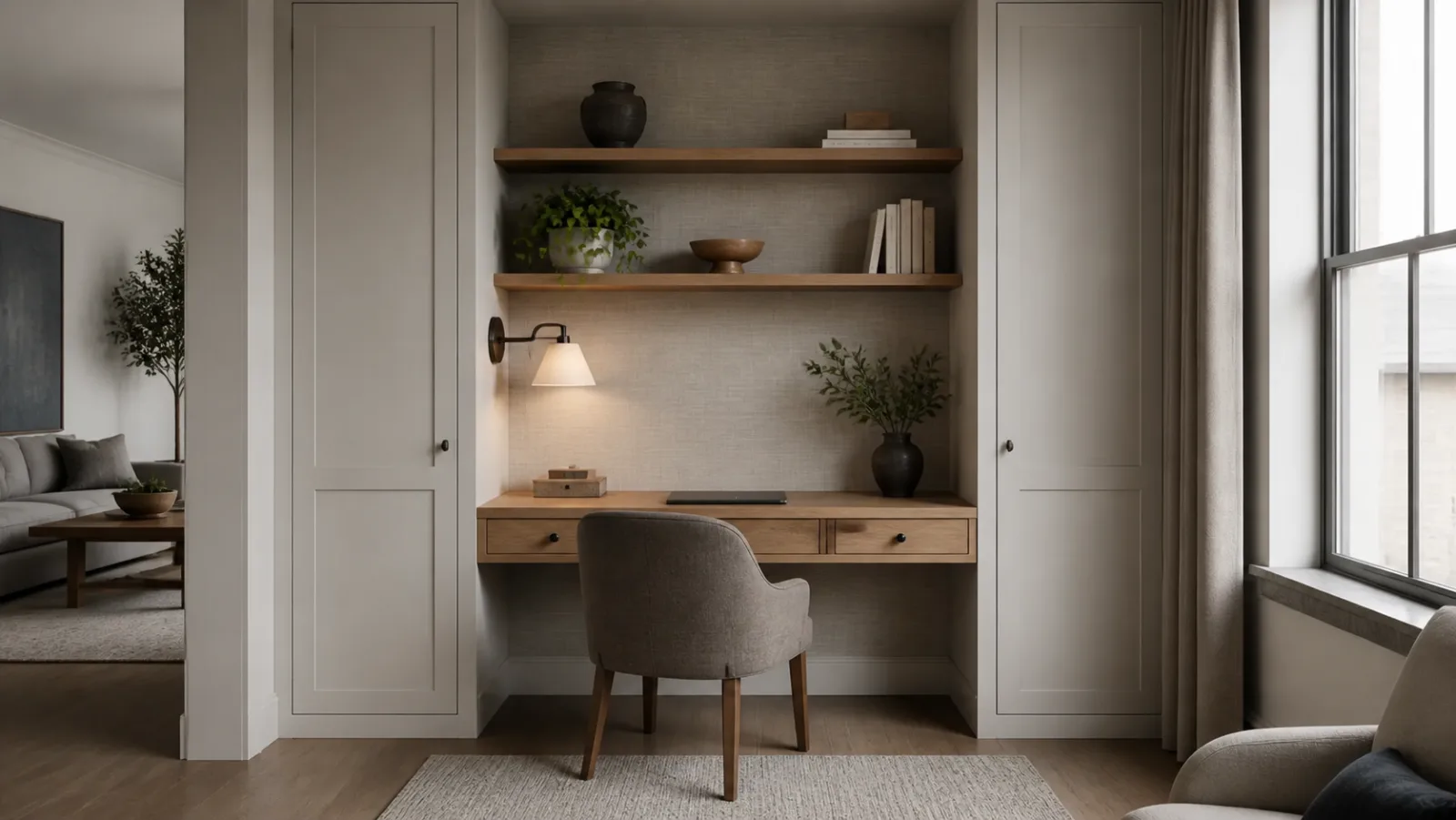
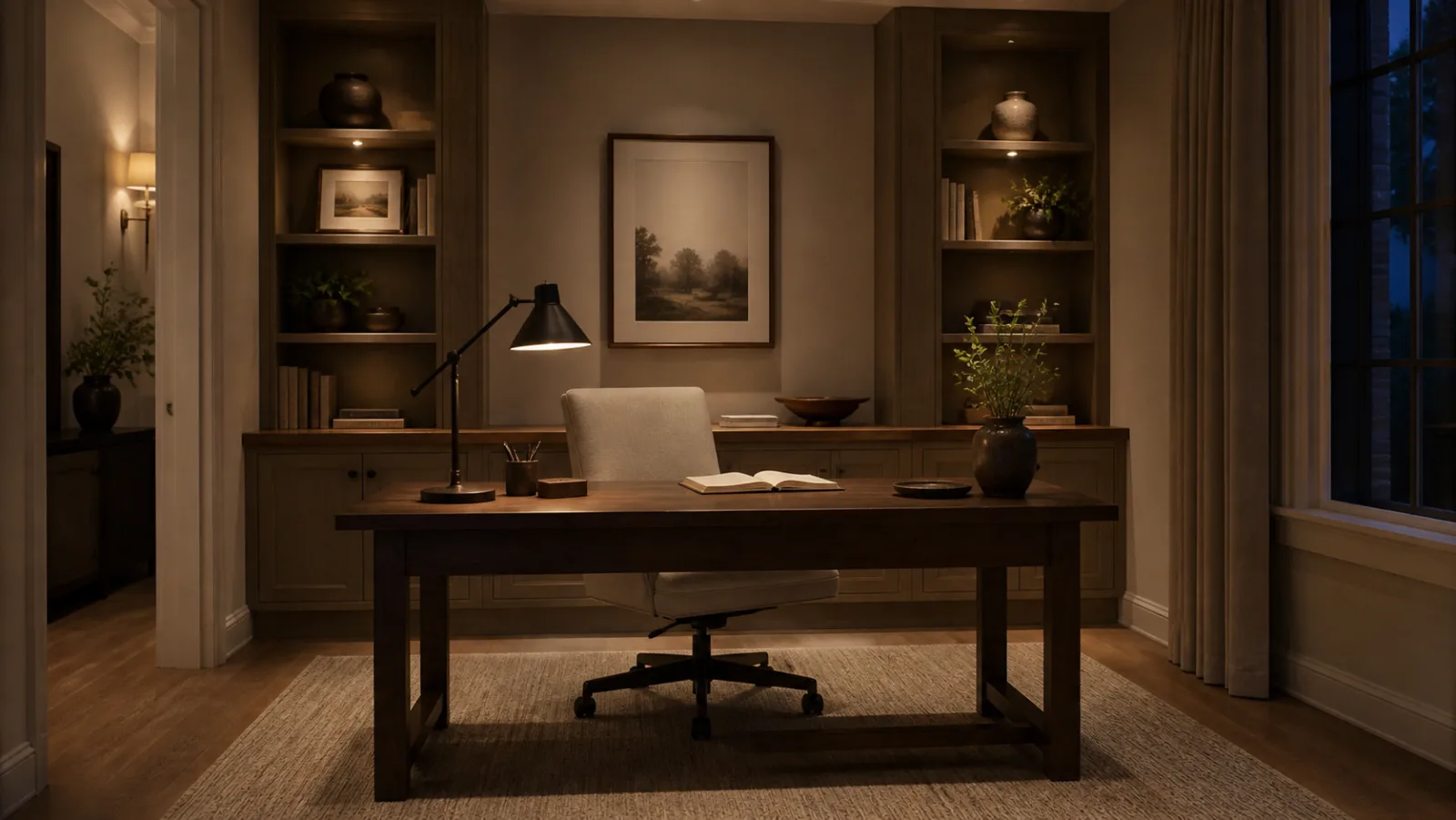
Use the style where it helps the room work: seating, circulation, focal point and material balance.
Side light usually gives useful illumination without placing a bright window directly behind the monitor.
Measure the monitor, keyboard, task lamp and cable route before deciding desk depth and storage.
Use drawers and cabinets for paper, chargers and supplies; reserve open shelves for a small edited group.
If space allows, add one reading chair or standing surface away from the main desk.
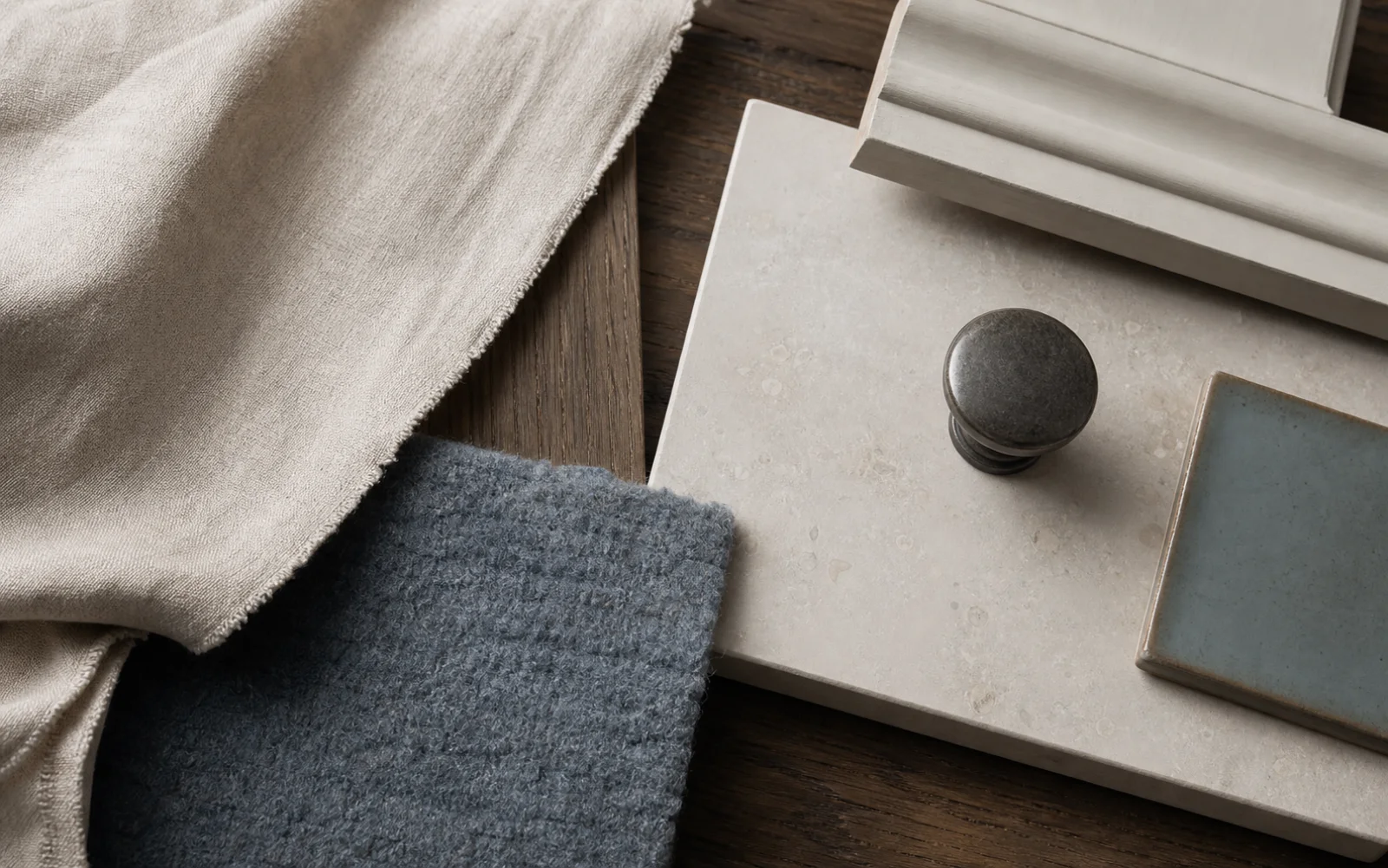
Use ivory and taupe for the envelope, repeat one oak tone across major pieces, then introduce blue-gray or charcoal in a single connected textile or cabinetry family.
A warmer alternative to pure white for molding, cabinetry and large upholstery.
Connects linen, wool, ceramic and limestone without turning every surface beige.
Provides enough grain and depth to anchor pale rooms without appearing formal or heavy.
A calm contrasting note for upholstery, grasscloth or painted storage.
A low-luster hardware finish that bridges traditional shapes and contemporary restraint.
Warm ivory, greige and mushroom keep molding and large upholstery calm.
Repeat medium or dark oak across one or two substantial anchors.
Muted blue-gray, olive or charcoal should distinguish one textile family.
Honed limestone, matte ceramic and aged pewter add depth without glamour.
For this room, a few strong choices can carry the style better than adding more decor.
Combine a practical workstation and concealed storage with shallow molding or oak casework, keeping equipment visually quiet. Confirm the work surface by dimensions, comfort and maintenance before choosing its decorative finish.
Repeat one timber family and let comfort, circulation and material continuity connect different furniture silhouettes; avoid matching suites and decorative shine.
Repeat one timber family and let comfort, circulation and material continuity connect different furniture silhouettes; avoid matching suites and decorative shine.
Repeat one timber family and let comfort, circulation and material continuity connect different furniture silhouettes; avoid matching suites and decorative shine.
Use these checks to keep the transitional character clear without compromising how the home office works.
Allow enough depth for equipment and forearm support rather than choosing only by silhouette.
Turn the desk perpendicular to strong daylight or add an adjustable shade.
Combine a limited display zone with closed files and cable management.