01
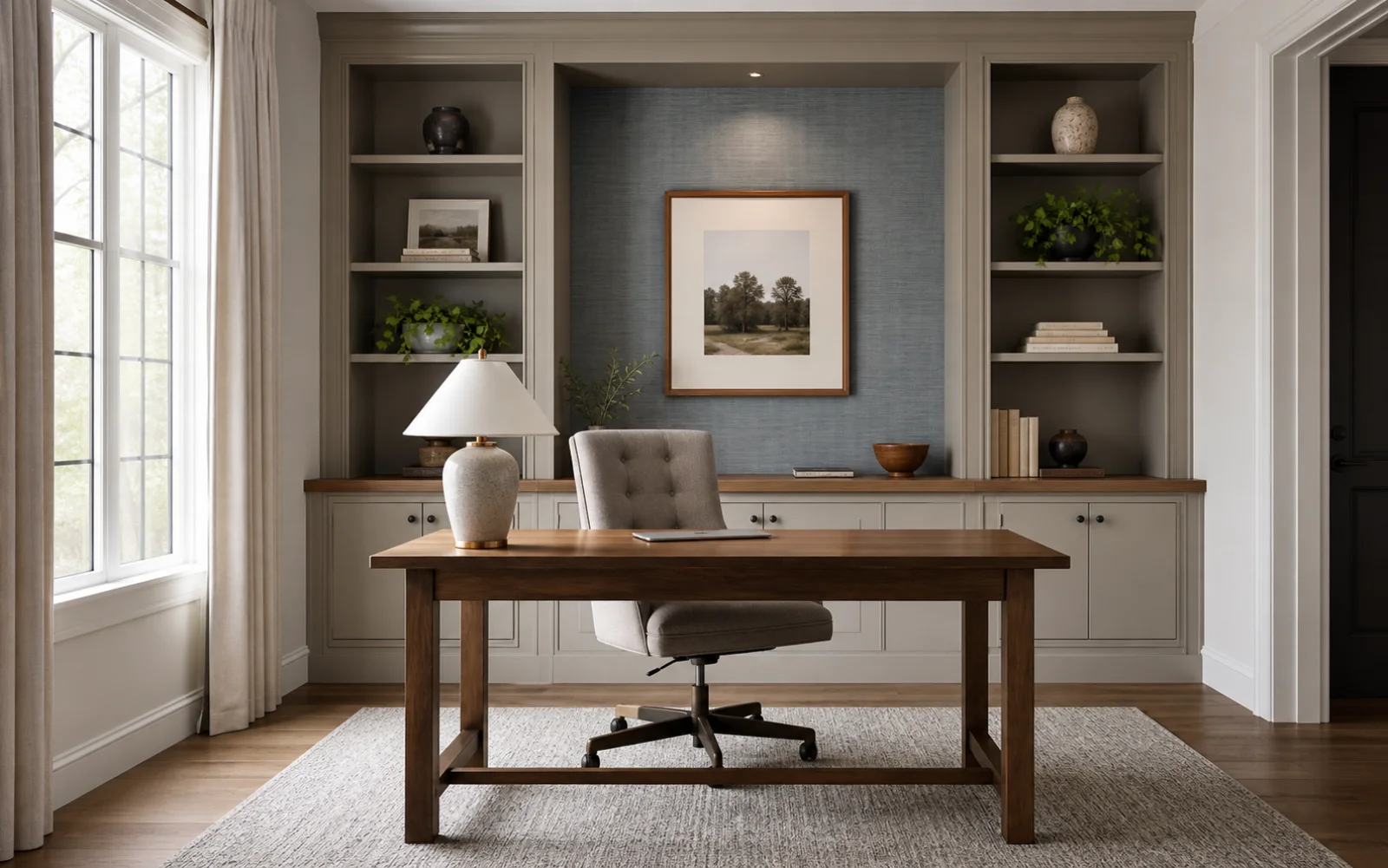
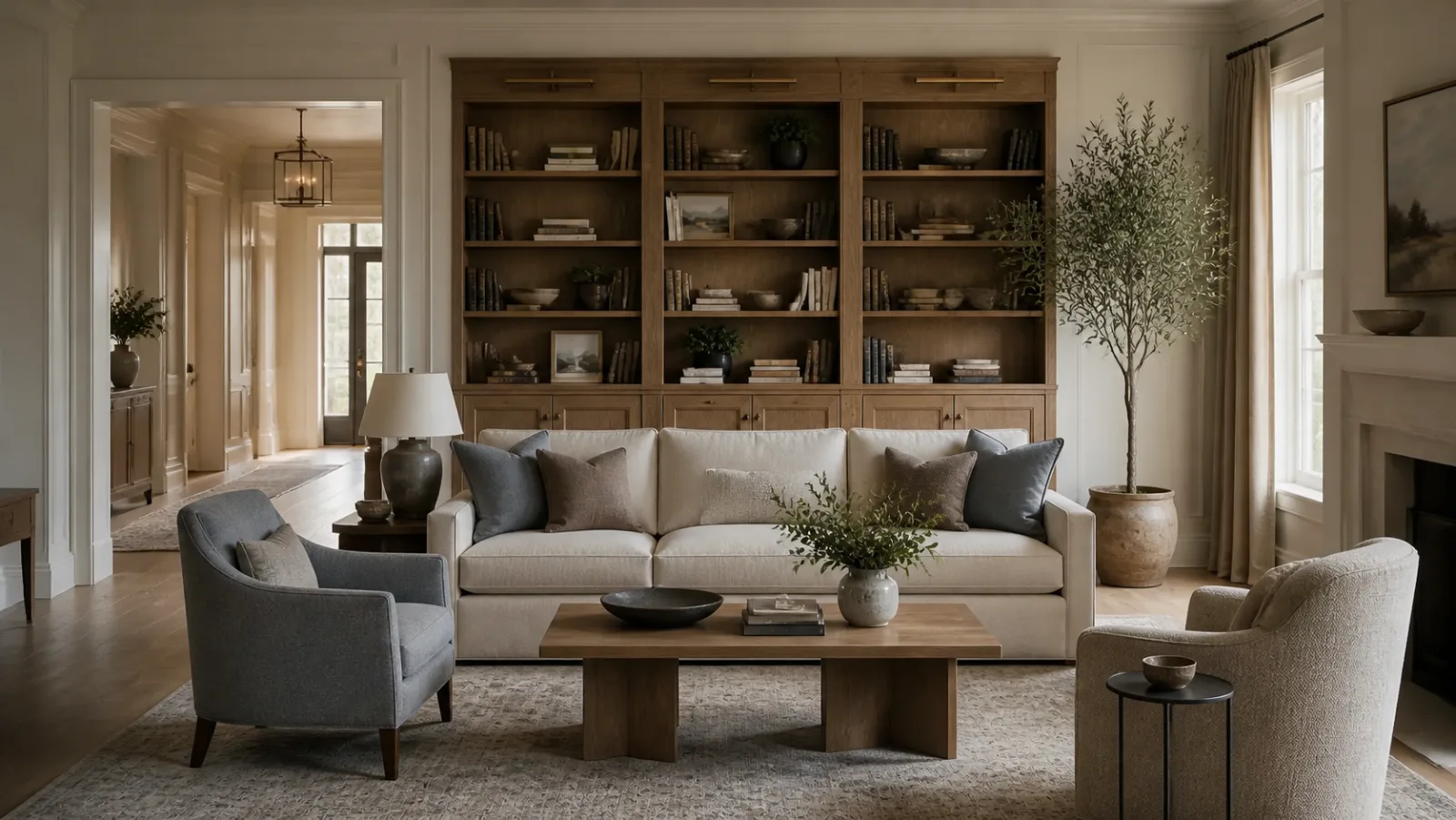
Oak Library
A substantial architectural or furniture anchor establishes the room hierarchy. Keep every seat within easy reach of the central table and outside the main walking route.
Five materially and spatially different transitional approaches to the living room, including a compact plan and an evening lighting study.
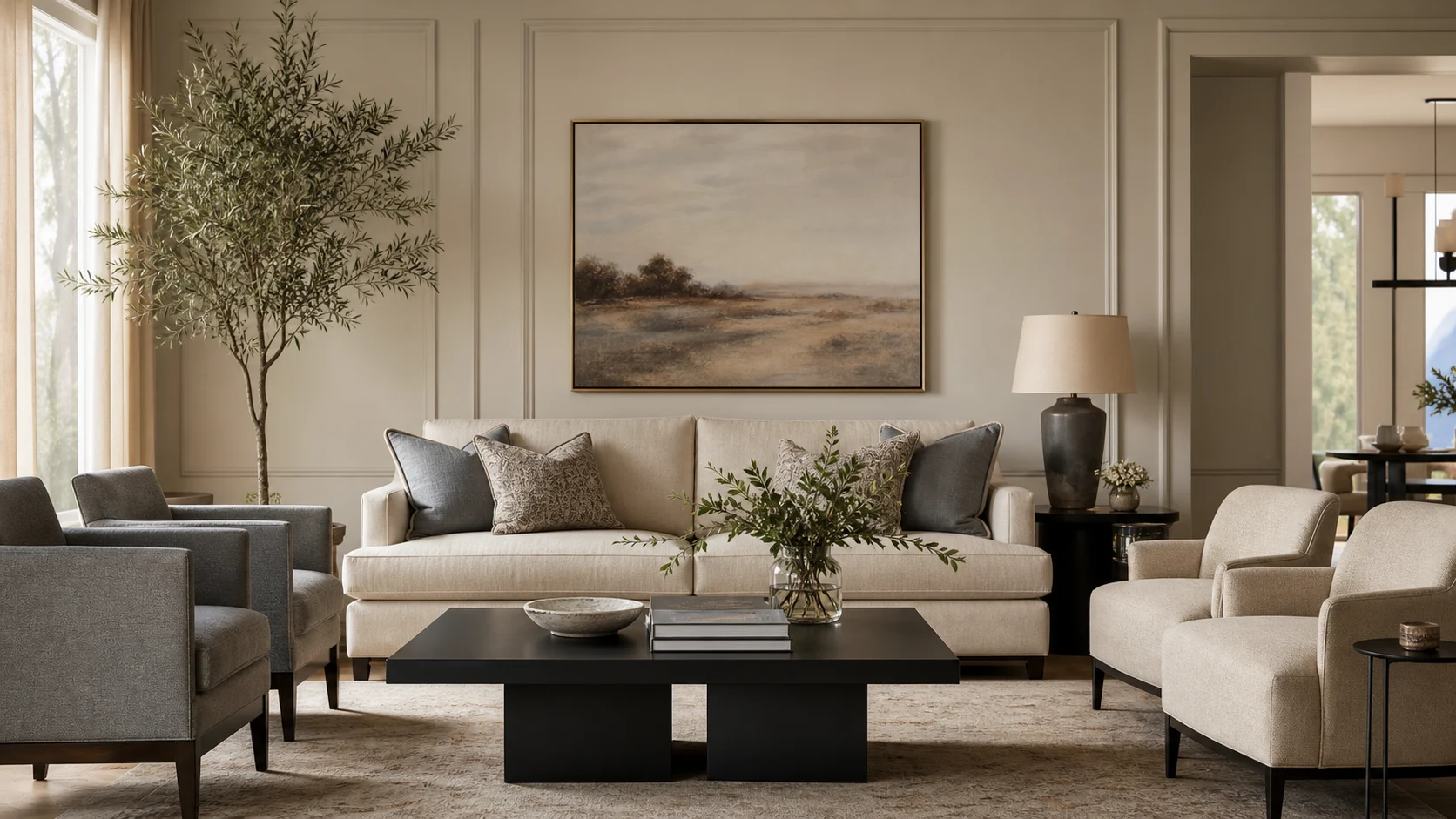
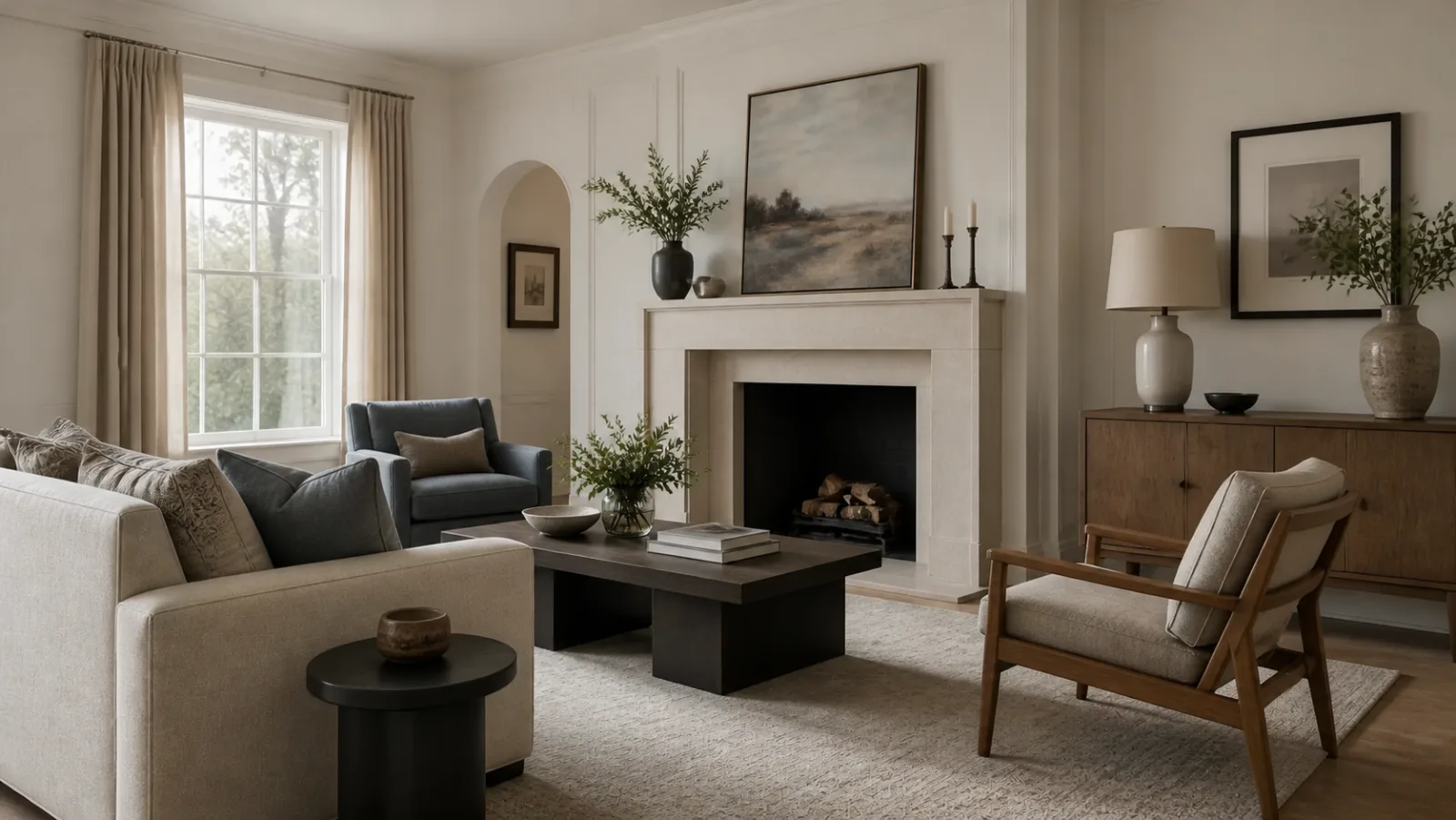
Transitional pairs classic architectural proportion with cleaner contemporary furniture, consistent timber, matte textiles and restrained color. In the living room, that identity must still support conversation, everyday comfort and one readable focal point.
Keep the seating center comfortable and collected rather than perfectly matched, with one architectural or storage anchor establishing order. Repeat one timber family and let comfort, circulation and material continuity connect different furniture silhouettes; avoid matching suites and decorative shine.
Use these examples to choose the version of the style that fits your architecture, light and square footage.
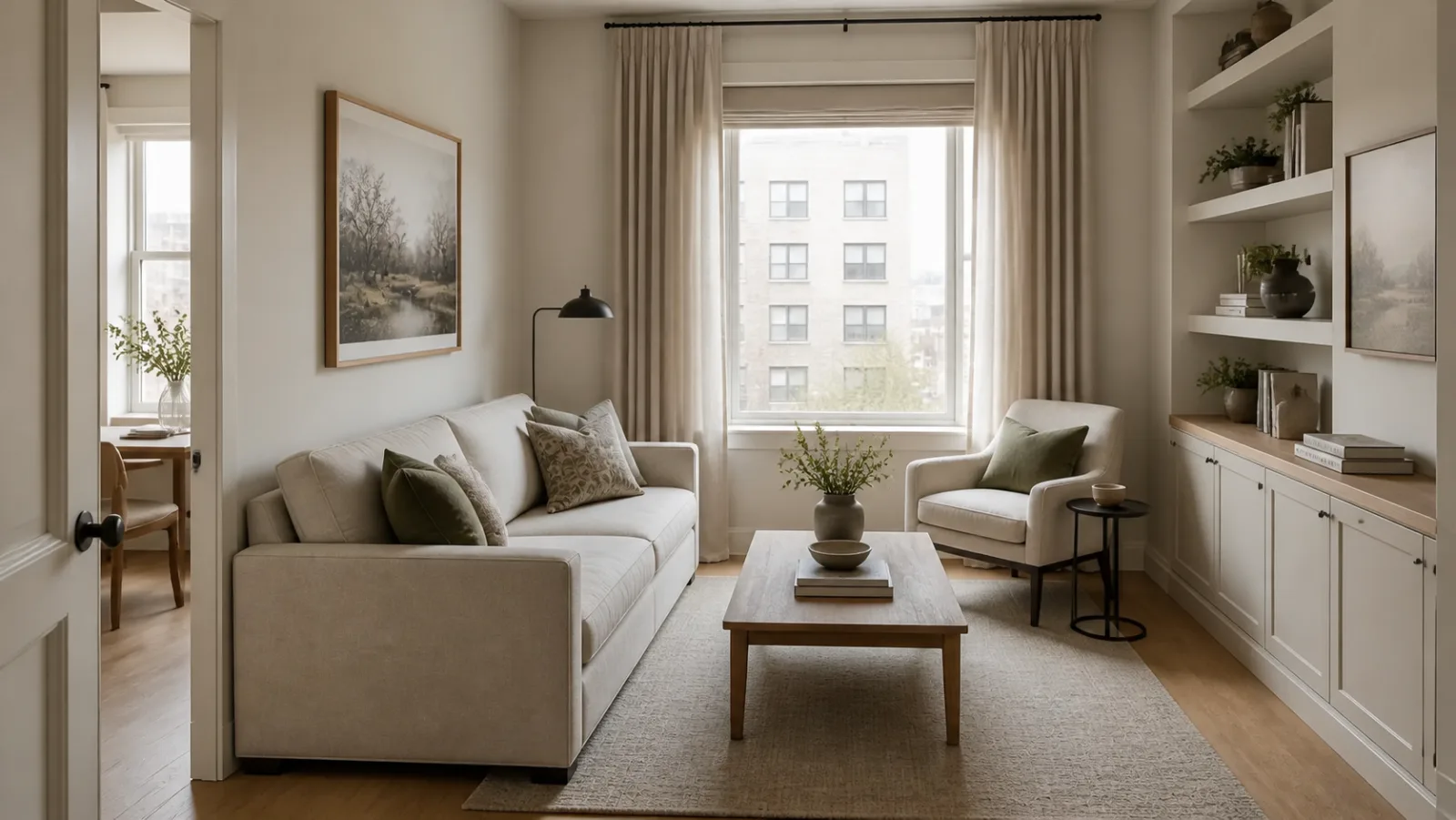
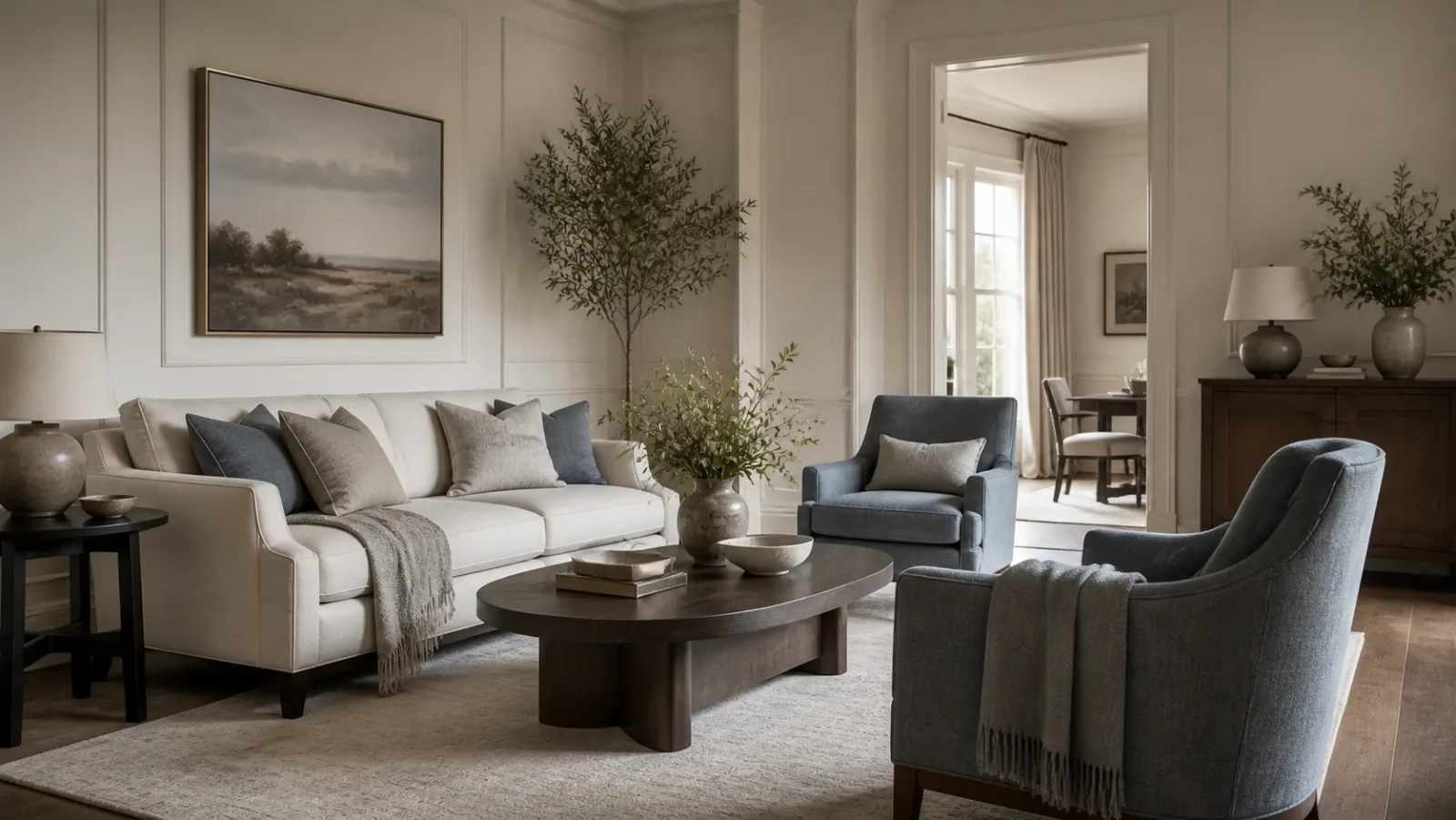
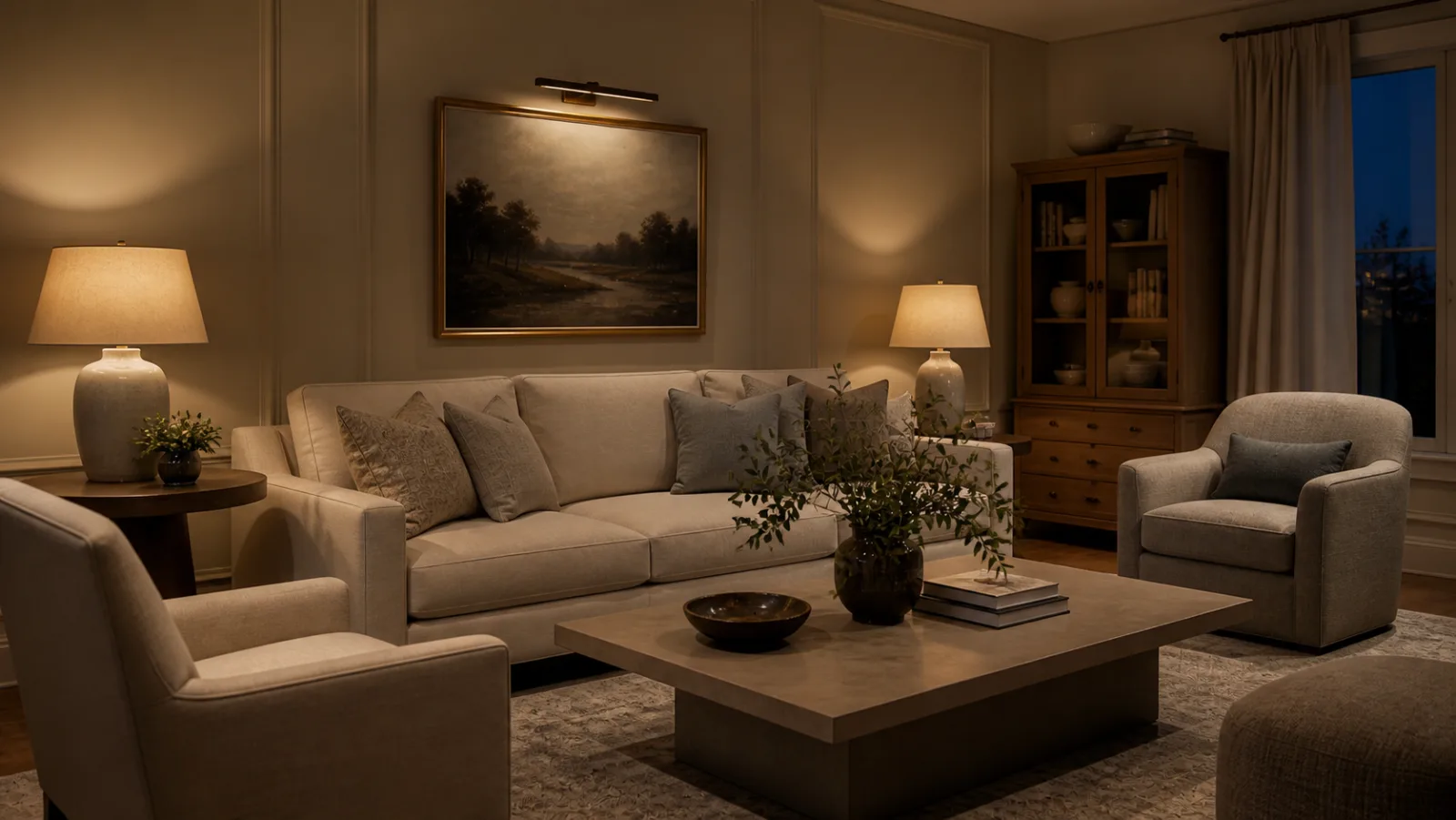
Use the style where it helps the room work: seating, circulation, focal point and material balance.
Keep the main sofa, chairs and table close enough for conversation without closing the route through the room.
Let a hearth, view, artwork or media wall set the furniture direction before adding small objects.
Keep the route from the doorway to adjacent rooms outside the central rug and seating zone.
Use upholstery, a generous rug and curtains to temper stone, timber, glass or metal.
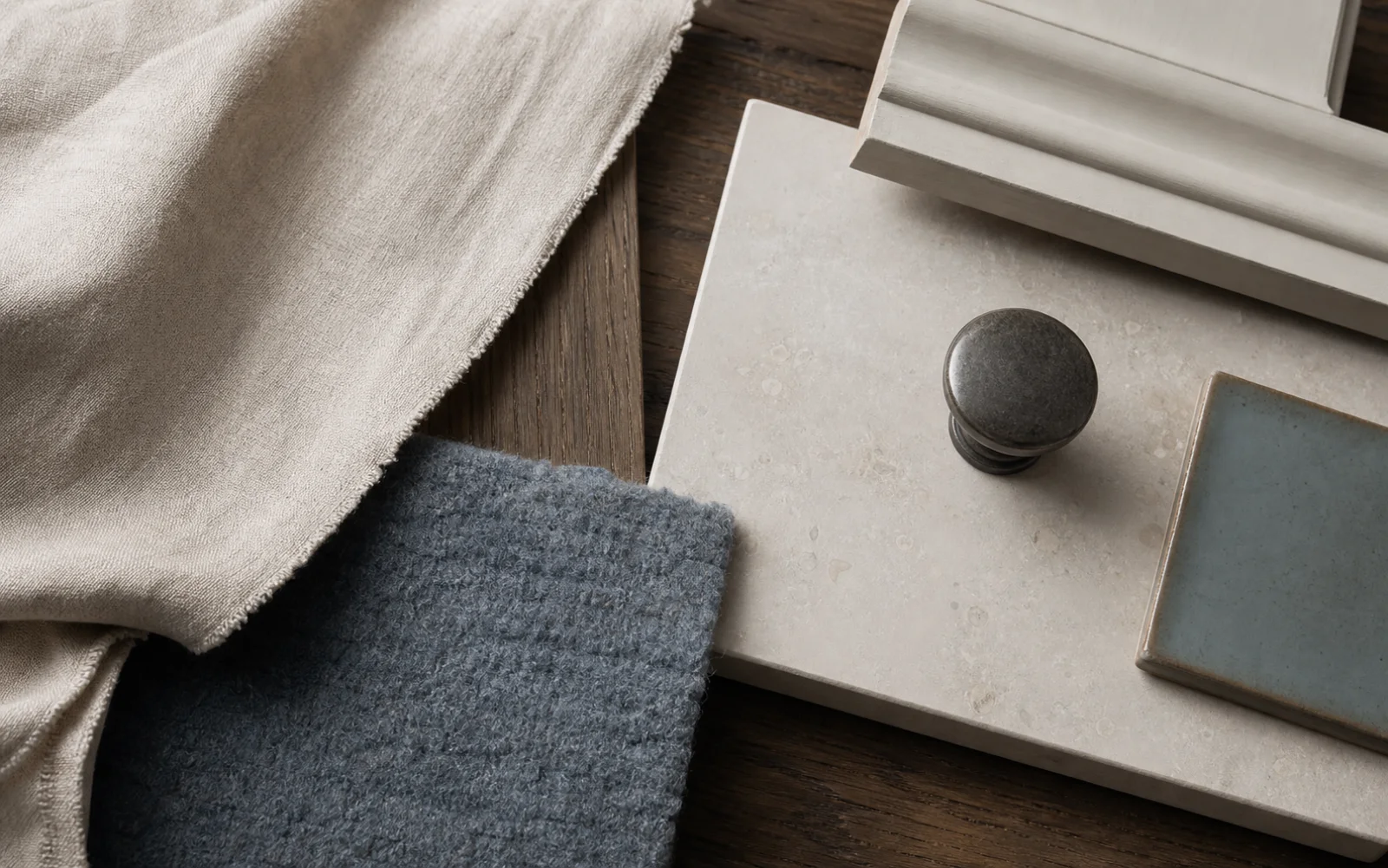
Use ivory and taupe for the envelope, repeat one oak tone across major pieces, then introduce blue-gray or charcoal in a single connected textile or cabinetry family.
A warmer alternative to pure white for molding, cabinetry and large upholstery.
Connects linen, wool, ceramic and limestone without turning every surface beige.
Provides enough grain and depth to anchor pale rooms without appearing formal or heavy.
A calm contrasting note for upholstery, grasscloth or painted storage.
A low-luster hardware finish that bridges traditional shapes and contemporary restraint.
Warm ivory, greige and mushroom keep molding and large upholstery calm.
Repeat medium or dark oak across one or two substantial anchors.
Muted blue-gray, olive or charcoal should distinguish one textile family.
Honed limestone, matte ceramic and aged pewter add depth without glamour.
For this room, a few strong choices can carry the style better than adding more decor.
Keep the seating center comfortable and collected rather than perfectly matched, with one architectural or storage anchor establishing order. Confirm the primary seating by dimensions, comfort and maintenance before choosing its decorative finish.
Repeat one timber family and let comfort, circulation and material continuity connect different furniture silhouettes; avoid matching suites and decorative shine.
Repeat one timber family and let comfort, circulation and material continuity connect different furniture silhouettes; avoid matching suites and decorative shine.
Repeat one timber family and let comfort, circulation and material continuity connect different furniture silhouettes; avoid matching suites and decorative shine.
Use these checks to keep the transitional character clear without compromising how the living room works.
Pull at least part of the seating group inward so the room has a clear social center.
Choose one primary focal point and let the television, view and artwork take supporting roles.
Resolve seat depth, table reach and lighting before adding decorative layers.