01
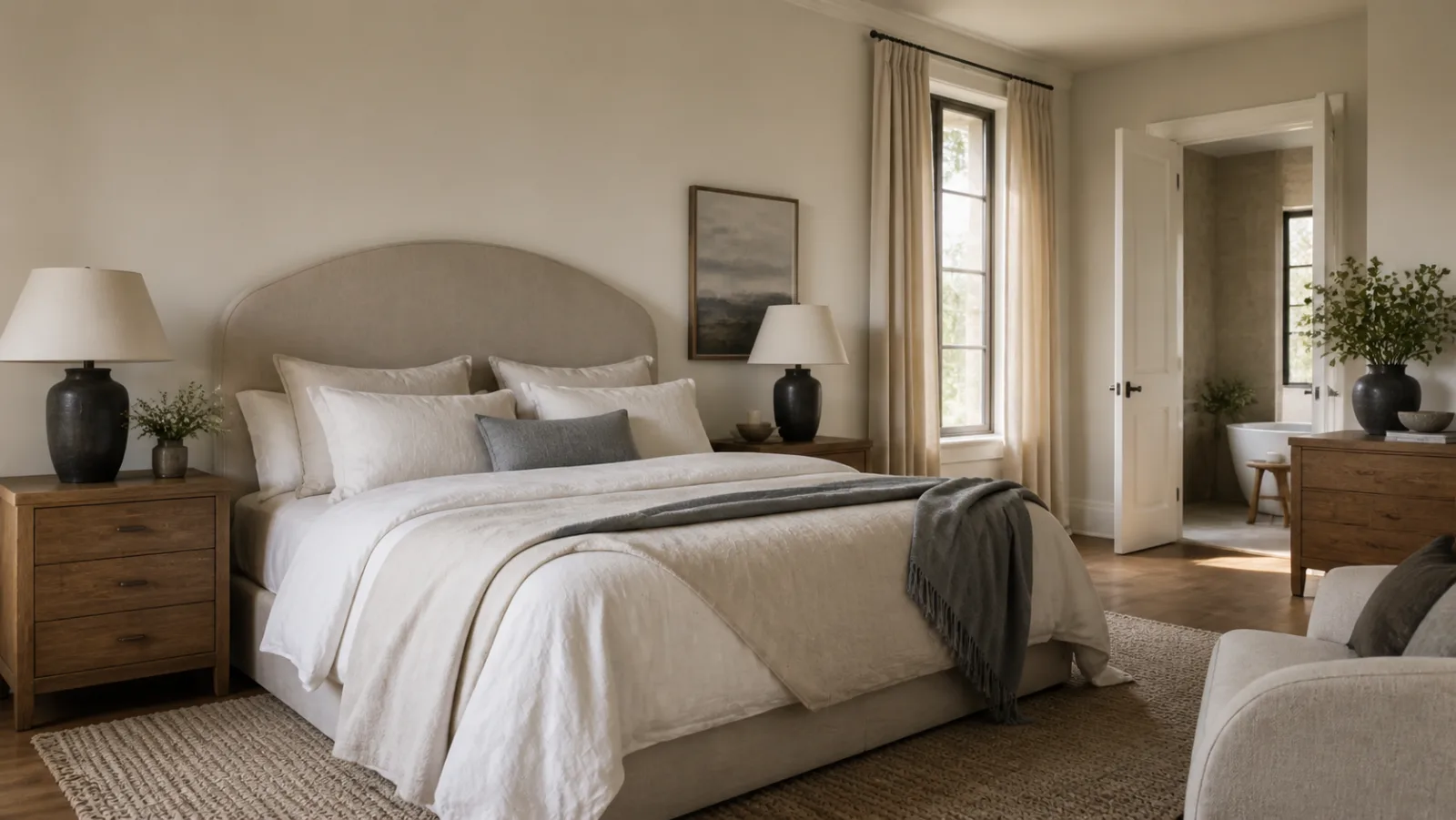
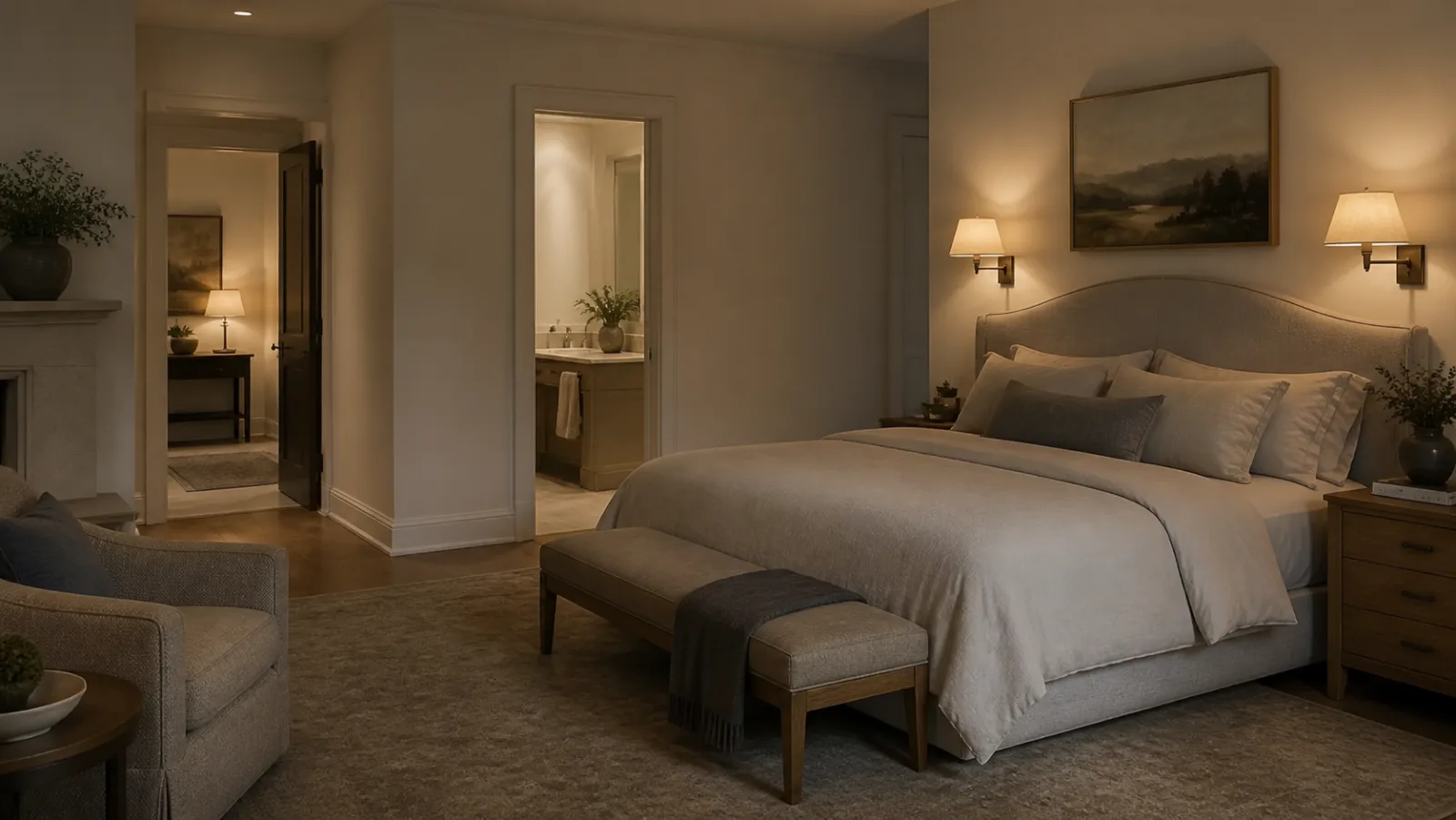
Arched Headboard
A substantial architectural or furniture anchor establishes the room hierarchy. Preserve a calm bedside zone and a clear path from the door to storage.
Five materially and spatially different transitional approaches to the bedroom, including a compact plan and an evening lighting study.
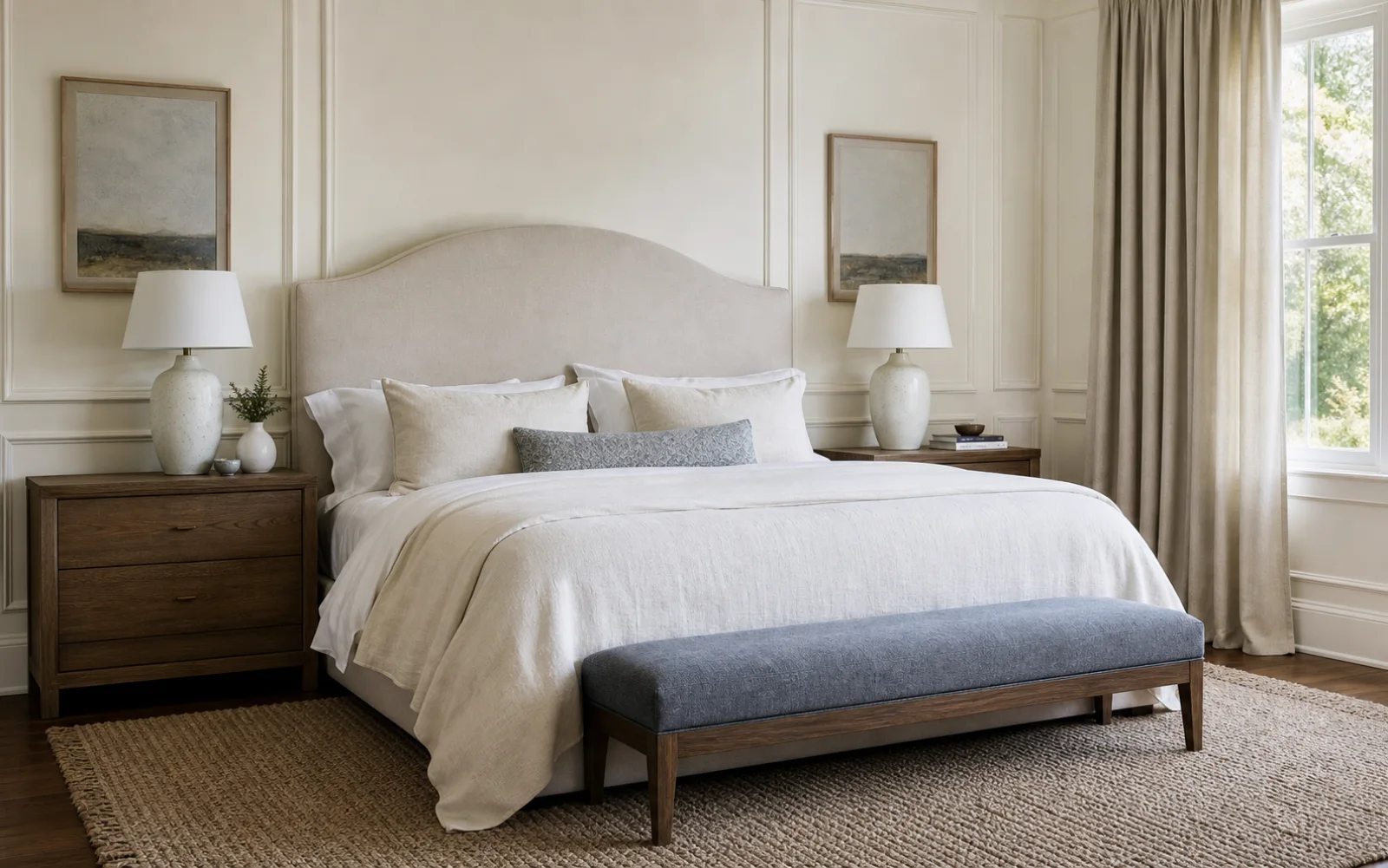
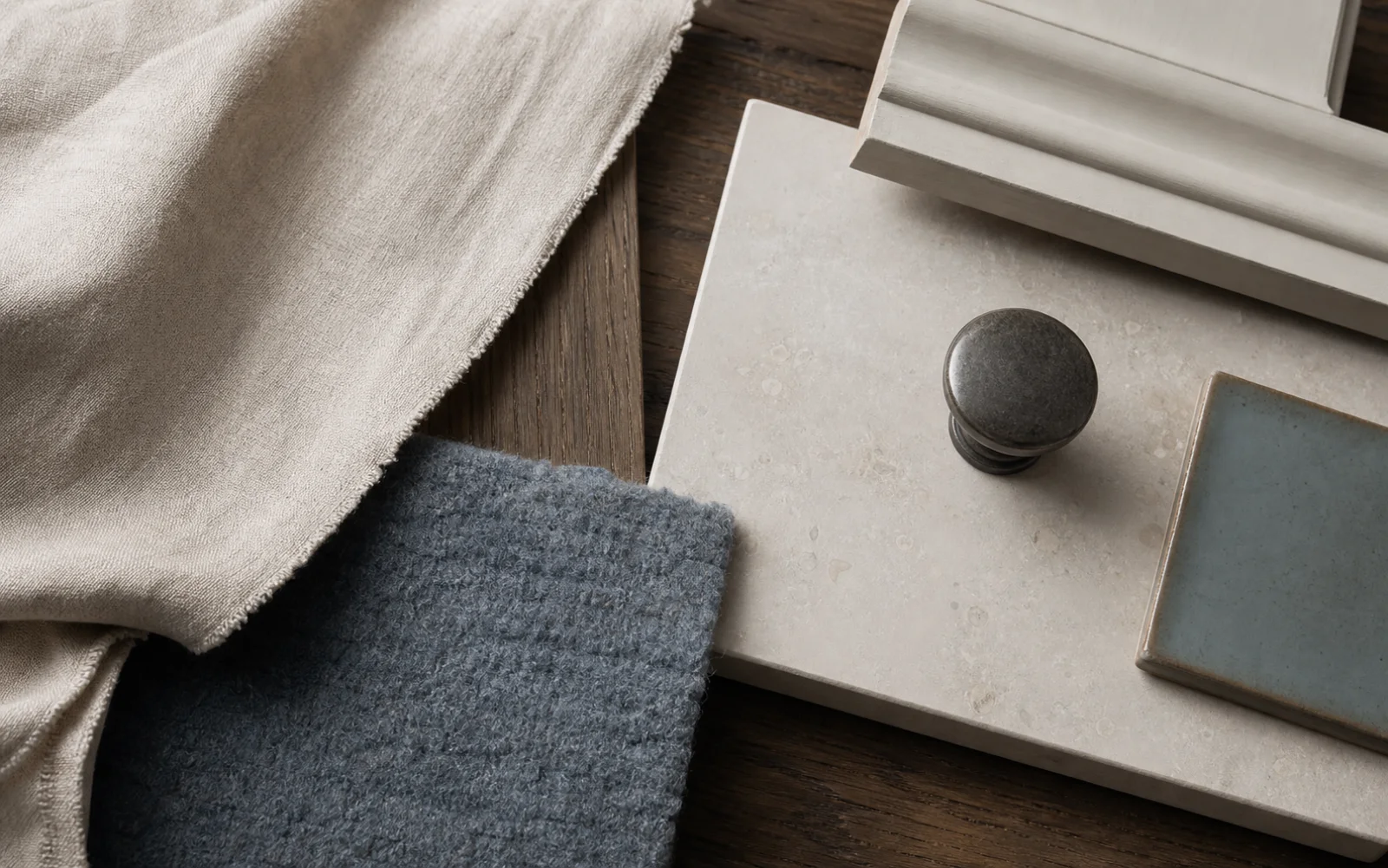
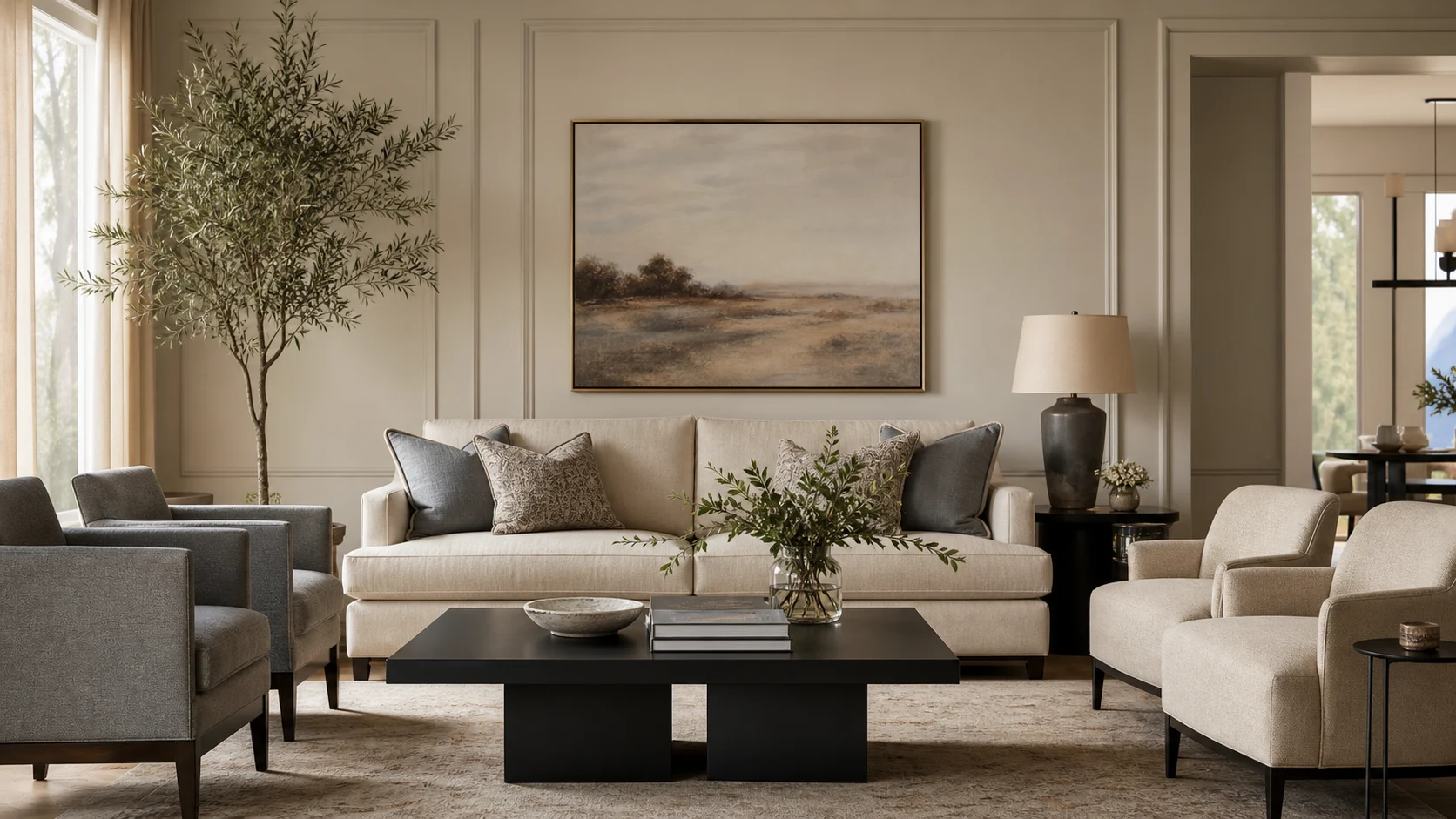
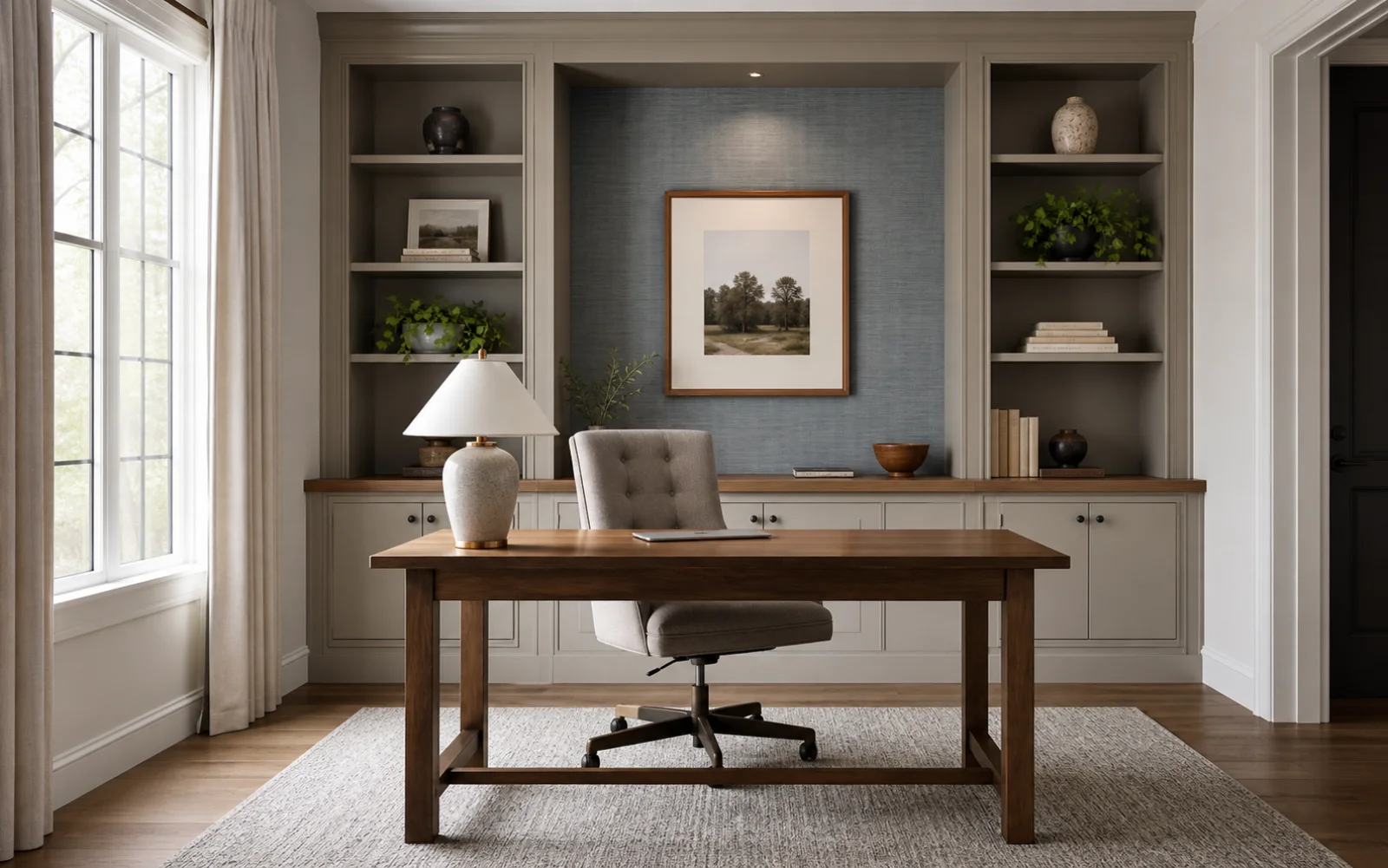
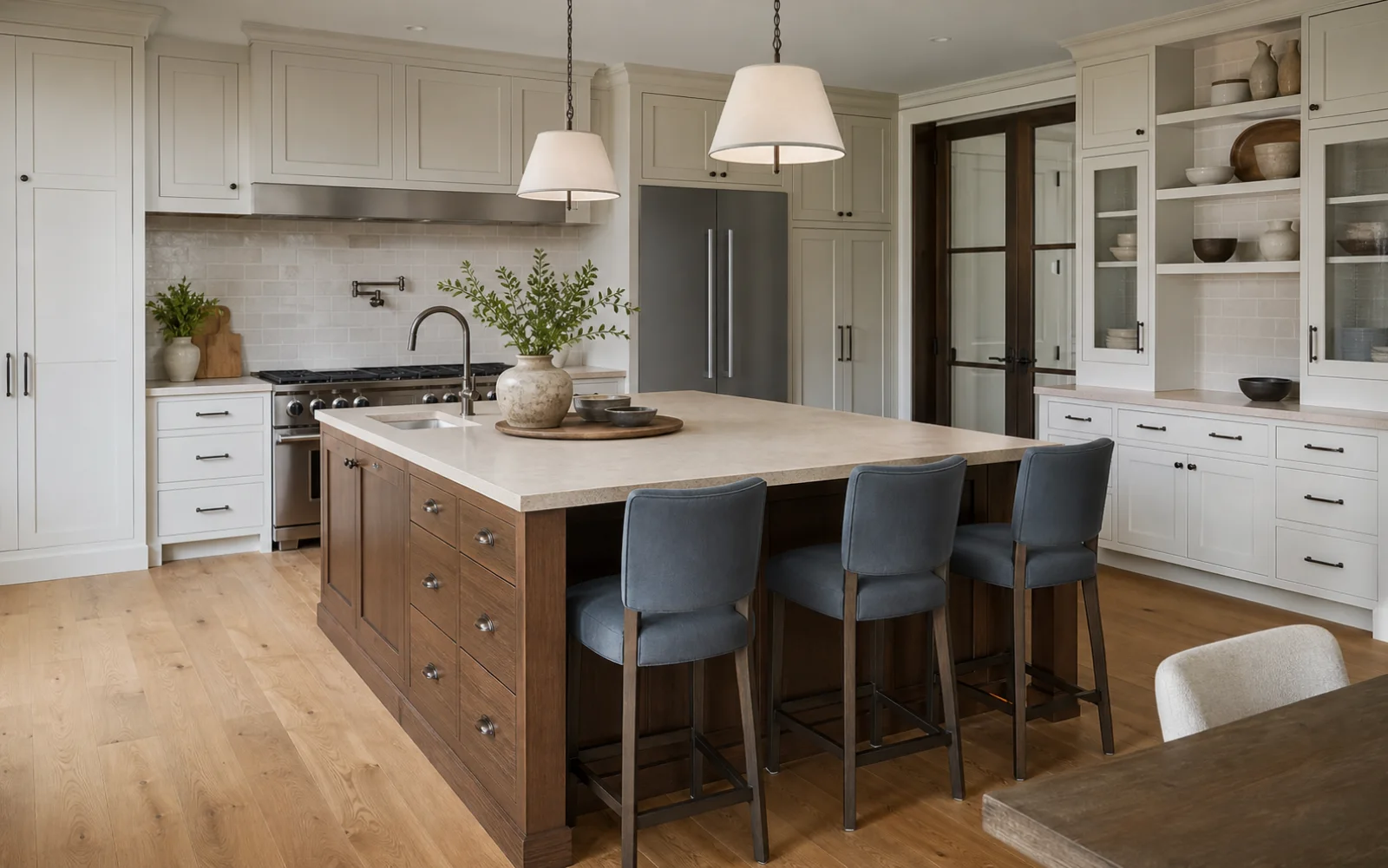
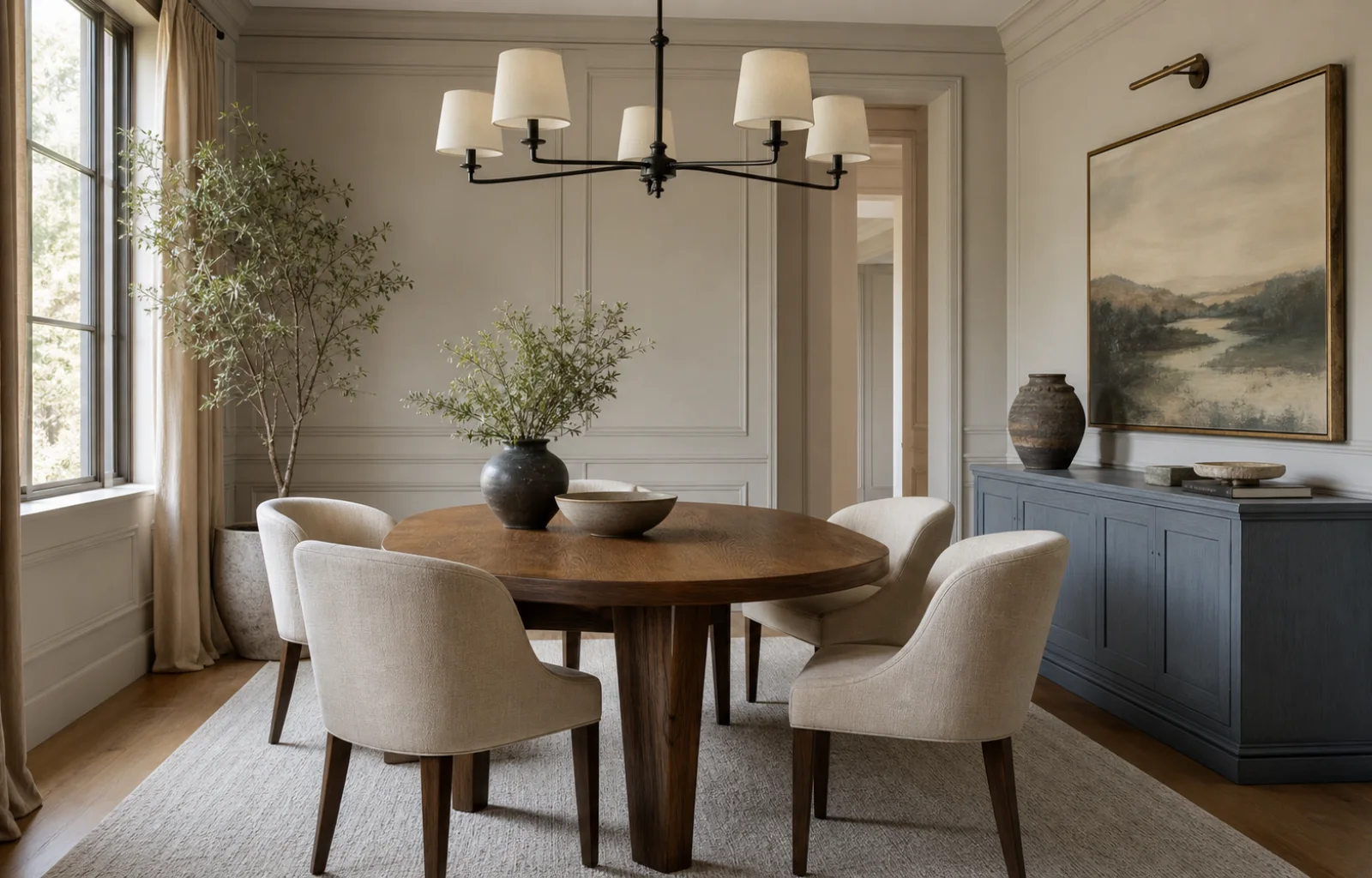
Transitional pairs classic architectural proportion with cleaner contemporary furniture, consistent timber, matte textiles and restrained color. In the bedroom, that identity must still support rest, low visual stimulation and an unobstructed route around the bed.
Let a gently shaped upholstered bed supply the classic note, then simplify casegoods, bedding and lighting around it. Repeat one timber family and let comfort, circulation and material continuity connect different furniture silhouettes; avoid matching suites and decorative shine.
Use these examples to choose the version of the style that fits your architecture, light and square footage.
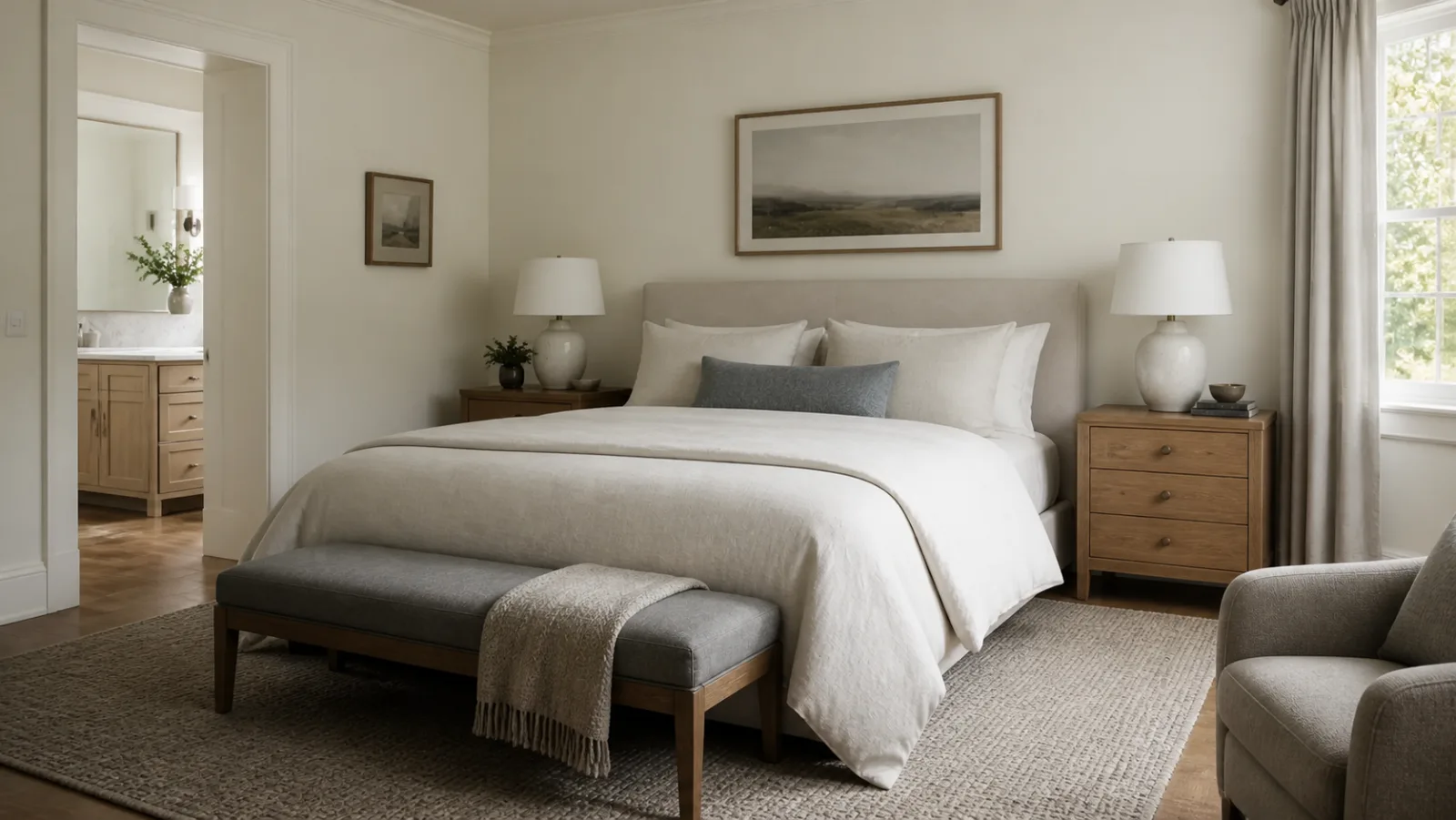
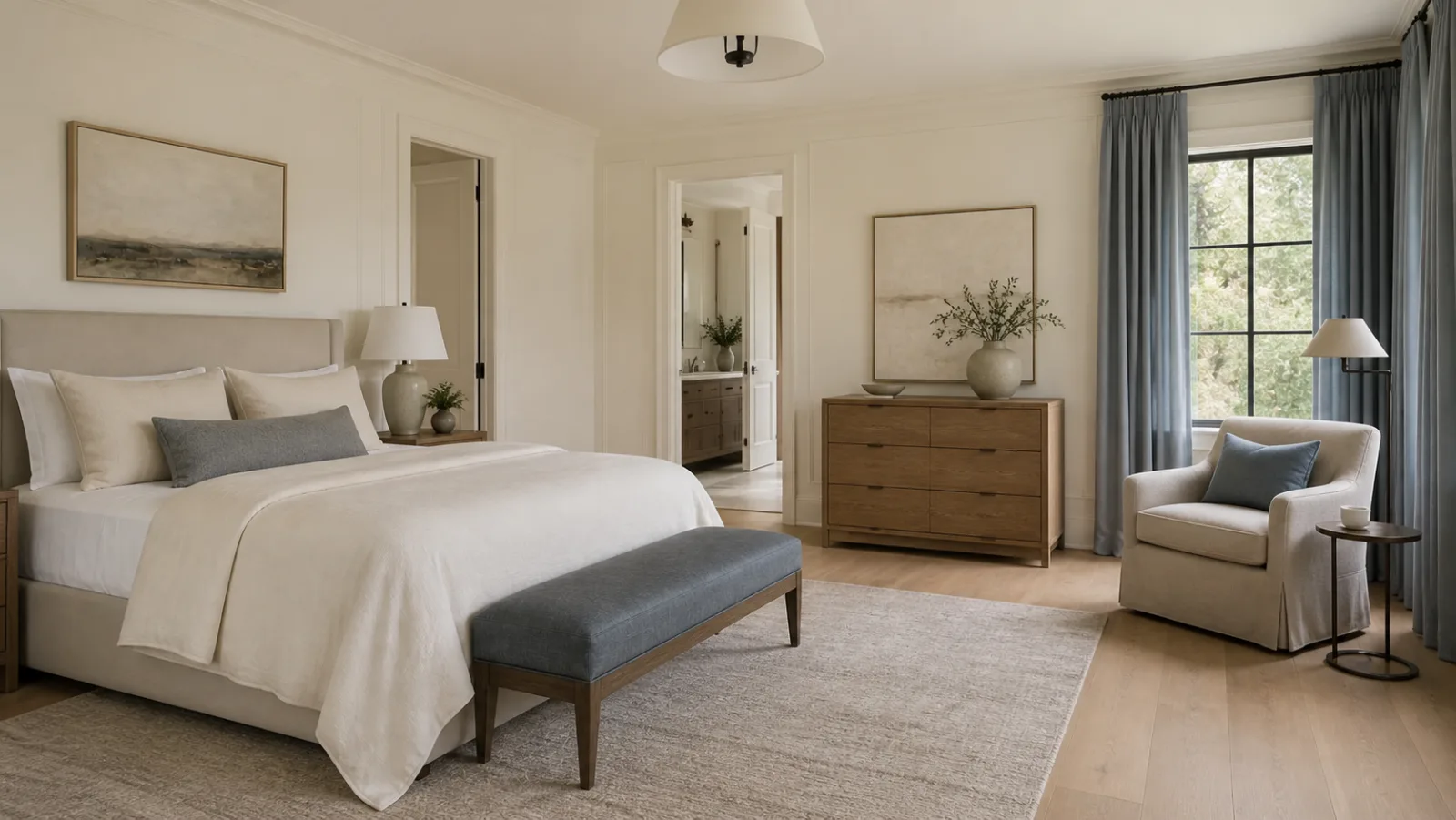
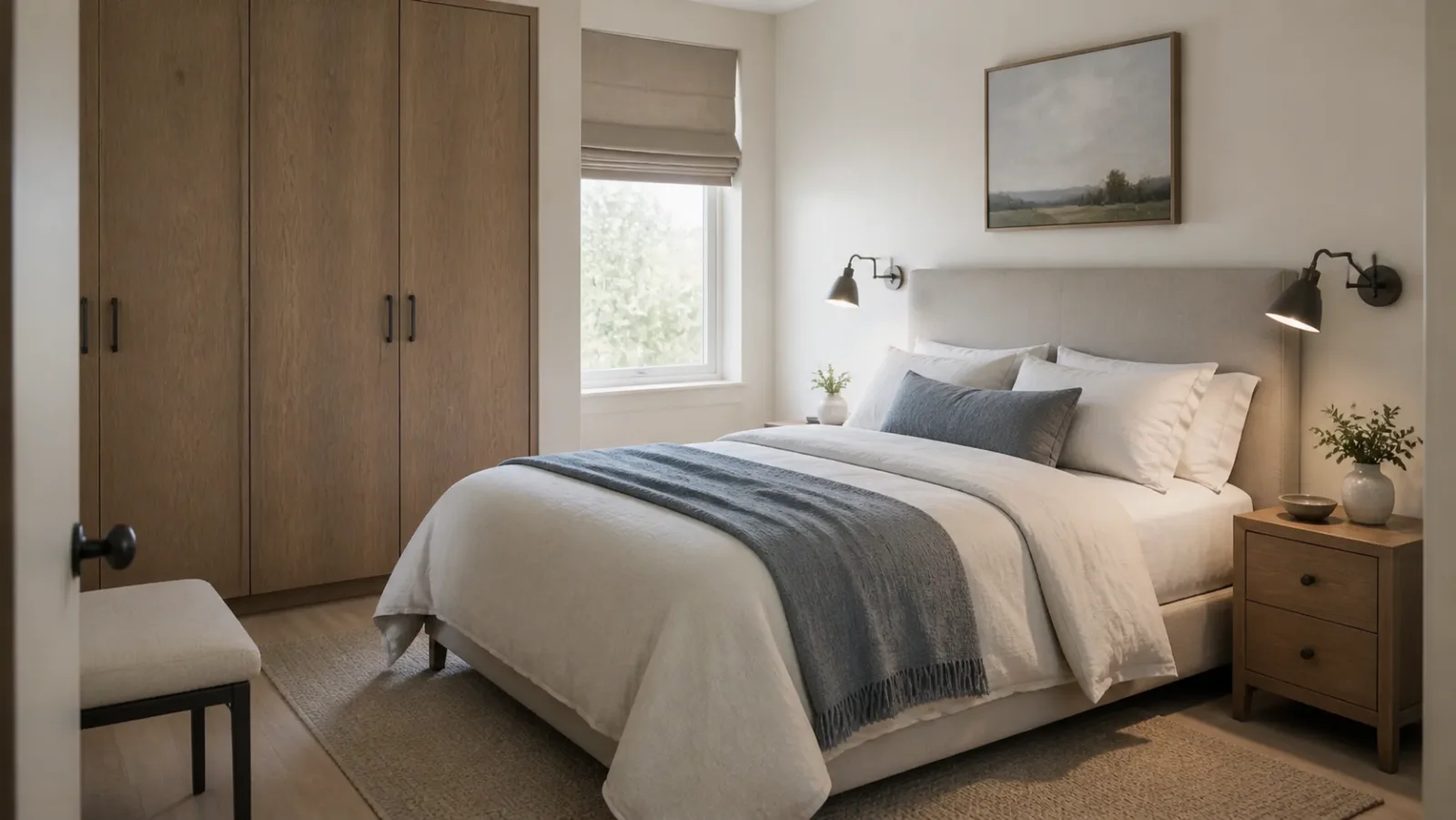
Use the style where it helps the room work: seating, circulation, focal point and material balance.
Place the headboard away from the busiest doorway when possible and preserve a clear approach on both sides.
A flush wardrobe or one resolved chest is calmer than several unrelated storage pieces.
Use bedside and concealed light below eye level instead of relying on a bright central ceiling fixture.
Prioritize breathable bedding, a tactile rug and curtains before decorative objects.
Use ivory and taupe for the envelope, repeat one oak tone across major pieces, then introduce blue-gray or charcoal in a single connected textile or cabinetry family.
A warmer alternative to pure white for molding, cabinetry and large upholstery.
Connects linen, wool, ceramic and limestone without turning every surface beige.
Provides enough grain and depth to anchor pale rooms without appearing formal or heavy.
A calm contrasting note for upholstery, grasscloth or painted storage.
A low-luster hardware finish that bridges traditional shapes and contemporary restraint.
Warm ivory, greige and mushroom keep molding and large upholstery calm.
Repeat medium or dark oak across one or two substantial anchors.
Muted blue-gray, olive or charcoal should distinguish one textile family.
Honed limestone, matte ceramic and aged pewter add depth without glamour.
For this room, a few strong choices can carry the style better than adding more decor.
Let a gently shaped upholstered bed supply the classic note, then simplify casegoods, bedding and lighting around it. Confirm the bed and headboard by dimensions, comfort and maintenance before choosing its decorative finish.
Repeat one timber family and let comfort, circulation and material continuity connect different furniture silhouettes; avoid matching suites and decorative shine.
Repeat one timber family and let comfort, circulation and material continuity connect different furniture silhouettes; avoid matching suites and decorative shine.
Repeat one timber family and let comfort, circulation and material continuity connect different furniture silhouettes; avoid matching suites and decorative shine.
Use these checks to keep the transitional character clear without compromising how the bedroom works.
Use ledges or compact tables that preserve the route around the bed.
Repeat a narrow family of tones and let weave, not pattern count, create depth.
Layer low bedside light with a dim ambient source for a calmer evening transition.