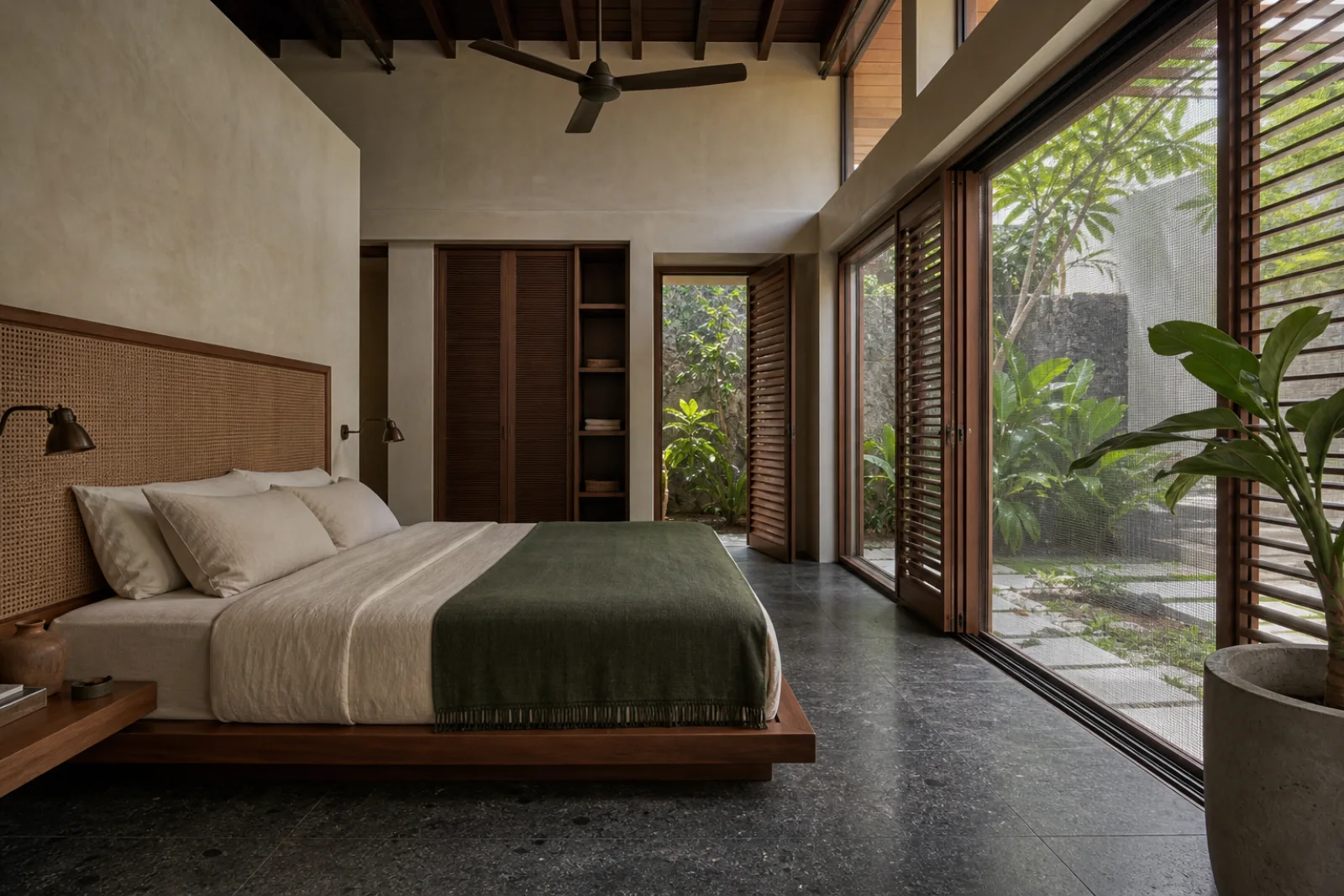
Screened teak louvers
Check blade operation, insect-mesh access, hardware finish and whether panels can be cleaned or repaired.
Deep shade, moving air and grounded natural materials make greenery feel architectural rather than decorative.
Tropical design is strongest when it responds to warm, humid conditions: deep roof shade, generous cross-ventilation, insect screens, ceiling fans and materials selected for moisture and frequent use. Greenery then extends the architecture instead of compensating for a sealed room.
There is no single universal tropical tradition, so avoid reducing the style to “exotic” objects or borrowed motifs. A disciplined contemporary room can use warm plaster, dark stone, timber and cane with just one living green layer. The result is richer than Coastal, calmer than Bohemian and less historically specific than Mediterranean style.
Use eaves, screens or adjustable louvers to stop heat before relying on curtains inside the room.
Keep tall storage and dense planting away from the path between operable openings.
Choose a garden view and one indoor specimen before adding patterned leaves or more pots.
Roof overhangs, screens and planted courtyards cool the light before it reaches interior surfaces.
Opposing openings and ceiling fans move air while insect mesh keeps the room usable after dusk.
Louvers, cane fronts and high ceilings prevent storage and sleeping areas from feeling sealed.
Dark stone and deep timber balance pale plaster and focused living green.
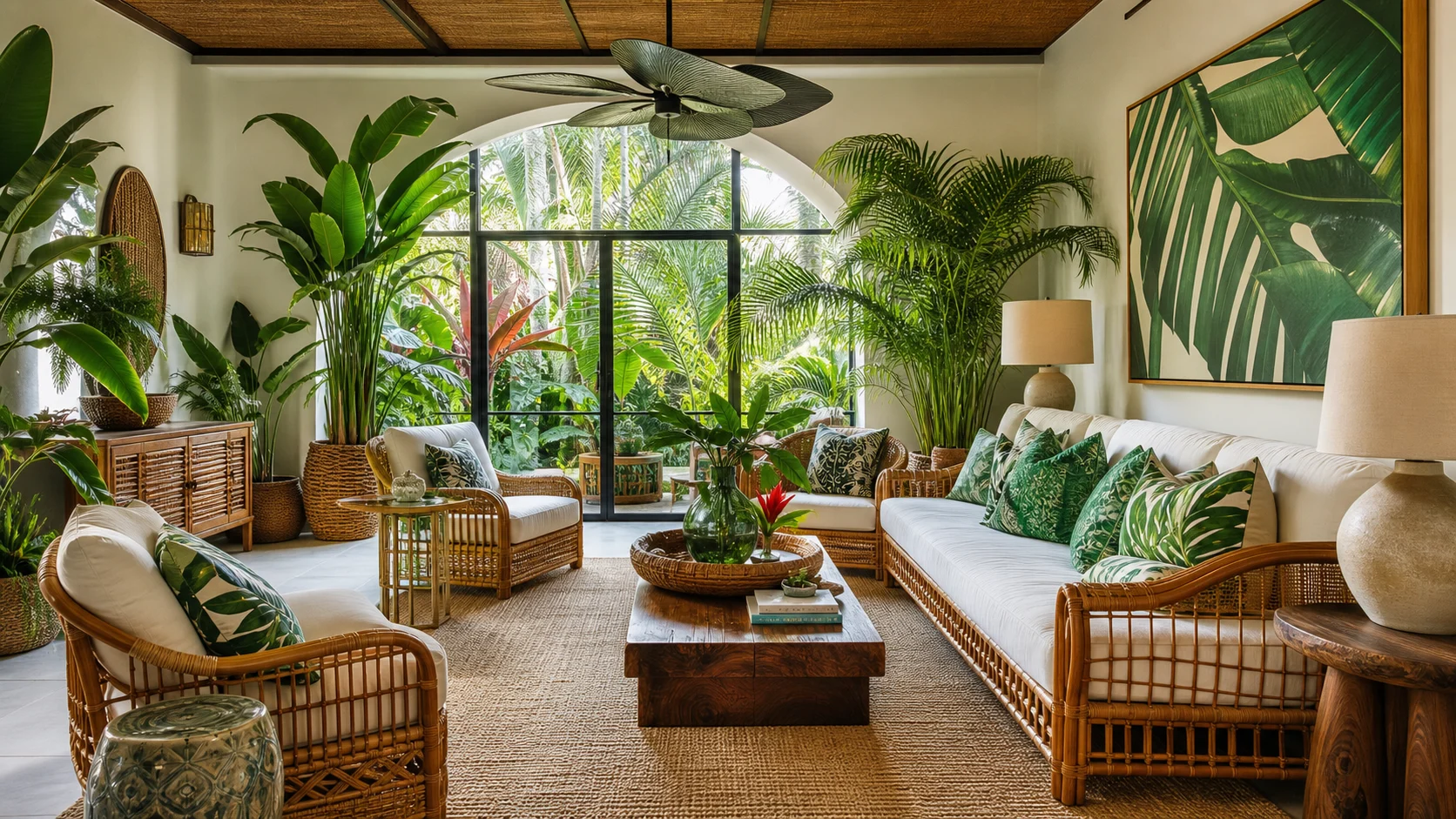
Aim seating toward a shaded garden opening, maintain the cross-breeze and let one large plant replace many small pots.
Combine screened louvers, a quiet ceiling fan and breathable linen; keep the bed low and clear of the main air route.
Use a substantial timber table under a deep overhang, with light cane chairs and space for air to move around the perimeter.
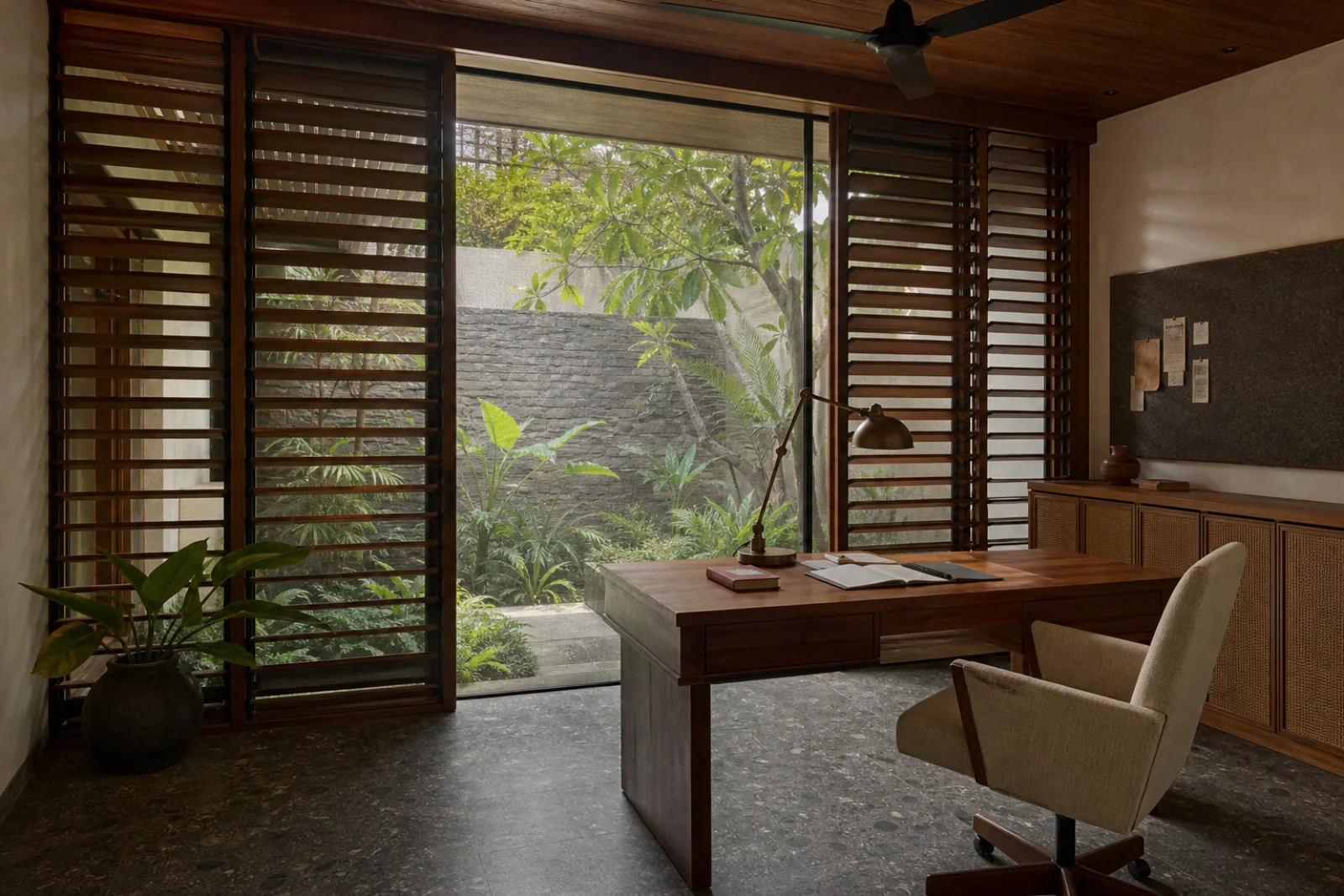
Place the screen away from direct glare, use adjustable louvers and choose an upholstered ergonomic chair over an all-cane seat.
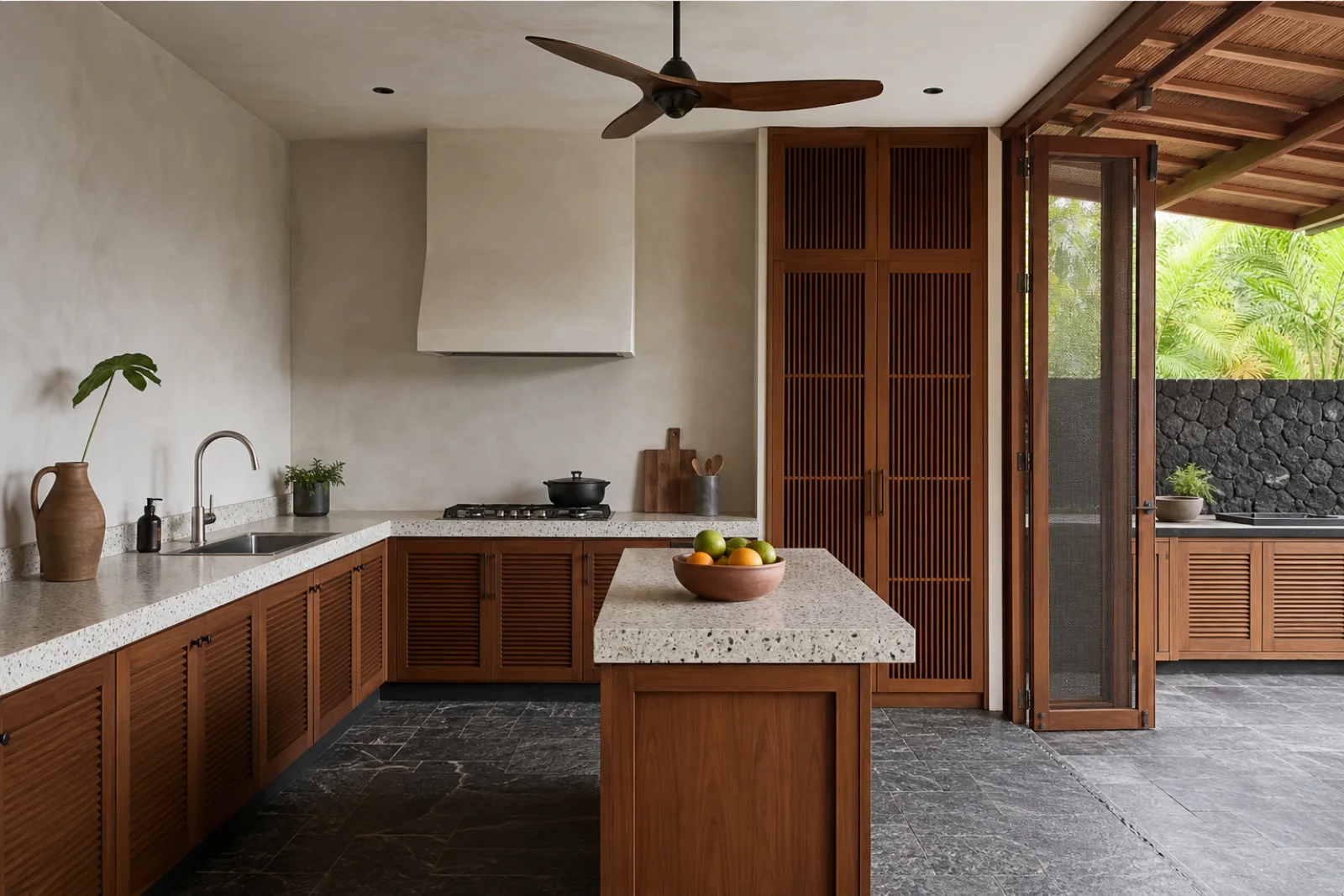
Ventilate tall storage, specify cleanable stone or terrazzo and connect outdoor preparation without exposing the worktop to rain.
Create a covered wet threshold with a drain, umbrella trough and ventilated storage before the dry interior floor begins.
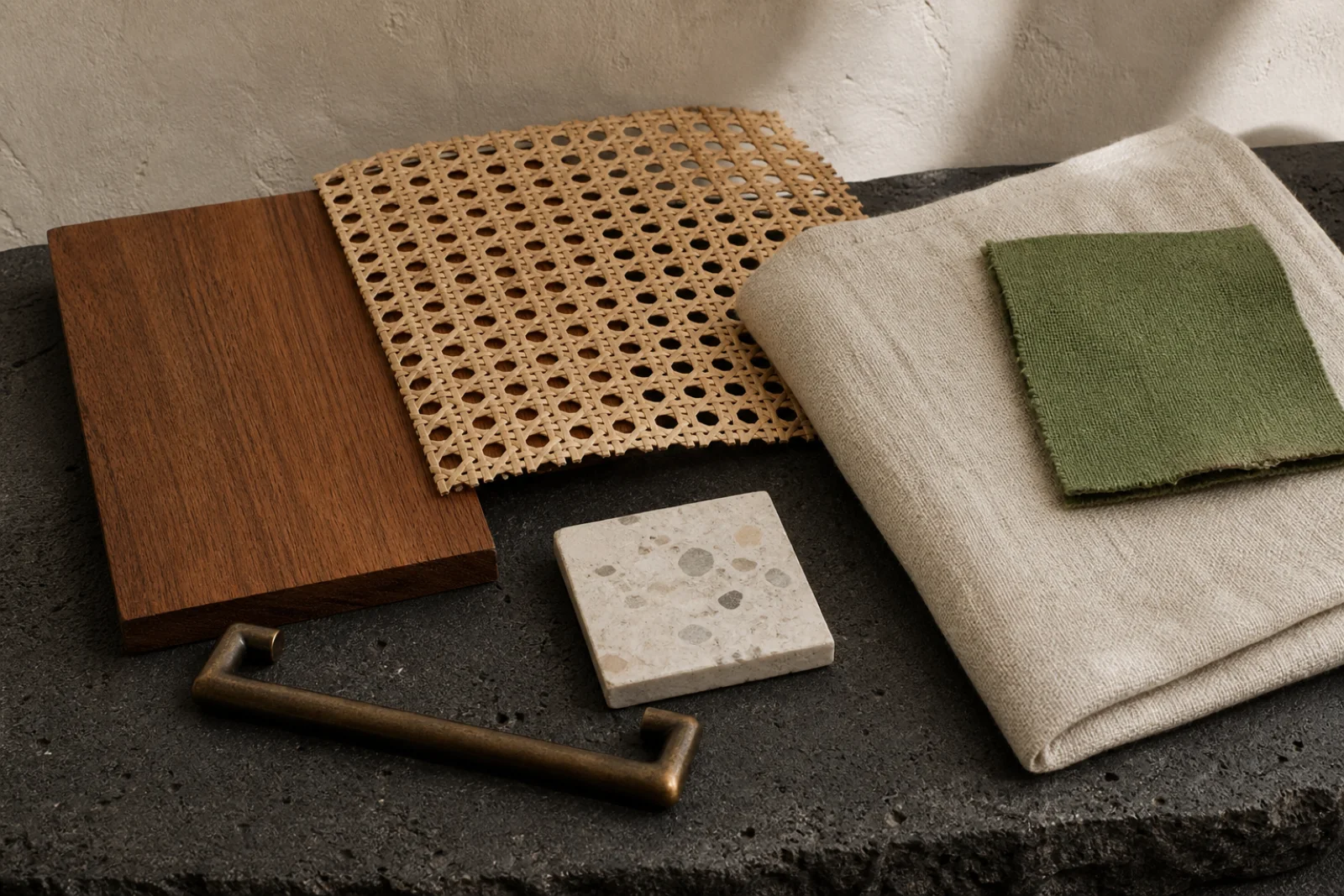
Let warm bone and charcoal define the shell, then use deep teak as the structural middle tone. Green should come primarily from a view or plant; add clay only as a small warming note.
A shaded plaster neutral that reflects light without becoming resort white.
The structural warm tone for screens, tables and ventilated joinery.
A concentrated living or textile accent, not an all-over printed theme.
Grounds wet routes and large rooms while concealing everyday tropical wear.
A small earthen note for one vessel or textile edge.
Stable dense timber for joinery and furniture when sourcing, finish and exposure are clearly specified.
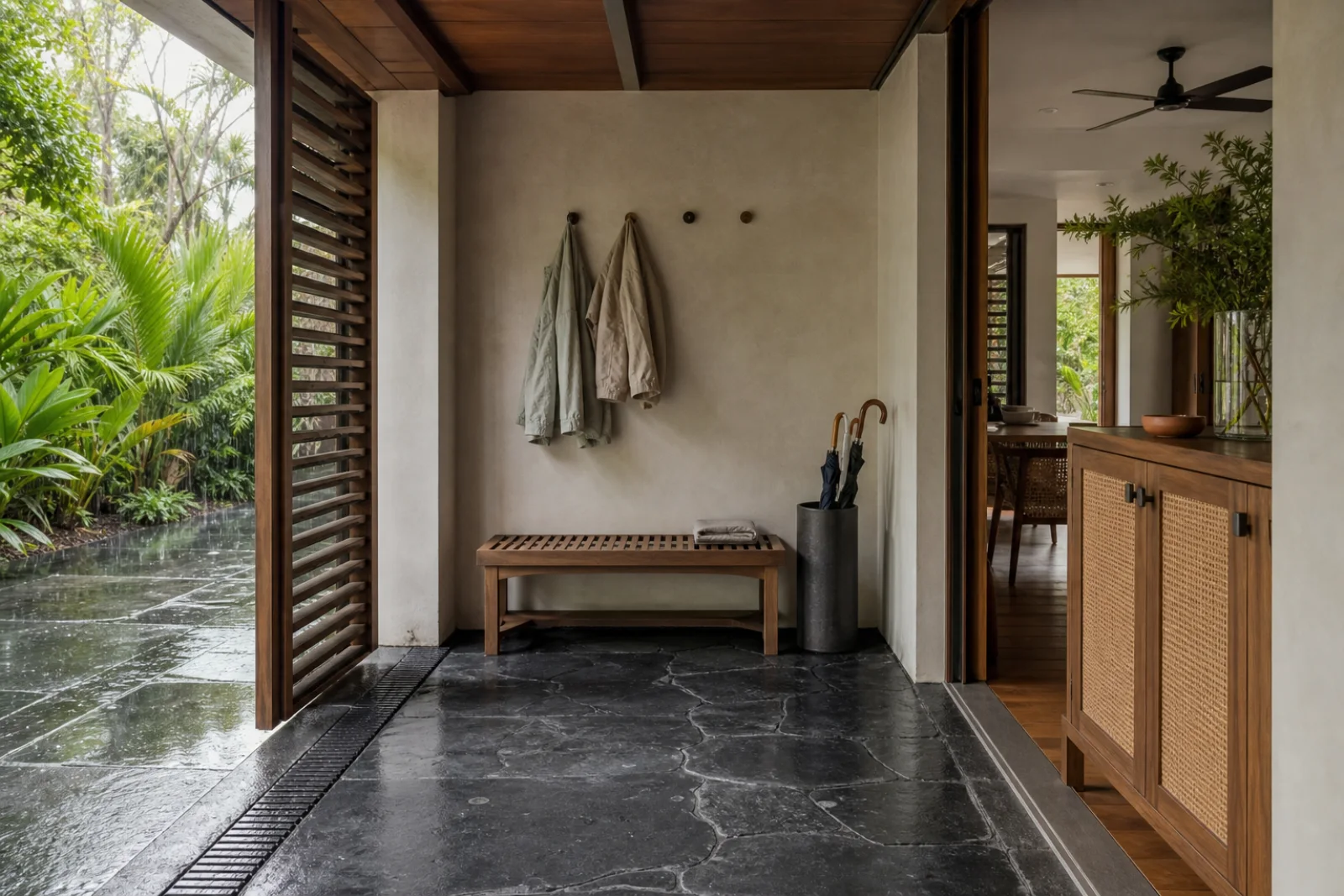
A durable base for wet thresholds when drainage, slip rating and sealing suit the location.
Allows air through headboards and cabinet fronts; keep it repairable and protected from driving rain.
A breathable upholstery and bedding layer that softens dark materials without trapping visual heat.
Plan shade, ventilation, insect control and rain routes before choosing furniture. Then limit the room to one timber, one dark mineral base and focused greenery.
Identify openings exposed to heat or driving rain and size exterior protection for those conditions.
Connect two operable screened openings and keep storage plus furniture outside that route.
Choose a dark, maintainable floor and repeat one durable timber across key joinery.
Use the exterior garden as the main green field and add only one necessary indoor plant.
When the room feels wrong, change the underlying decision before adding more decor.
Add exterior shade, screens and air movement before increasing indoor vegetation.
Keep cane to chair backs or cabinet fronts and balance it with plaster, stone and solid timber.
Concentrate it on frames and furniture, then open larger wall areas with warm bone plaster.
Remove leaf prints, tiki objects and theatrical lighting; retain useful climate-responsive elements.
Tropical interiors are not identified by leaf motifs alone. Their distinctiveness comes from architecture that moderates heat, humidity, insects and heavy rain while maintaining a close garden connection.
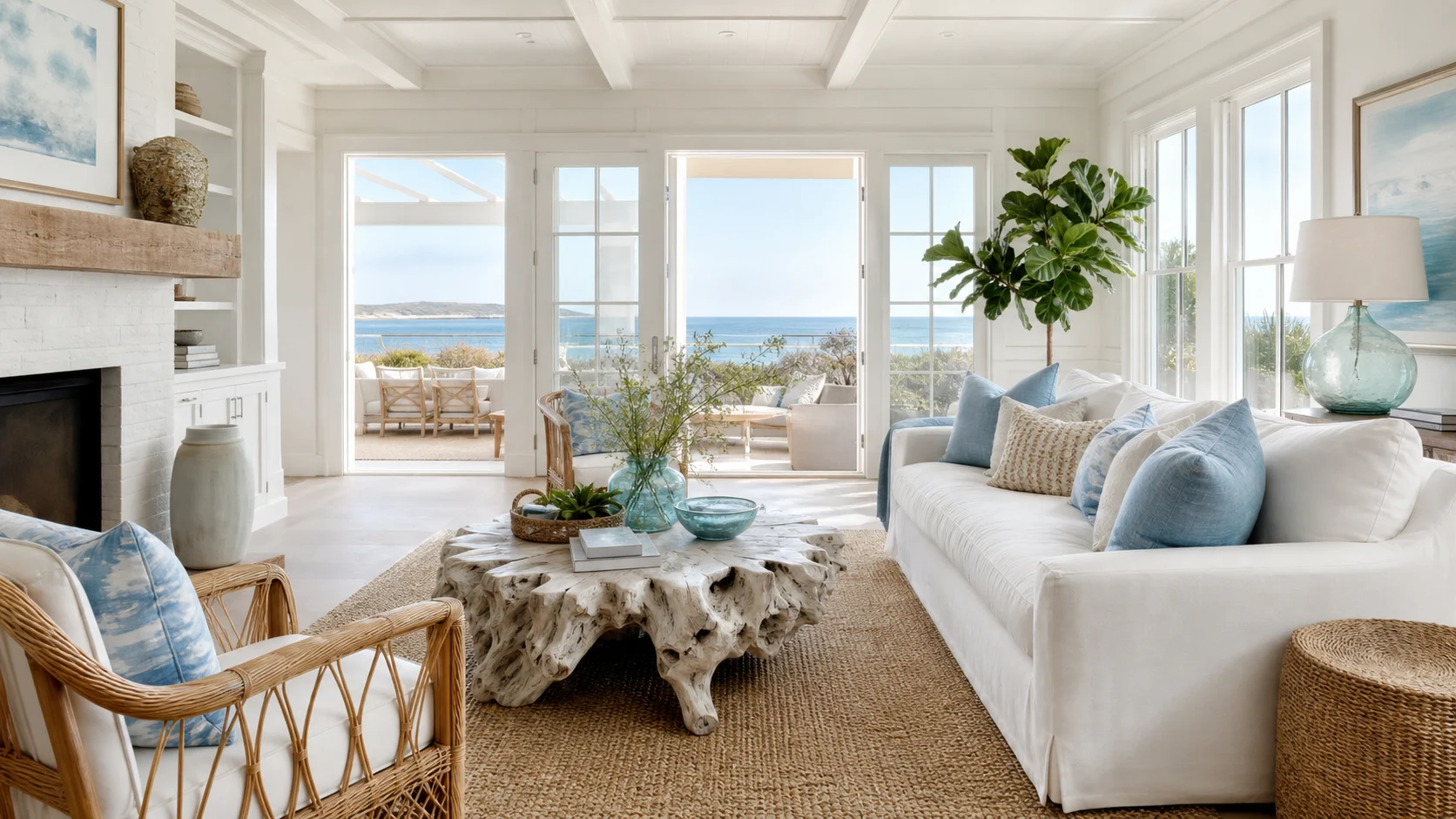
Paler, drier and cooler, using limestone, bleached oak and sea-grey around strong daylight and sandy routes.
Choose Tropical for deeper shade, darker timber, lush courtyards and a warm-humid climate response.
Screened teak louvers replace pale shutters and dune tones.
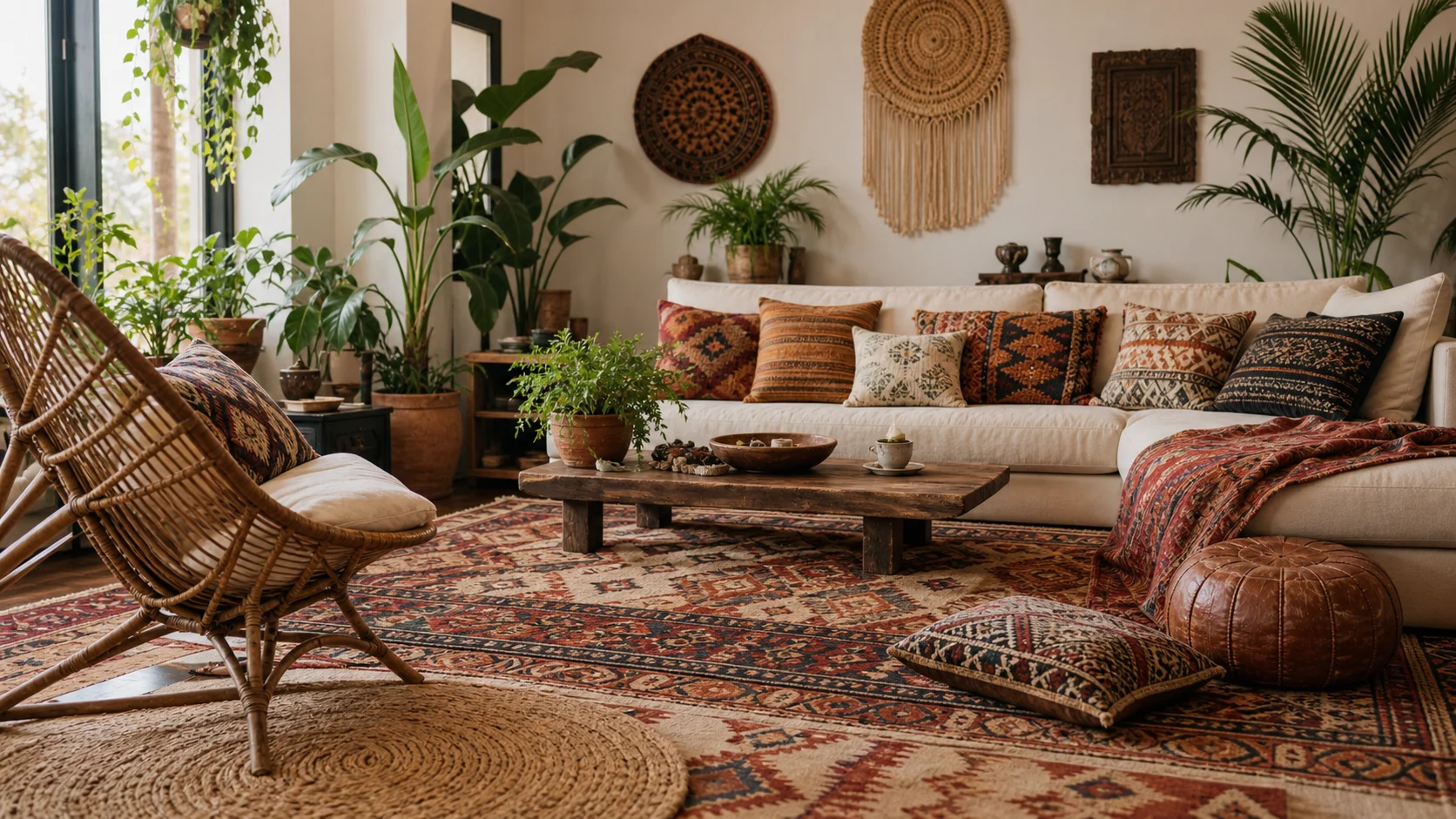
More collected and textile-led, layering global objects, rugs, pattern and informal personal display.
Choose Tropical for clearer architecture, less pattern and a stronger focus on air, shade and rain.
Operable screens replace decorative layering.
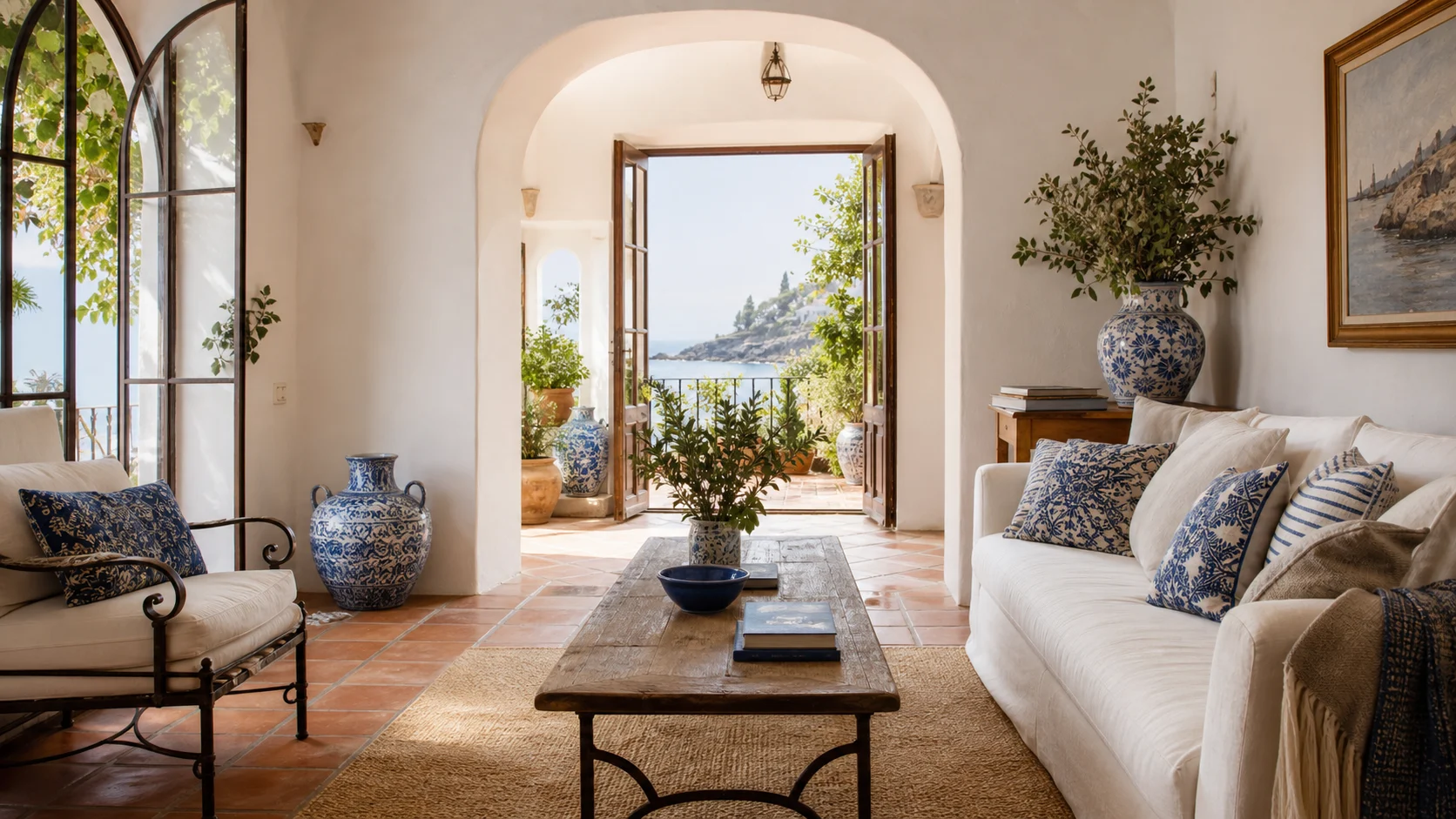
More sun-baked and historically regional, with lime, terracotta, arches and patterned ceramic traditions.
Choose Tropical for wetter conditions, deeper vegetation and ventilated timber enclosure.
Dark wet-route stone replaces terracotta and dry-climate mass.
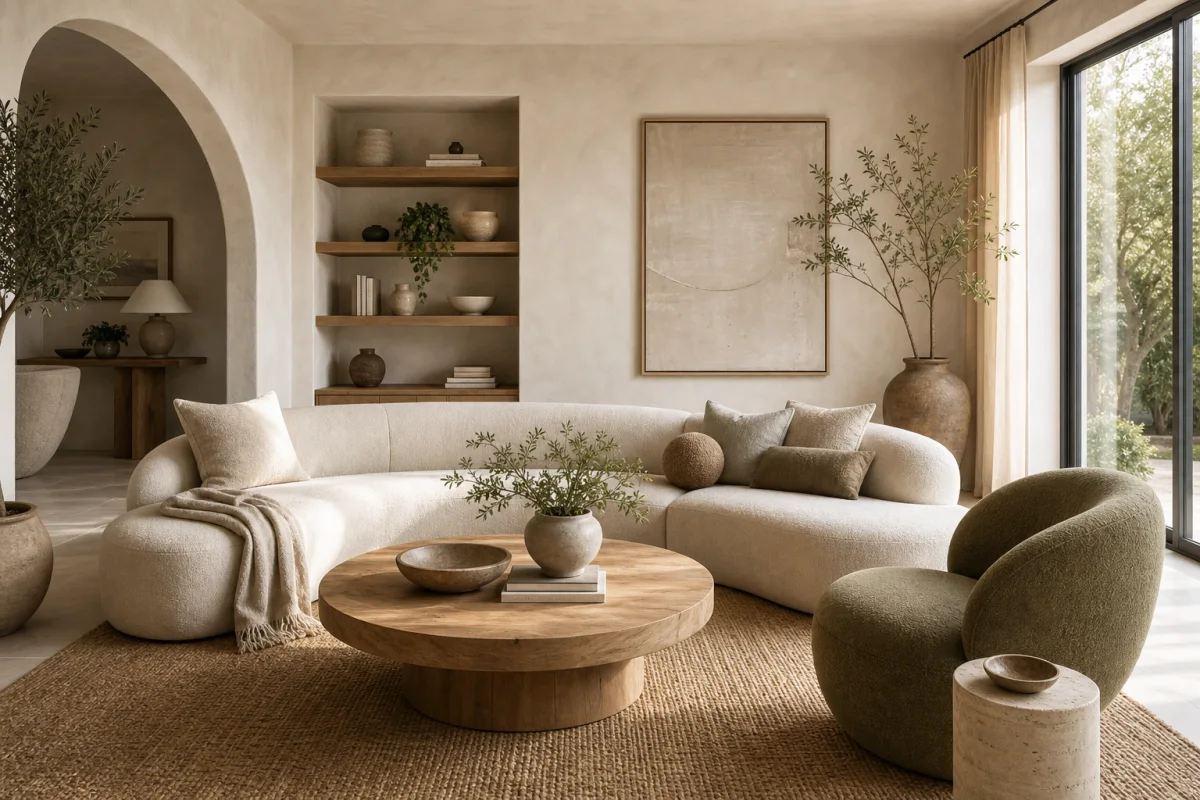
Calmer and more sculptural, using soft forms, pale oak and natural texture in climate-neutral contemporary rooms.
Choose Tropical when screens, fans, courtyards and humidity visibly shape the architecture.
Climate hardware replaces abstract organic form.
Confirm exposure, repairability and moisture performance for the exact location. “Natural” does not automatically mean suitable for a wet or humid zone.
Check blade operation, insect-mesh access, hardware finish and whether panels can be cleaned or repaired.
Use slats selectively where airflow helps, while protecting food storage from insects and grease.
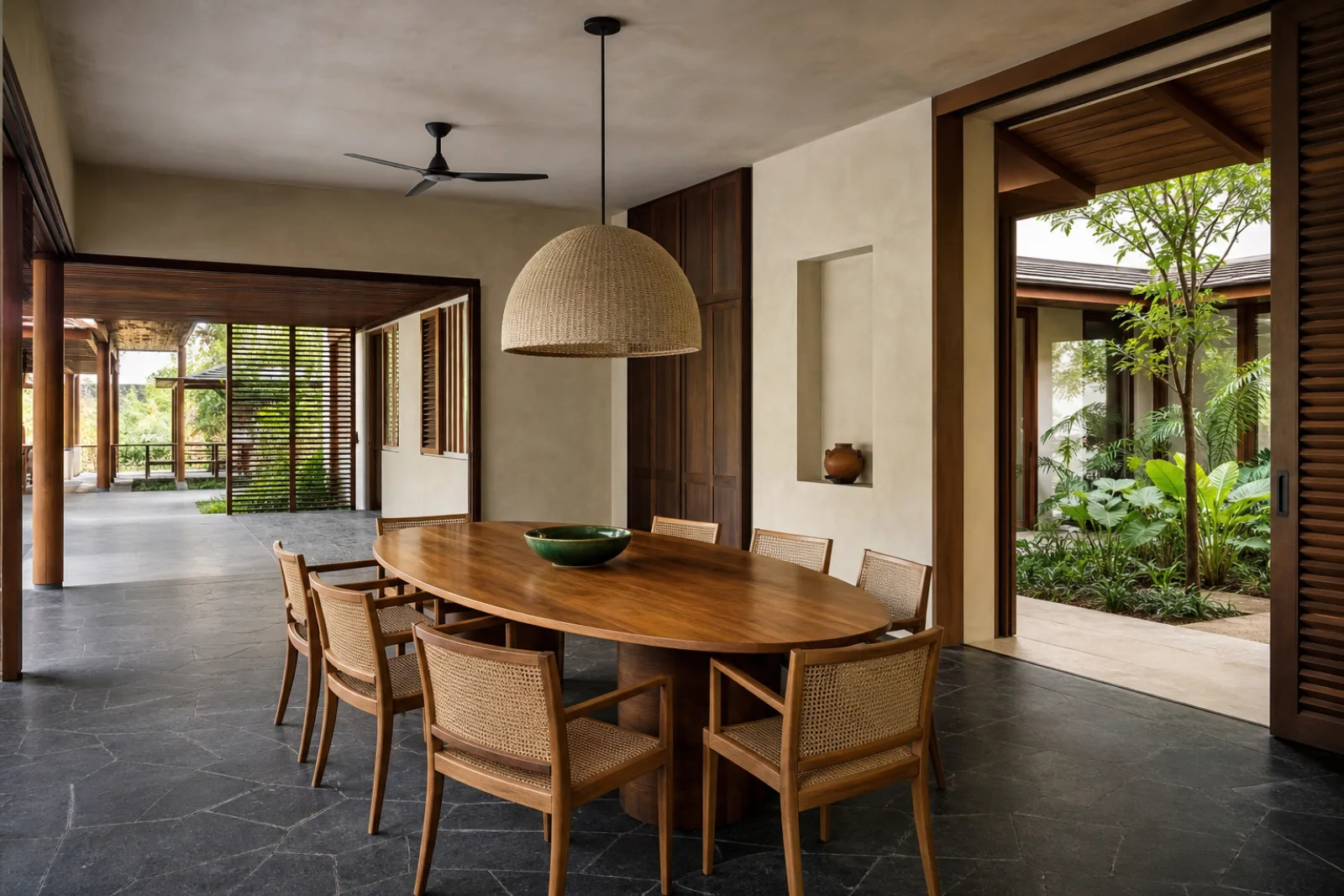
Inspect frame stability and replaceable weave; keep prolonged wet exposure separate from indoor humidity.
Match louver direction to glare and breeze, then verify that the desk remains usable when panels are open.
Confirm slip rating, drainage falls and sealing; appearance alone cannot determine threshold suitability.
Compare samples under shaded daylight and request care guidance for local humidity and use.