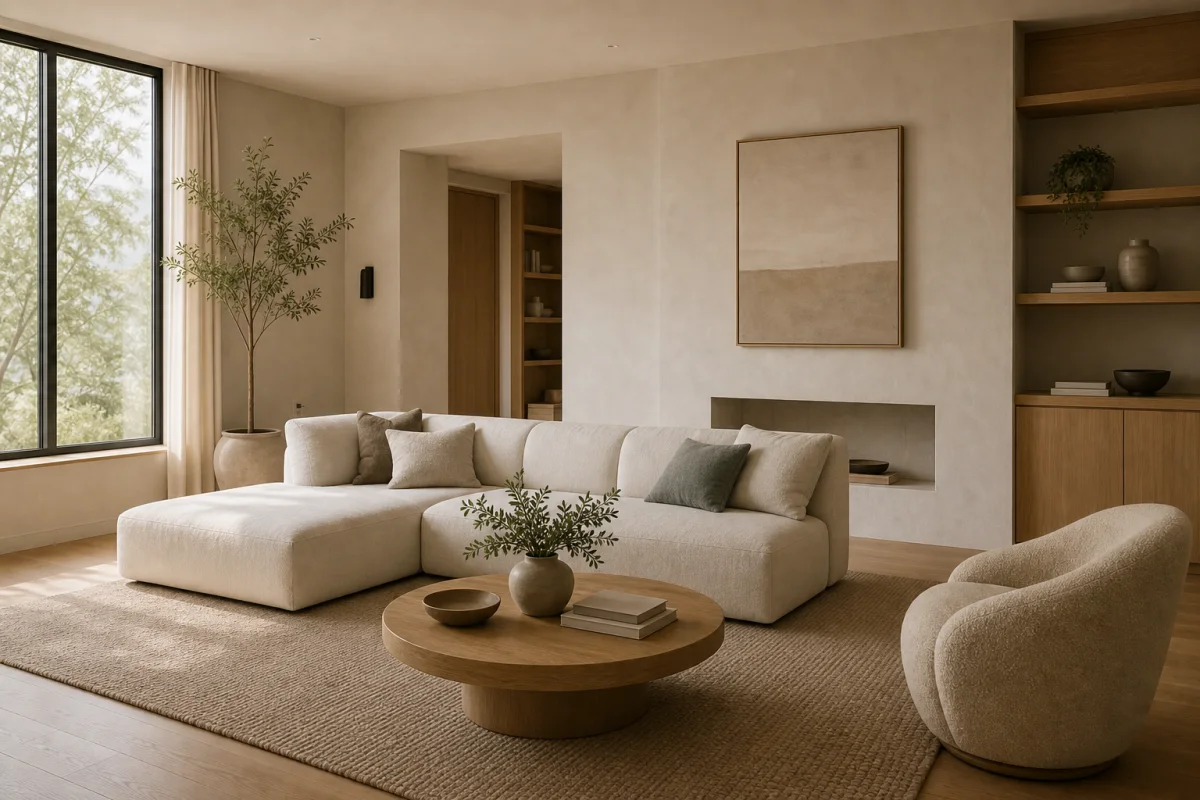
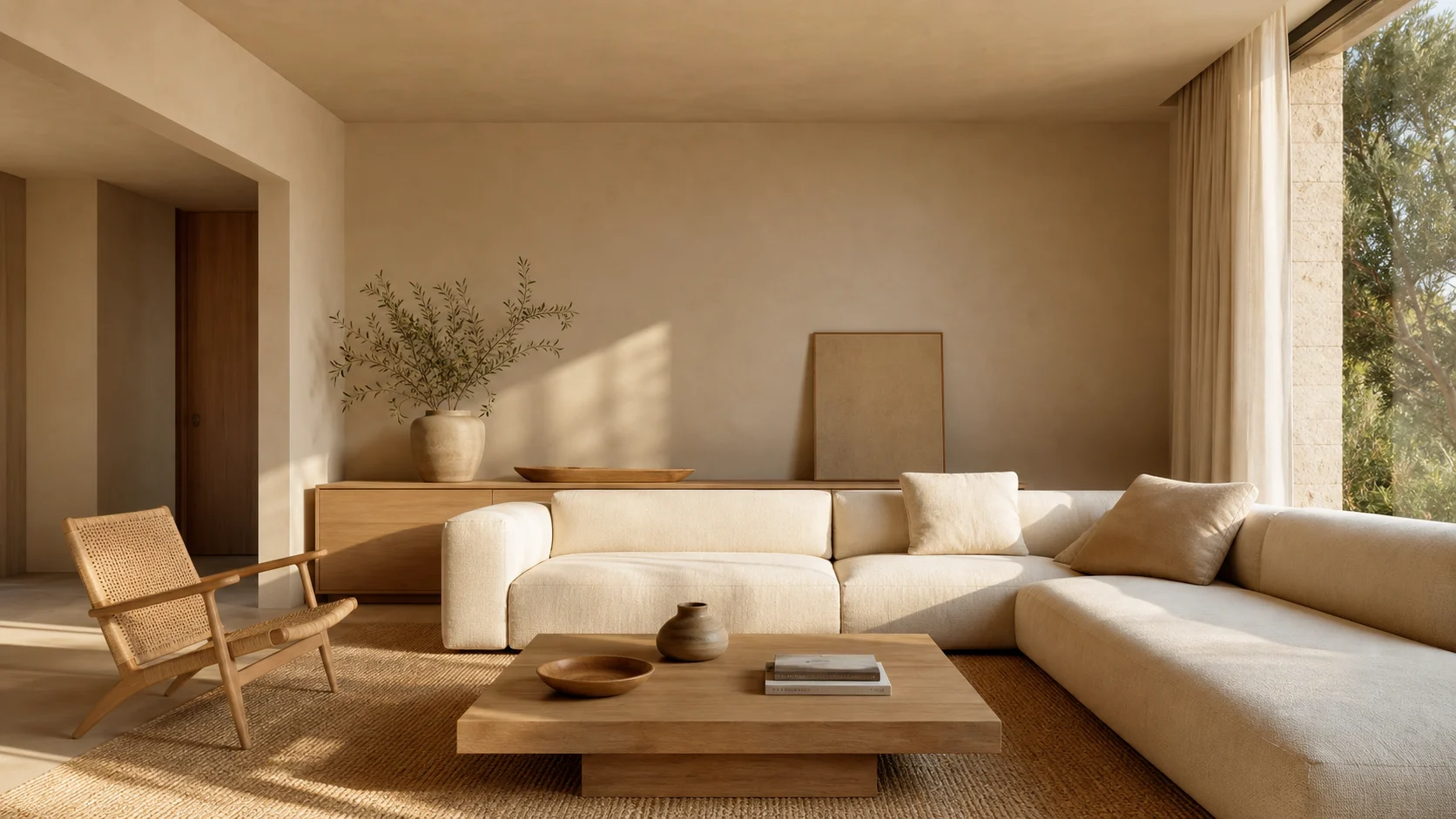
Generous linen sofa
Choose a simple silhouette at the right scale, with visible weave and enough depth for daily comfort.
Clear spaces made comfortable through warm neutrals, natural grain, tactile textiles and soft, layered light.
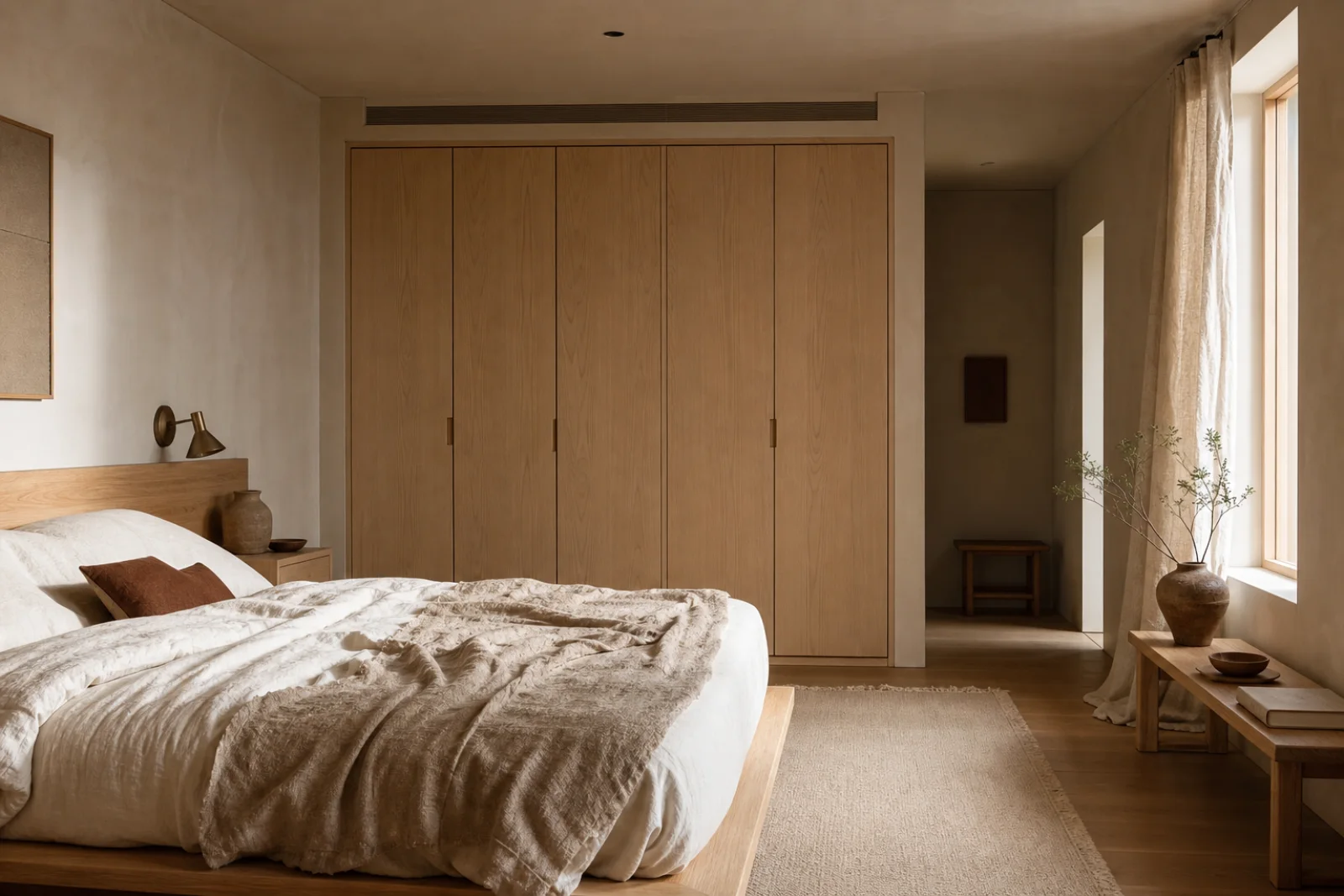
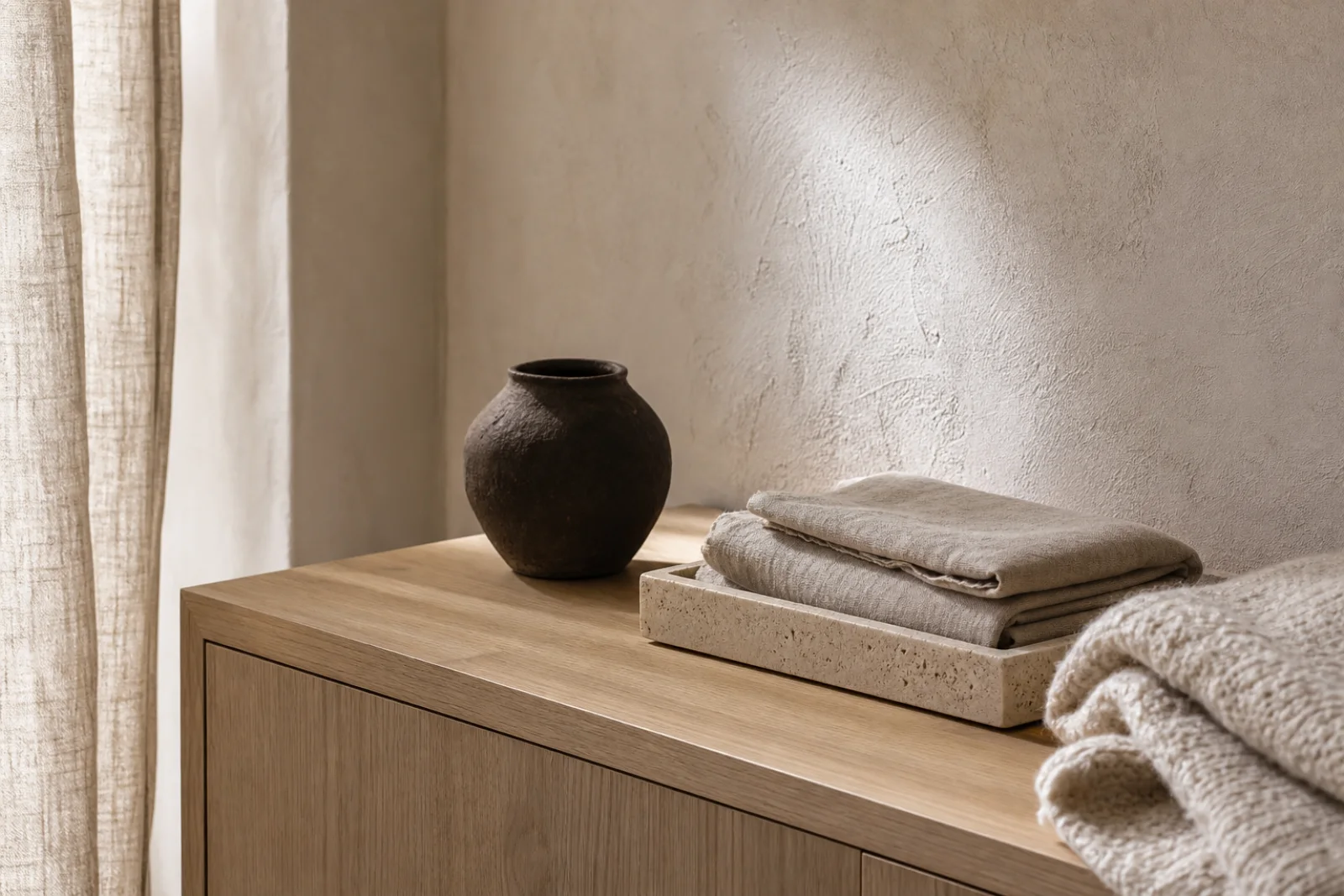
Warm minimalist interior design keeps the clear circulation, restrained palette and careful editing of minimalism, then adds comfort through warm undertones, visible wood grain, woven textiles and soft light. The room contains fewer things, but the things that remain feel good to touch and use.
The key is to build warmth into the room itself instead of adding decorative clutter. If the accessories disappeared, proportion, daylight, upholstery and natural materials should still make the space feel welcoming.
Open circulation and closed storage create calm before color or styling enters the room.
Linen weave, wool, oak grain and matte plaster provide depth without filling every surface.
A small amount of umber, olive or charcoal stops a neutral room from becoming flat beige.
Empty areas protect circulation, daylight and the visual importance of a few well-scaled pieces.
Oak, linen, wool, plaster and honed stone react differently to light and make a limited palette feel layered.
One correctly sized sofa, table or rug feels calmer than several undersized pieces competing for attention.
Diffused daylight, eye-level lamps and low warm light create atmosphere without decorative excess.
Front sofa legs on the rug; keep 75–90 cm for the main path.
Use wall lights and closed bedside storage to clear small surfaces.
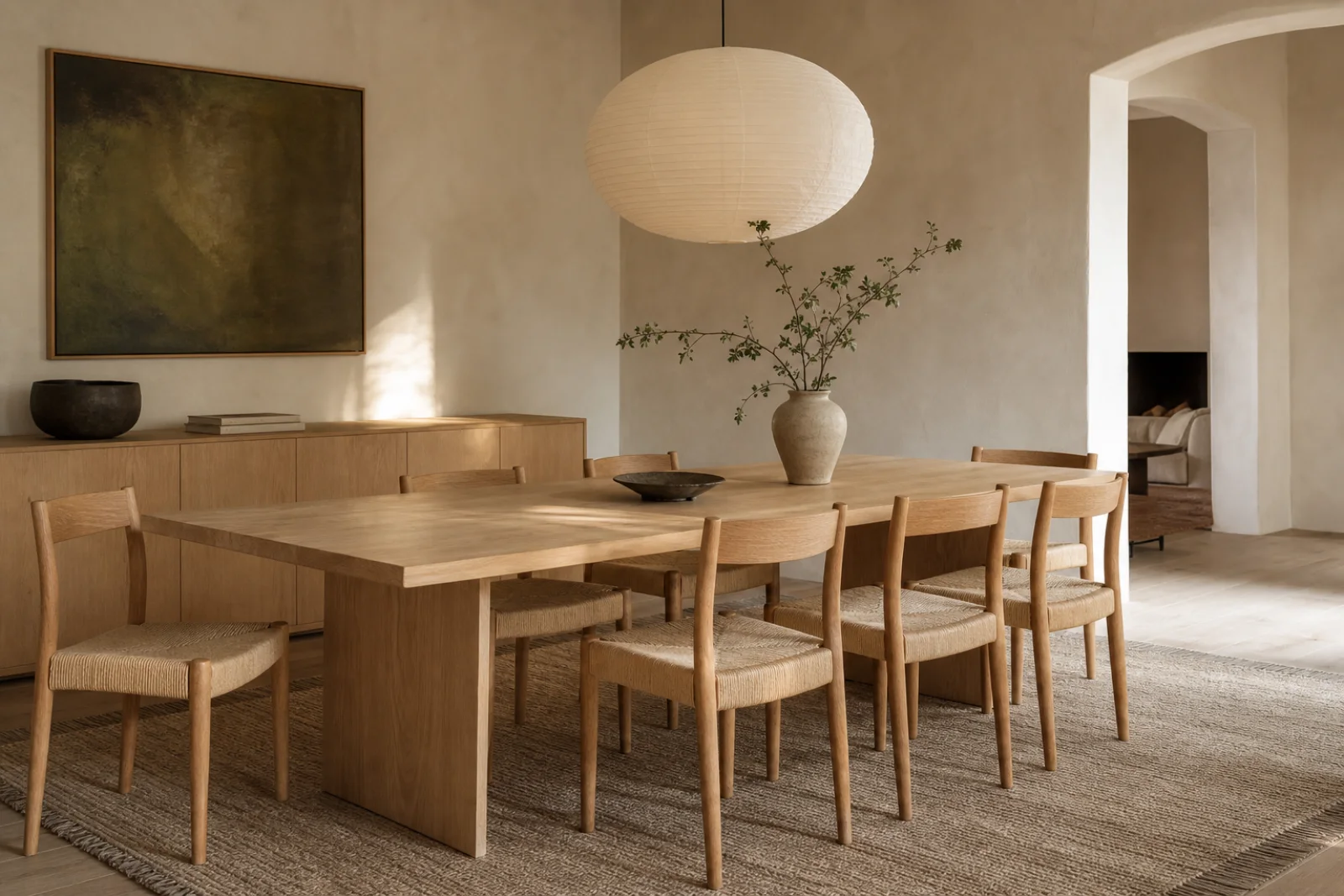
Let the table and one large pendant carry the room.
Hide cables and paperwork; add warmth at hand and eye level.
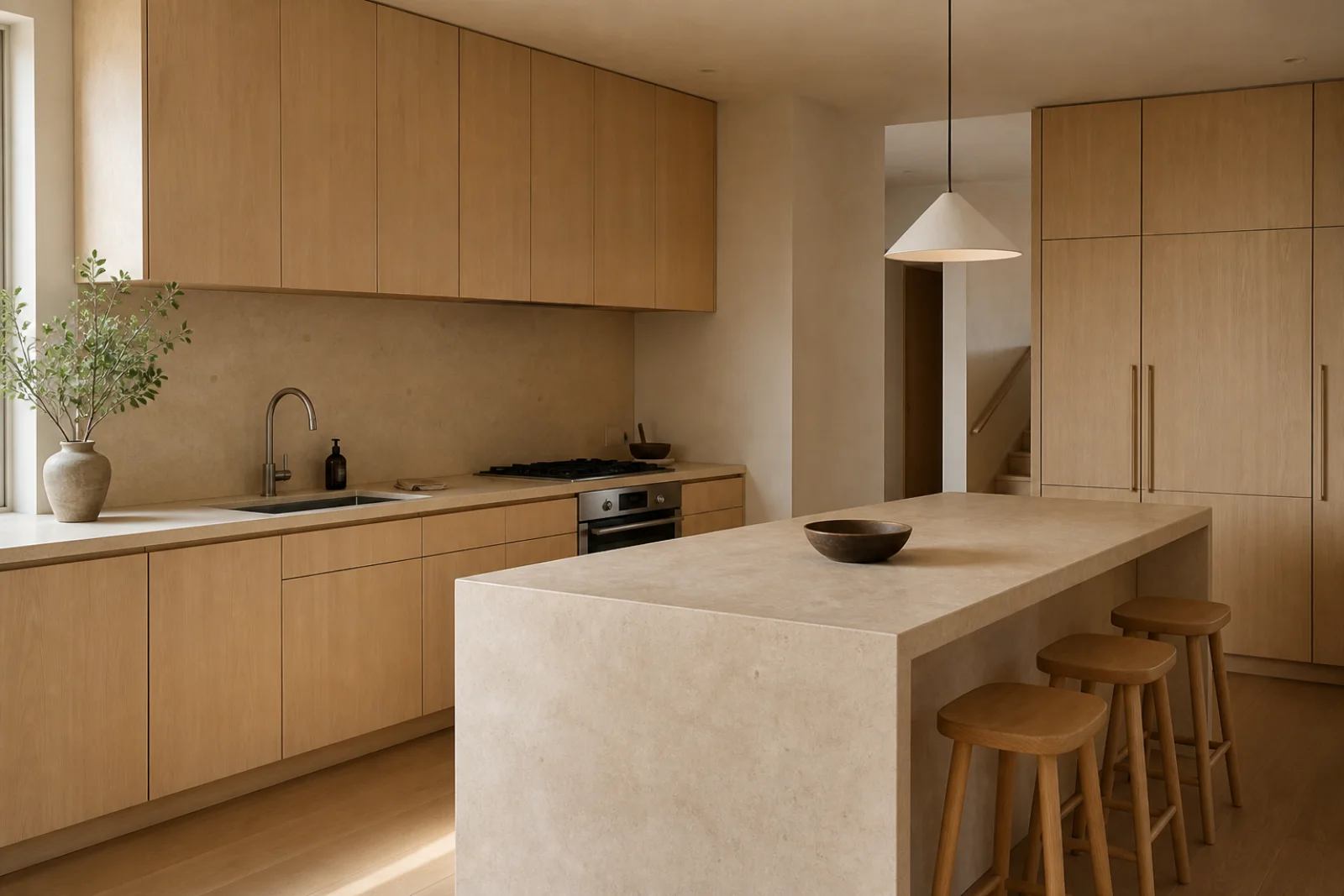
Choose flat cabinetry, one stone surface and very little open display.
Prioritize full-height coat storage, a bench and a durable wool runner.
Assign each neutral a role instead of collecting many similar beige objects: a light envelope, a warm material tone, a soft shadow and one restrained accent.
A warm wall and ceiling base that reflects daylight without the blue cast of brilliant white.
The main warmth layer for floors, storage and one or two substantial furniture pieces.
Use in curtains, upholstery and bedding to connect pale surfaces with wood.
Adds definition through one chair, cushion, frame or small piece of furniture.
A restrained living accent for art, branches or a single textile detail.
Use visible grain on substantial pieces and repeat the same wood family rather than mixing many finishes.
Filters light and breaks up large upholstery surfaces with a relaxed, visible weave.
Adds softness underfoot and gives the body a tactile counterpoint to plaster and stone.
Matte mineral texture and one handmade dark object create depth without visual clutter.
Four decisions create most of the look. Make them before buying decorative objects.
Check paint beside the floor in daylight; reject whites that turn blue or gray.
Choose one generous anchor and enough closed storage for daily visual noise.
Combine ceiling, eye-level and low light; use roughly 2700K in living and sleeping areas.
Repeat one wood family, two tactile textiles and one darker accent.
When the room feels wrong, change the underlying decision before adding more decor.
Add a darker line, stronger grain or muted olive—not another neutral accessory.
Correct the rug, artwork or pendant scale before adding small decor.
Increase closed storage and give daily objects a specific home.
Replace the single ceiling source with three lower, warmer light levels.
Warm minimalism overlaps with several quiet interior styles. The clearest distinction is how it combines practical editing with tactile comfort and a contemporary furniture language.
Sharper, cooler and often more focused on smooth surfaces.
Choose warm minimalism if you want the same clarity with more wood, textile texture and softer light.
Warm undertones and visible weave replace stark white and hard black contrast.
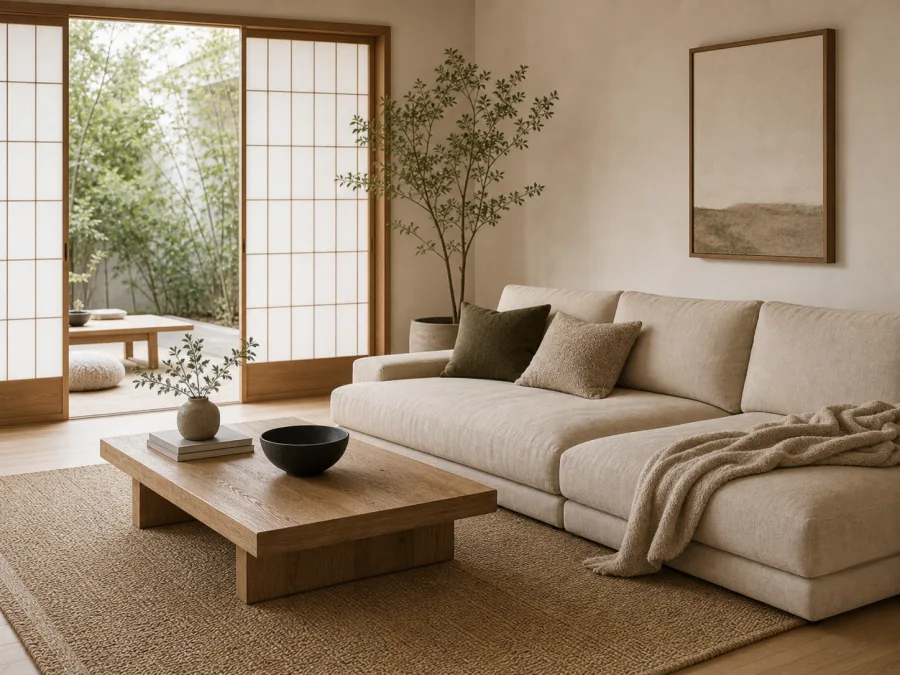
Lower, more restrained and more influenced by Japanese craft.
Choose warm minimalism if you want a broader contemporary look without strong cultural design cues.
Furniture can sit higher and feel more upholstered, while the palette stays quiet.
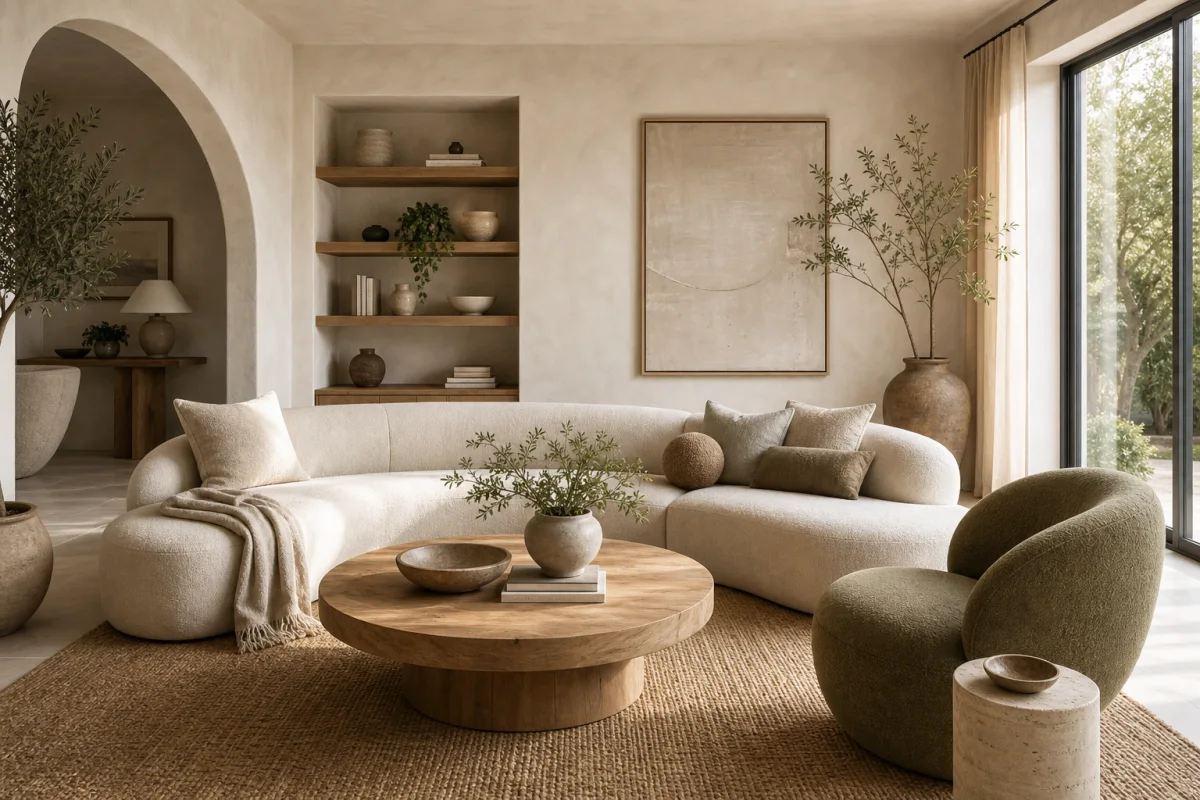
Curvier, more sculptural and more expressive in stone and plaster.
Choose warm minimalism if you prefer straighter lines, clearer storage and less sculptural furniture.
The layout and usefulness of each piece matter more than dramatic organic form.
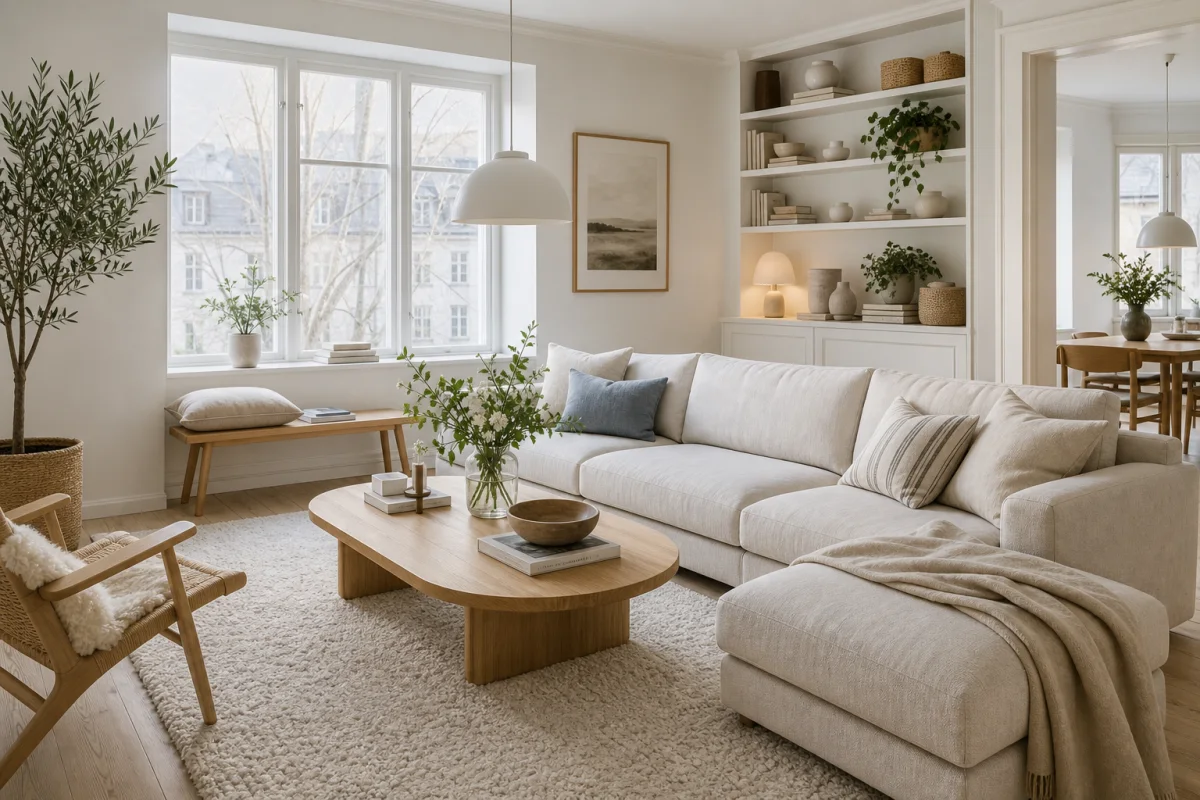
Brighter, more casual and more likely to use small colorful accents.
Choose warm minimalism if you want a quieter palette and fewer visible accessories.
Use larger, calmer anchors and hide more everyday visual noise.
Do not buy a complete beige room. Start with pieces that solve scale, storage, light and texture; the style will emerge from how they work together.
Choose a simple silhouette at the right scale, with visible weave and enough depth for daily comfort.
One substantial wood piece can provide more warmth than many small wooden accessories.
Size it beyond the furniture edges so it anchors the layout instead of floating in the center.
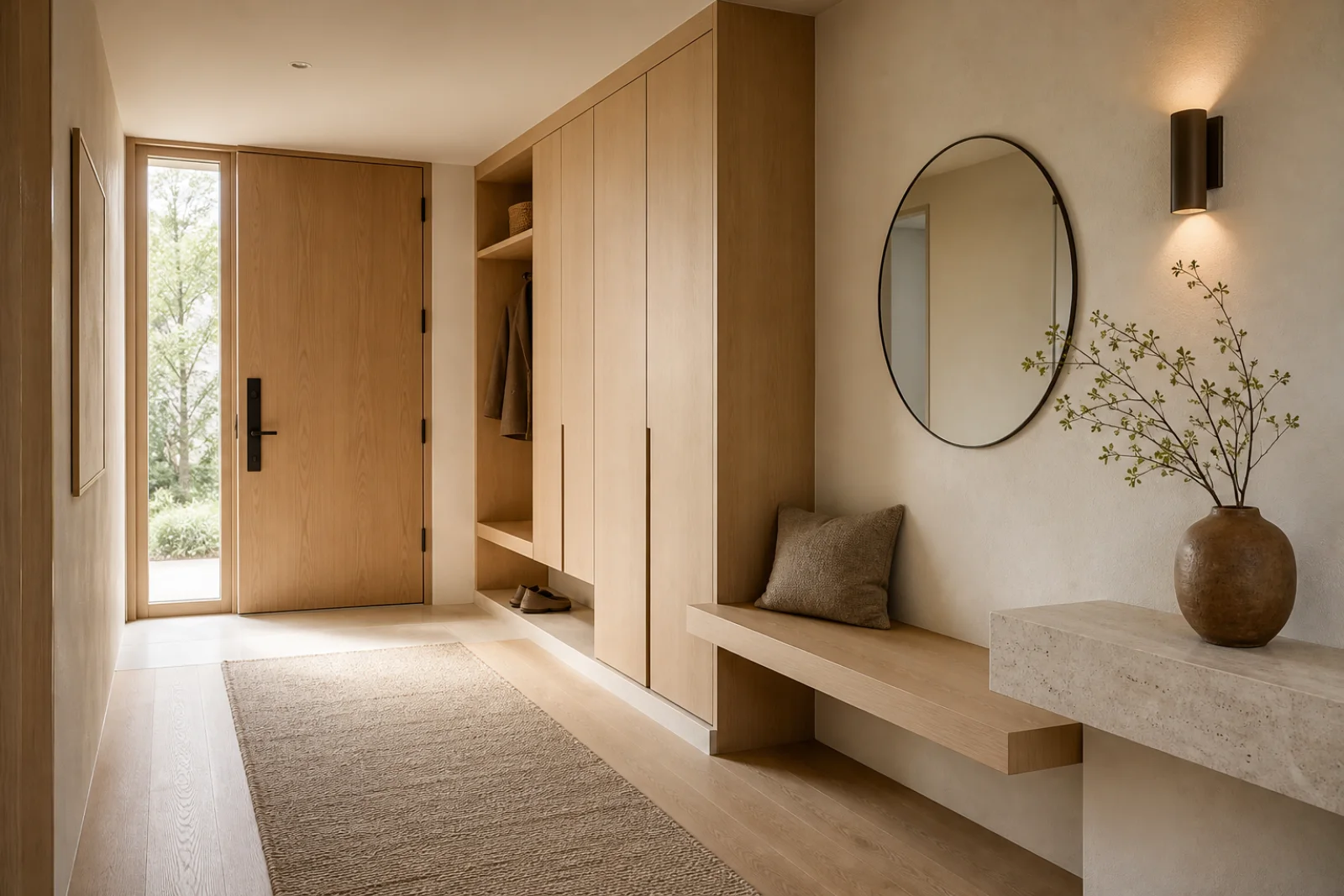
Solve daily visual noise before adding open shelves or decorative display.
A dark ceramic, linen layer or honed stone tray adds contrast without creating clutter.
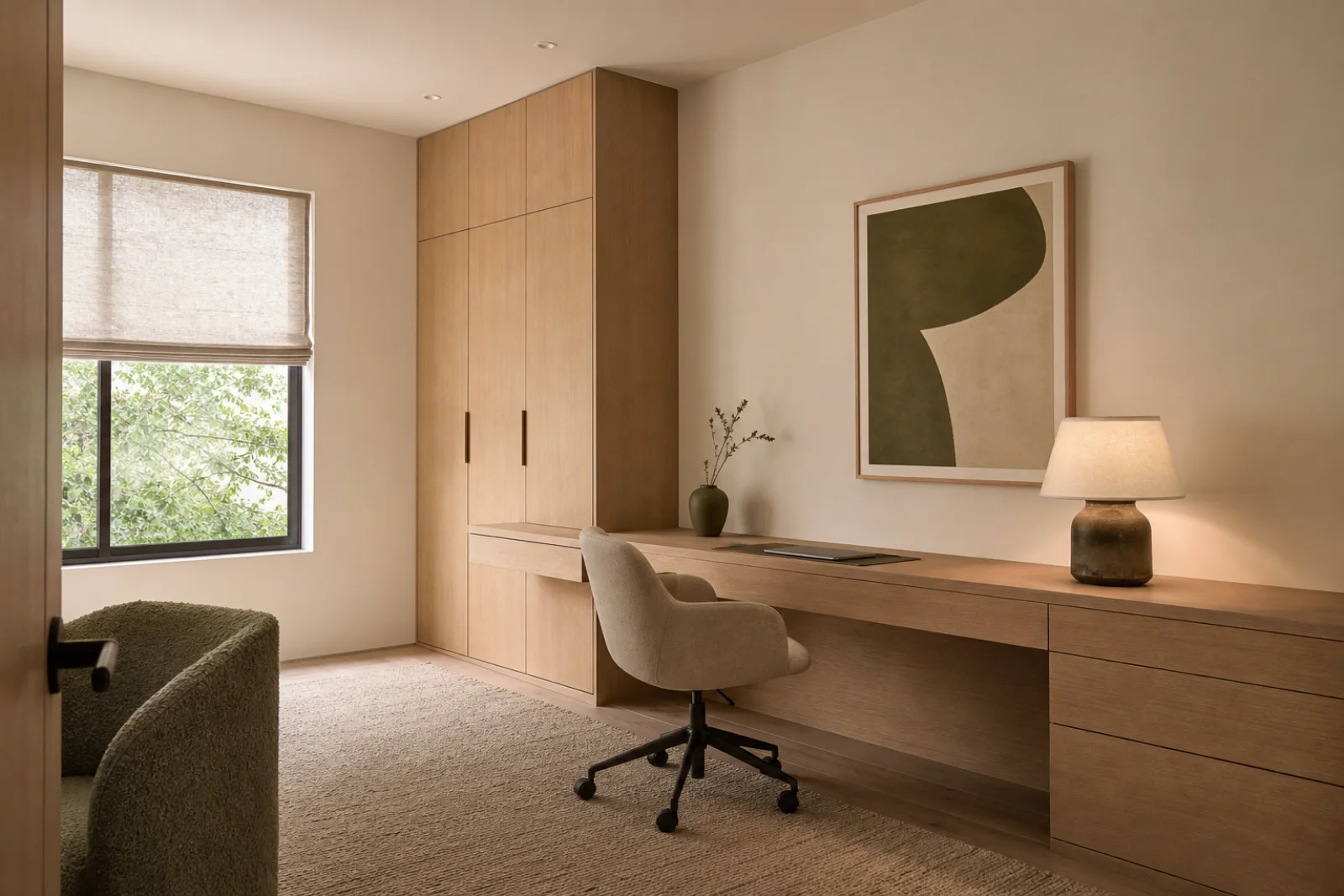
Combine a paper or linen shade with eye-level and low light around 2700K.