01
Climate Wall
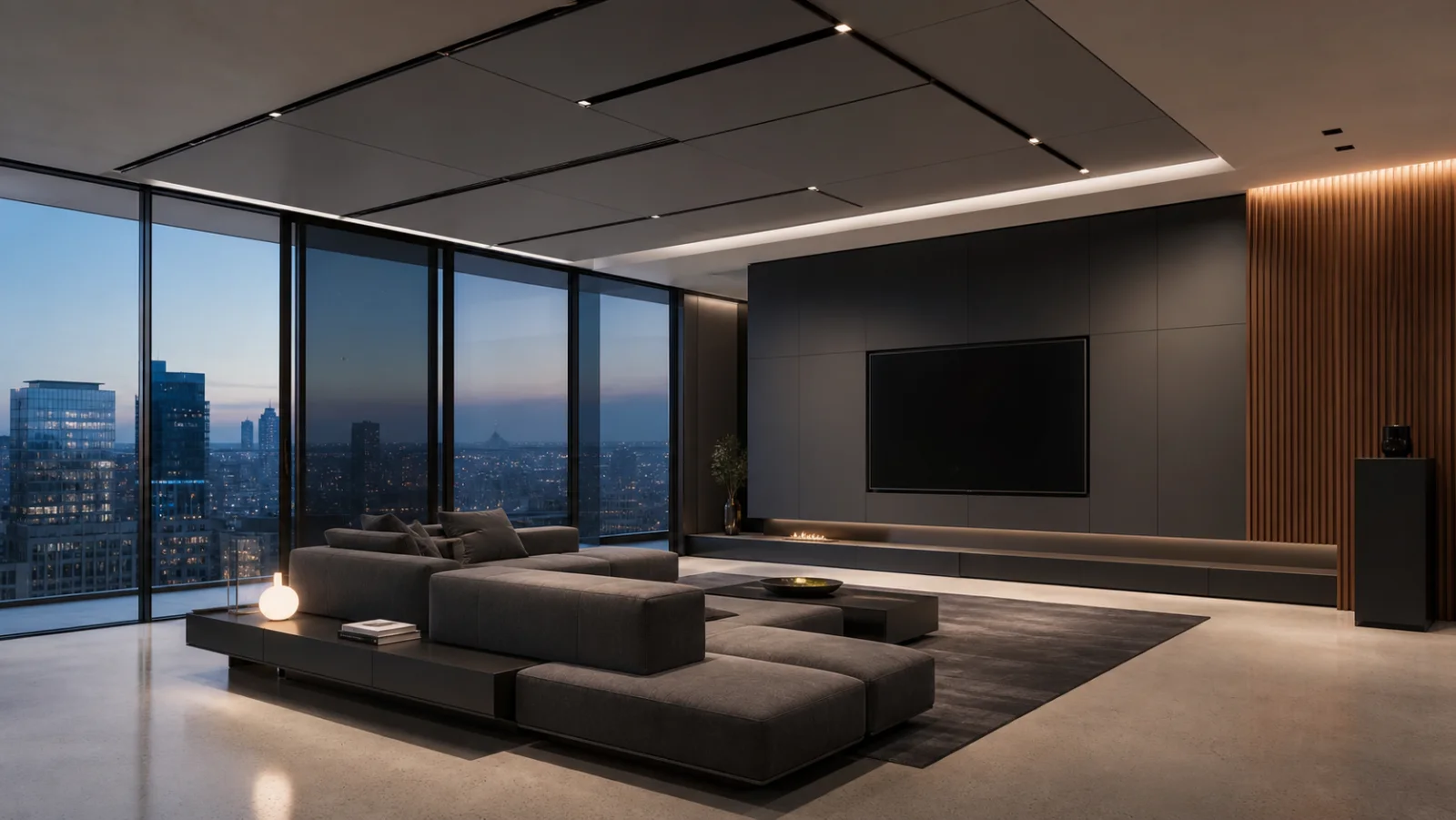
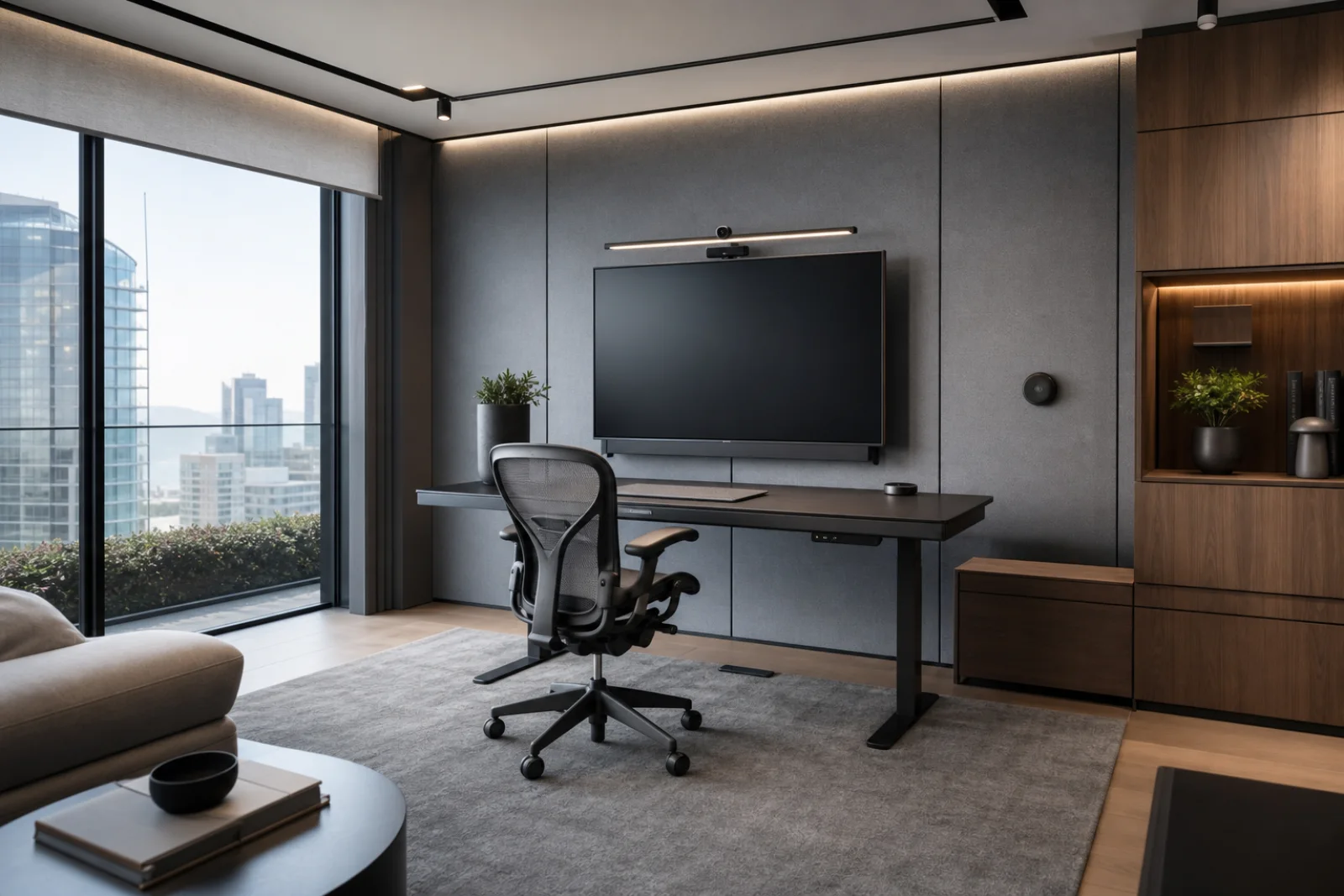
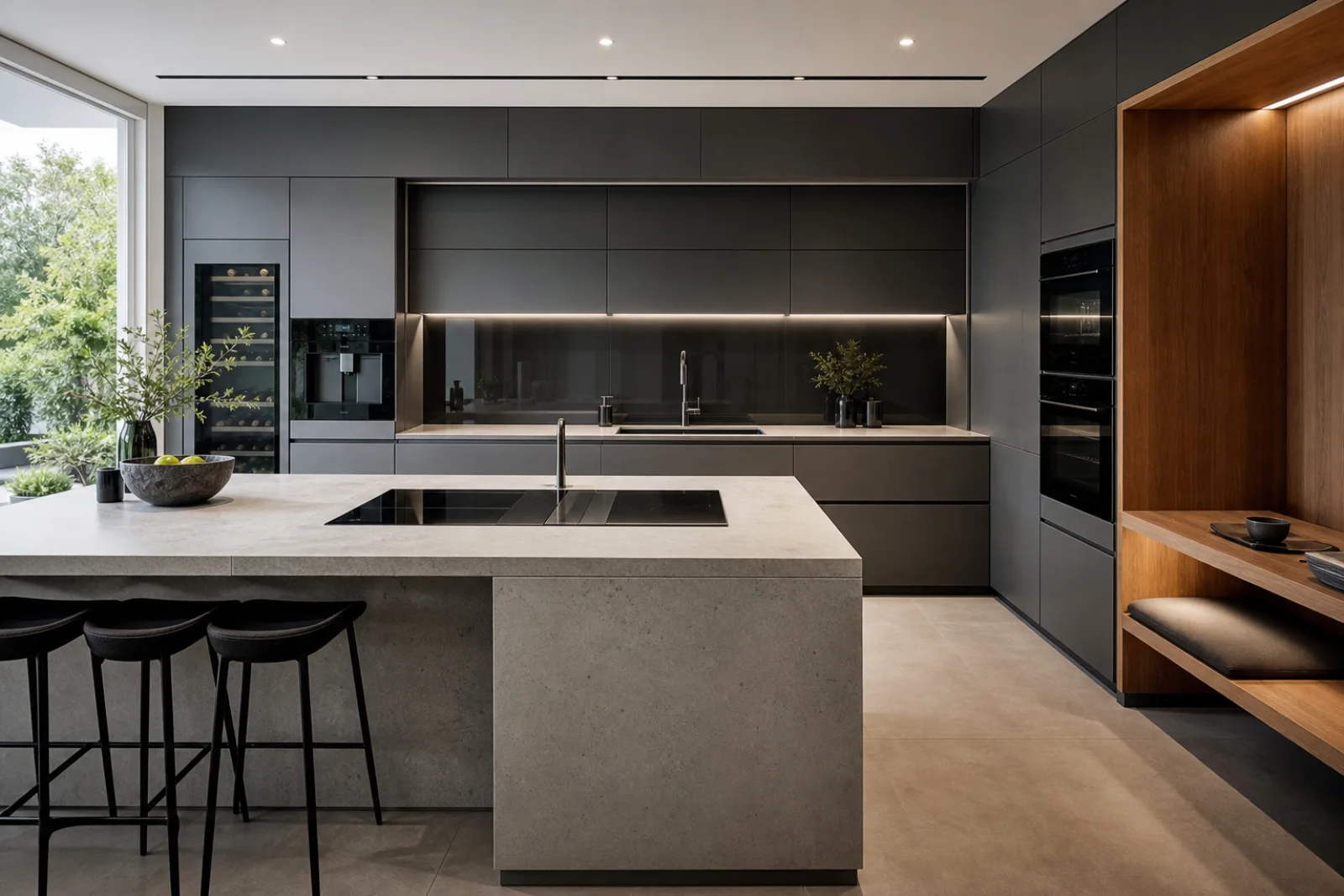
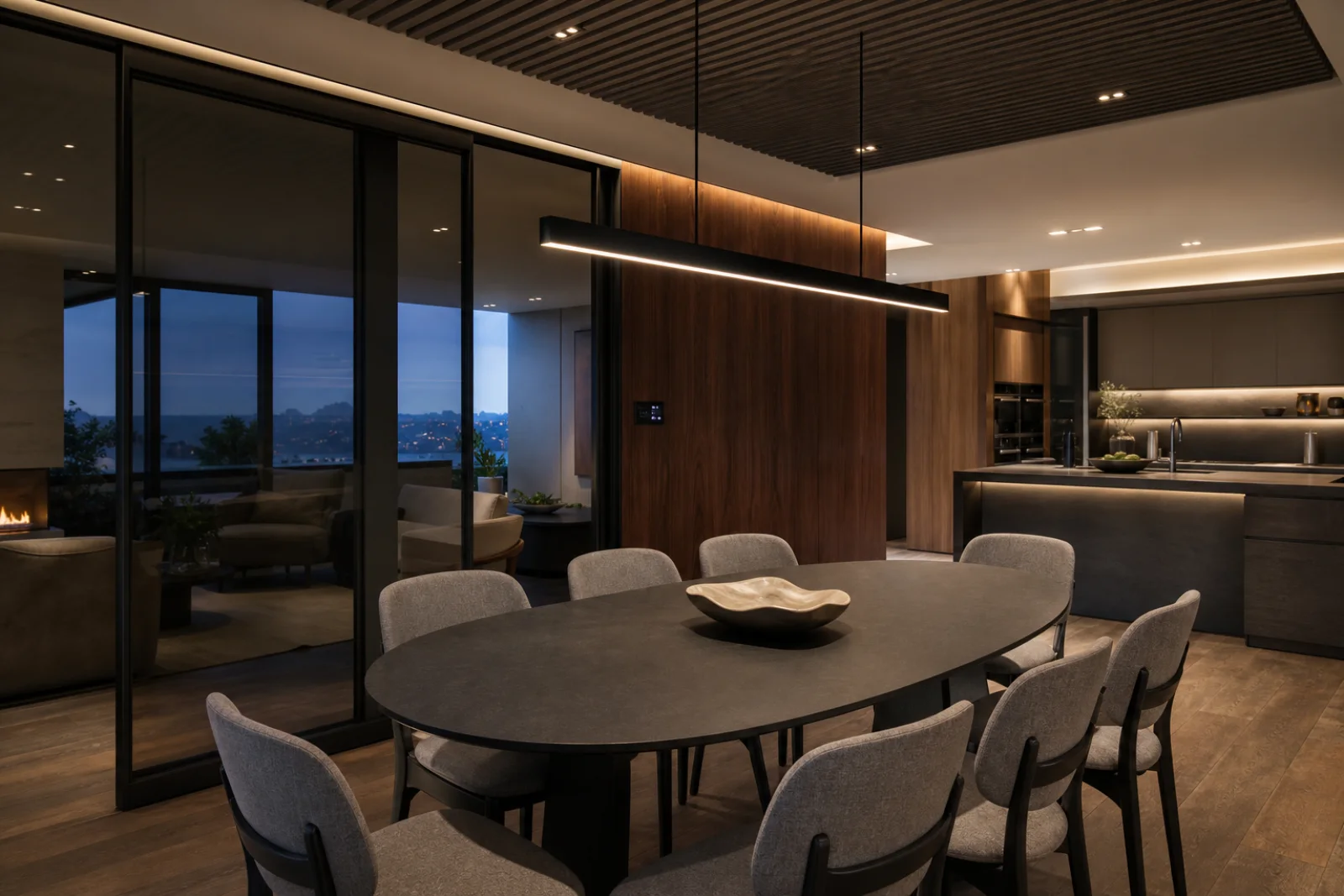
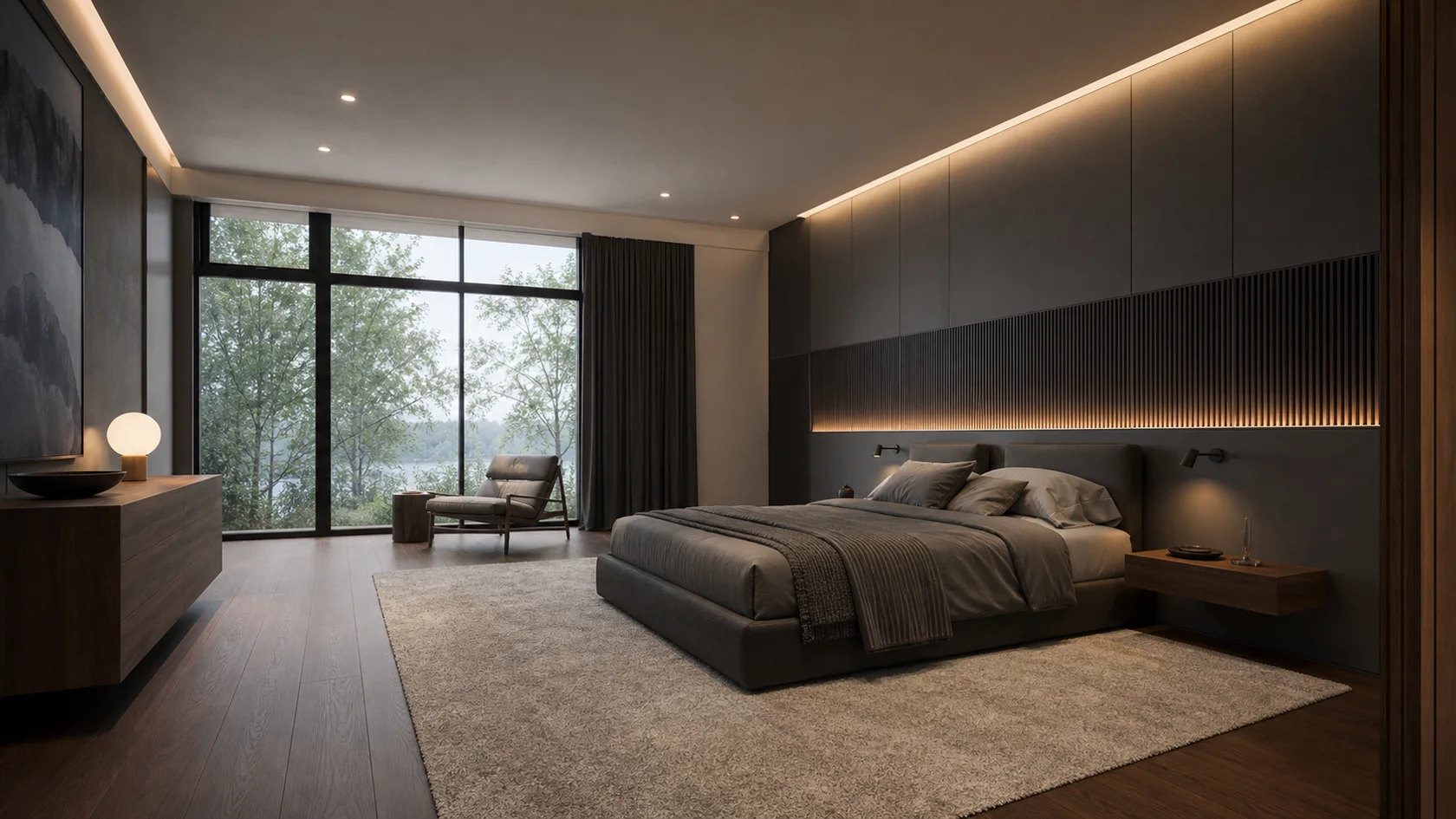
A flush service wall integrates media, ventilation and storage while keeping maintenance access credible. Preserve a calm bedside zone and a clear path from the door to storage.
Five genuinely different high-tech approaches to the bedroom, each built around a new plan, architectural condition or time of day.
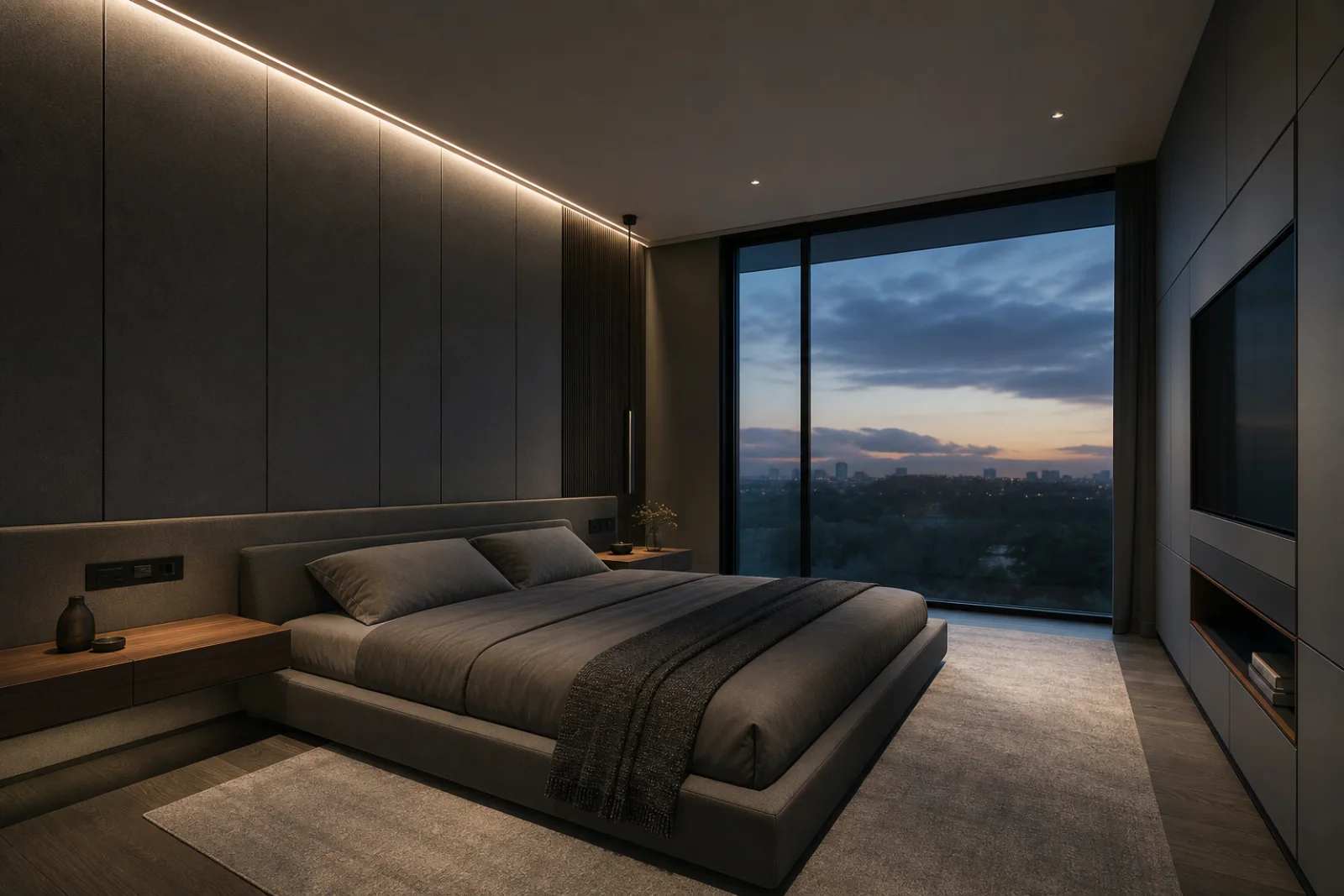
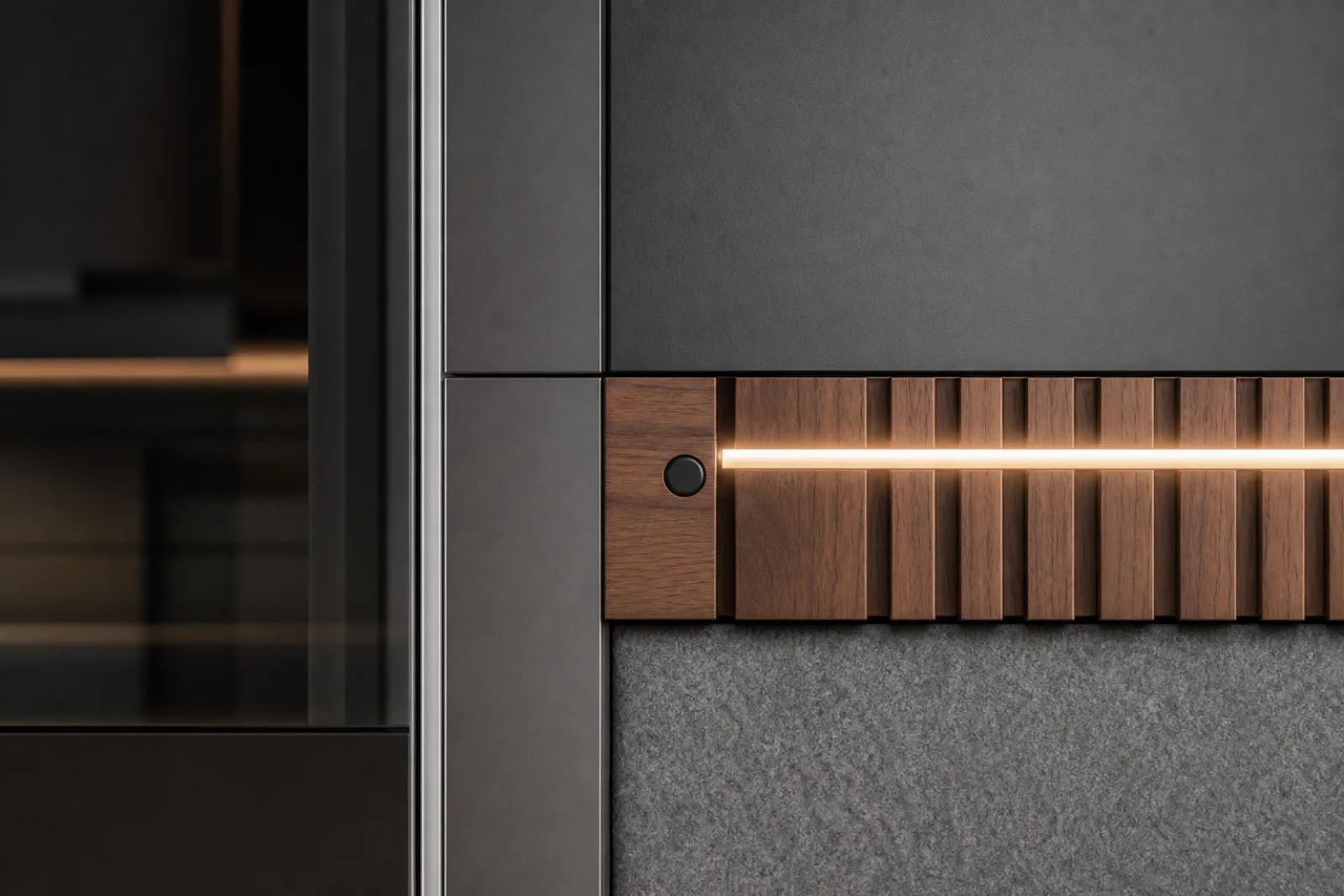
High-Tech treats automation, media, acoustics and climate as invisible infrastructure integrated into precise residential architecture. In the bedroom, that idea must still support rest, low visual stimulation and an unobstructed route around the bed.
Keep climate, blackout and night controls reachable but visually quiet, with no standby glow facing the bed. Design cable routes, controls, ventilation and access panels before surfaces; technology should simplify the room rather than advertise itself.
Use these examples to choose the version of the style that fits your architecture, light and square footage.
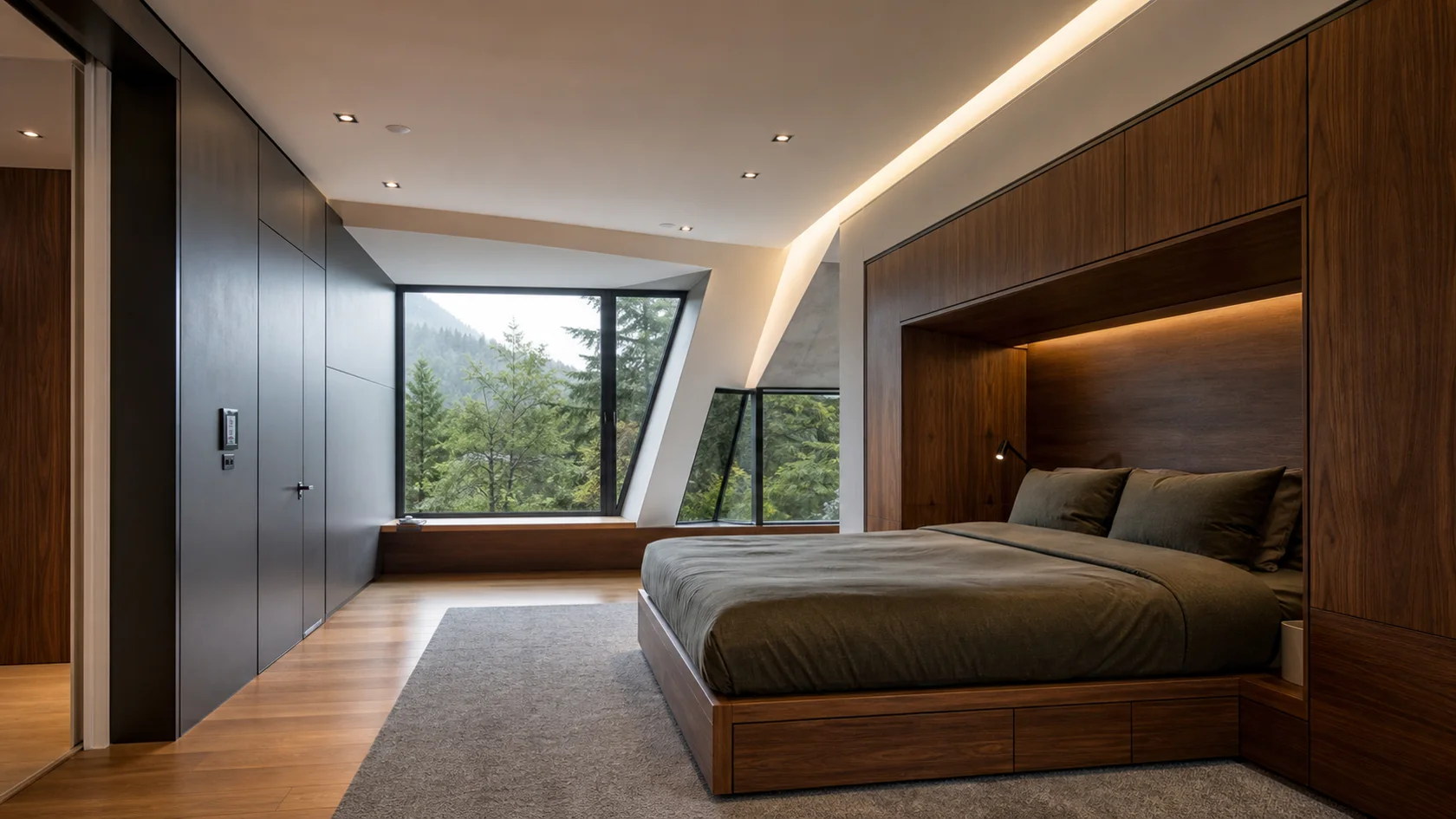
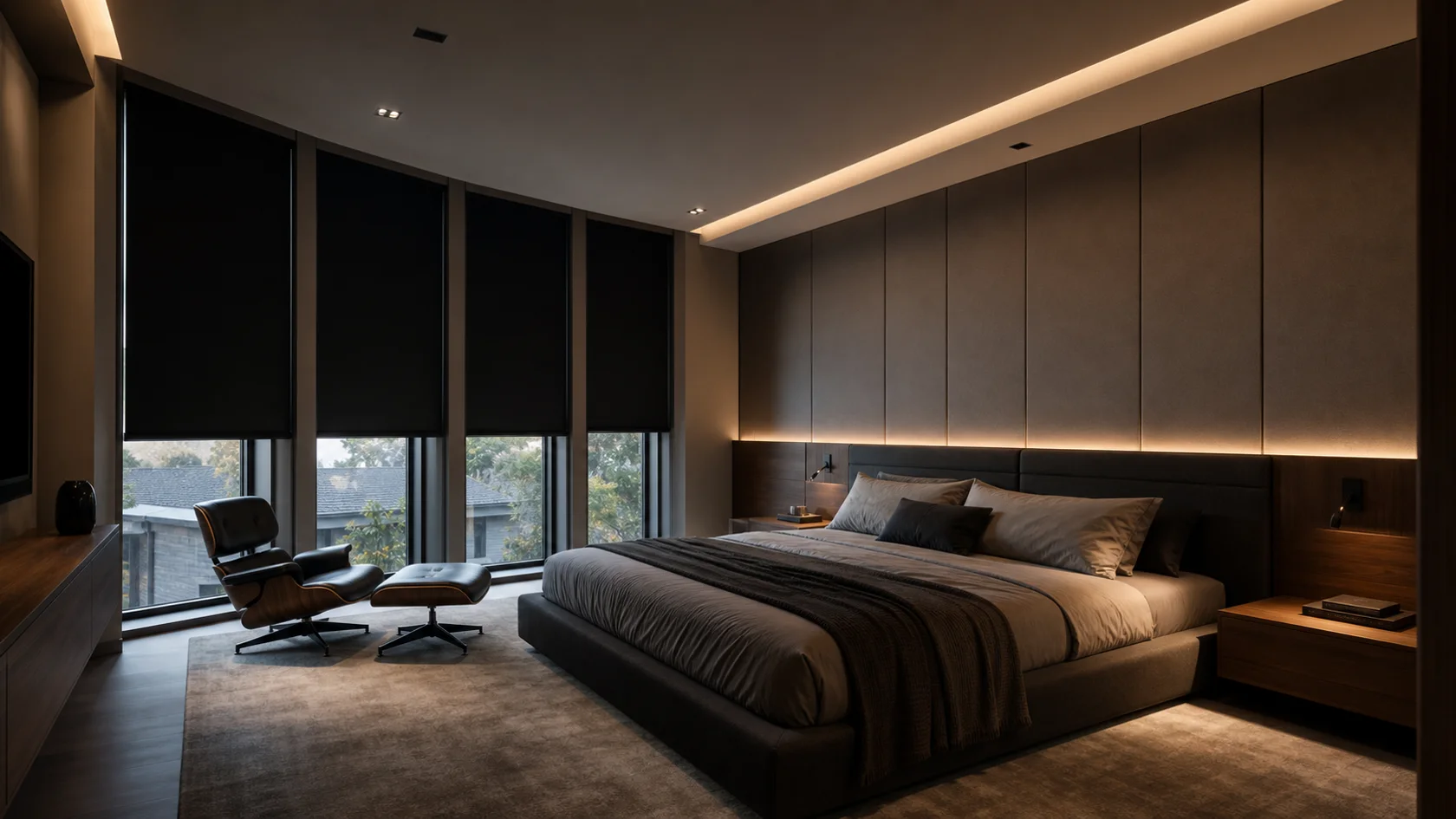
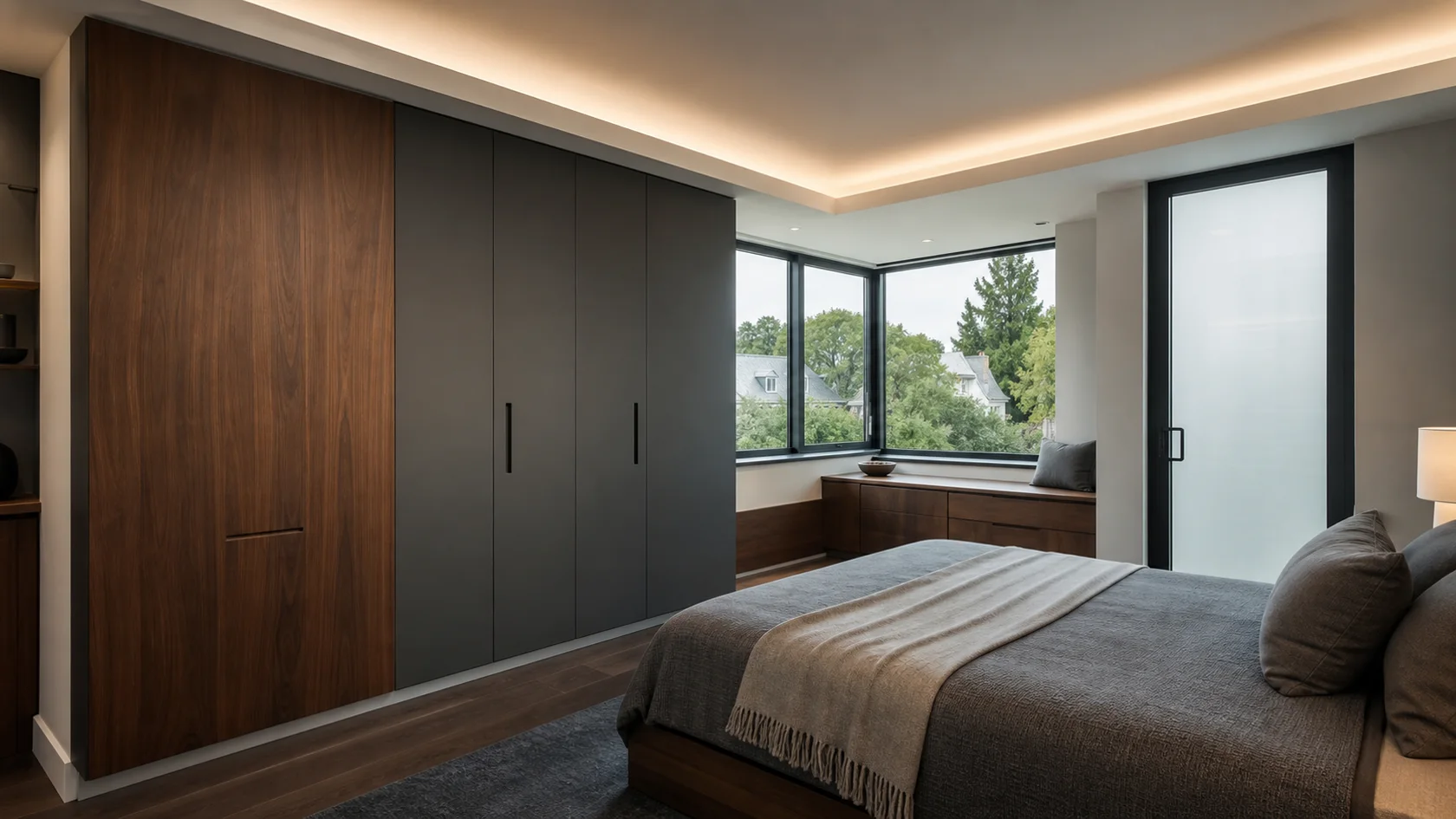
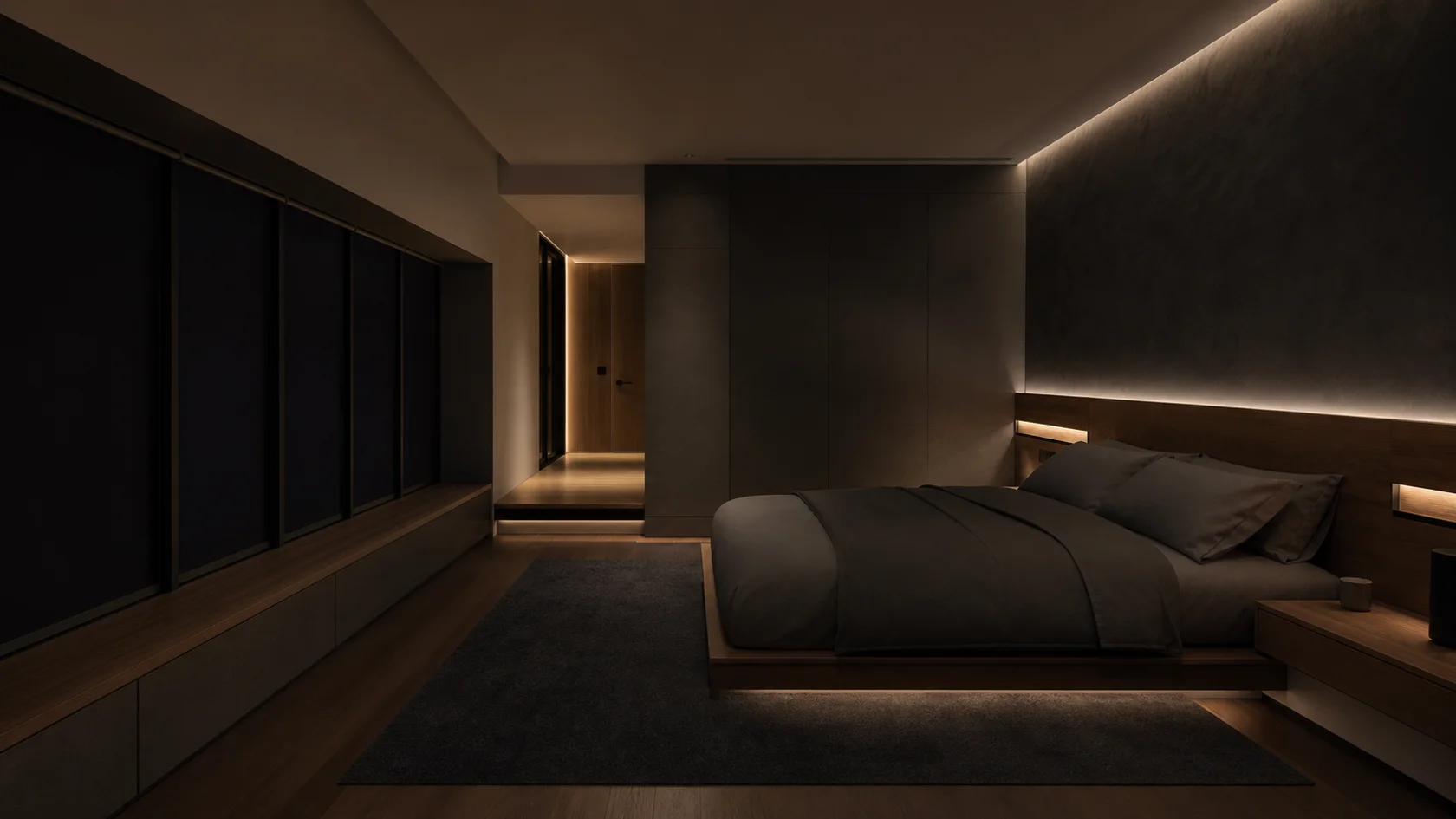
Use the style where it helps the room work: seating, circulation, focal point and material balance.
Place the headboard away from the busiest doorway when possible and preserve a clear approach on both sides.
A flush wardrobe or one resolved chest is calmer than several unrelated storage pieces.
Use bedside and concealed light below eye level instead of relying on a bright central ceiling fixture.
Prioritize breathable bedding, a tactile rug and curtains before decorative objects.
Use dark and metallic values to unify technical elements, then introduce acoustic gray and one warm timber so the room remains comfortable when every screen is off.
The matte structural base for cabinetry, media walls and technical ceiling panels.
A precise mid-gray for frames, tracks, hardware and durable furniture components.
Allows inactive displays and control surfaces to recede into darker planes.
A softer textile value that reduces echo and breaks up metal and glass.
Use in one niche or slatted plane to keep the technical palette residential.
Soft graphite, mineral gray and warm white keep technical planes legible without creating a laboratory.
Walnut, saddle leather or dense wool should counter aluminum, glass and composite surfaces.
Screens and controls work best as dark, flush elements that disappear when inactive.
Use tunable indirect white light for tasks and atmosphere; avoid colored LED outlines as decoration.
For this room, a few strong choices can carry the style better than adding more decor.
Keep climate, blackout and night controls reachable but visually quiet, with no standby glow facing the bed. Choose this bed and headboard by real dimensions, comfort and maintenance needs before judging its finish.
Design cable routes, controls, ventilation and access panels before surfaces; technology should simplify the room rather than advertise itself.
Design cable routes, controls, ventilation and access panels before surfaces; technology should simplify the room rather than advertise itself.
Design cable routes, controls, ventilation and access panels before surfaces; technology should simplify the room rather than advertise itself.
Use these checks to keep the high-tech character clear without compromising how the bedroom works.
Use ledges or compact tables that preserve the route around the bed.
Repeat a narrow family of tones and let weave, not pattern count, create depth.
Layer low bedside light with a dim ambient source for a calmer evening transition.