01
Dense Focal Wall
A meaningful artwork, rug or textile supplies the story and three colors that organize every later layer. Protect the door swing and give shoes, coats and keys a defined place at the point of arrival.
Five materially and spatially different maximalist approaches to the entryway, from a clear daytime plan to a controlled evening mood.
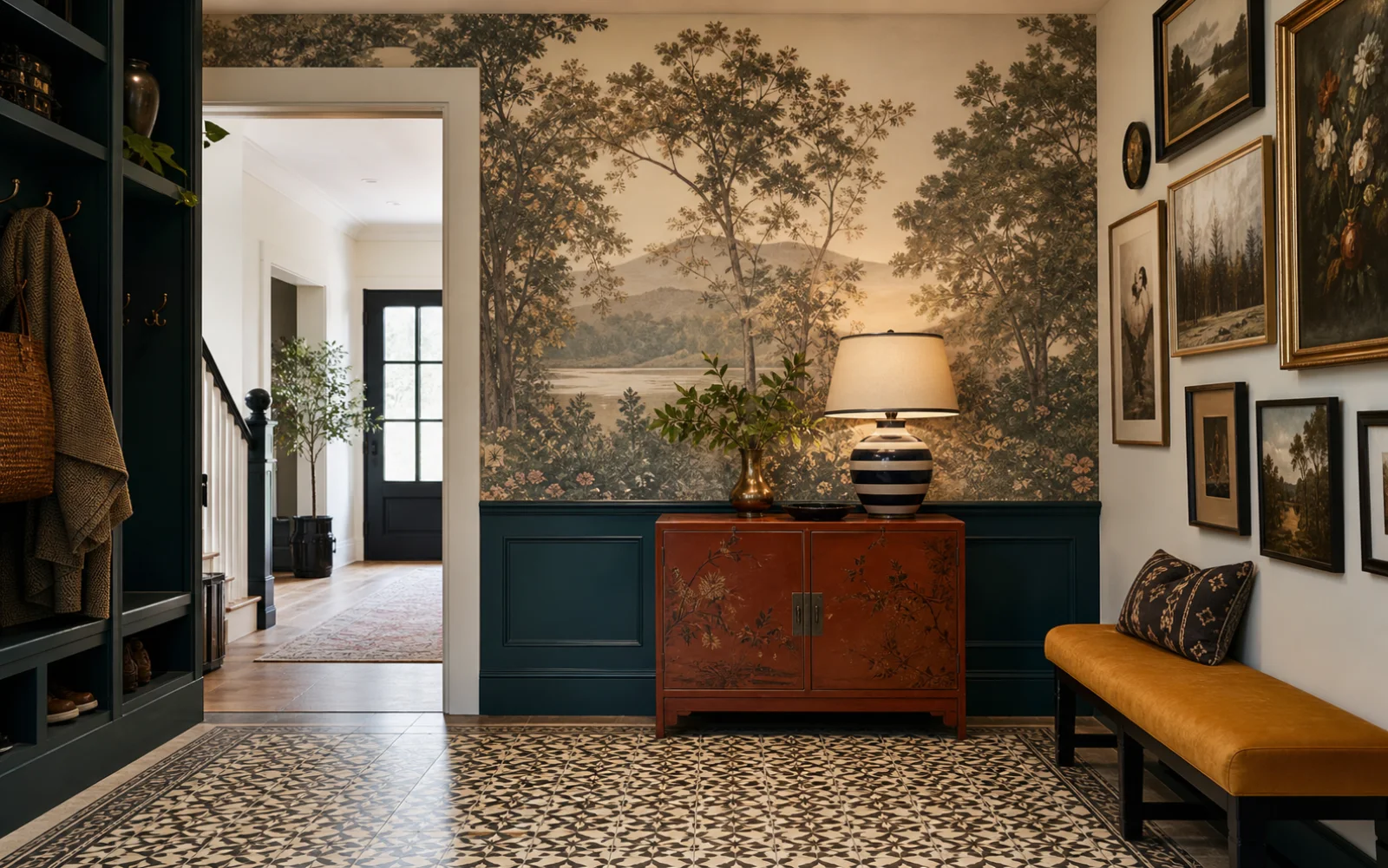
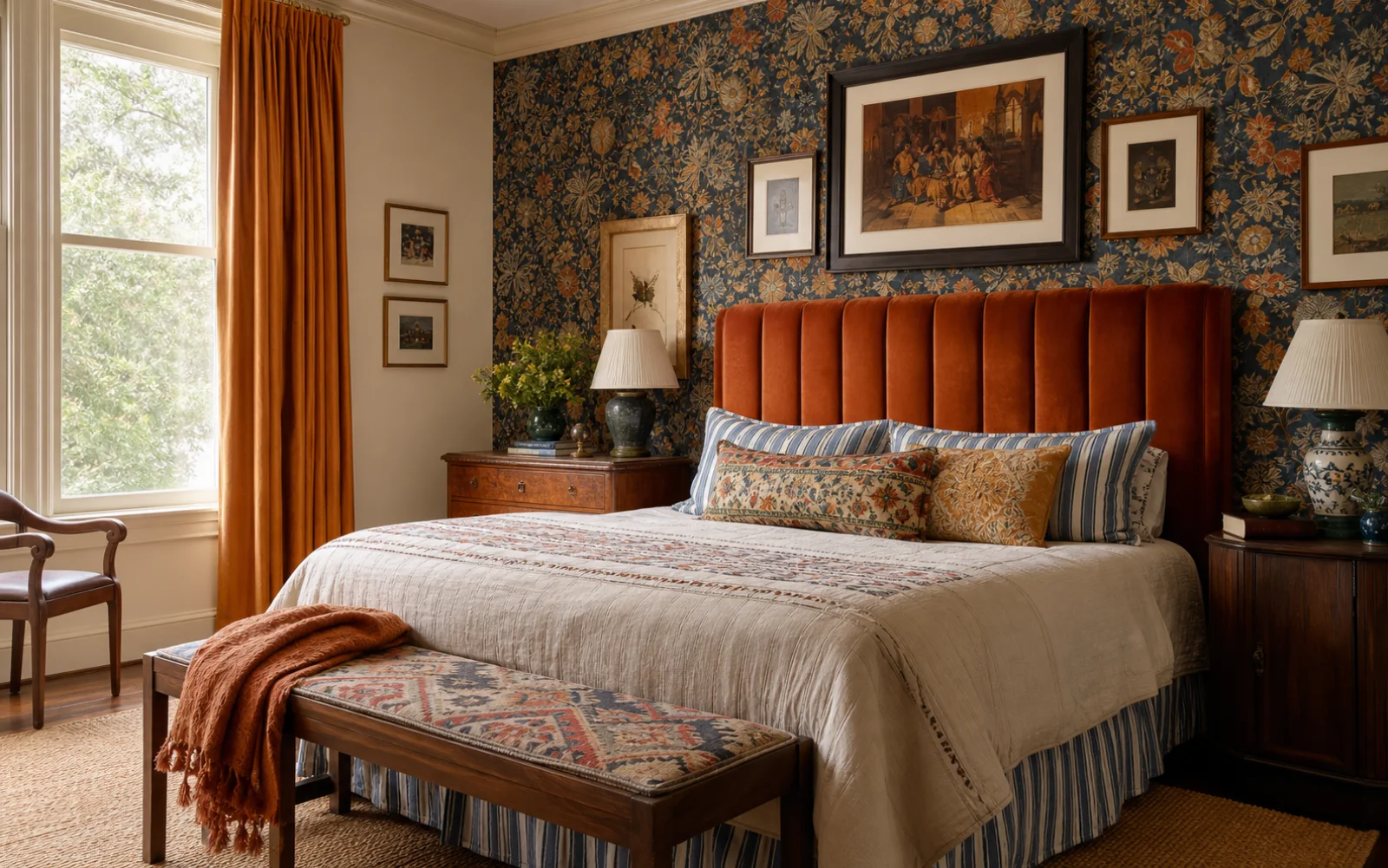
Maximalist builds expressive rooms from personal collections, repeated color and deliberate shifts in pattern scale while preserving visual pauses and daily function. In the entryway, that identity must still support arrival, quick storage and an uncluttered transition into the home.
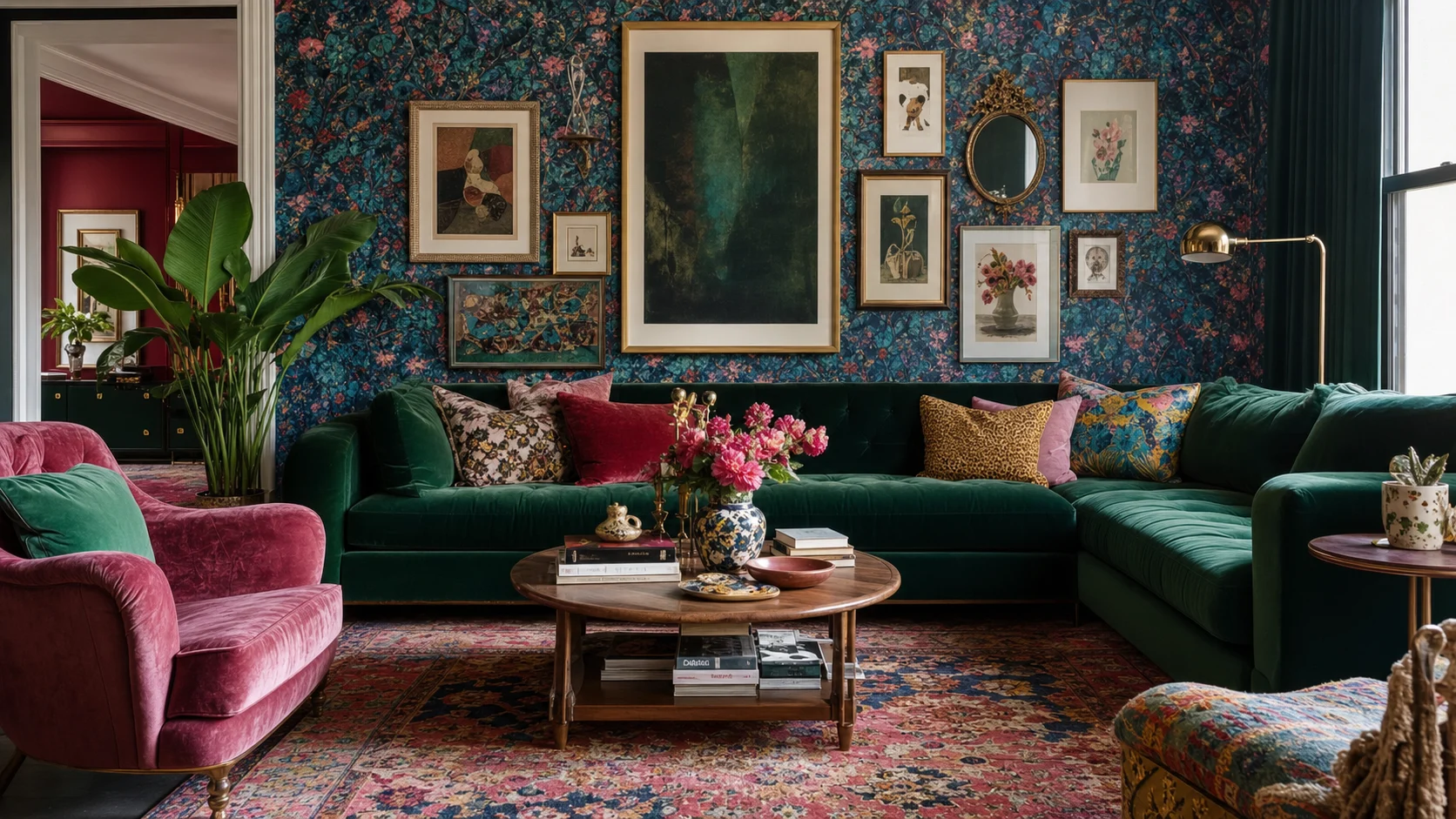
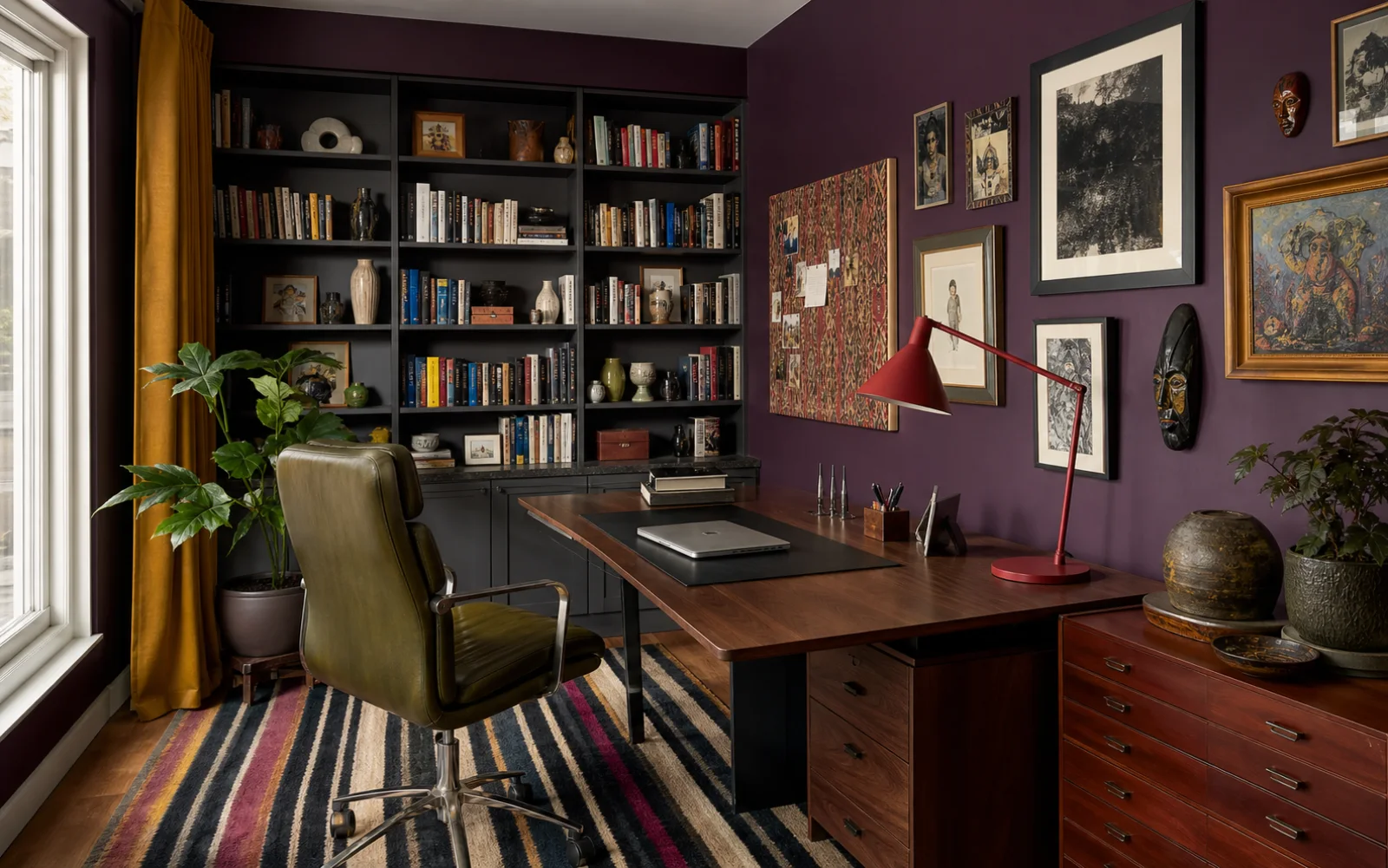
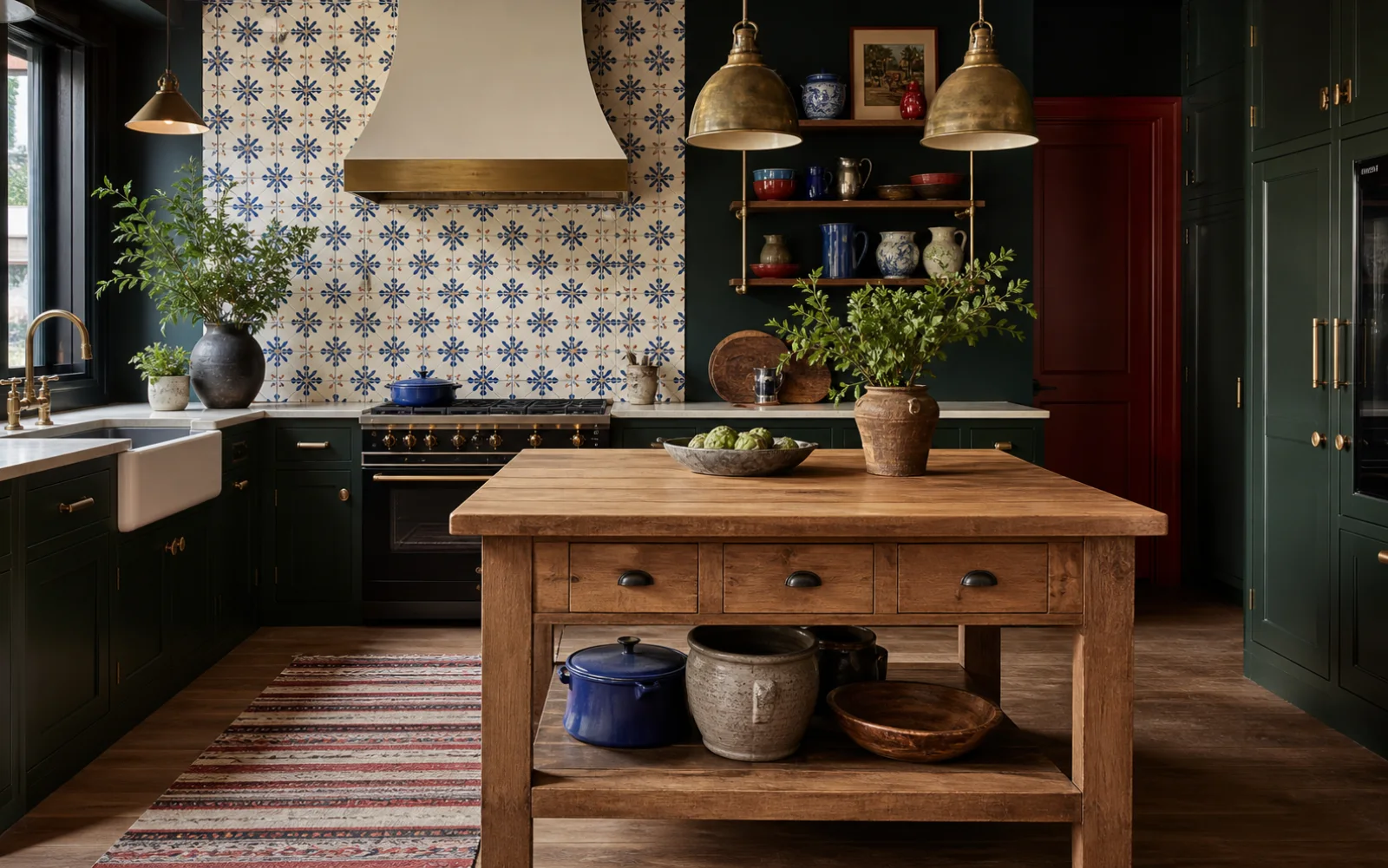
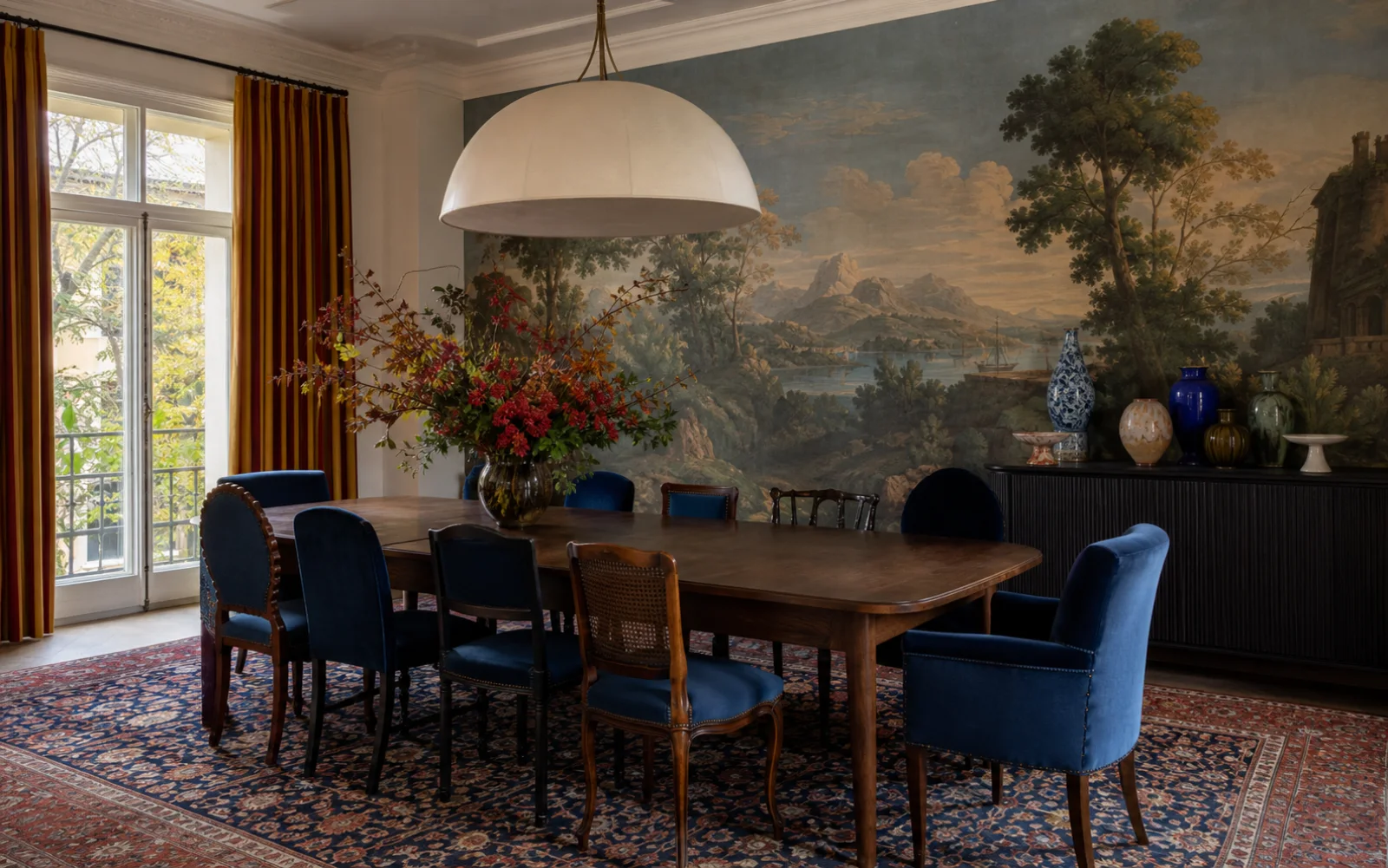
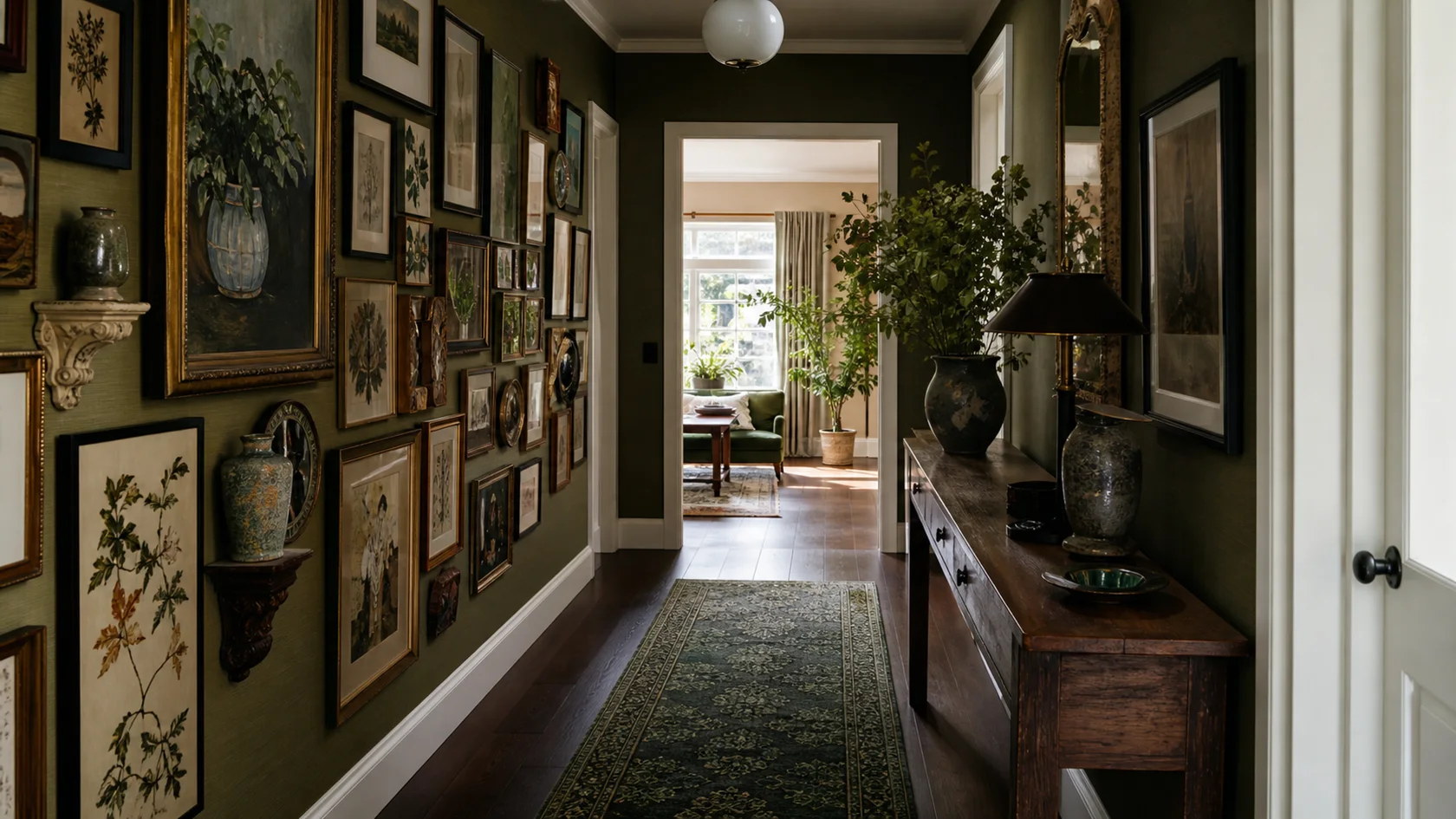
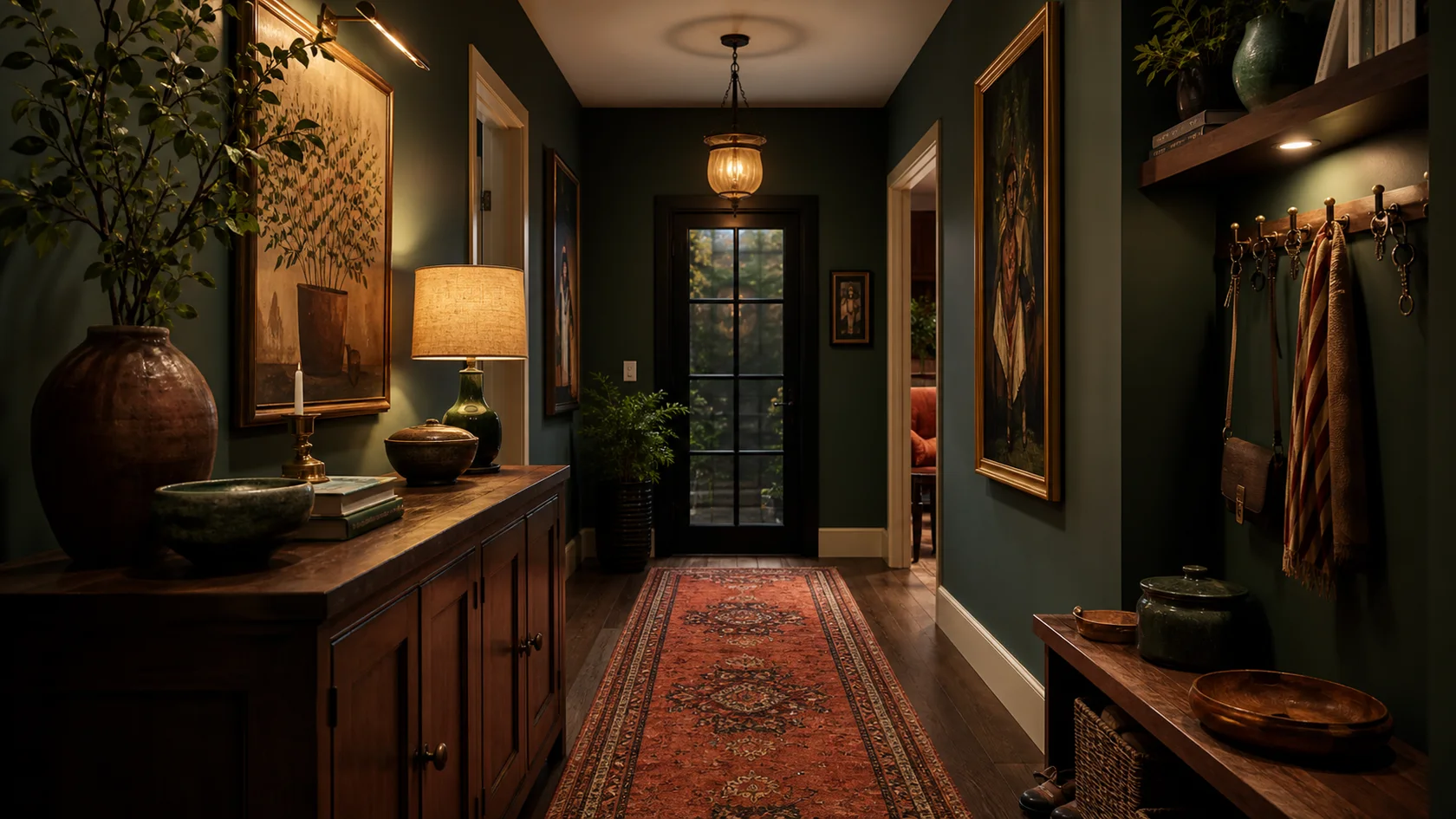
Create one dense focal wall and a separate object group, leaving the door swing and walking line completely free. Begin with a meaningful anchor, extract three recurring colors and group objects into readable zones before adding another layer.
Use these examples to choose the version of the style that fits your architecture, light and square footage.
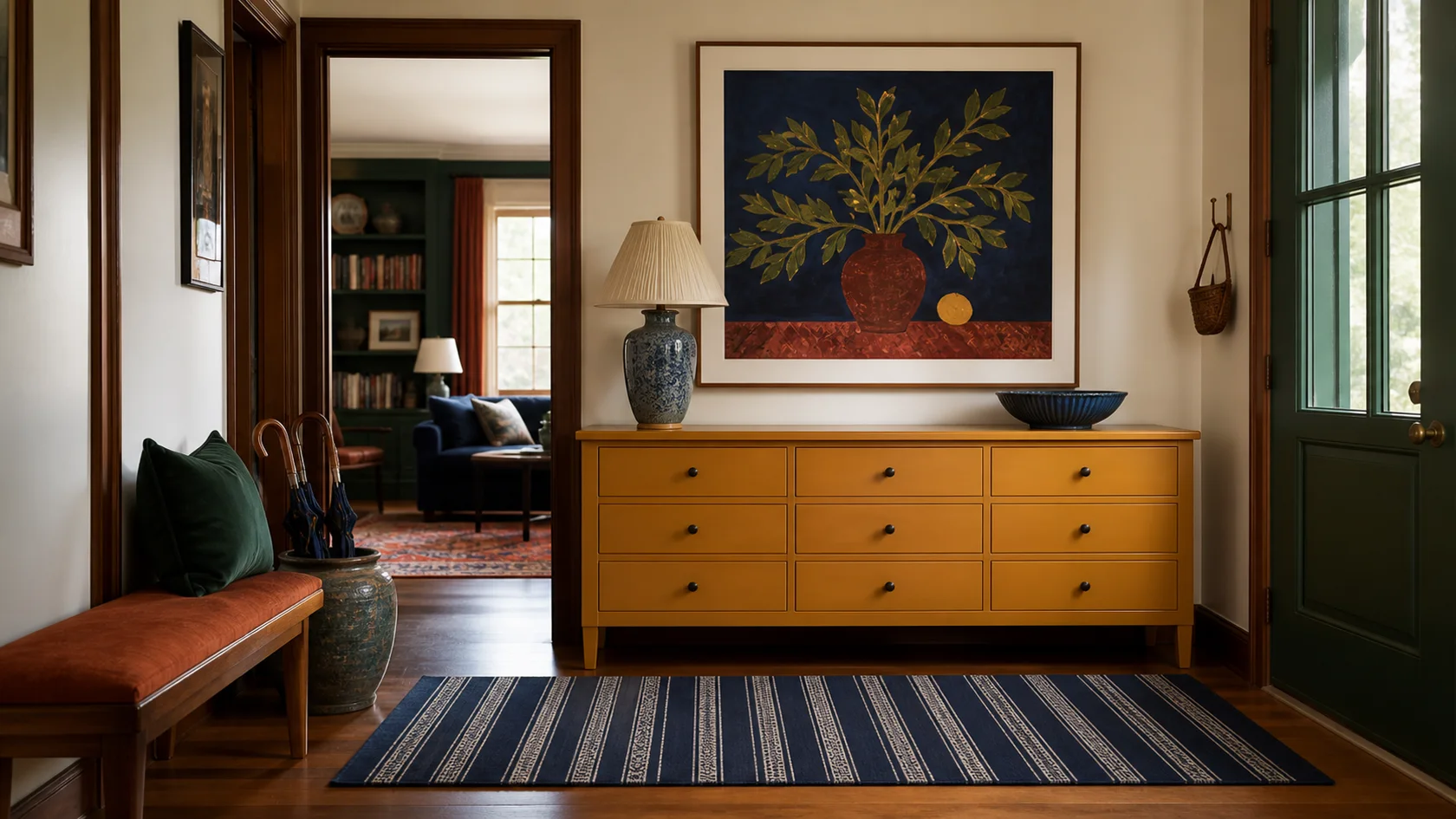
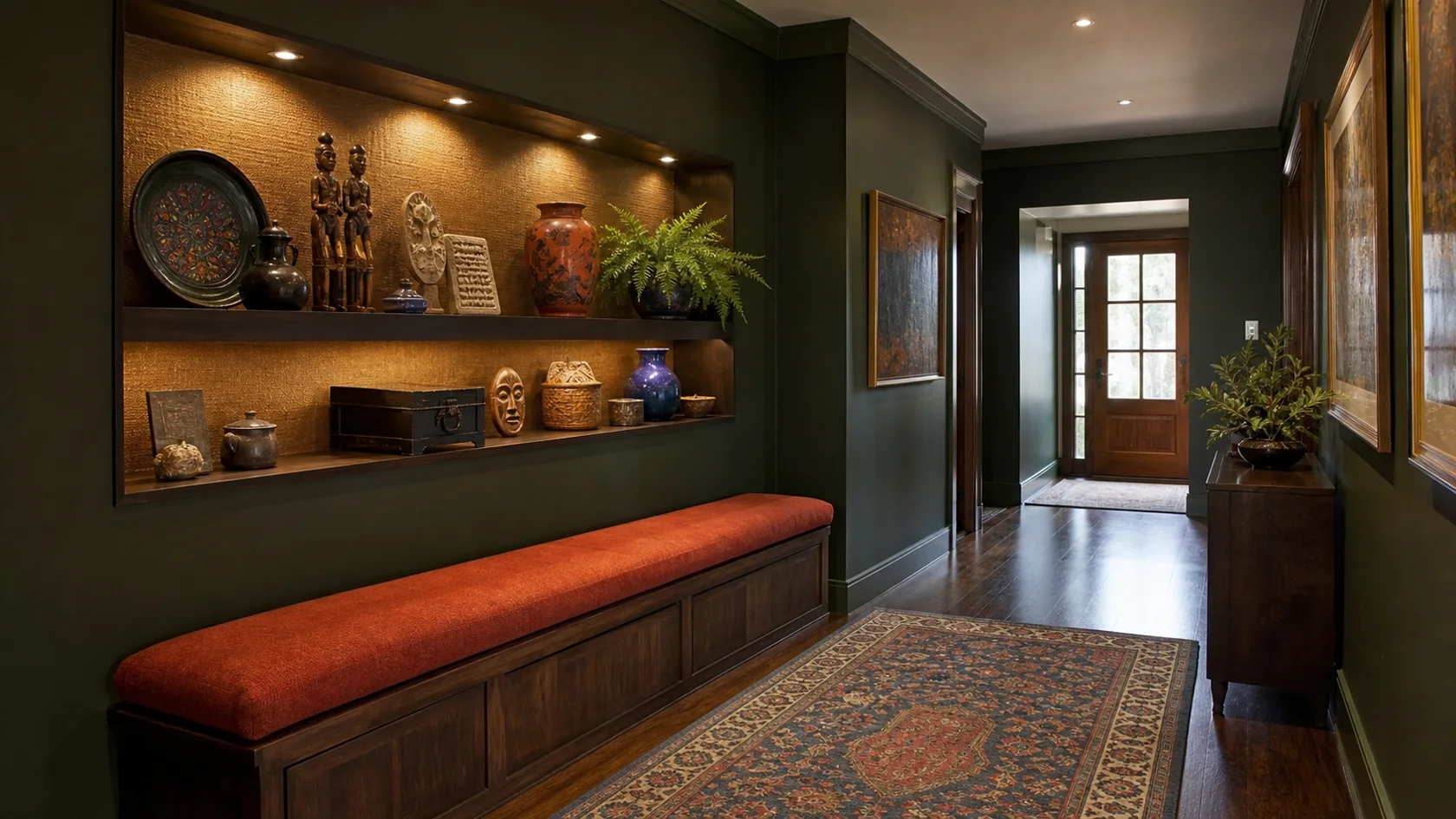
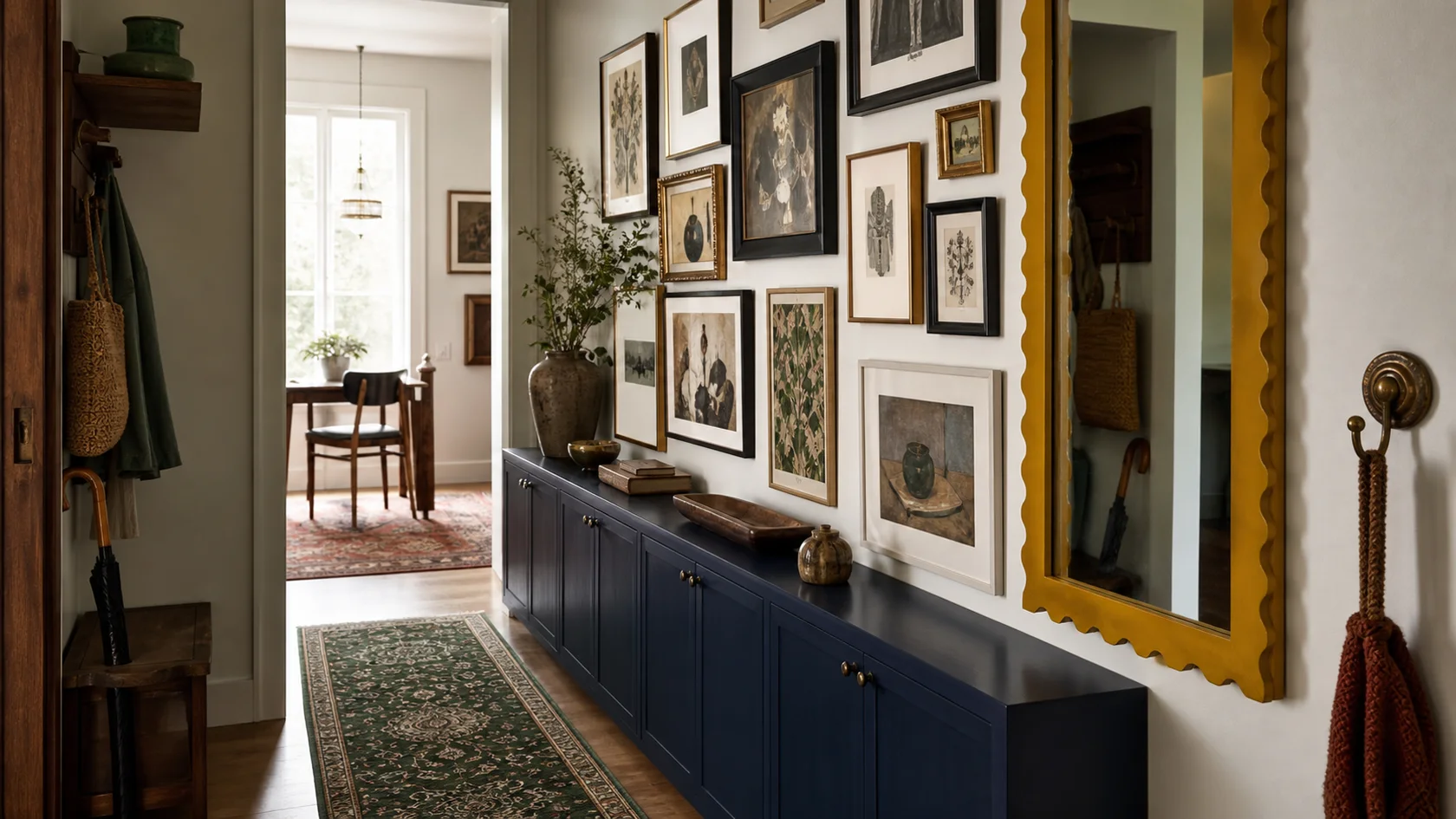
Use the style where it helps the room work: seating, circulation, focal point and material balance.
Place benches, cabinets and baskets outside the full arc of the front door.
Give shoes, coats, keys and bags a specific place close to where each item is used.
Shallow storage and one strong object make a narrow hall feel intentional without crowding it.
Combine practical threshold light with a washable runner or resilient floor at the highest-wear zone.
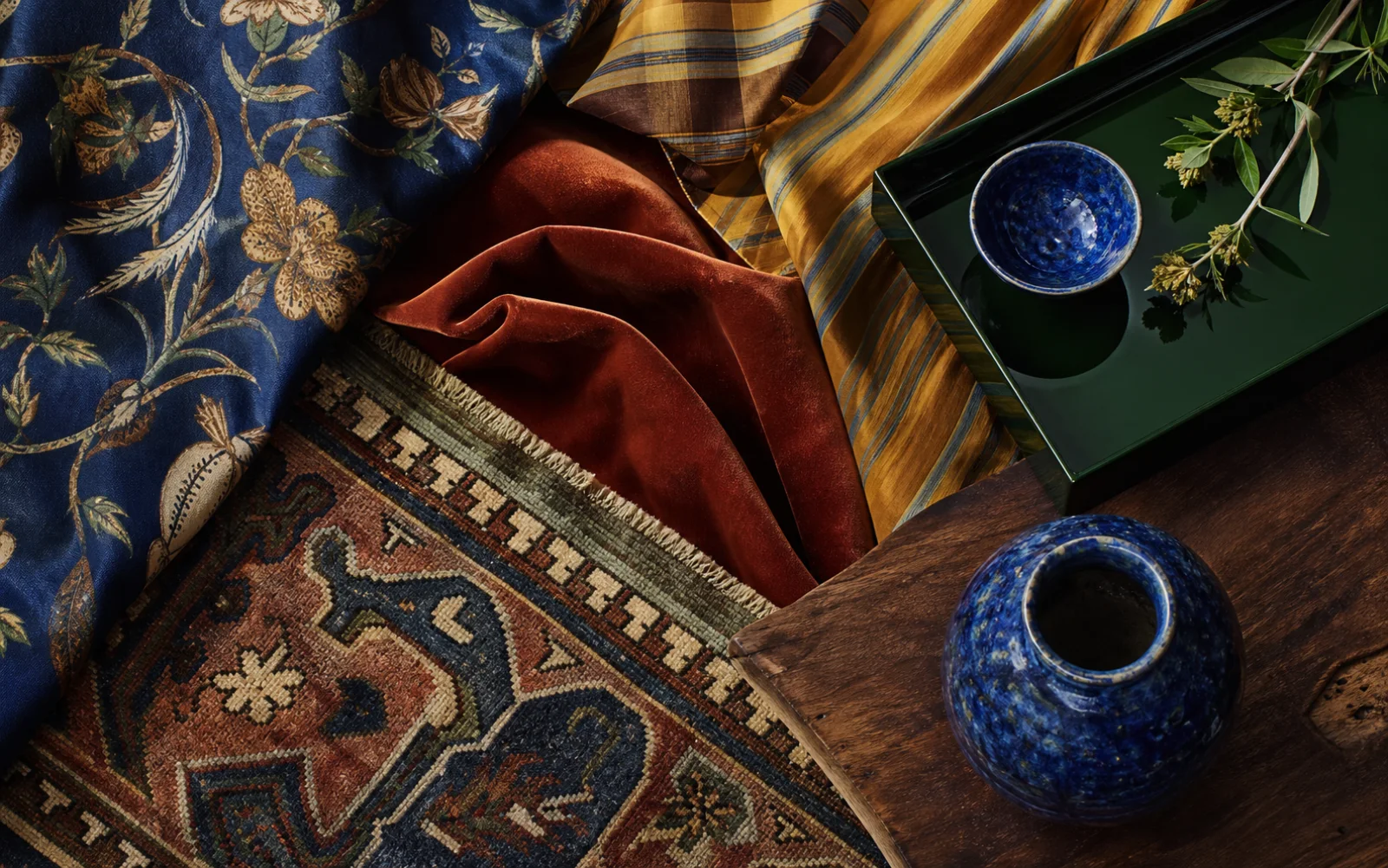
Choose three main colors from the anchor piece, assign one to the largest surface or furniture item, repeat the others at different scales and retain a few natural or pale pauses.
A deep blue that can connect wallpaper, ceramics, upholstery and rug details.
Adds warmth through velvet, lacquer or a recurring thread in patterned textiles.
A dark architectural anchor for cabinetry or one large piece of furniture.
A bright but earthy accent best repeated in curtains, stripes and small art notes.
Natural grain gives dense color schemes a consistent, useful foundation.
Assign indigo, forest, rust or another deep hue to the largest furniture or architectural plane.
Repeat two supporting colors across textiles, art and ceramics at different scales.
Walnut, oak, wool and pale plaster give saturated layers a consistent material base.
Leave ceilings, worktops, pathways or selected upholstery quiet so dense areas remain legible.
For this room, a few strong choices can carry the style better than adding more decor.
Create one dense focal wall and a separate object group, leaving the door swing and walking line completely free. Confirm the bench or console by dimensions, comfort and maintenance before selecting its decorative finish.
Begin with a meaningful anchor, extract three recurring colors and group objects into readable zones before adding another layer.
Begin with a meaningful anchor, extract three recurring colors and group objects into readable zones before adding another layer.
Begin with a meaningful anchor, extract three recurring colors and group objects into readable zones before adding another layer.
Use these checks to keep the maximalist character clear without compromising how the entryway & hallway works.
Choose shallow wall-mounted storage and protect the minimum walking width.
Add ventilated drawers or a cabinet so the floor remains clear.
Provide a small tray or ledge for keys before adding art or objects.