01
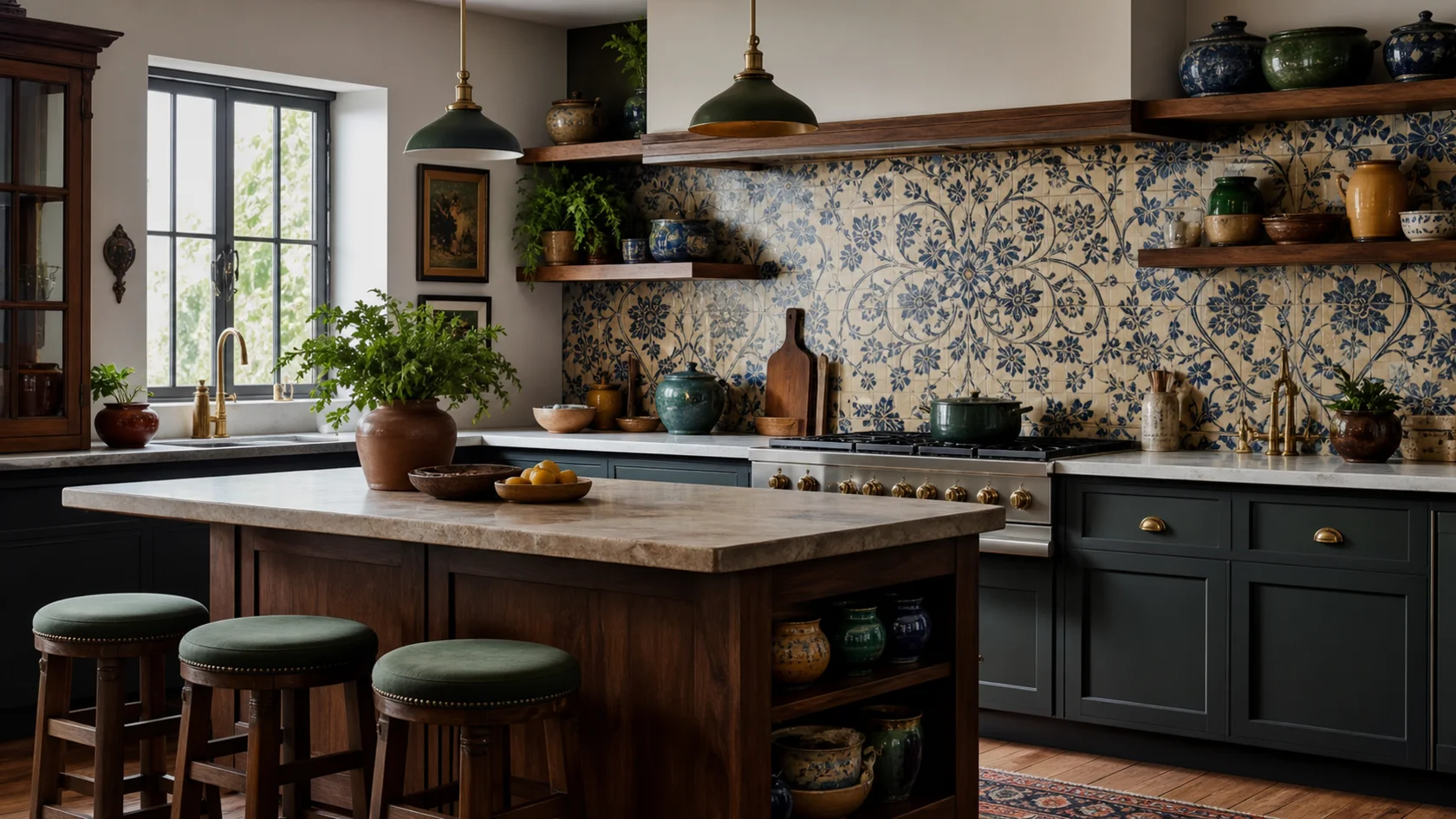
Narrative Backsplash
A meaningful artwork, rug or textile supplies the story and three colors that organize every later layer. Verify work aisles, appliance openings and uninterrupted task light around the preparation zone.
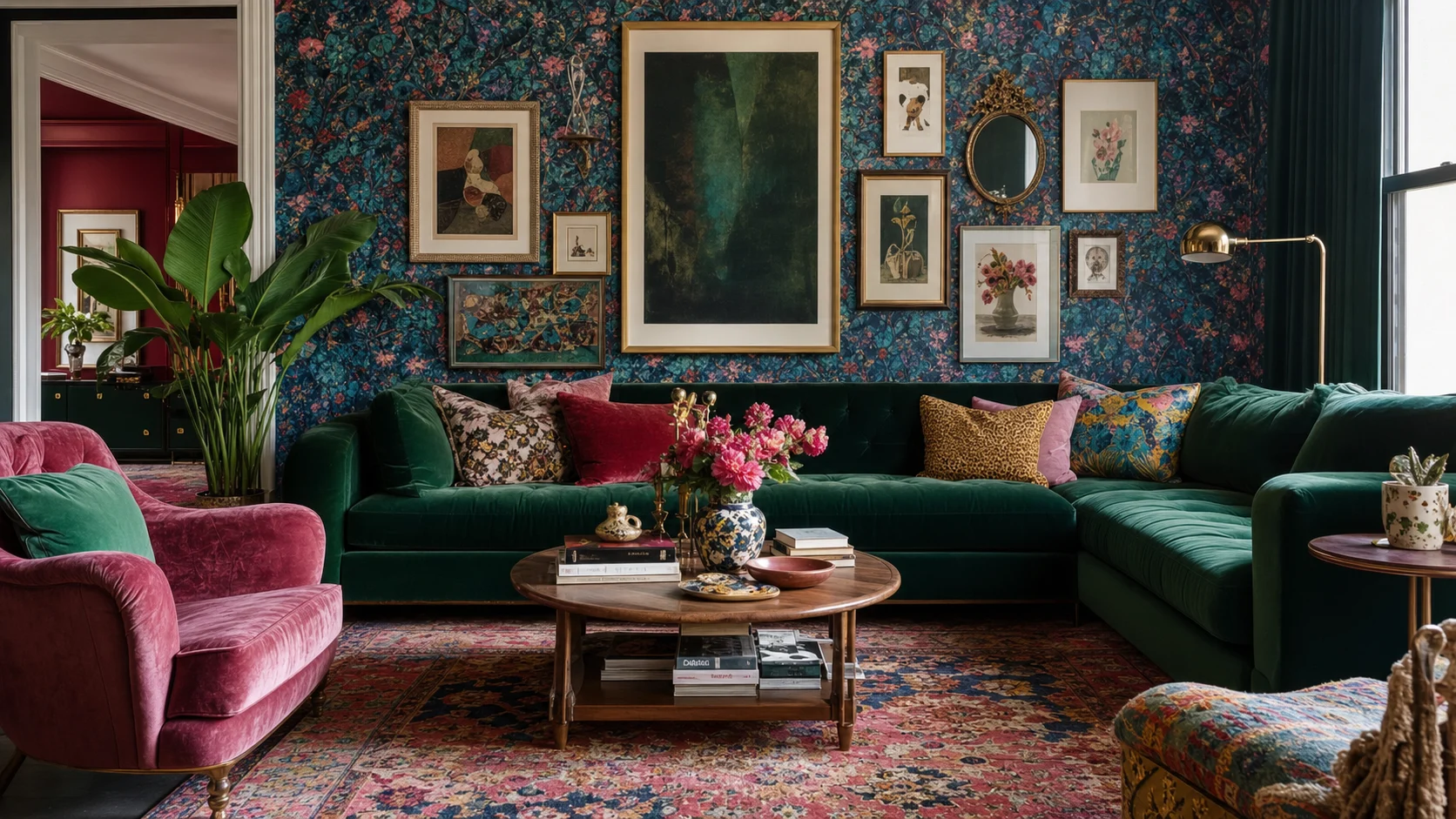
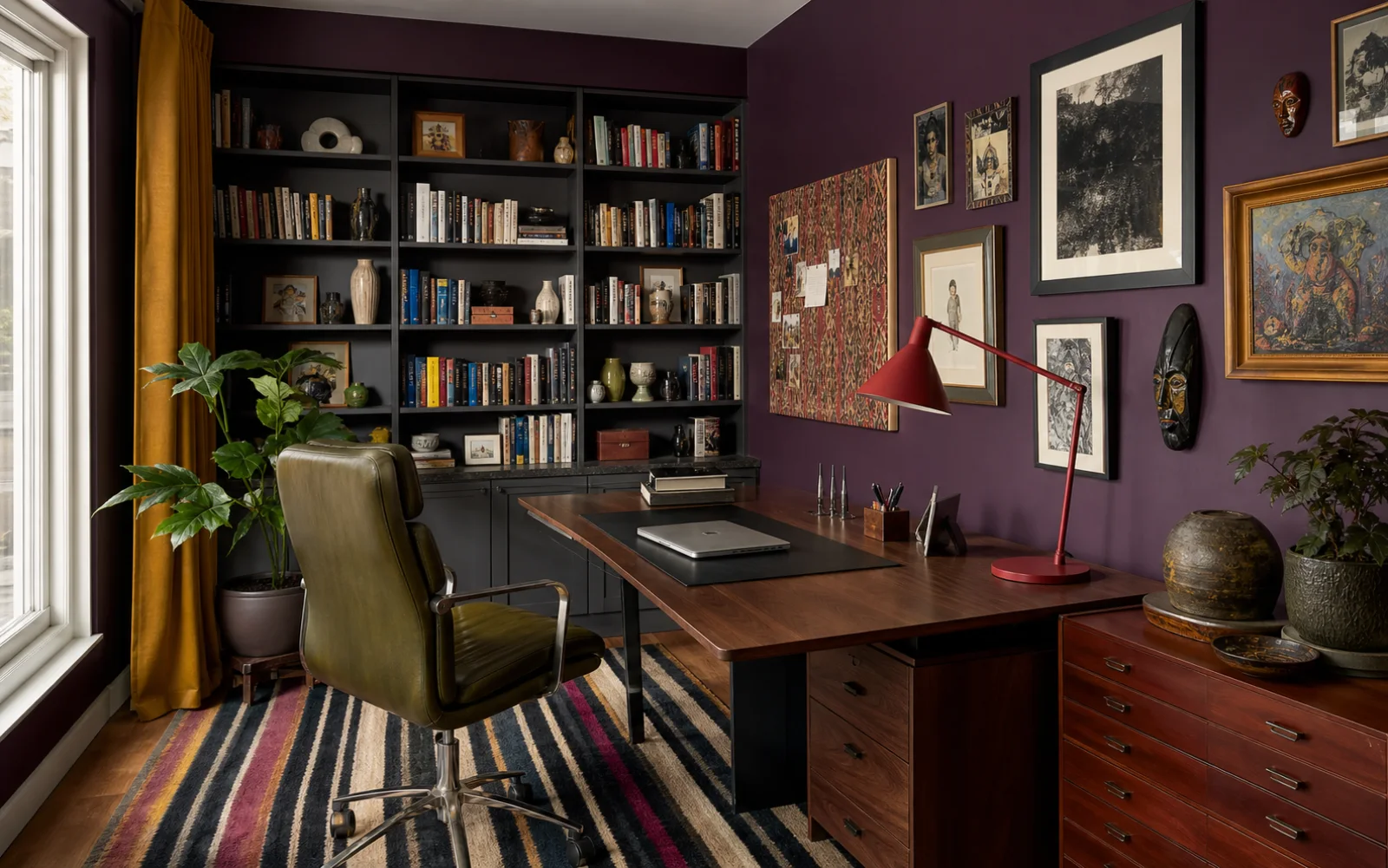
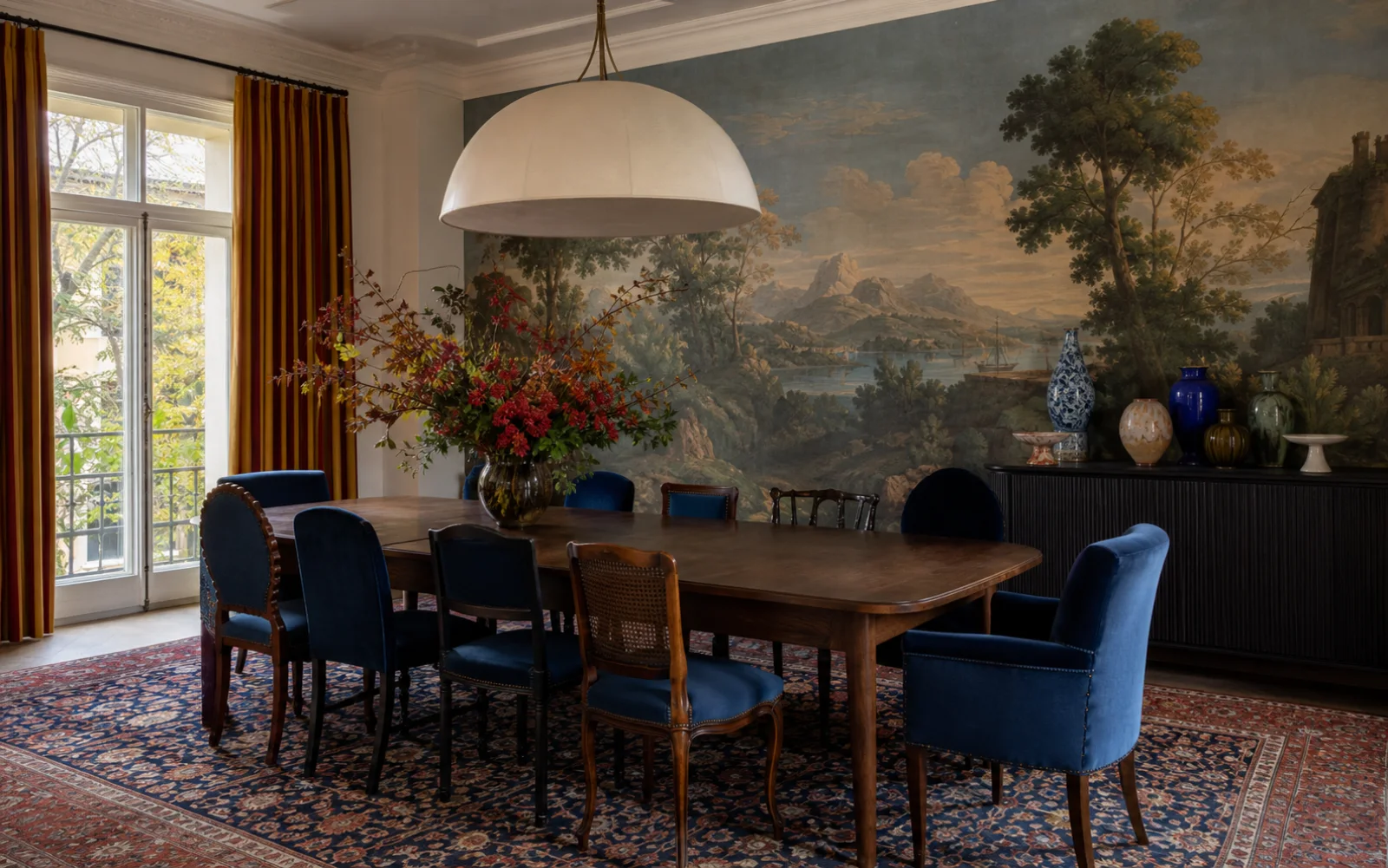
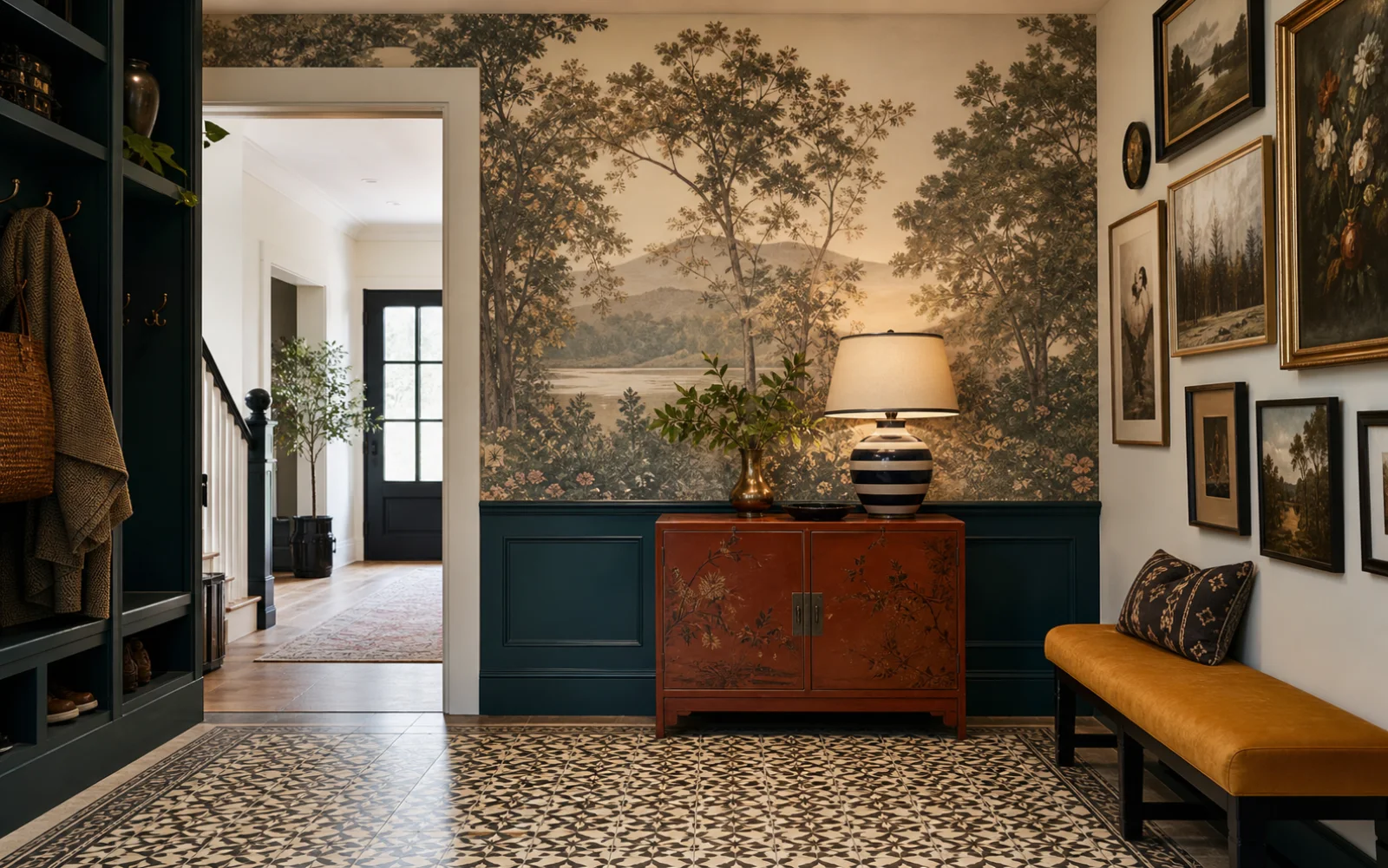
Five materially and spatially different maximalist approaches to the kitchen, from a clear daytime plan to a controlled evening mood.
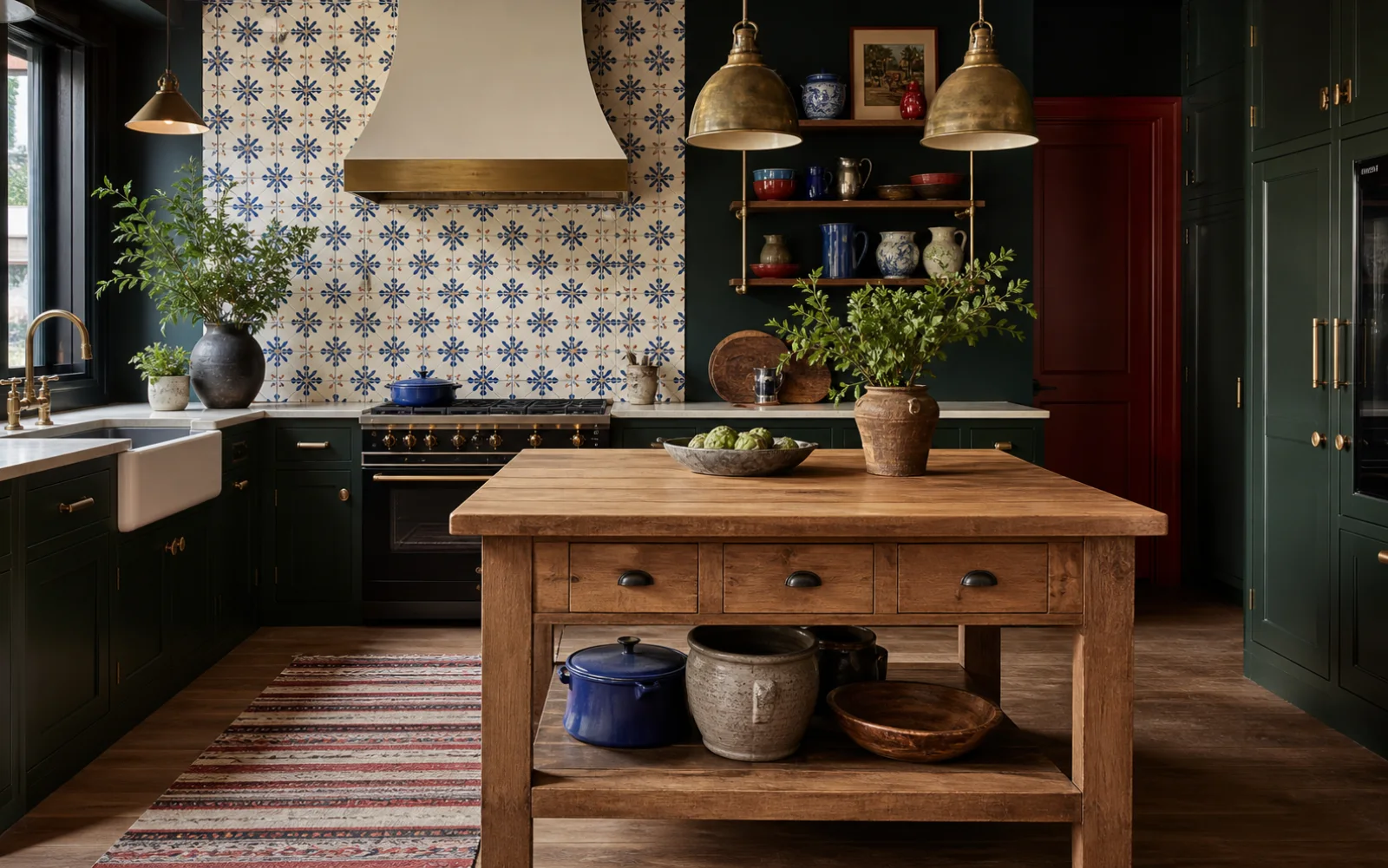
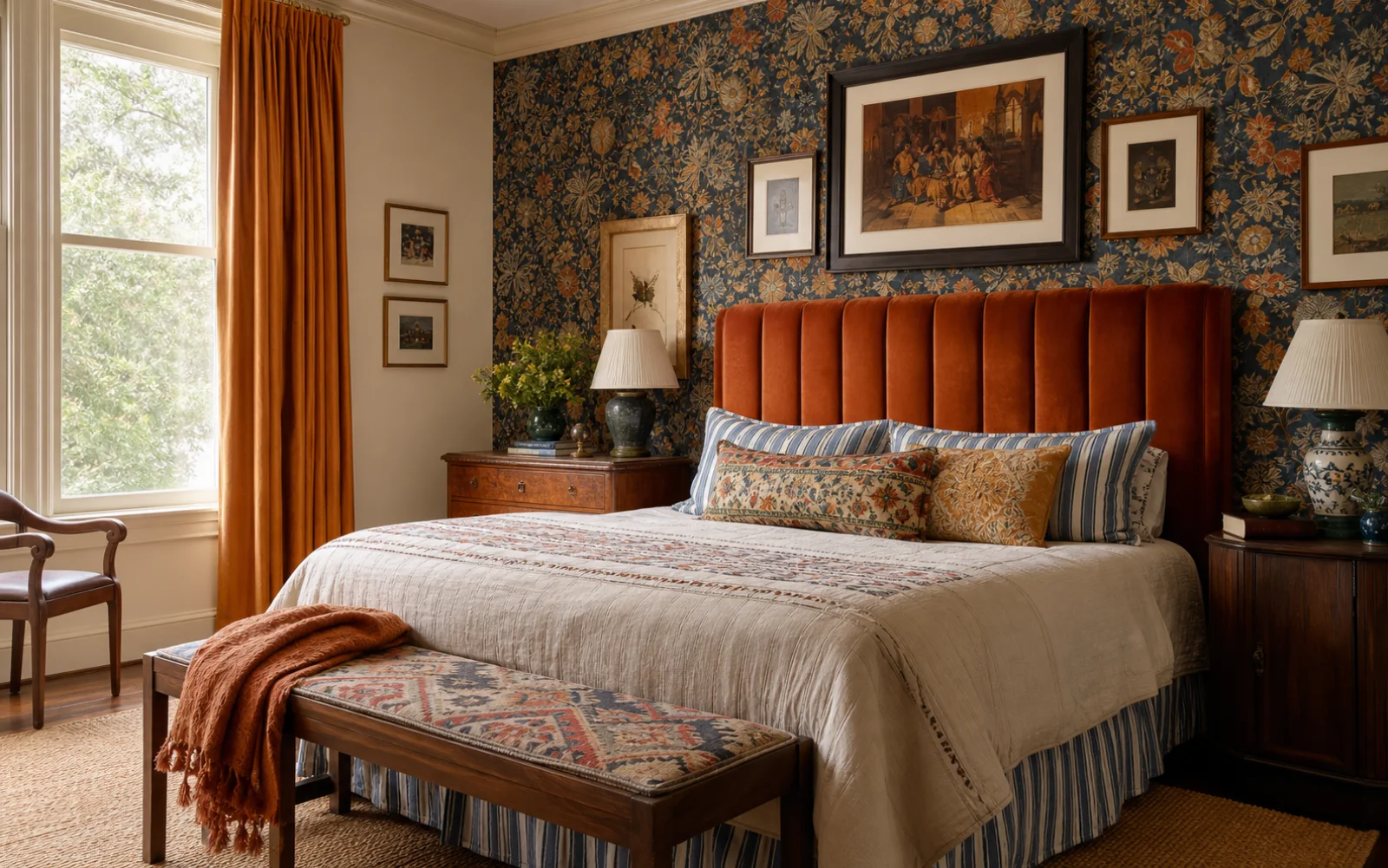
Maximalist builds expressive rooms from personal collections, repeated color and deliberate shifts in pattern scale while preserving visual pauses and daily function. In the kitchen, that identity must still support safe preparation, useful storage and durable surfaces arranged around a clear workflow.
Confine detailed tile to the backsplash, repeat its colors in ceramics and preserve an uncluttered preparation surface. Begin with a meaningful anchor, extract three recurring colors and group objects into readable zones before adding another layer.
Use these examples to choose the version of the style that fits your architecture, light and square footage.
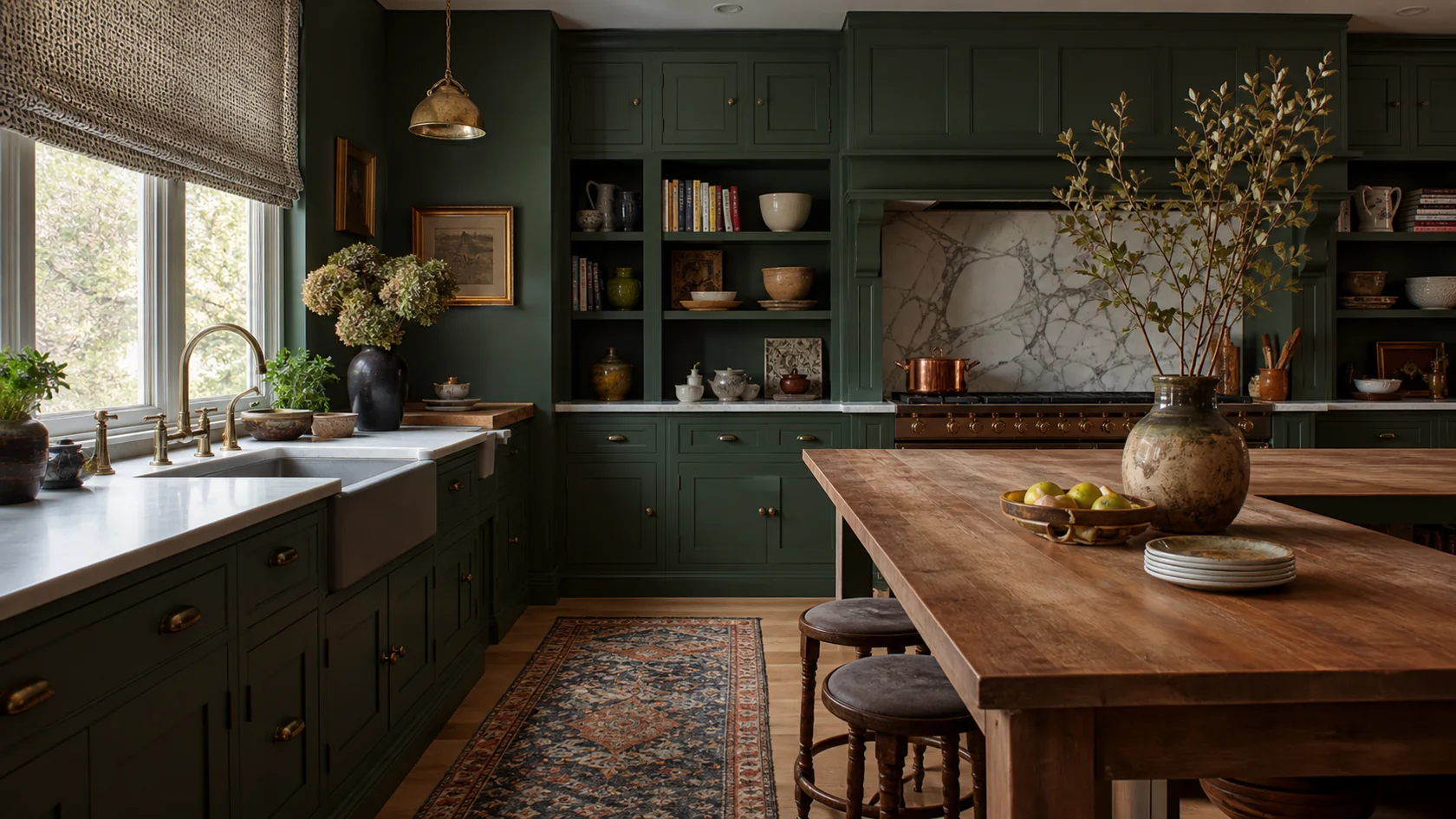
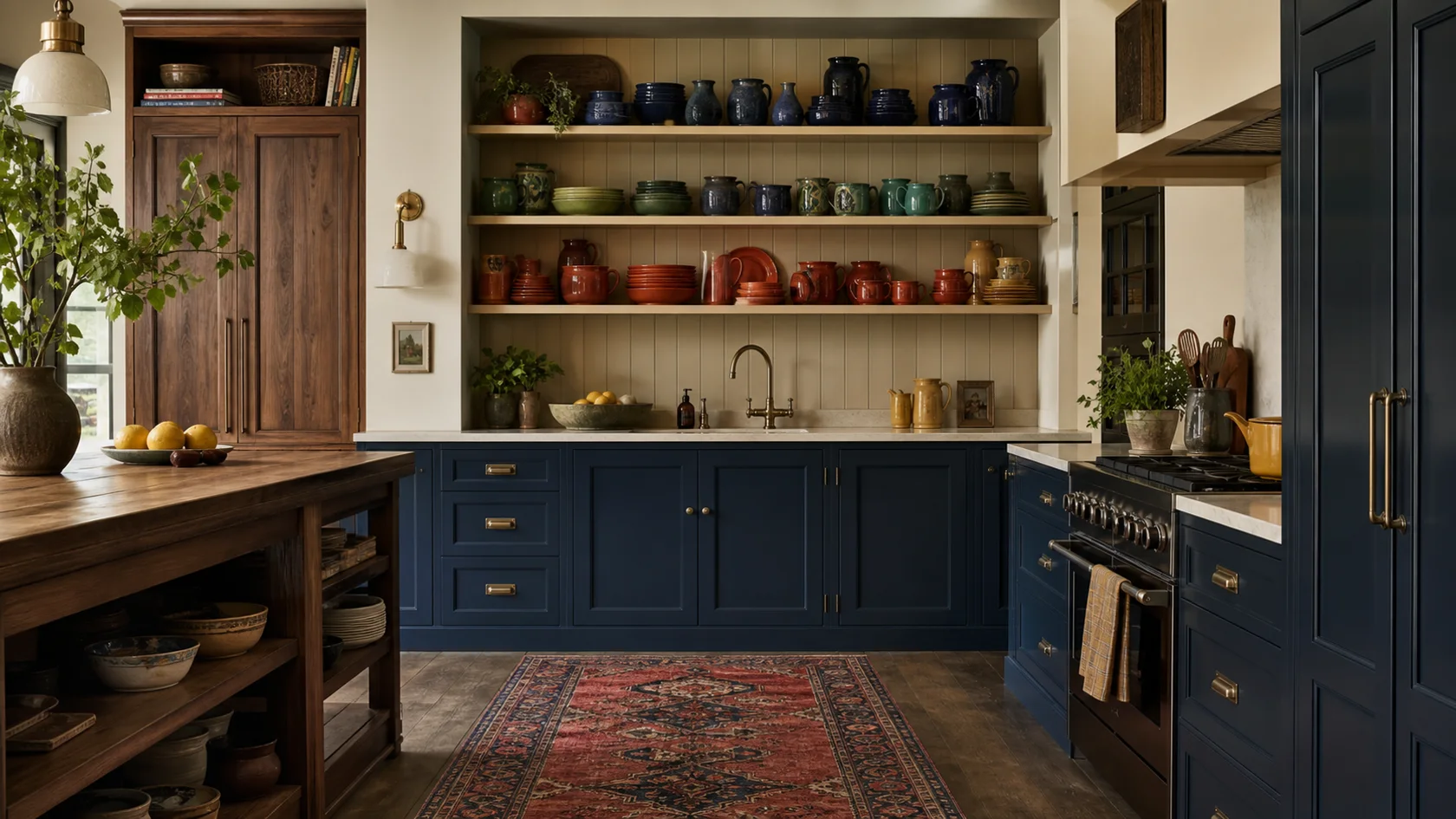
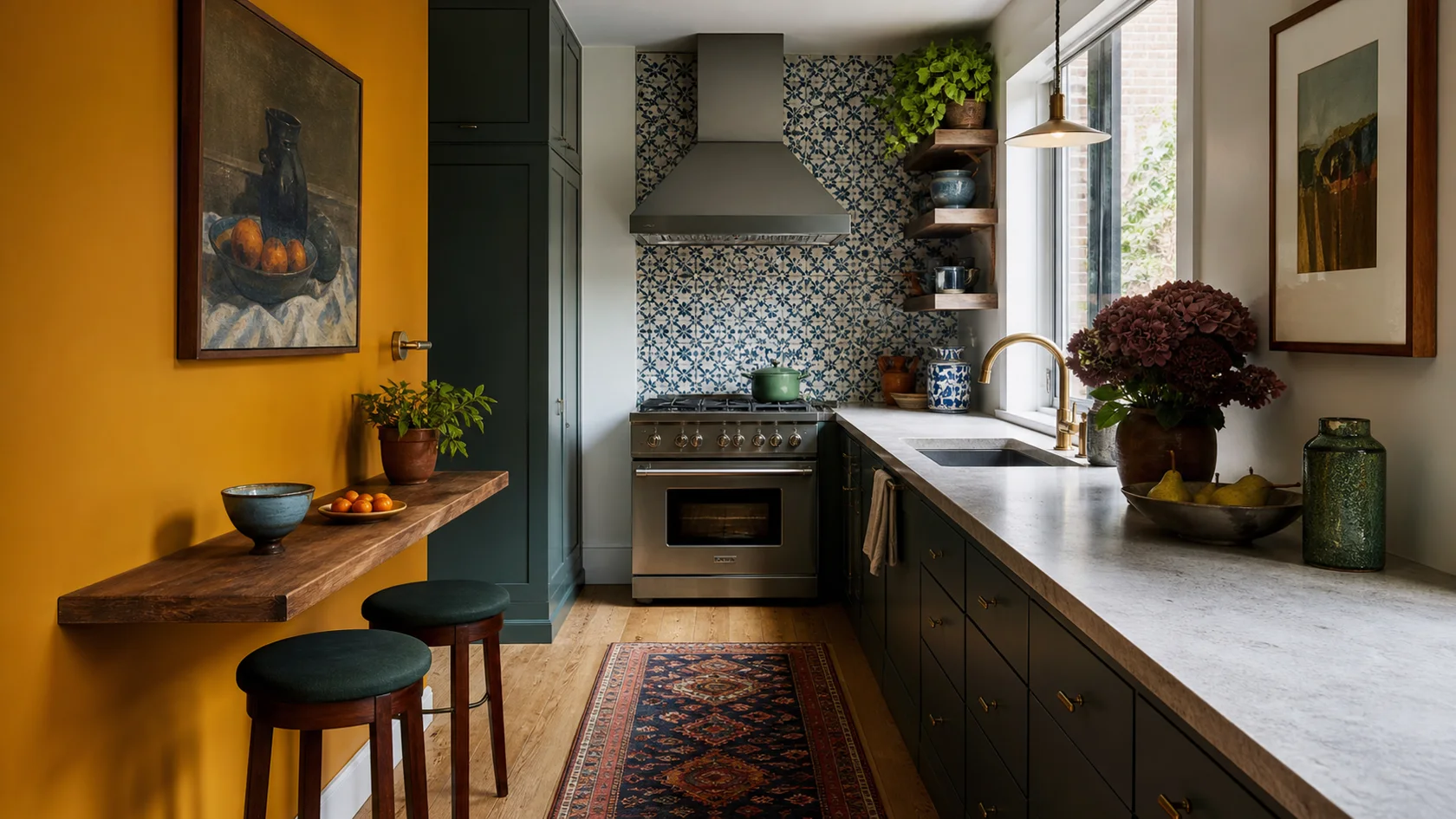
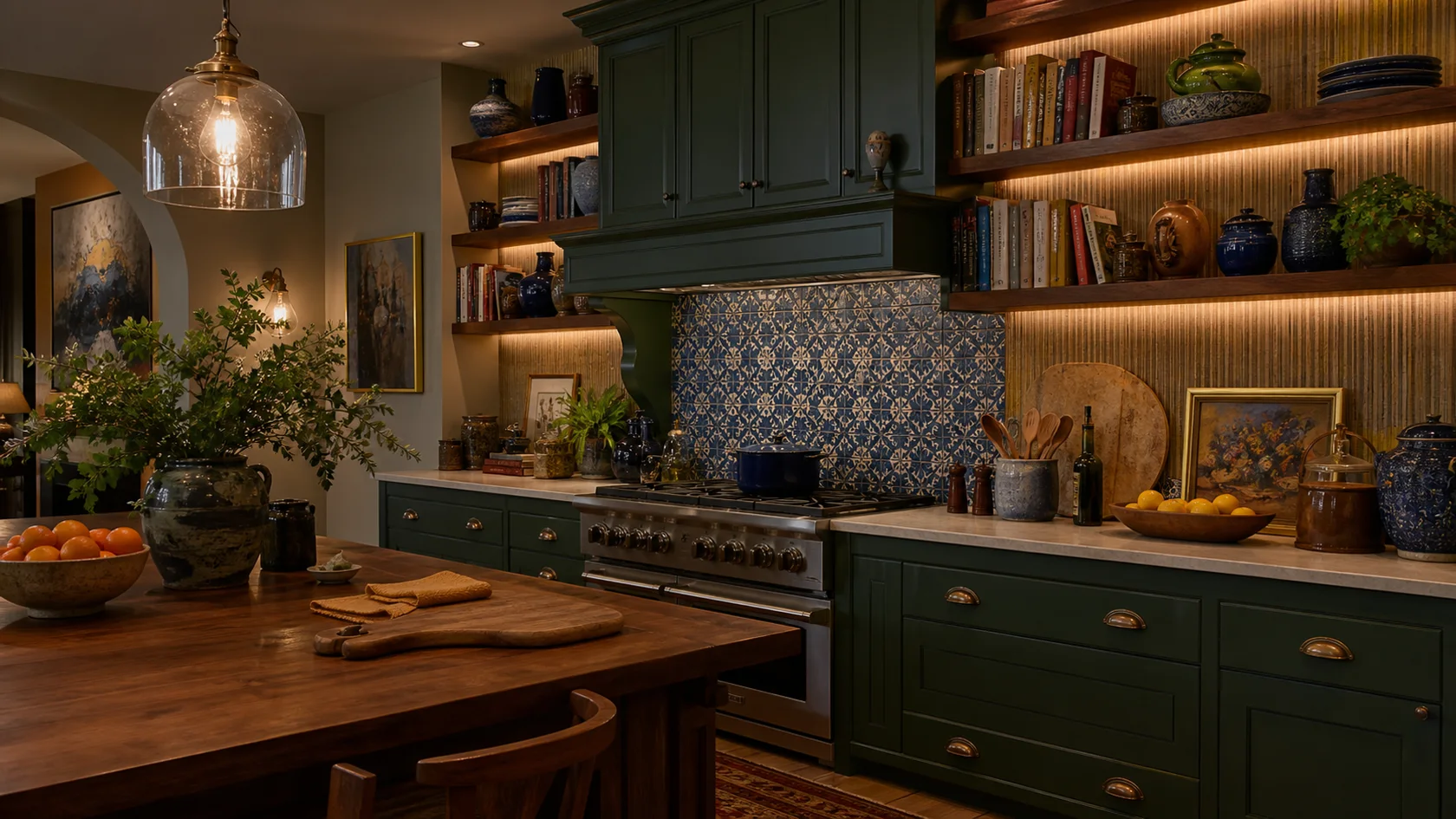
Use the style where it helps the room work: seating, circulation, focal point and material balance.
Keep the sink, cooking zone and cold storage connected without routing household traffic through the main prep area.
Check appliance doors, drawer pulls and seated overhangs before fixing the island or peninsula footprint.
Let one shelf or niche hold useful objects while full-height storage absorbs pantry goods and small appliances.
Worktop light should be continuous and shadow-free; pendants can then provide atmosphere rather than basic visibility.
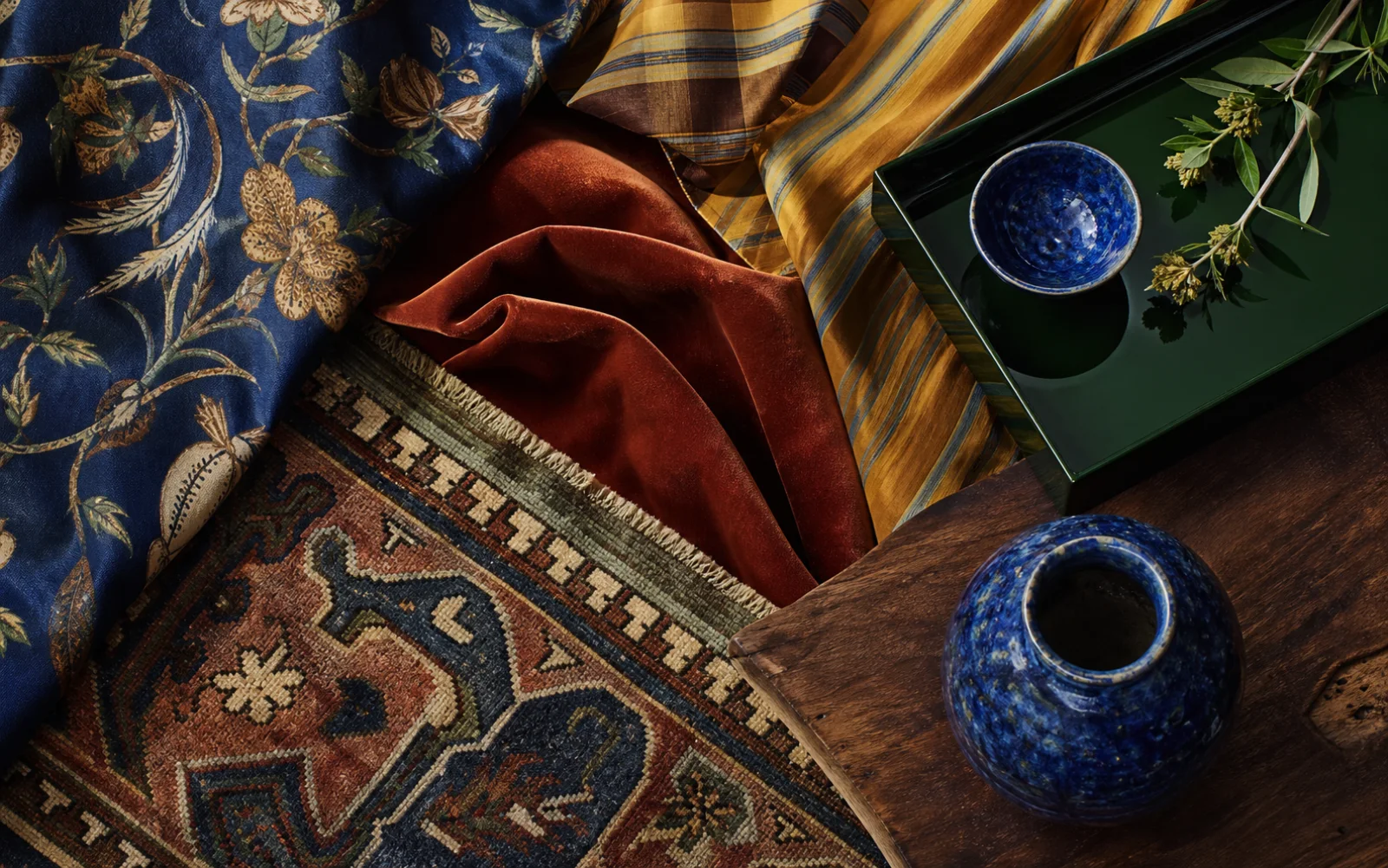
Choose three main colors from the anchor piece, assign one to the largest surface or furniture item, repeat the others at different scales and retain a few natural or pale pauses.
A deep blue that can connect wallpaper, ceramics, upholstery and rug details.
Adds warmth through velvet, lacquer or a recurring thread in patterned textiles.
A dark architectural anchor for cabinetry or one large piece of furniture.
A bright but earthy accent best repeated in curtains, stripes and small art notes.
Natural grain gives dense color schemes a consistent, useful foundation.
Assign indigo, forest, rust or another deep hue to the largest furniture or architectural plane.
Repeat two supporting colors across textiles, art and ceramics at different scales.
Walnut, oak, wool and pale plaster give saturated layers a consistent material base.
Leave ceilings, worktops, pathways or selected upholstery quiet so dense areas remain legible.
For this room, a few strong choices can carry the style better than adding more decor.
Confine detailed tile to the backsplash, repeat its colors in ceramics and preserve an uncluttered preparation surface. Confirm the cabinet system by dimensions, comfort and maintenance before selecting its decorative finish.
Begin with a meaningful anchor, extract three recurring colors and group objects into readable zones before adding another layer.
Begin with a meaningful anchor, extract three recurring colors and group objects into readable zones before adding another layer.
Begin with a meaningful anchor, extract three recurring colors and group objects into readable zones before adding another layer.
Use these checks to keep the maximalist character clear without compromising how the kitchen works.
Reduce its depth or use a freestanding table when the working aisles cannot remain clear.
Display only frequently used pieces and keep bulk food or appliances behind doors.
Use a quieter cabinet field and give the worktop or island one clear material role.