01
Gallery Anchor
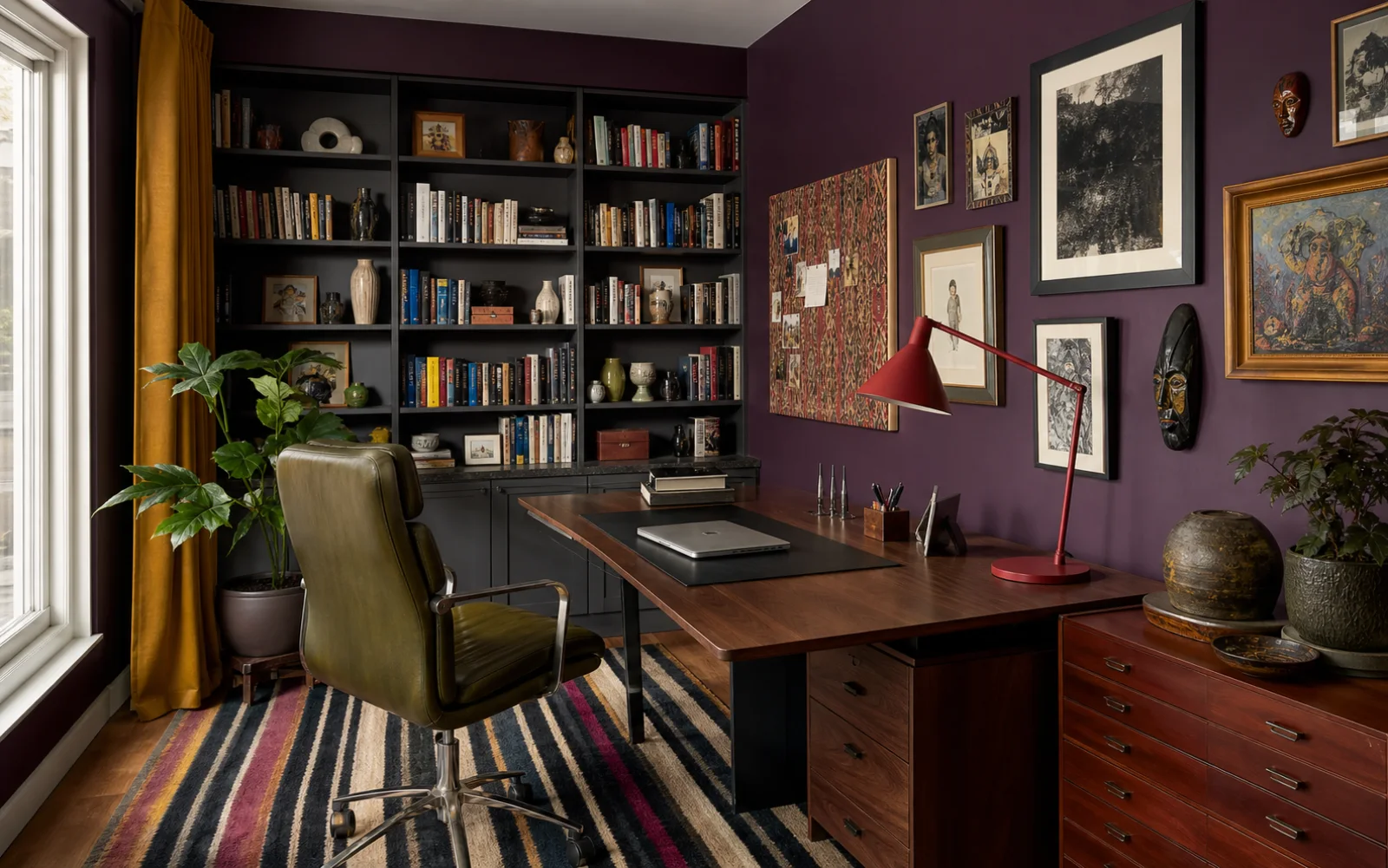
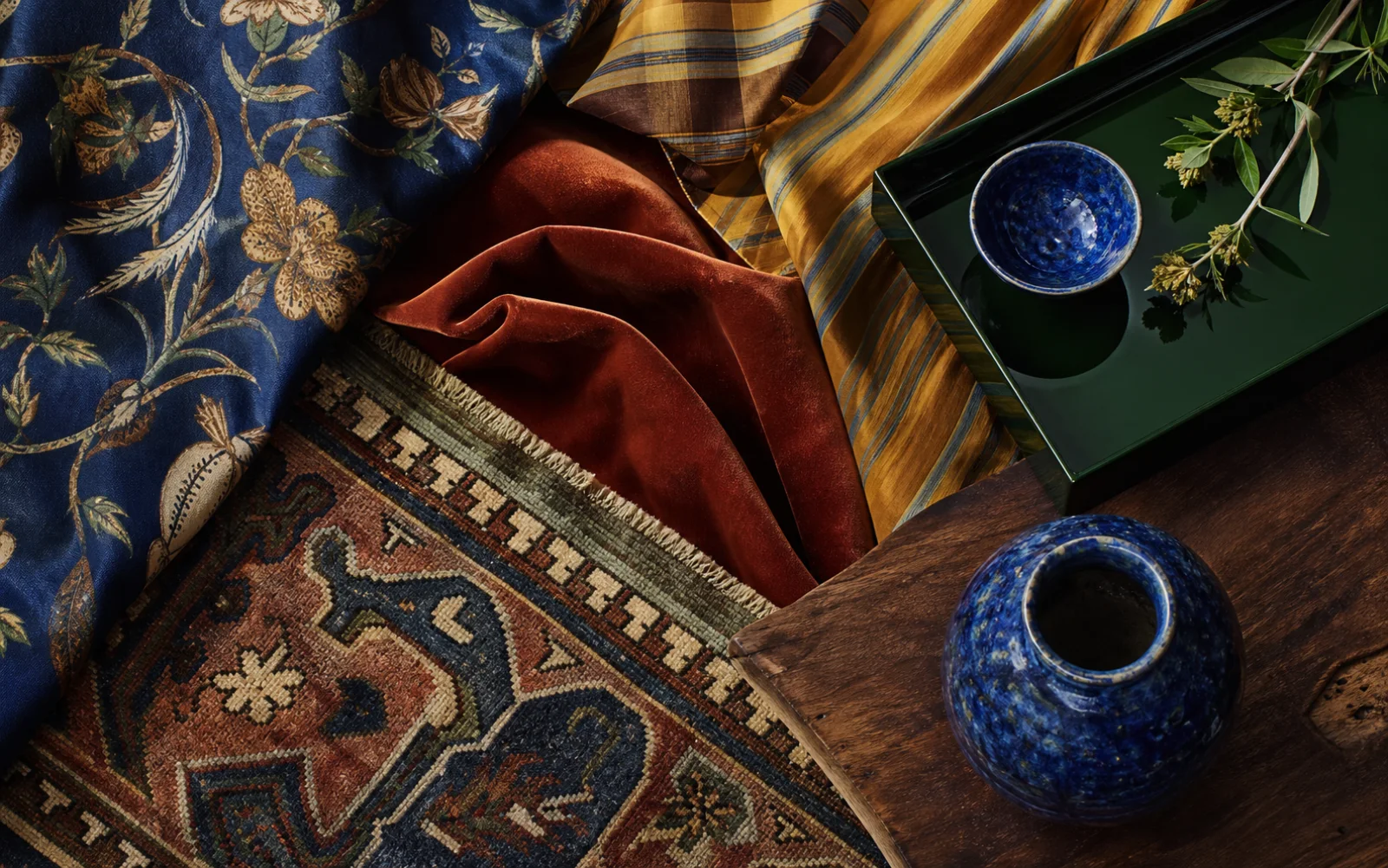
A meaningful artwork, rug or textile supplies the story and three colors that organize every later layer. Keep every seat within easy reach of the central table and outside the main walking route.
Five materially and spatially different maximalist approaches to the living room, from a clear daytime plan to a controlled evening mood.
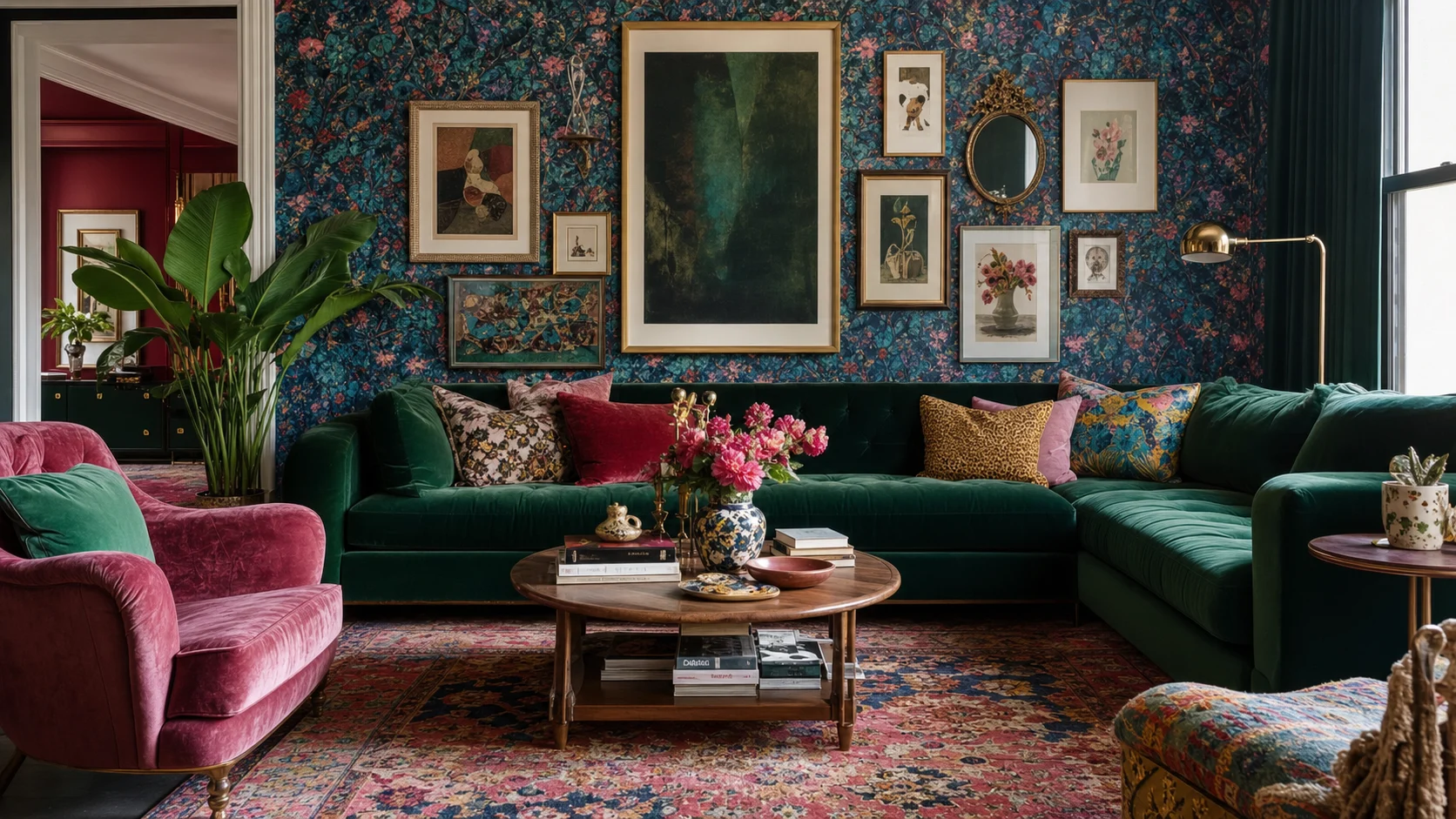
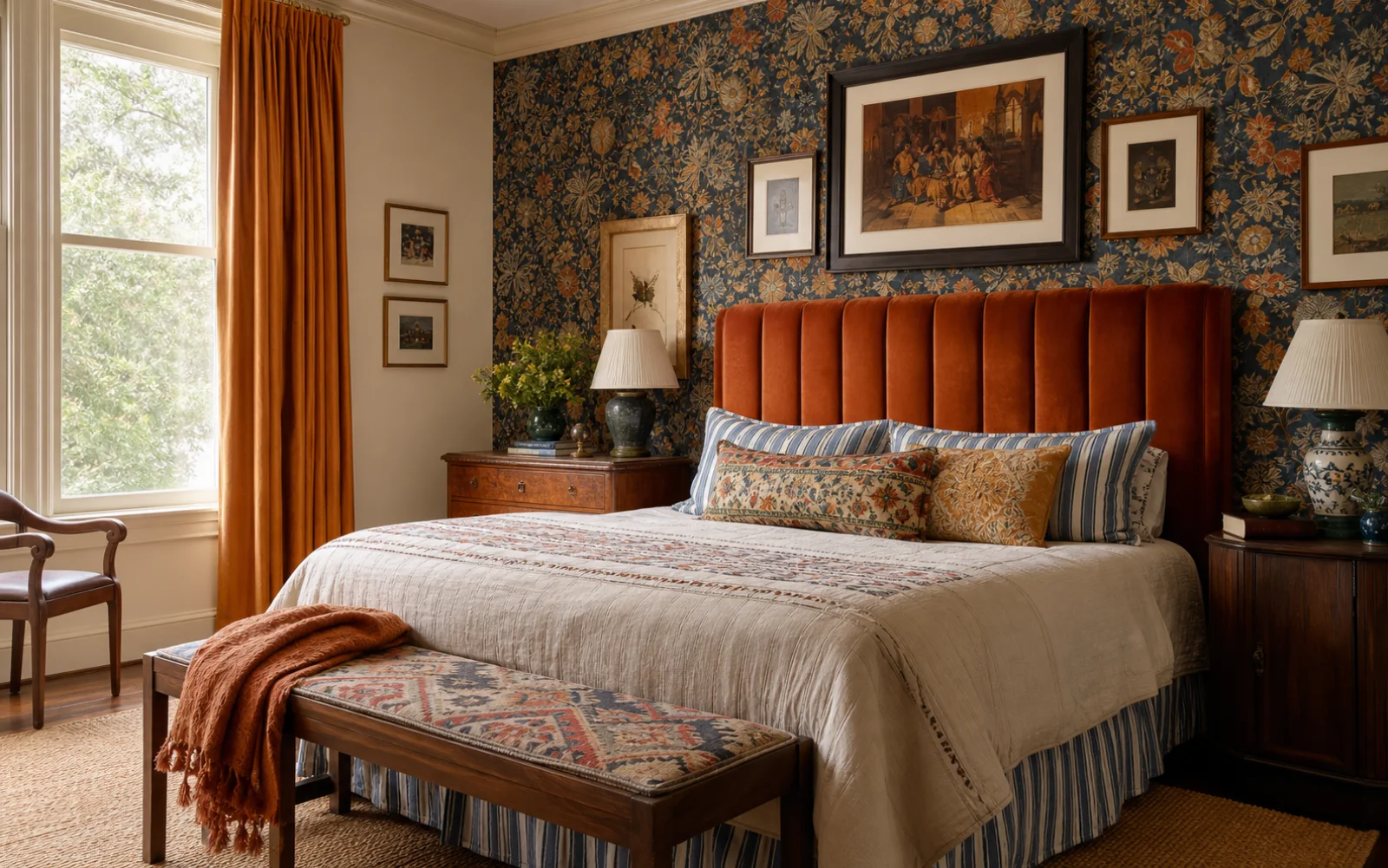
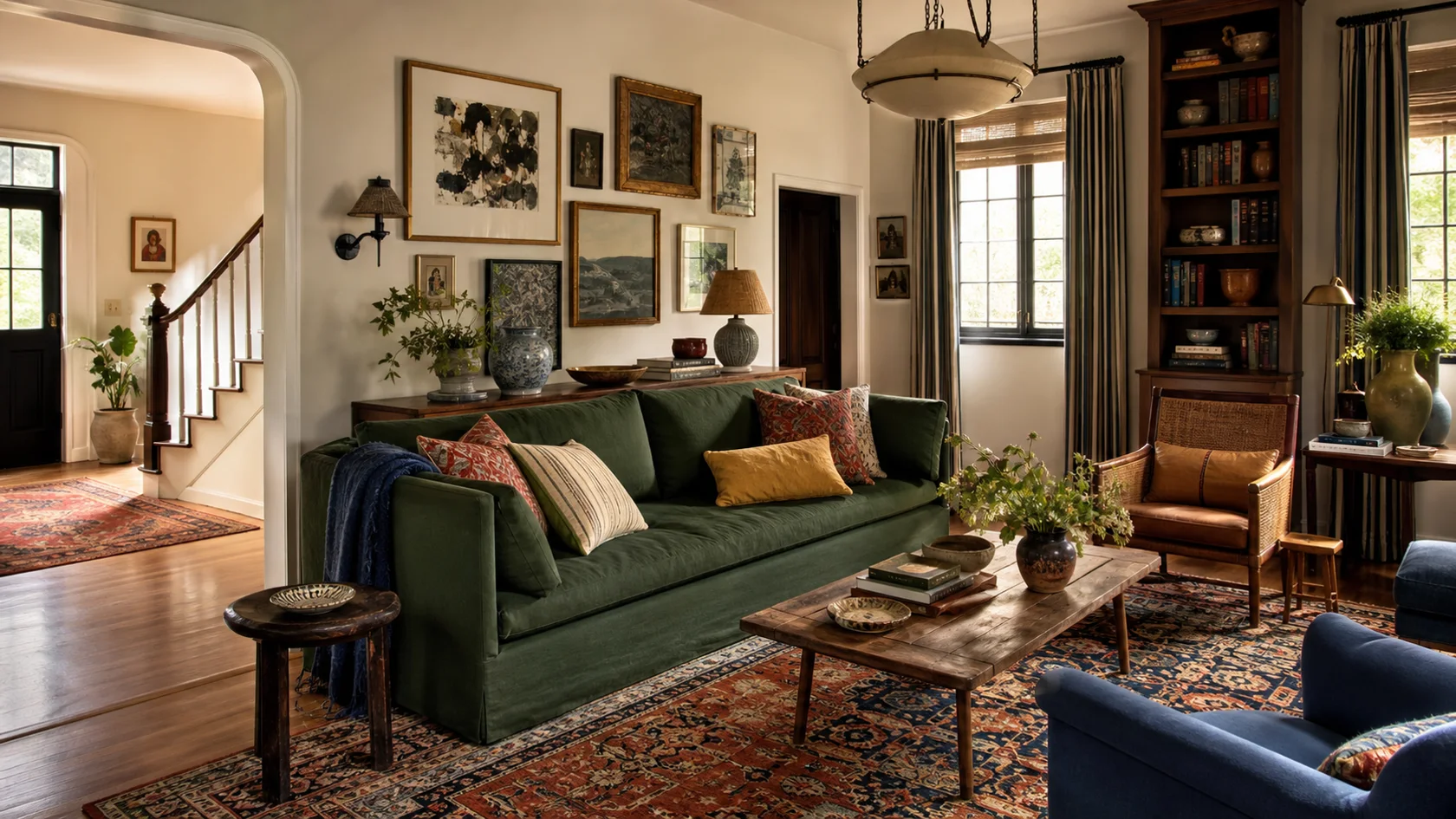
Maximalist builds expressive rooms from personal collections, repeated color and deliberate shifts in pattern scale while preserving visual pauses and daily function. In the living room, that identity must still support conversation, everyday comfort and one readable focal point.
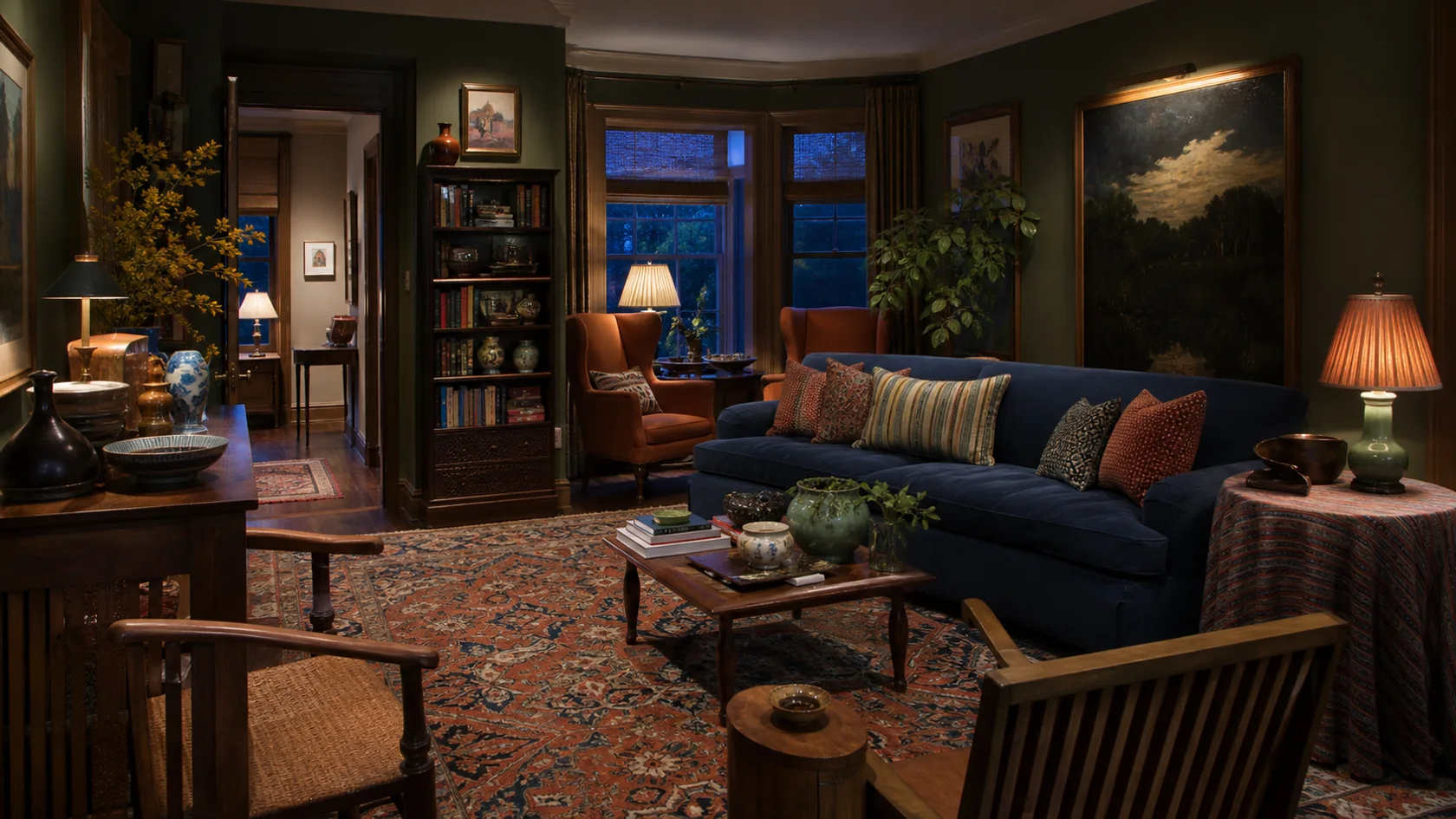
Use a large solid-color sofa to anchor wallpaper, gallery art and patterned rugs, repeating two accents across all three layers. Begin with a meaningful anchor, extract three recurring colors and group objects into readable zones before adding another layer.
Use these examples to choose the version of the style that fits your architecture, light and square footage.
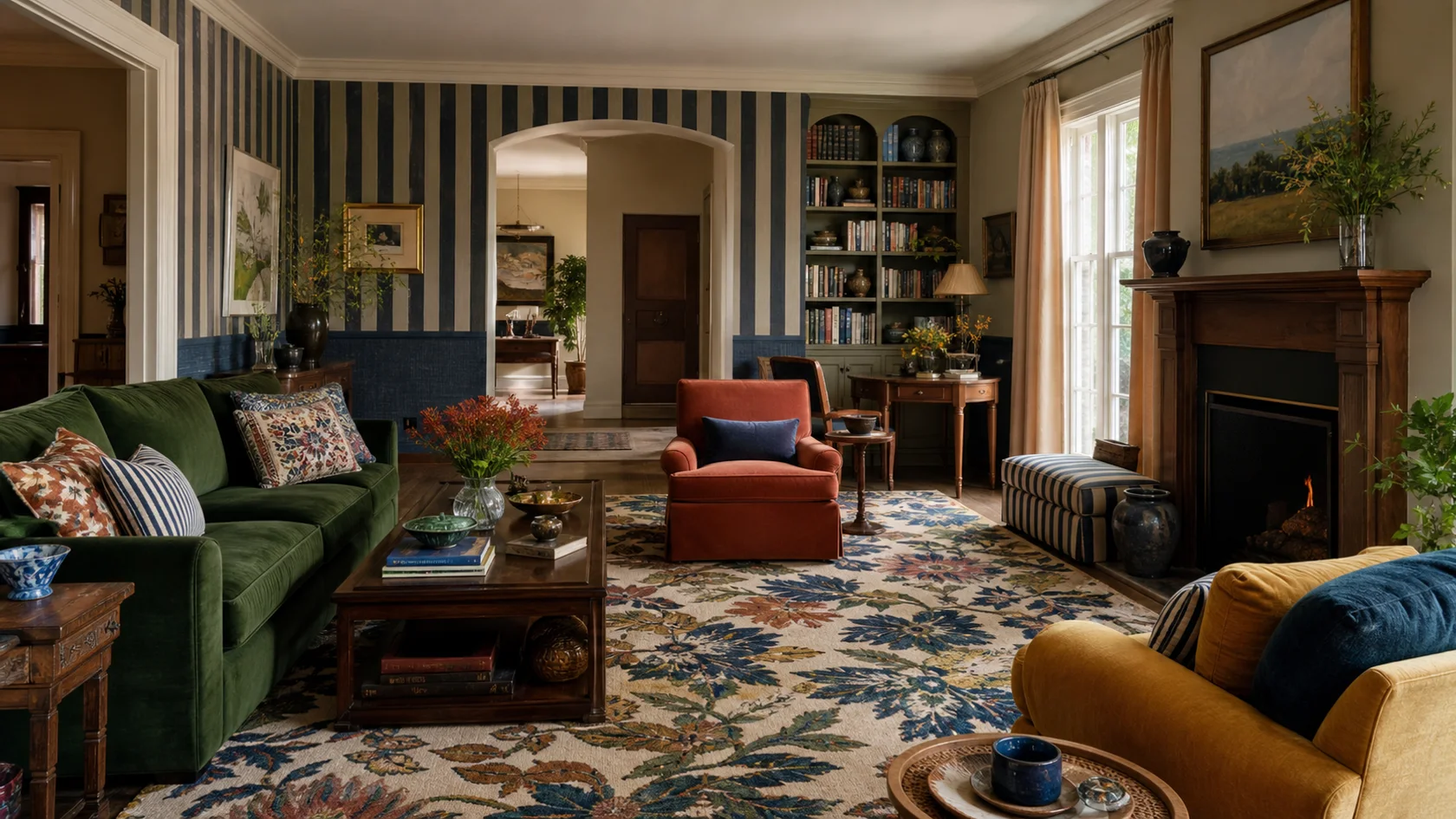
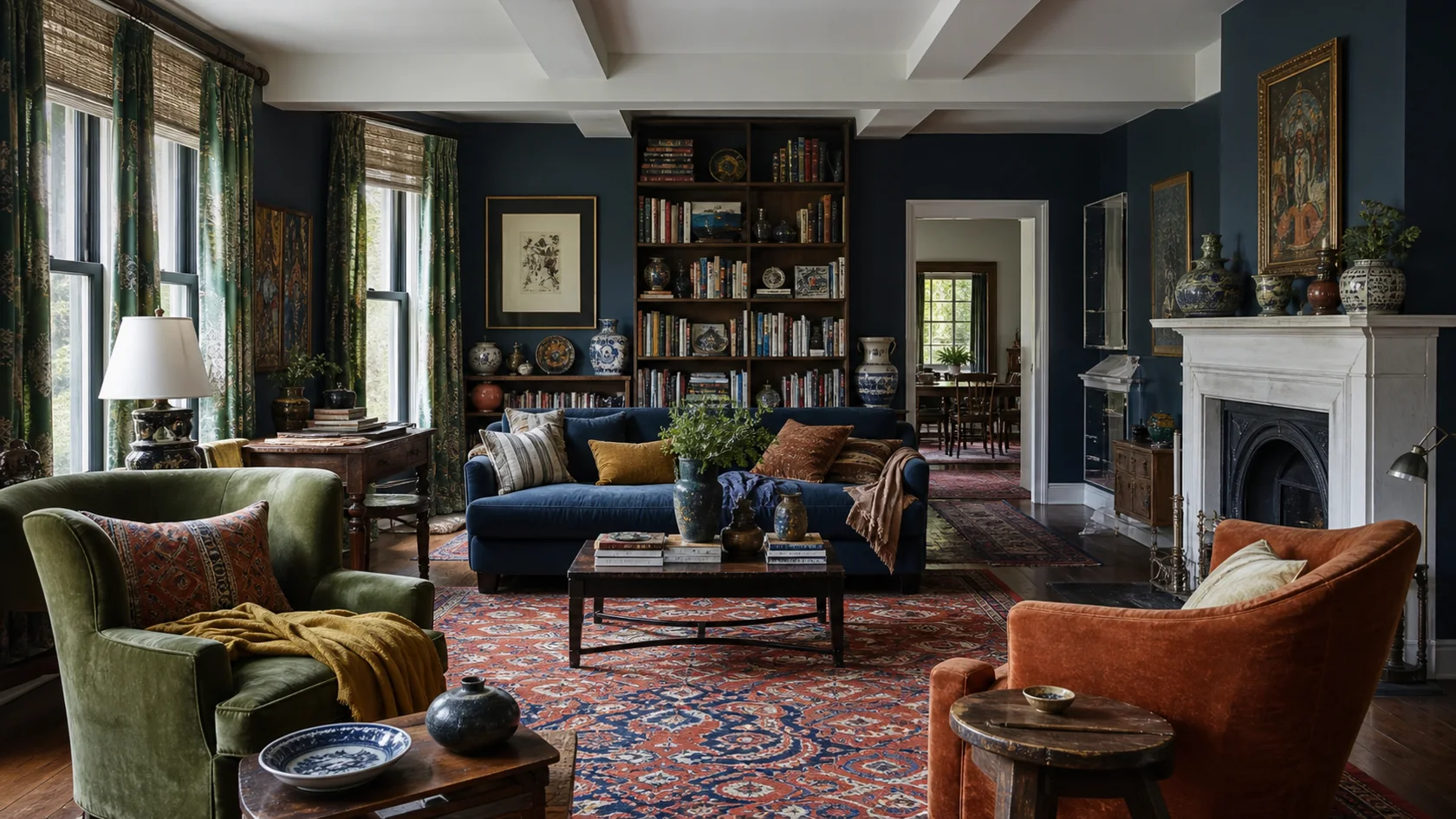
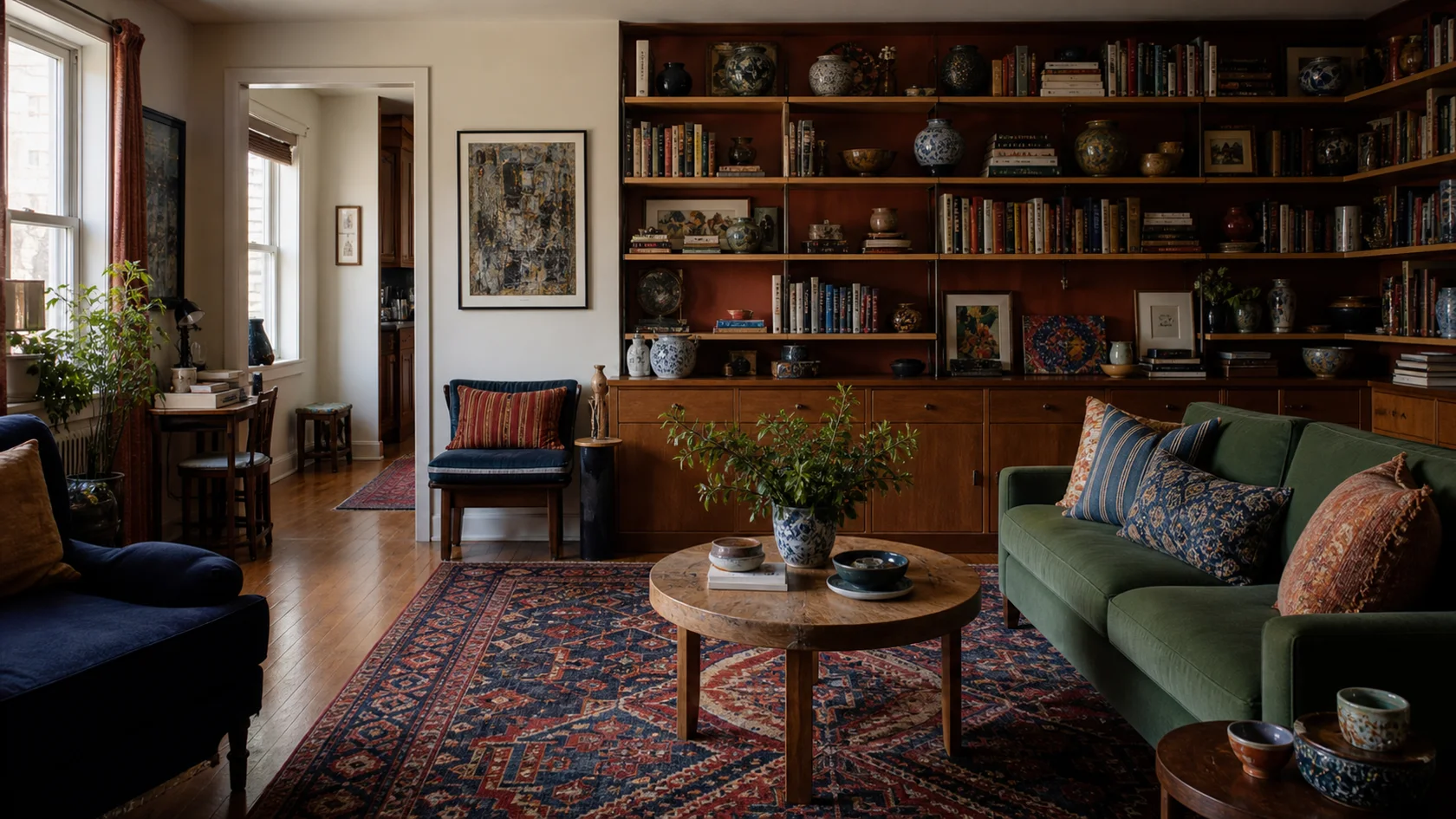
Use the style where it helps the room work: seating, circulation, focal point and material balance.
Keep the main sofa, chairs and table close enough for conversation without closing the route through the room.
Let a hearth, view, artwork or media wall set the furniture direction before adding small objects.
Keep the route from the doorway to adjacent rooms outside the central rug and seating zone.
Use upholstery, a generous rug and curtains to temper stone, timber, glass or metal.
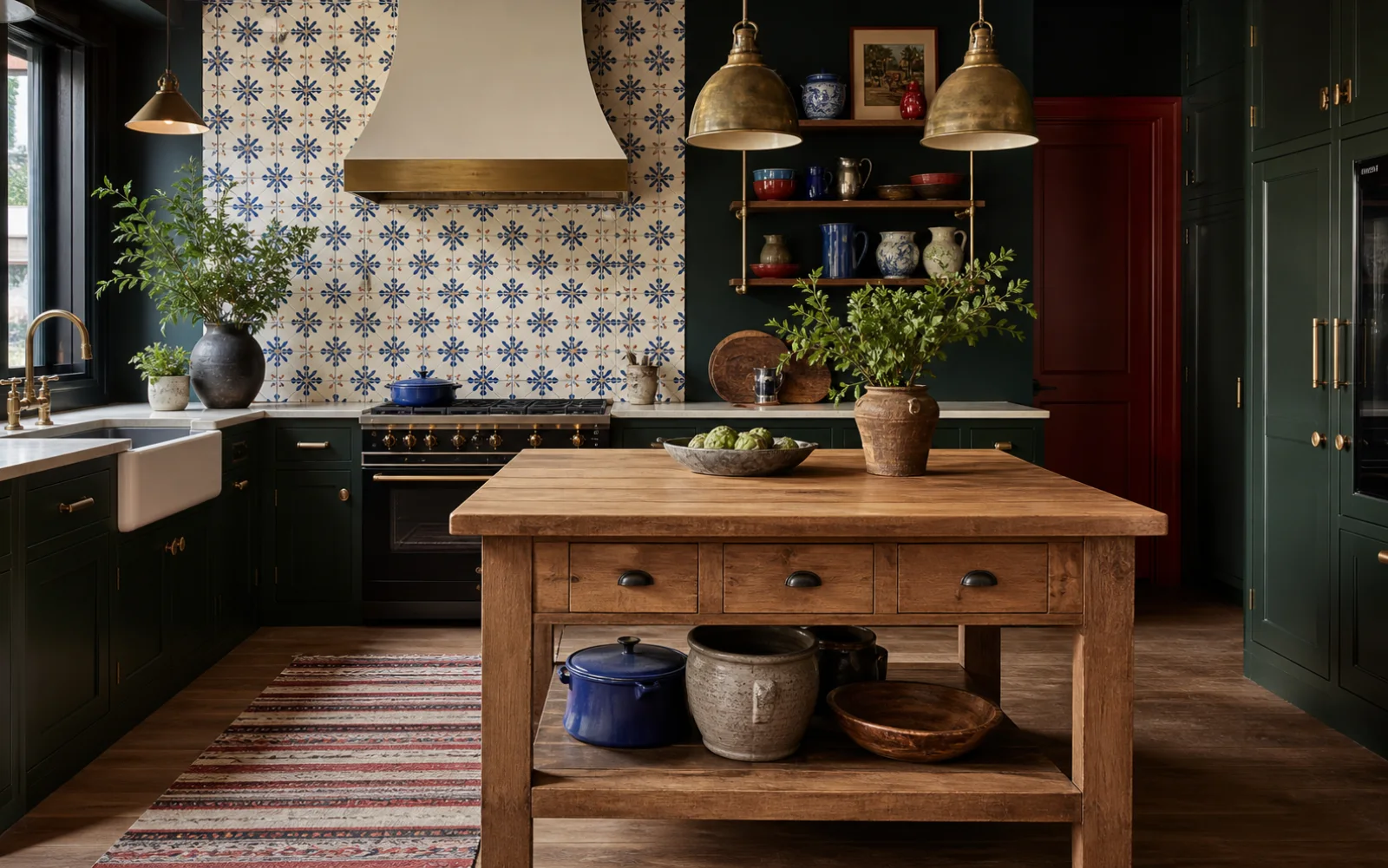
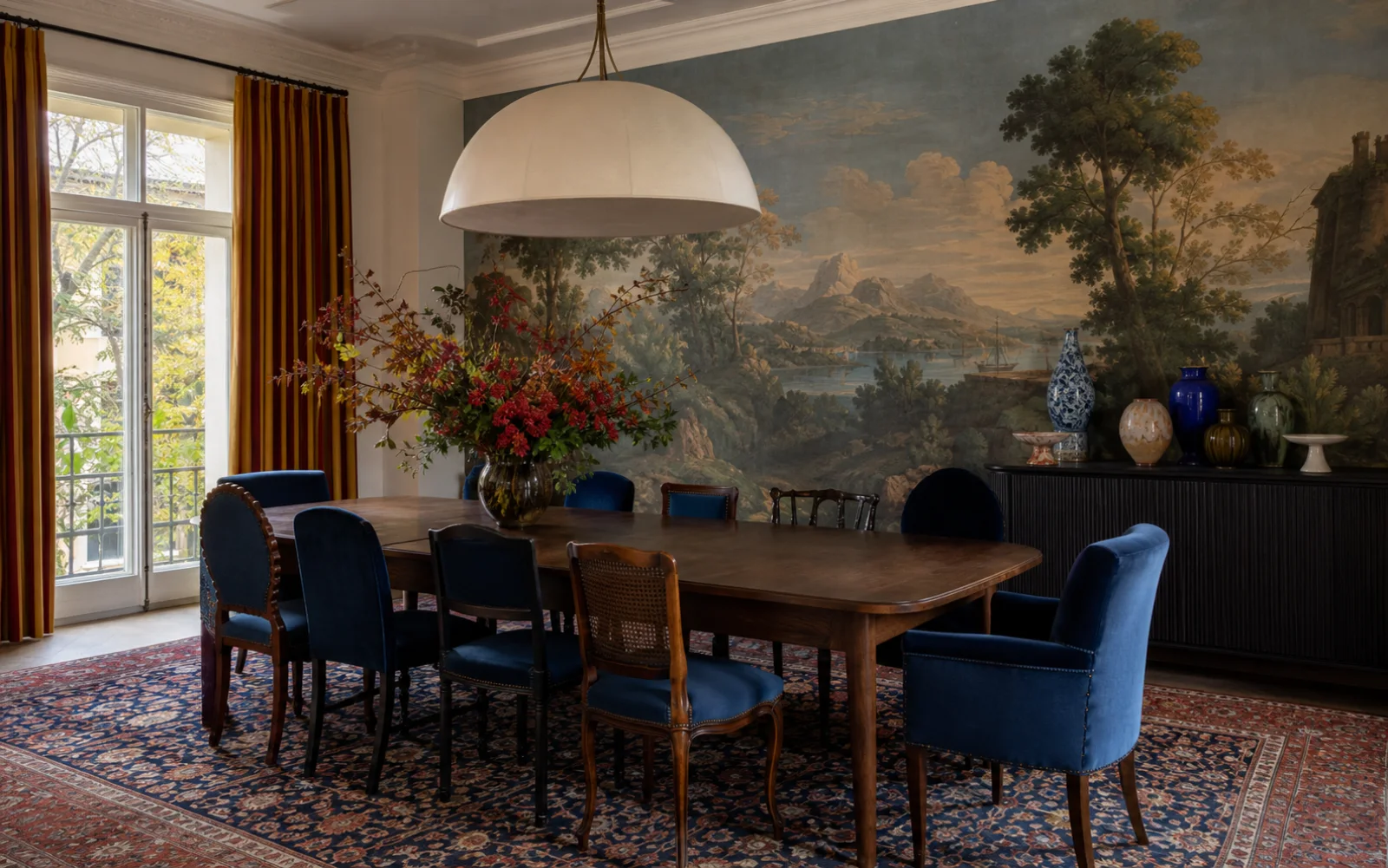
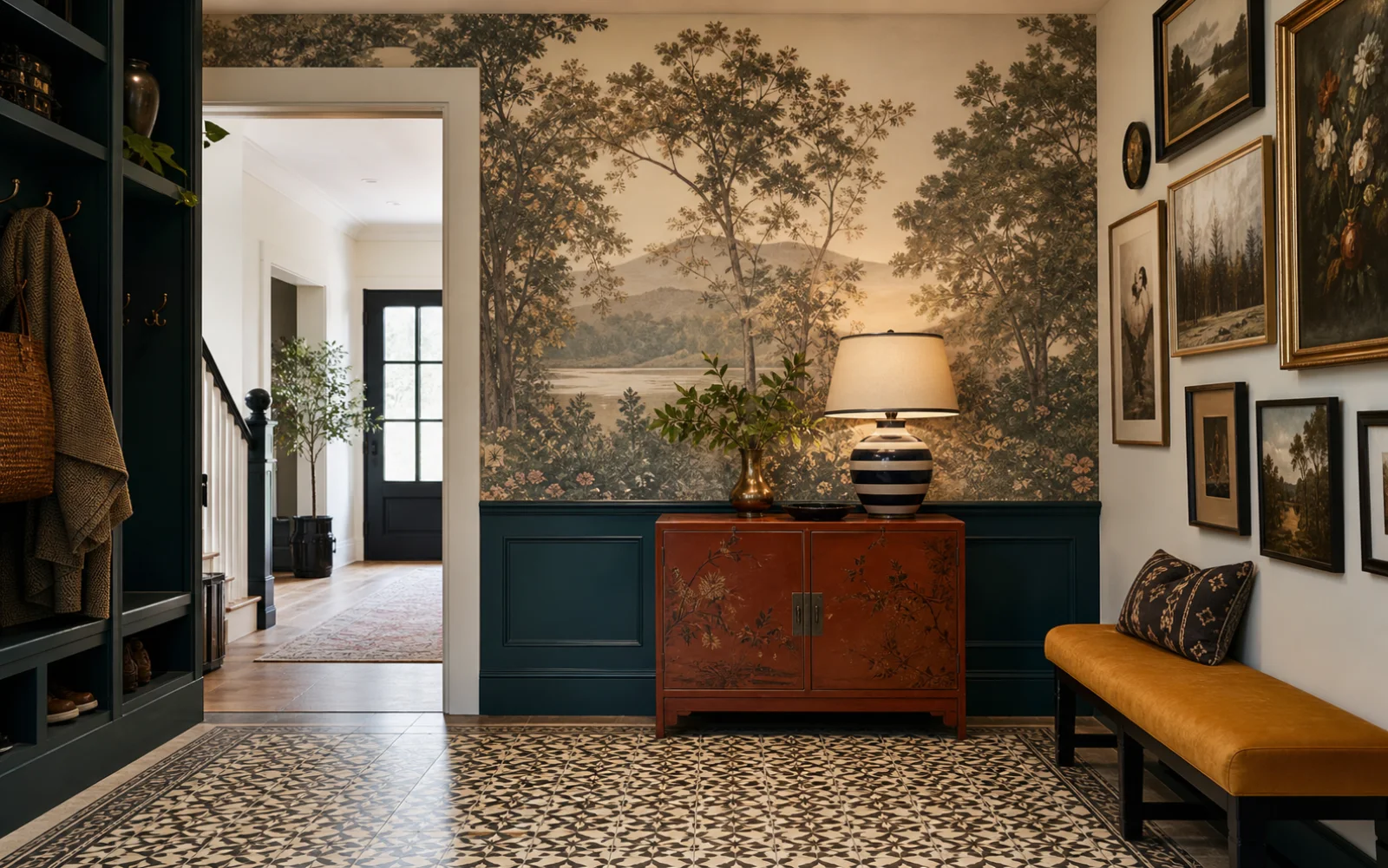
Choose three main colors from the anchor piece, assign one to the largest surface or furniture item, repeat the others at different scales and retain a few natural or pale pauses.
A deep blue that can connect wallpaper, ceramics, upholstery and rug details.
Adds warmth through velvet, lacquer or a recurring thread in patterned textiles.
A dark architectural anchor for cabinetry or one large piece of furniture.
A bright but earthy accent best repeated in curtains, stripes and small art notes.
Natural grain gives dense color schemes a consistent, useful foundation.
Assign indigo, forest, rust or another deep hue to the largest furniture or architectural plane.
Repeat two supporting colors across textiles, art and ceramics at different scales.
Walnut, oak, wool and pale plaster give saturated layers a consistent material base.
Leave ceilings, worktops, pathways or selected upholstery quiet so dense areas remain legible.
For this room, a few strong choices can carry the style better than adding more decor.
Use a large solid-color sofa to anchor wallpaper, gallery art and patterned rugs, repeating two accents across all three layers. Confirm the primary seating by dimensions, comfort and maintenance before selecting its decorative finish.
Begin with a meaningful anchor, extract three recurring colors and group objects into readable zones before adding another layer.
Begin with a meaningful anchor, extract three recurring colors and group objects into readable zones before adding another layer.
Begin with a meaningful anchor, extract three recurring colors and group objects into readable zones before adding another layer.
Use these checks to keep the maximalist character clear without compromising how the living room works.
Pull at least part of the seating group inward so the room has a clear social center.
Choose one primary focal point and let the television, view and artwork take supporting roles.
Resolve seat depth, table reach and lighting before adding decorative layers.