01
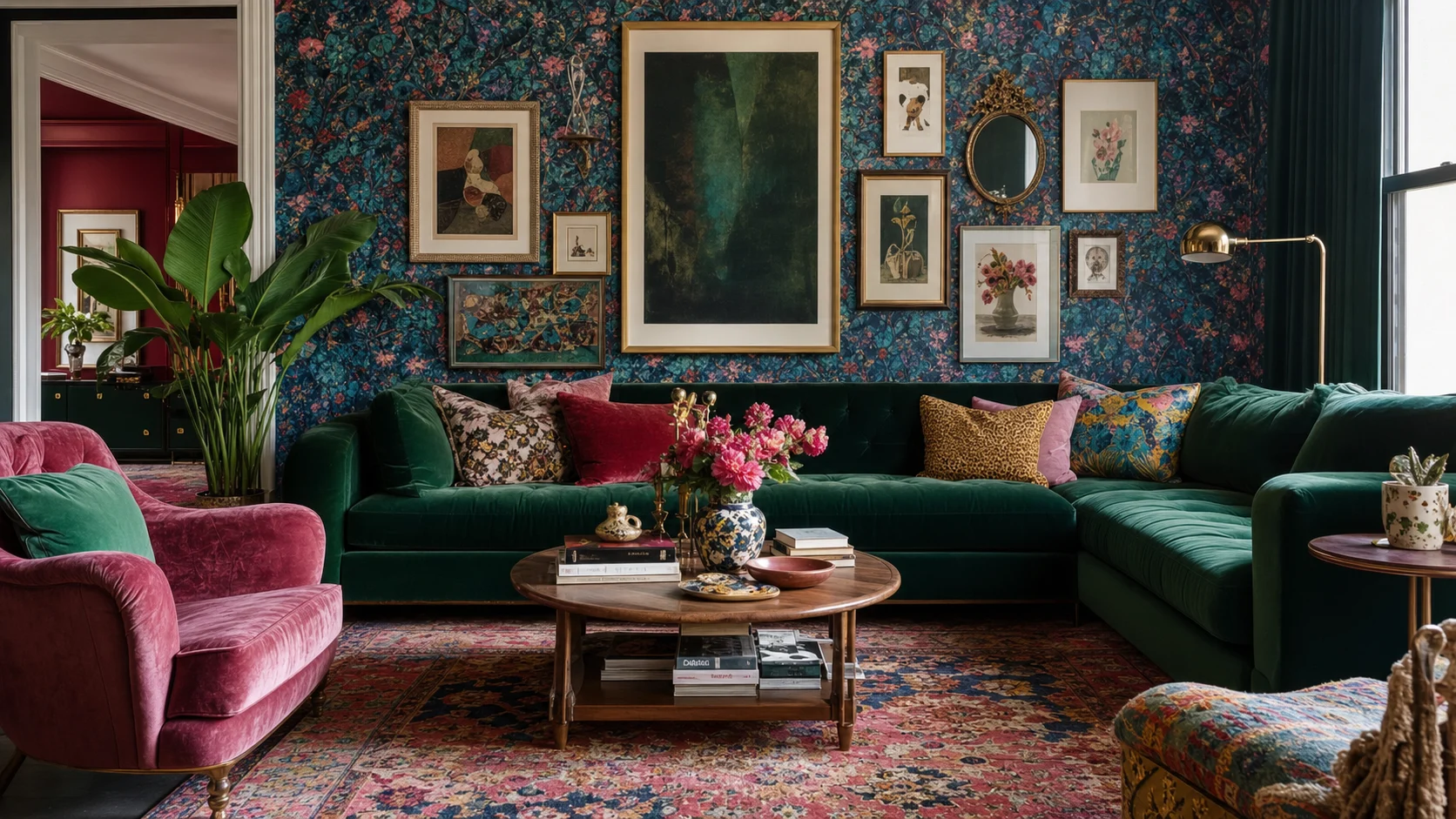
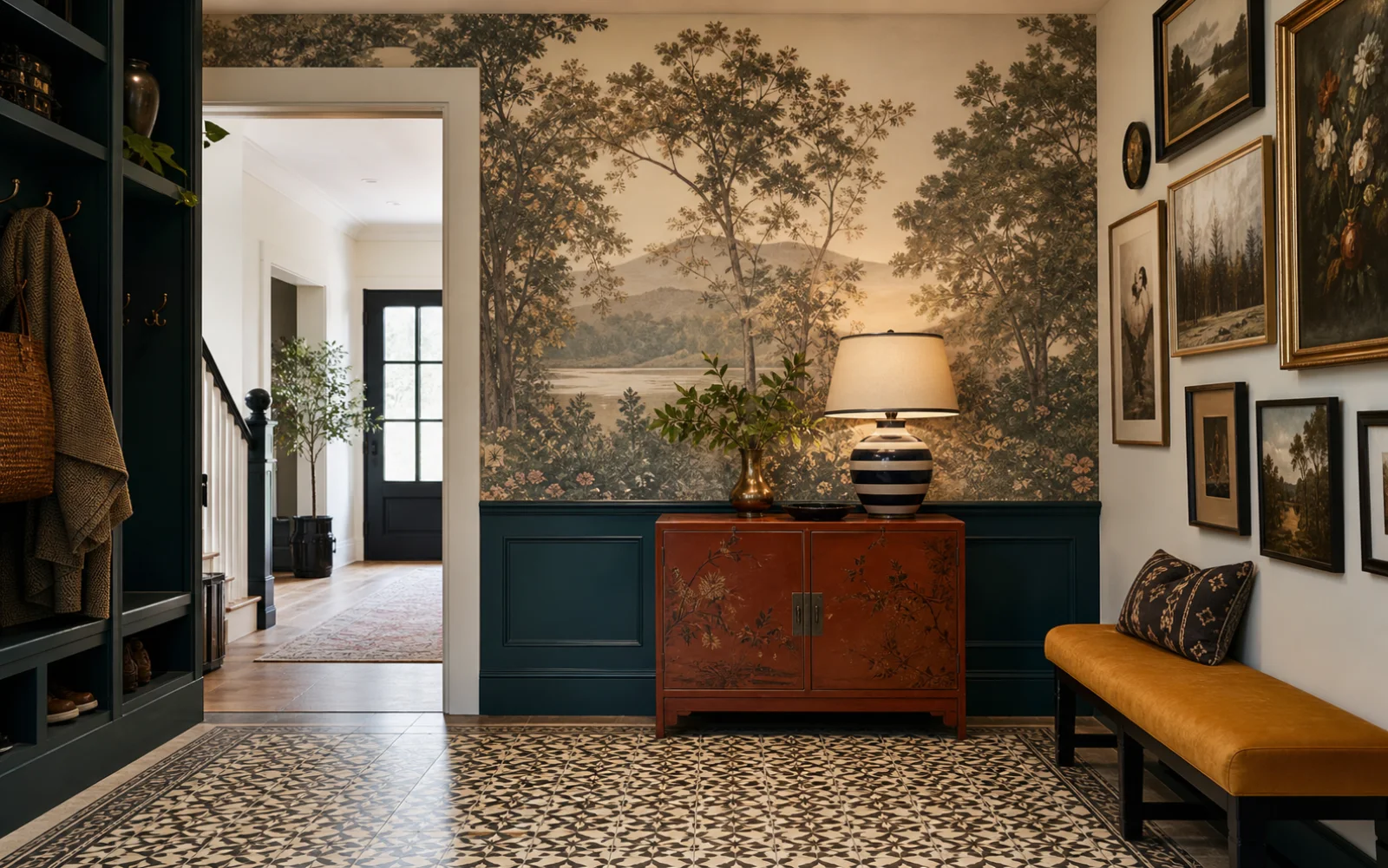
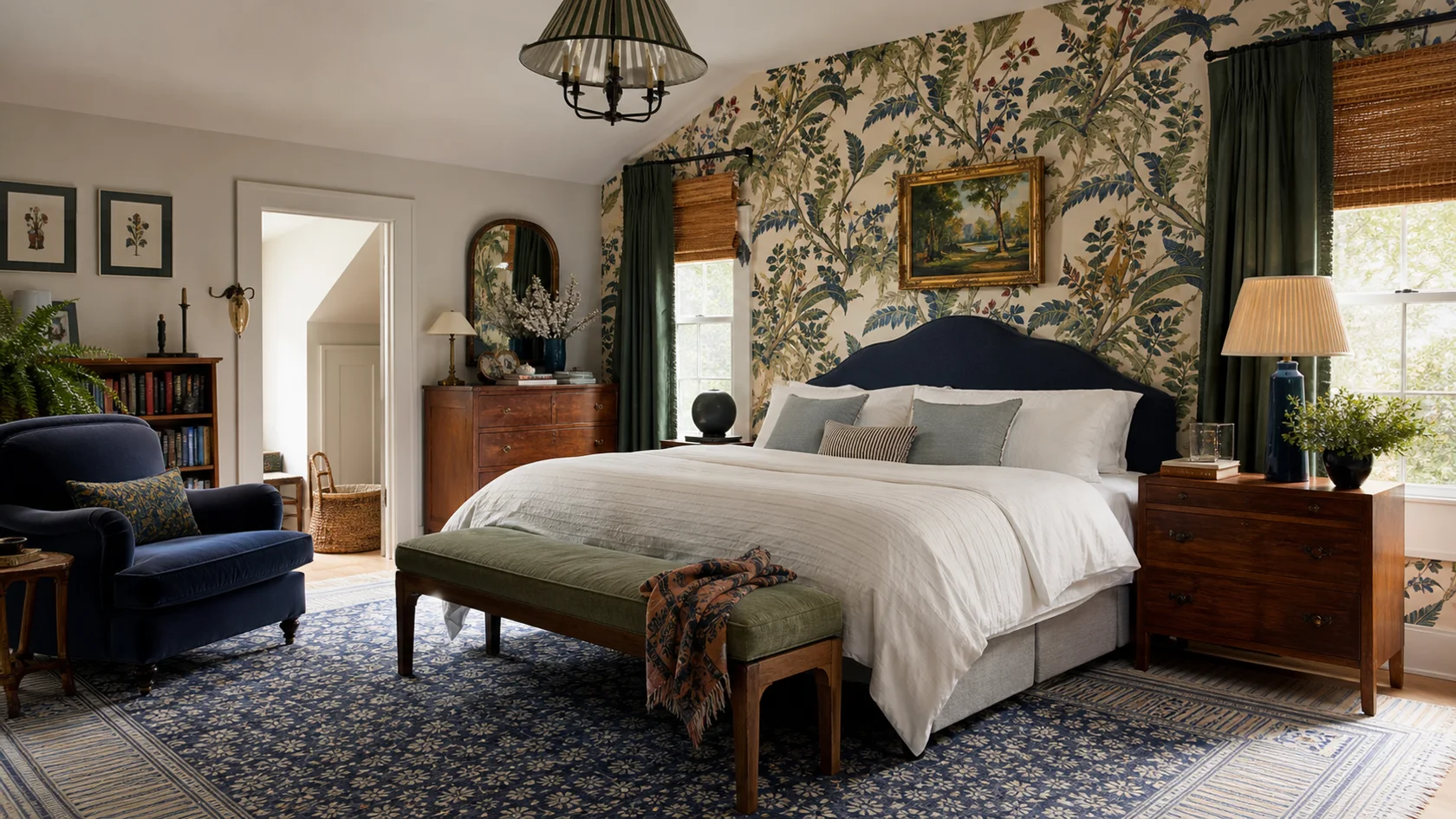
Botanical Wall
A meaningful artwork, rug or textile supplies the story and three colors that organize every later layer. Preserve a calm bedside zone and a clear path from the door to storage.
Five materially and spatially different maximalist approaches to the bedroom, from a clear daytime plan to a controlled evening mood.
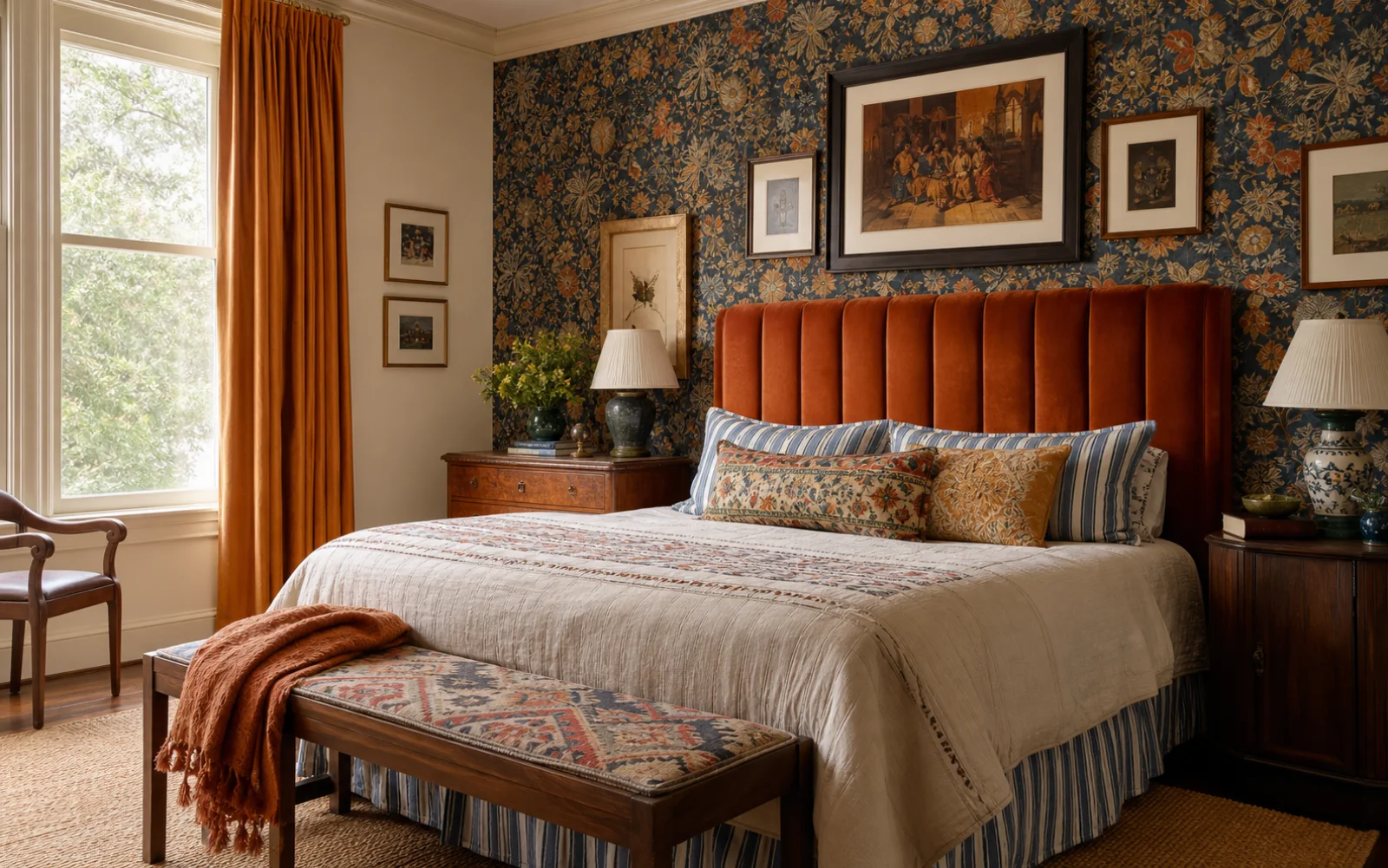
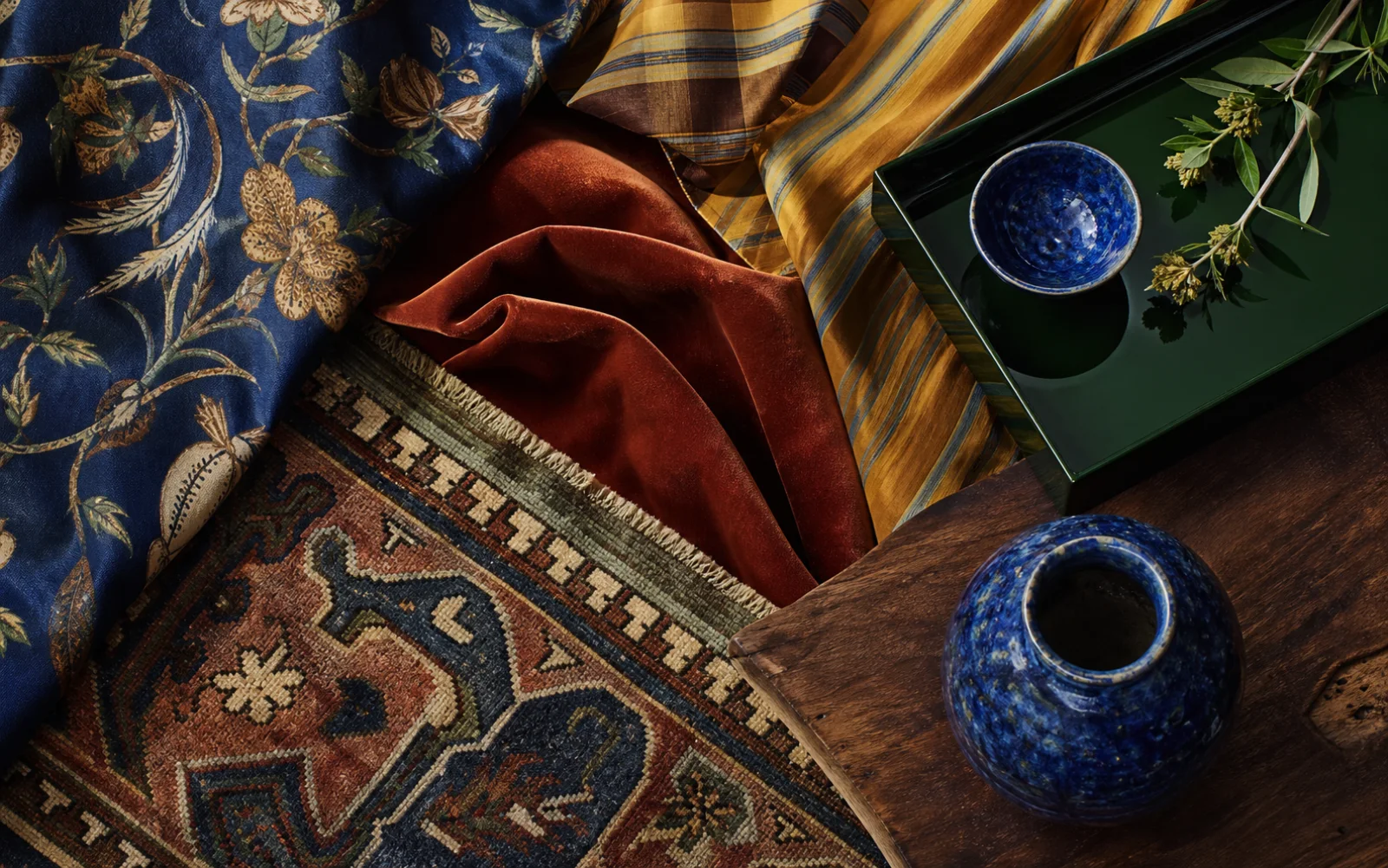
Maximalist builds expressive rooms from personal collections, repeated color and deliberate shifts in pattern scale while preserving visual pauses and daily function. In the bedroom, that identity must still support rest, low visual stimulation and an unobstructed route around the bed.
Let wallpaper carry the smallest motif, keep the bed mostly calm and introduce a stripe to separate botanical or scenic patterns. Begin with a meaningful anchor, extract three recurring colors and group objects into readable zones before adding another layer.
Use these examples to choose the version of the style that fits your architecture, light and square footage.
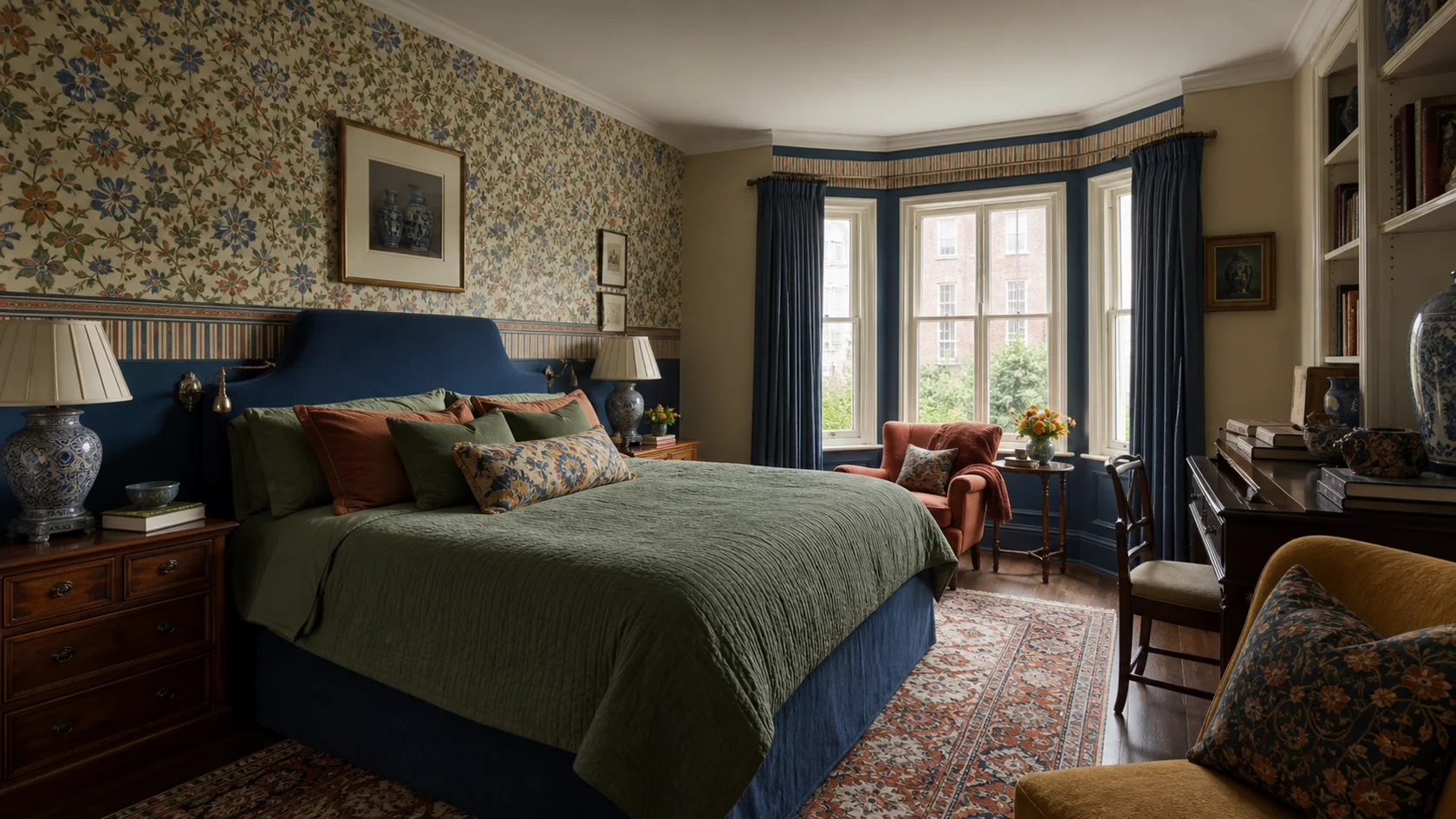
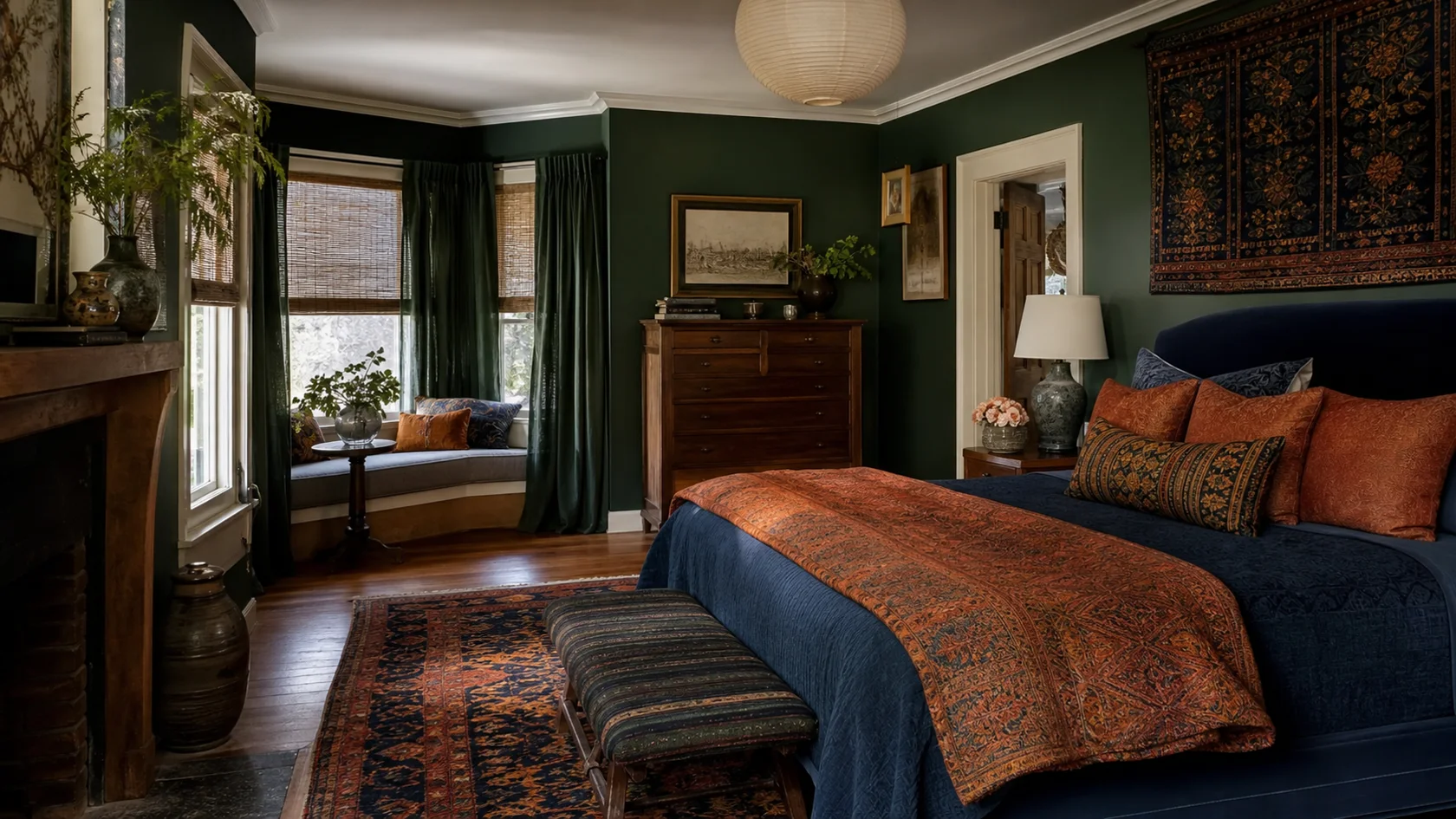
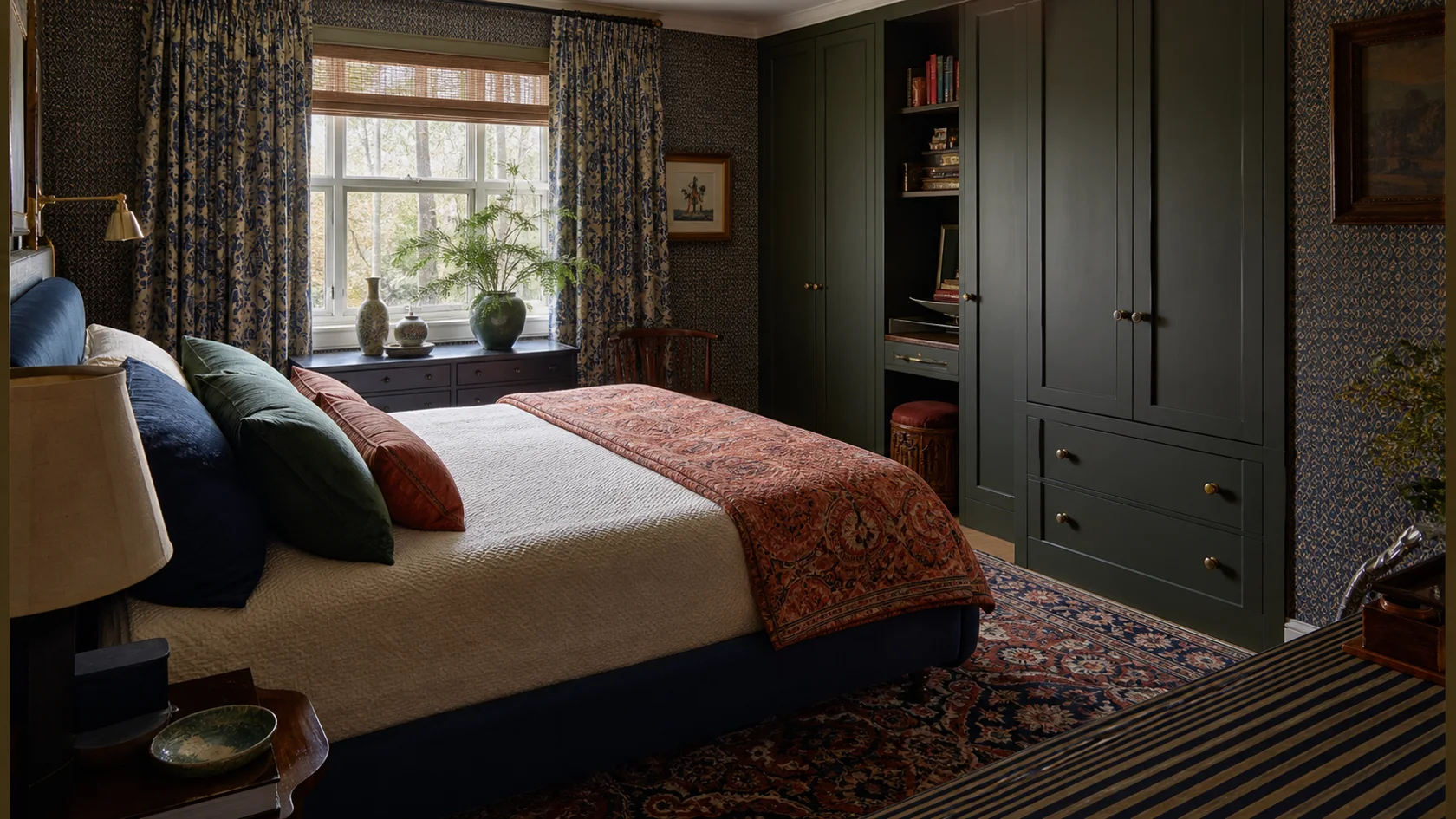
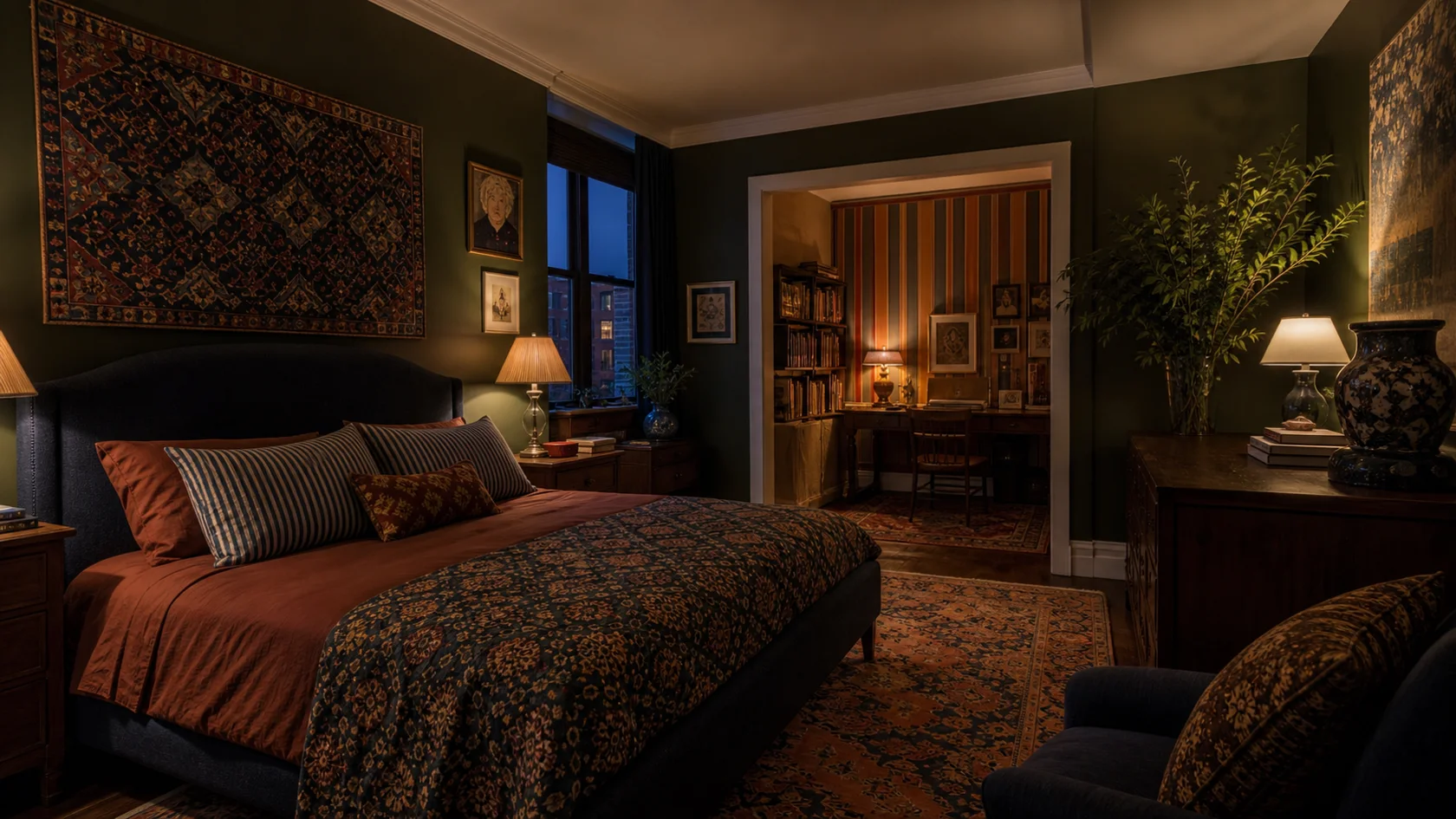
Use the style where it helps the room work: seating, circulation, focal point and material balance.
Place the headboard away from the busiest doorway when possible and preserve a clear approach on both sides.
A flush wardrobe or one resolved chest is calmer than several unrelated storage pieces.
Use bedside and concealed light below eye level instead of relying on a bright central ceiling fixture.
Prioritize breathable bedding, a tactile rug and curtains before decorative objects.
Choose three main colors from the anchor piece, assign one to the largest surface or furniture item, repeat the others at different scales and retain a few natural or pale pauses.
A deep blue that can connect wallpaper, ceramics, upholstery and rug details.
Adds warmth through velvet, lacquer or a recurring thread in patterned textiles.
A dark architectural anchor for cabinetry or one large piece of furniture.
A bright but earthy accent best repeated in curtains, stripes and small art notes.
Natural grain gives dense color schemes a consistent, useful foundation.
Assign indigo, forest, rust or another deep hue to the largest furniture or architectural plane.
Repeat two supporting colors across textiles, art and ceramics at different scales.
Walnut, oak, wool and pale plaster give saturated layers a consistent material base.
Leave ceilings, worktops, pathways or selected upholstery quiet so dense areas remain legible.
For this room, a few strong choices can carry the style better than adding more decor.
Let wallpaper carry the smallest motif, keep the bed mostly calm and introduce a stripe to separate botanical or scenic patterns. Confirm the bed and headboard by dimensions, comfort and maintenance before selecting its decorative finish.
Begin with a meaningful anchor, extract three recurring colors and group objects into readable zones before adding another layer.
Begin with a meaningful anchor, extract three recurring colors and group objects into readable zones before adding another layer.
Begin with a meaningful anchor, extract three recurring colors and group objects into readable zones before adding another layer.
Use these checks to keep the maximalist character clear without compromising how the bedroom works.
Use ledges or compact tables that preserve the route around the bed.
Repeat a narrow family of tones and let weave, not pattern count, create depth.
Layer low bedside light with a dim ambient source for a calmer evening transition.