01
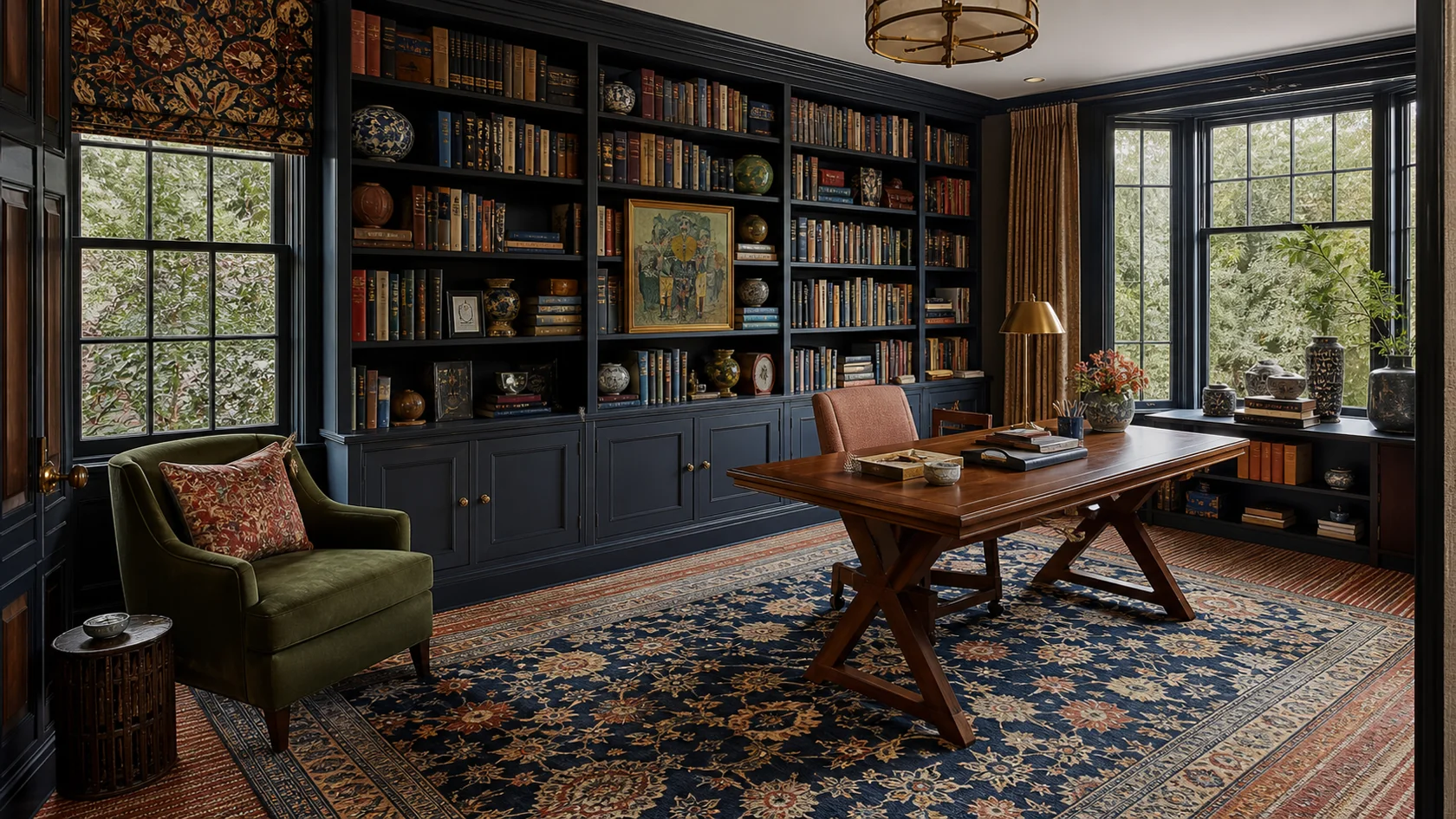
Library Collection
A meaningful artwork, rug or textile supplies the story and three colors that organize every later layer. Check desk depth, side daylight and cable storage before treating the composition as finished.
Five materially and spatially different maximalist approaches to the home office, from a clear daytime plan to a controlled evening mood.
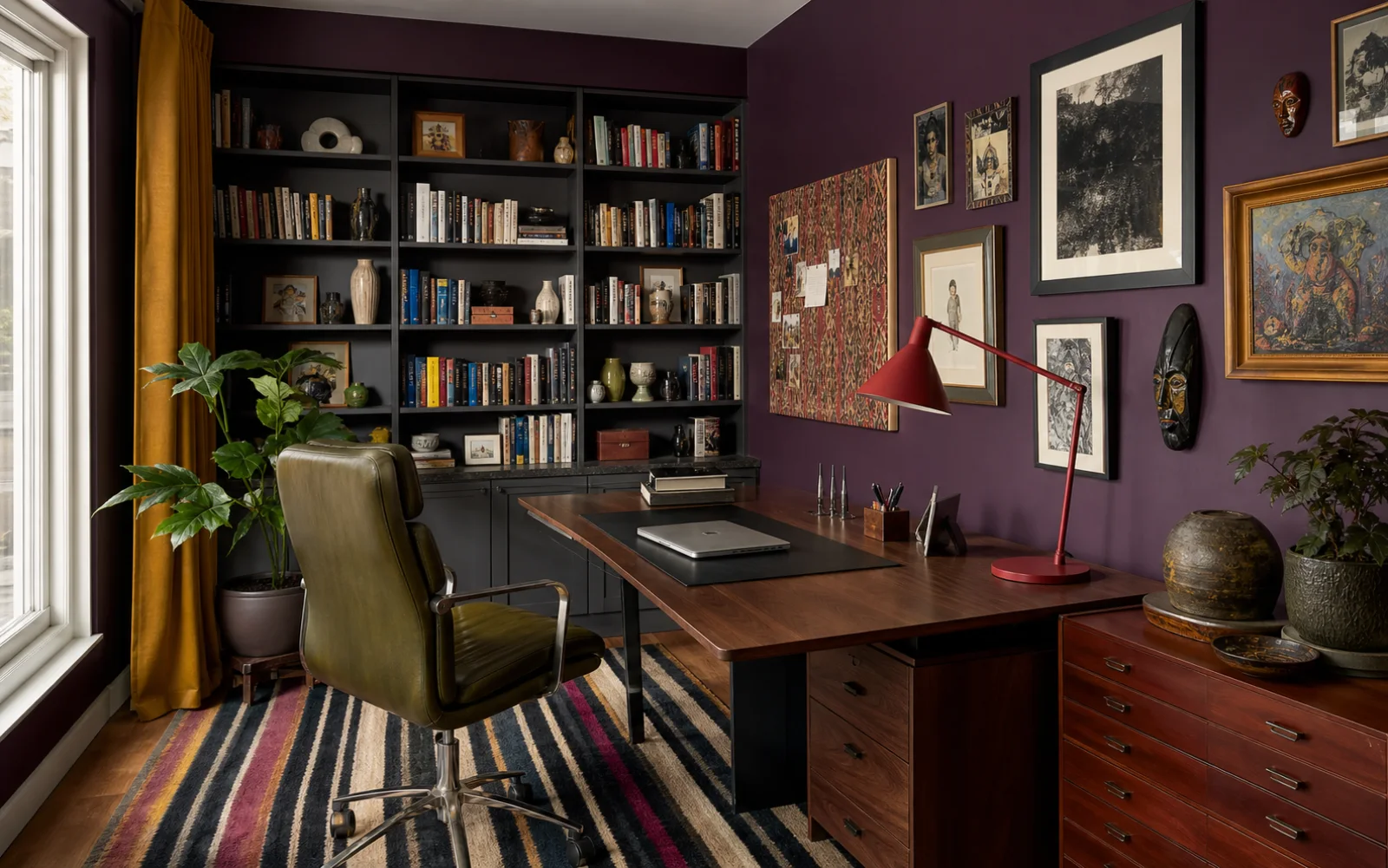
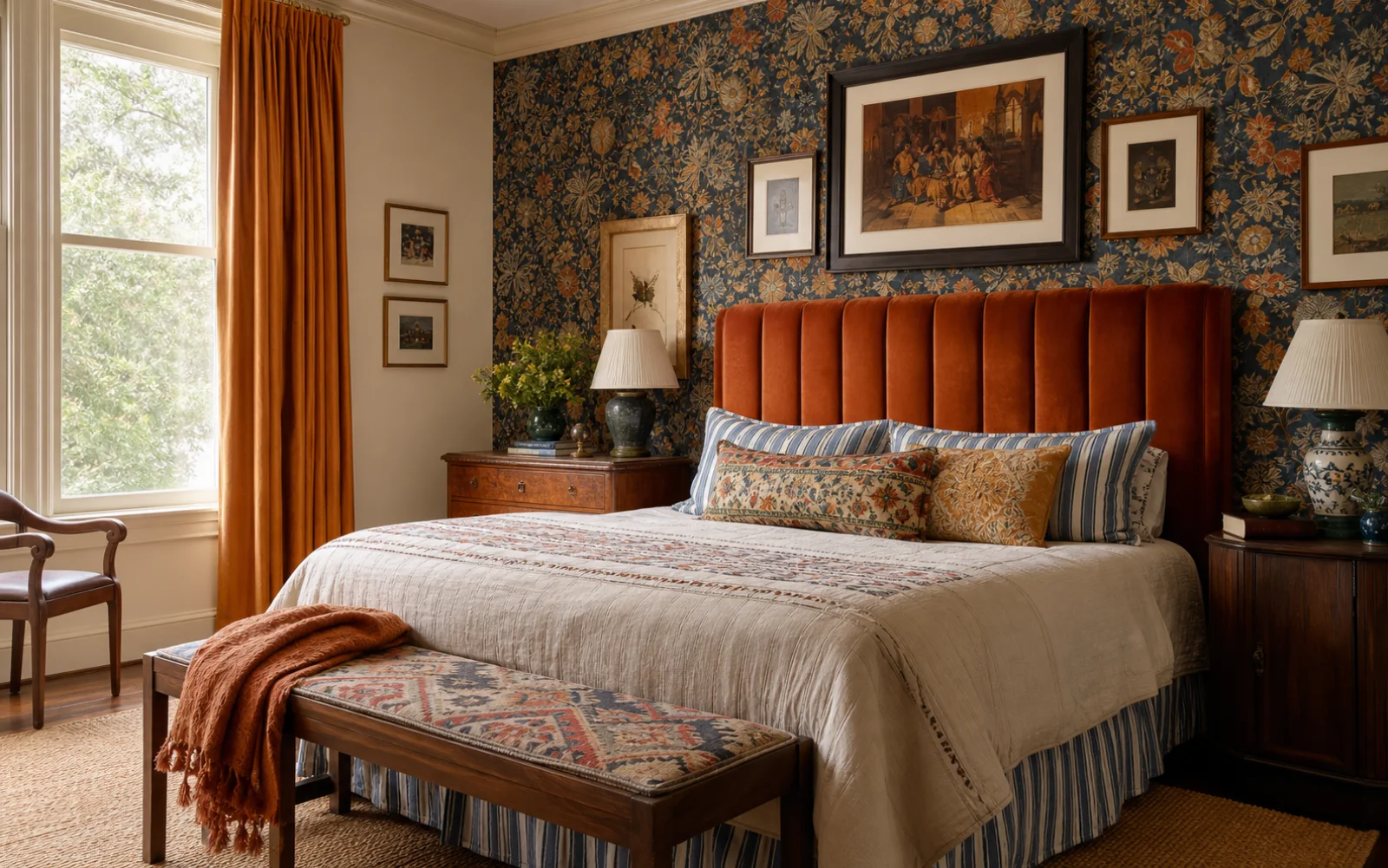
Maximalist builds expressive rooms from personal collections, repeated color and deliberate shifts in pattern scale while preserving visual pauses and daily function. In the home office, that identity must still support focused work, ergonomic support and storage that controls visual noise.
Concentrate books and art on storage walls while keeping the desk surface, monitor background and task-light zone clear. Begin with a meaningful anchor, extract three recurring colors and group objects into readable zones before adding another layer.
Use these examples to choose the version of the style that fits your architecture, light and square footage.
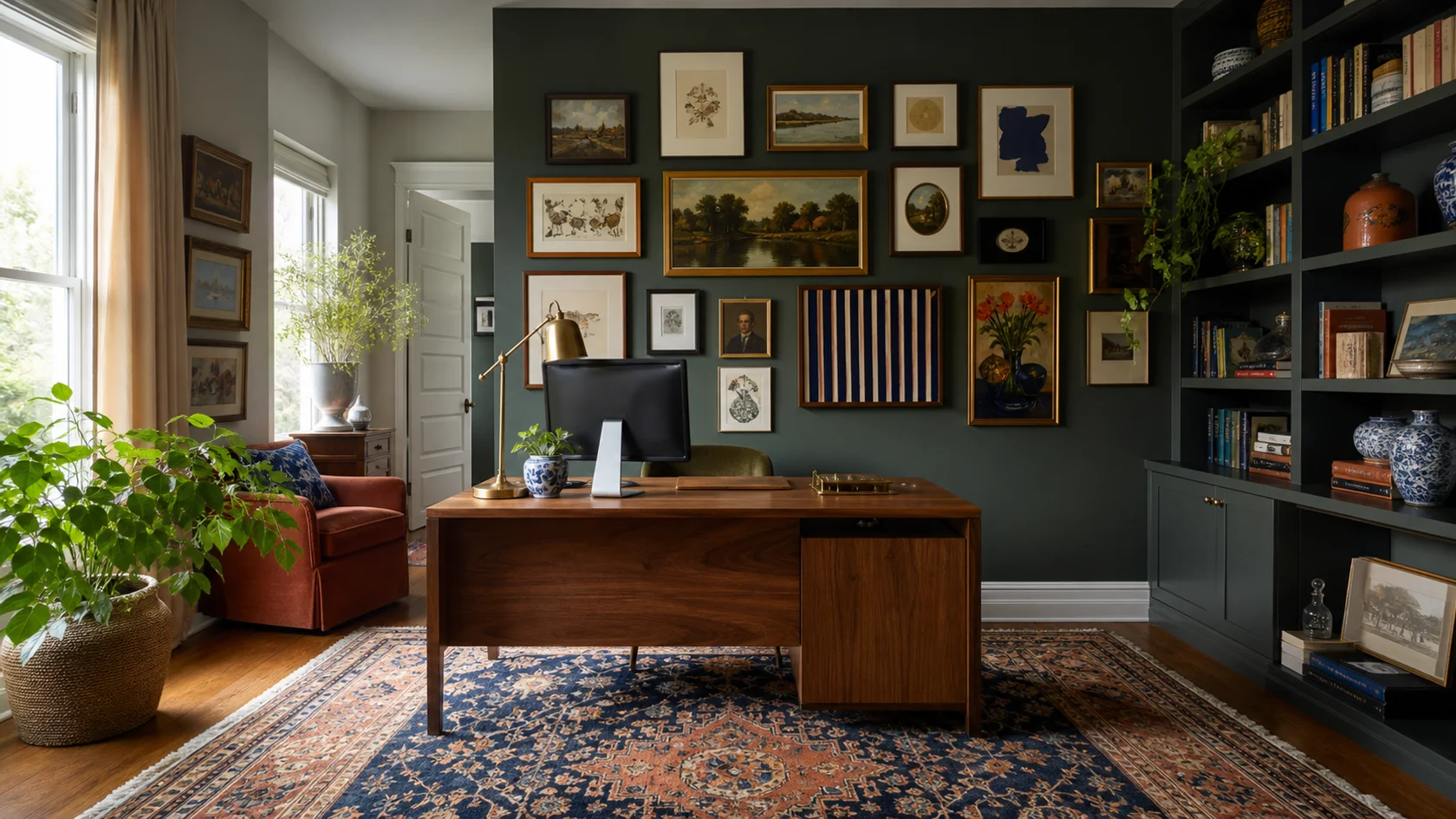
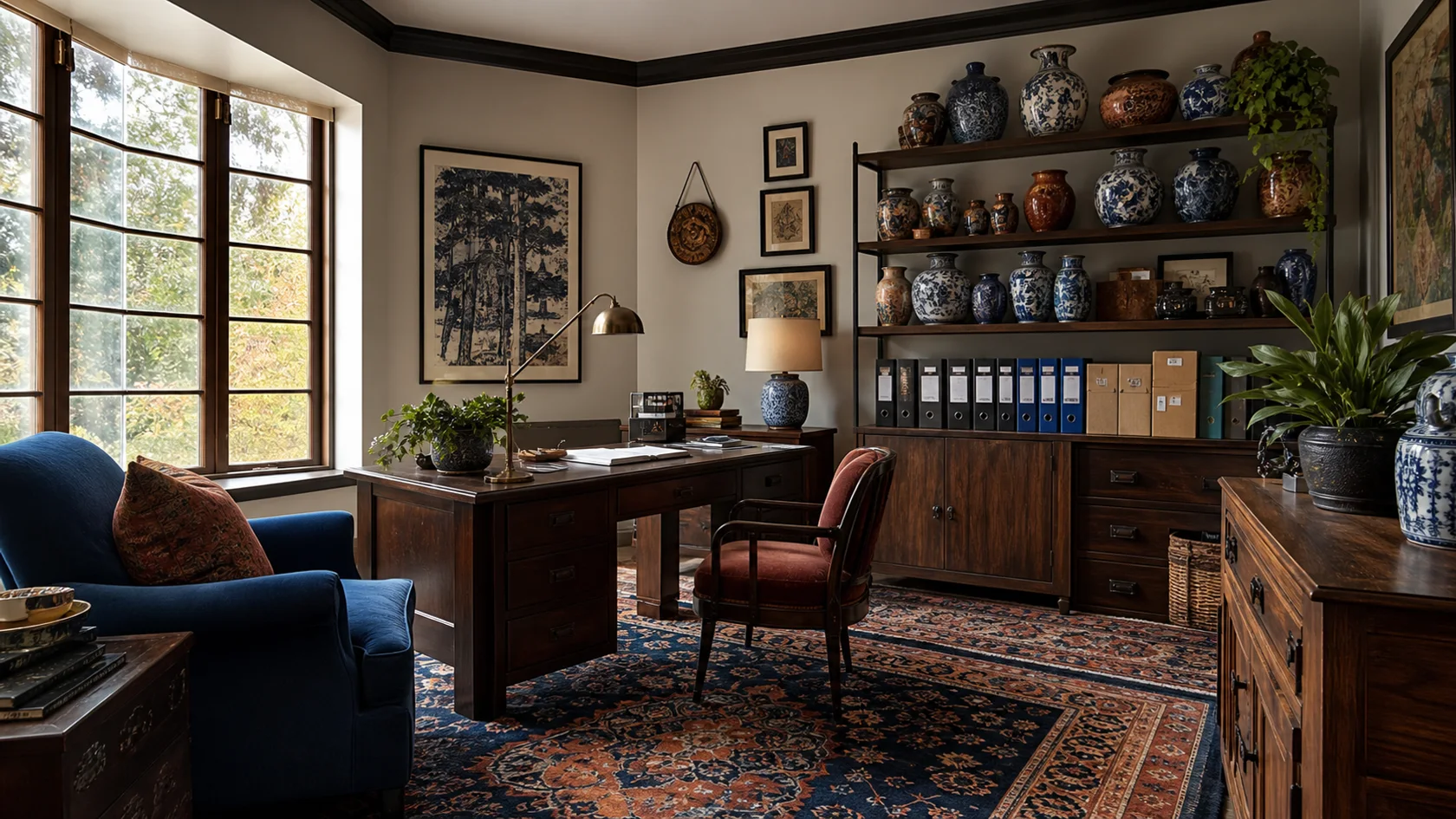
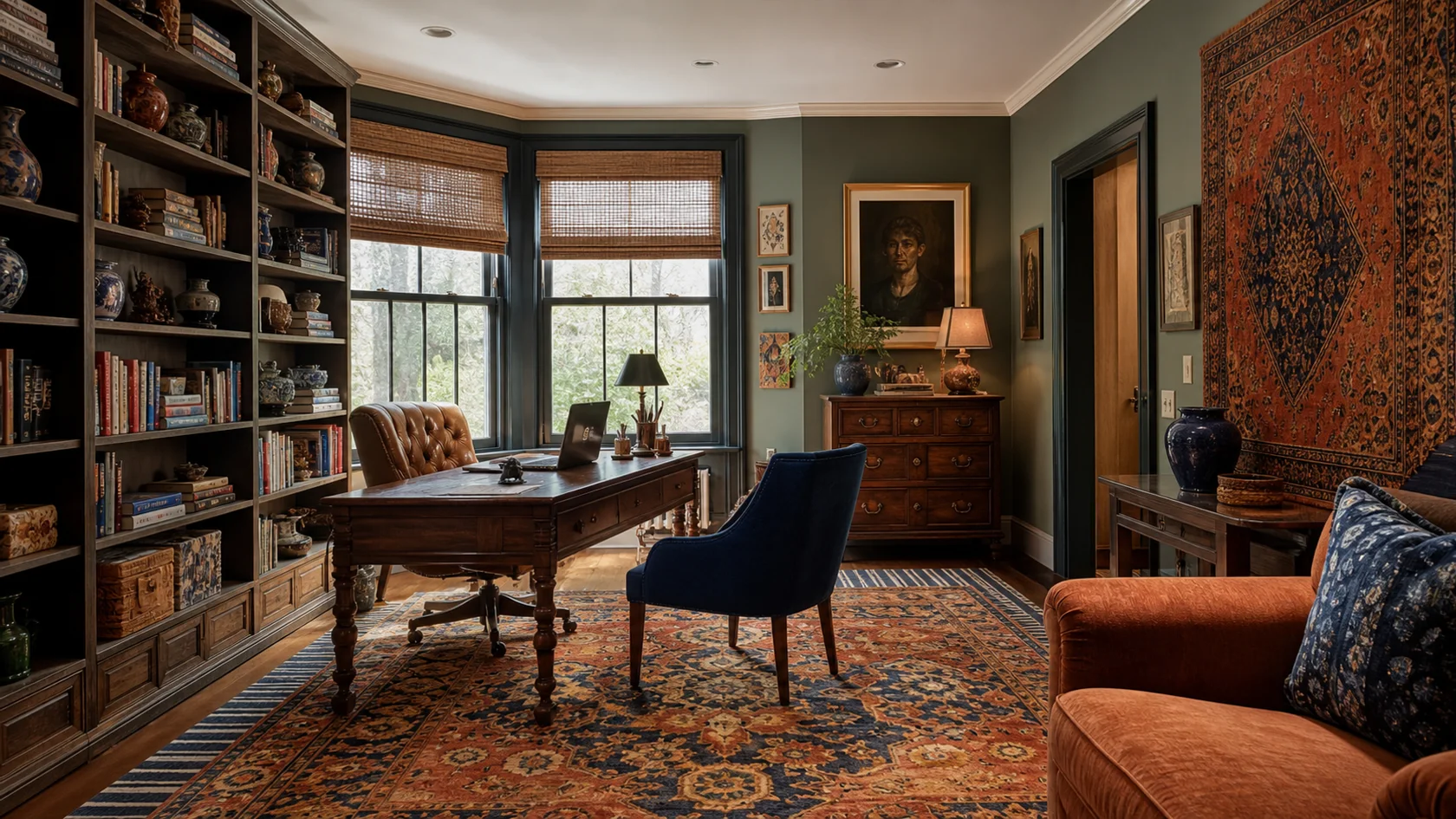
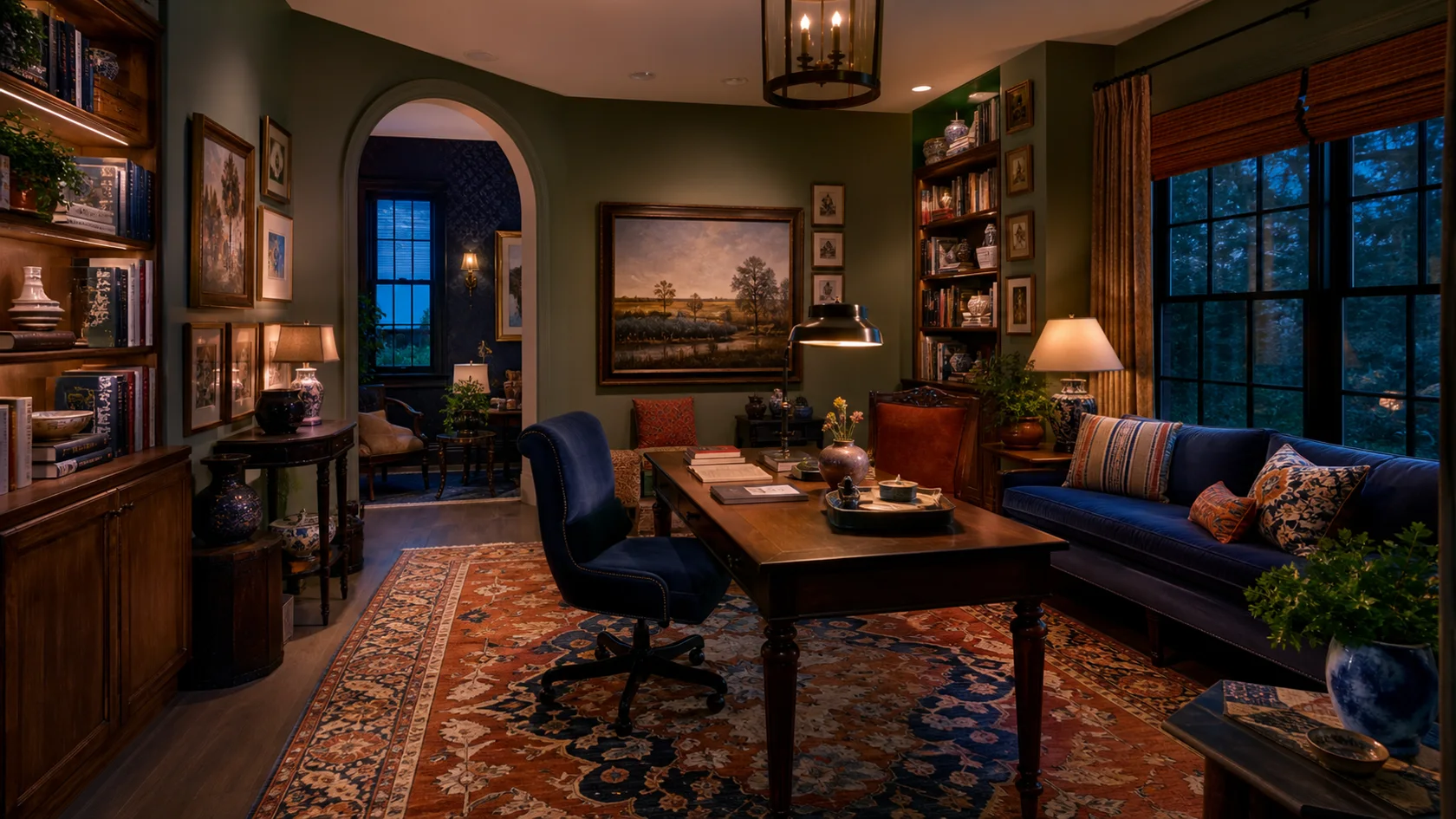
Use the style where it helps the room work: seating, circulation, focal point and material balance.
Side light usually gives useful illumination without placing a bright window directly behind the monitor.
Measure the monitor, keyboard, task lamp and cable route before deciding desk depth and storage.
Use drawers and cabinets for paper, chargers and supplies; reserve open shelves for a small edited group.
If space allows, add one reading chair or standing surface away from the main desk.
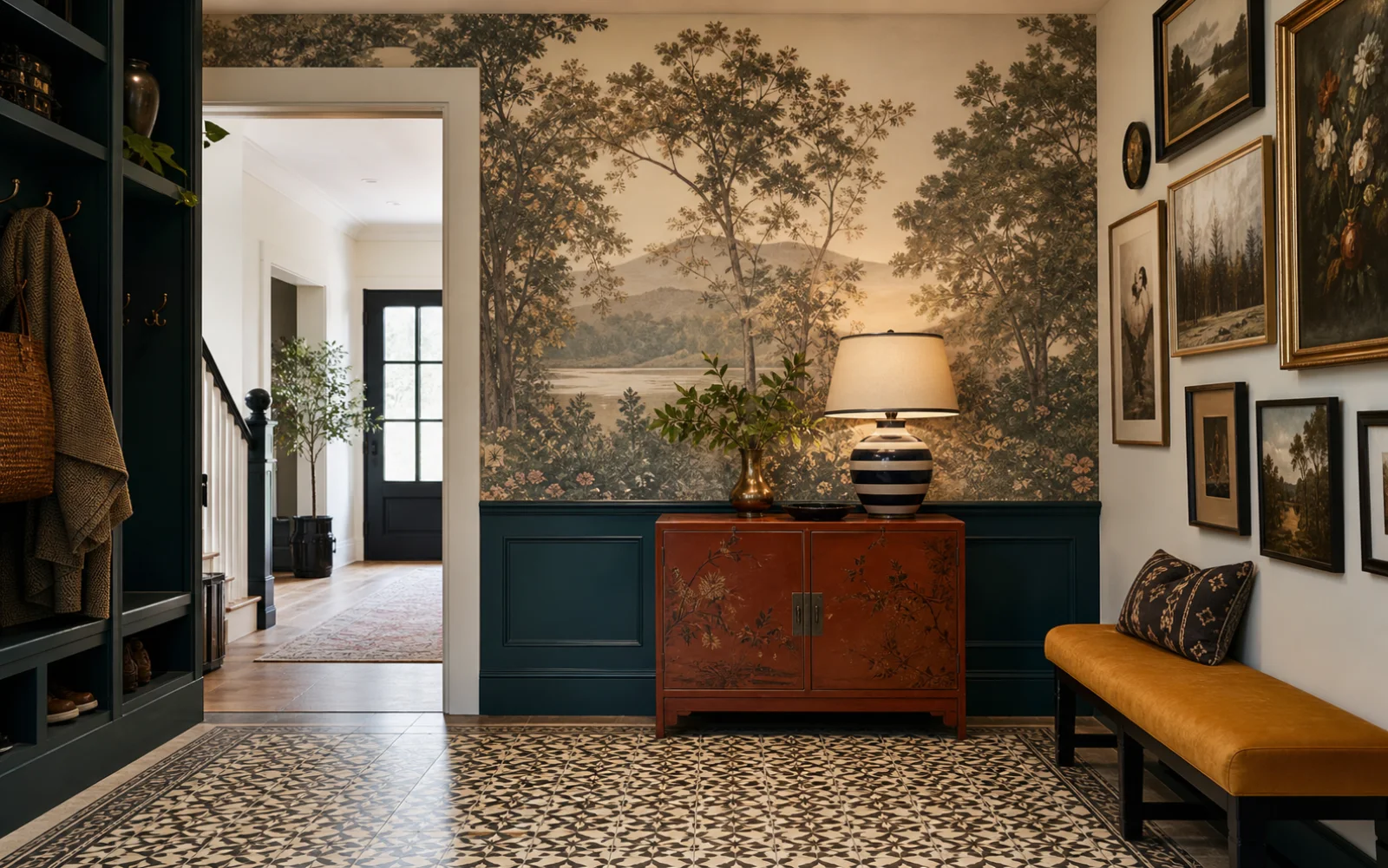
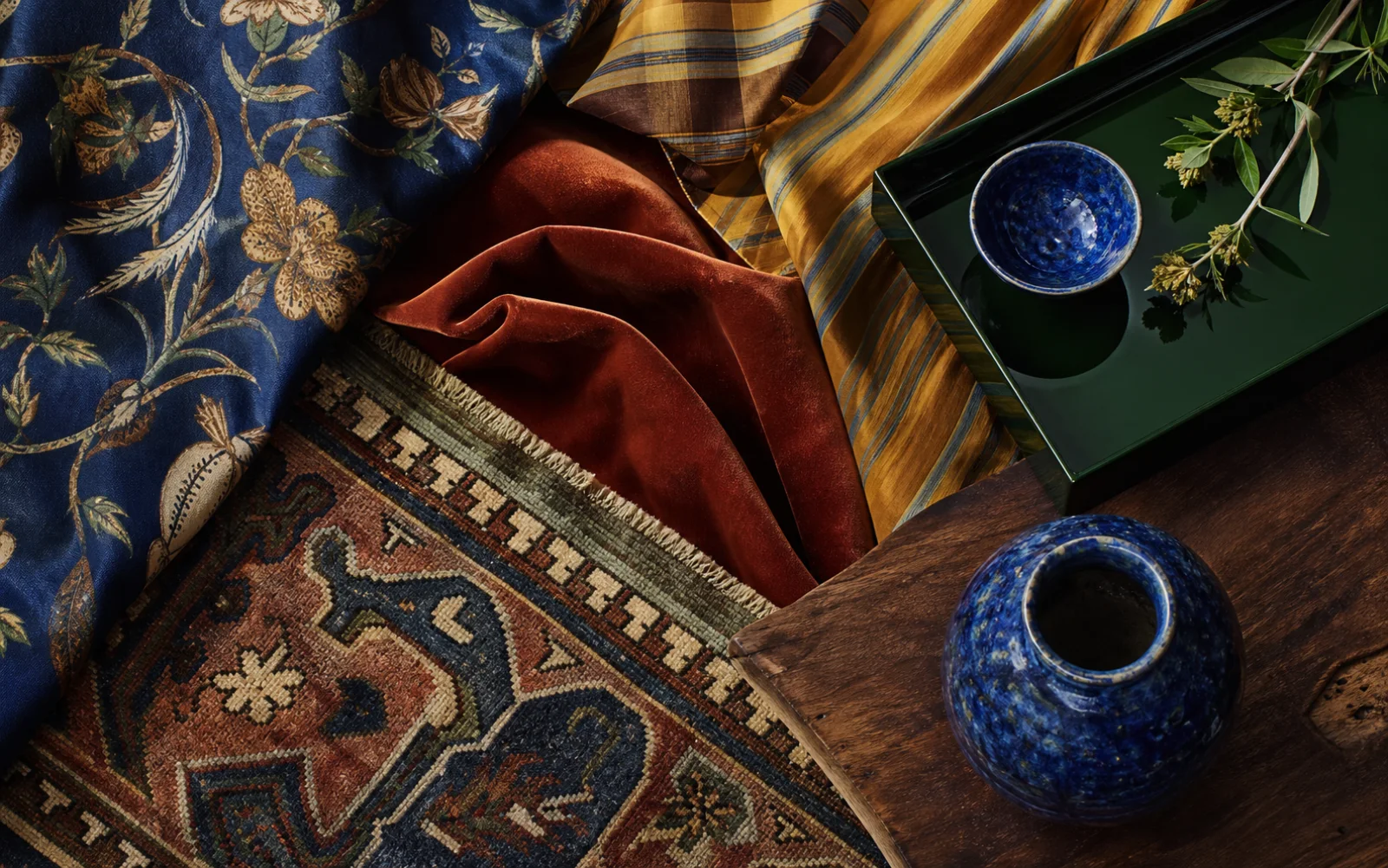
Choose three main colors from the anchor piece, assign one to the largest surface or furniture item, repeat the others at different scales and retain a few natural or pale pauses.
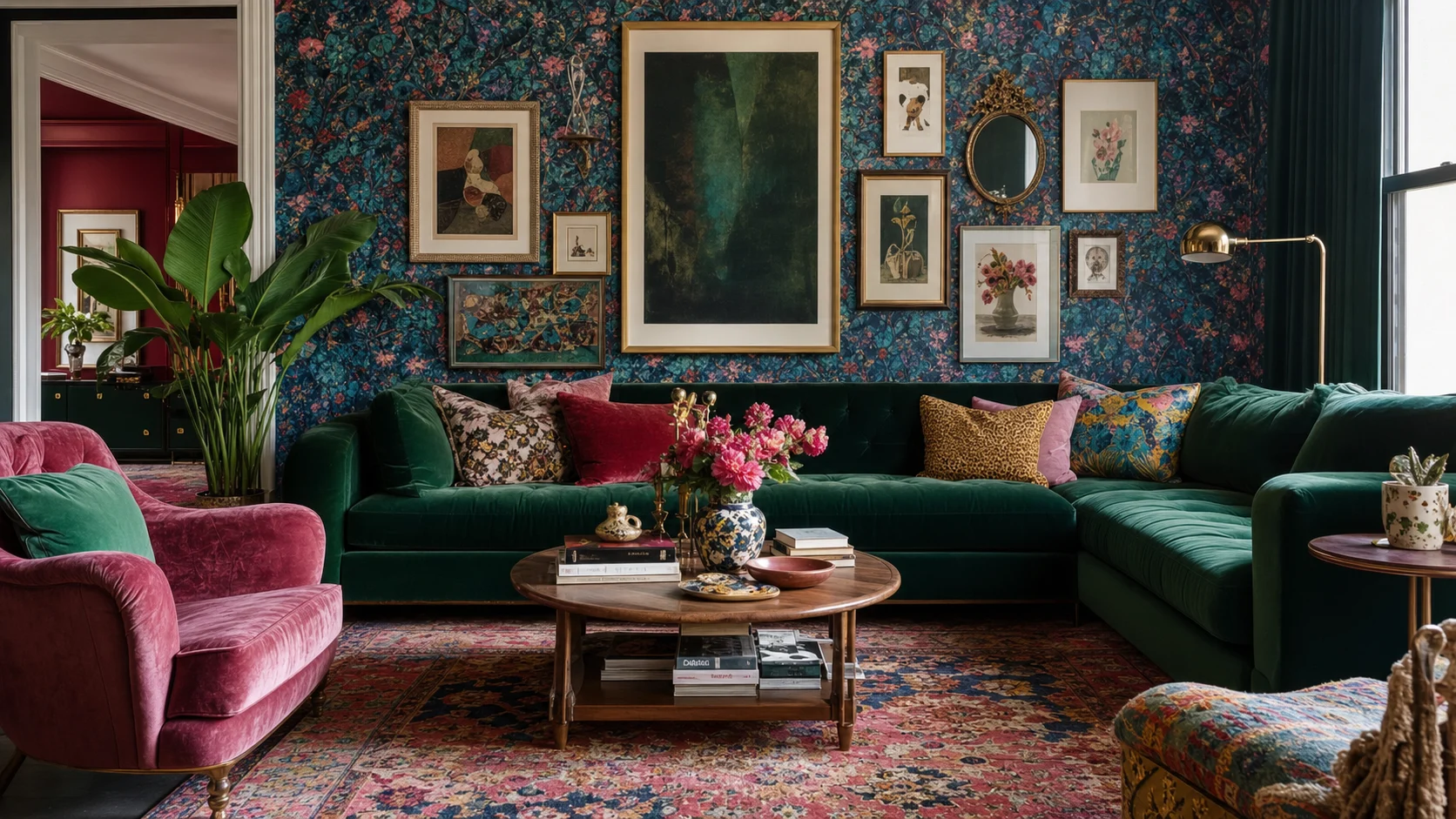
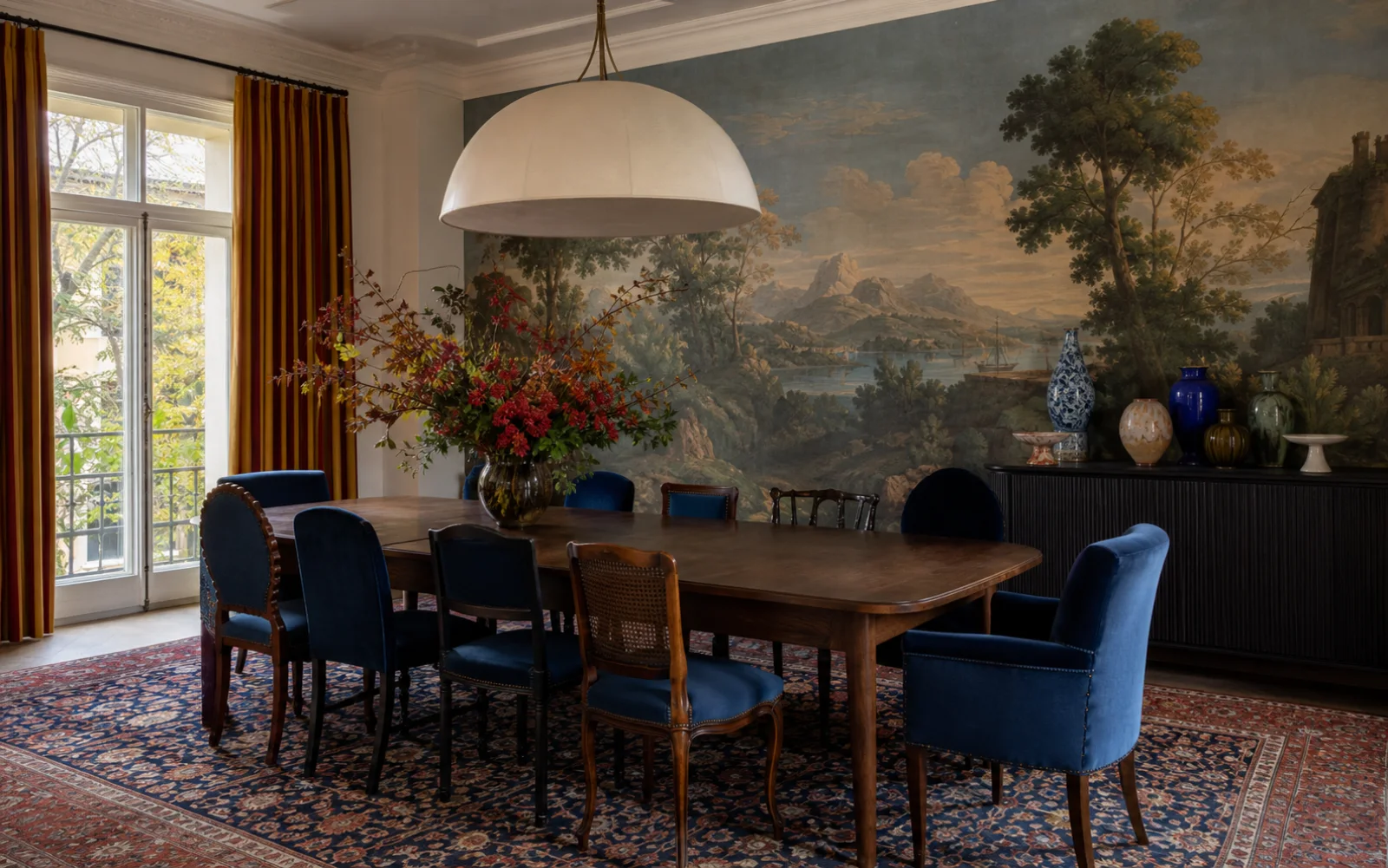
A deep blue that can connect wallpaper, ceramics, upholstery and rug details.
Adds warmth through velvet, lacquer or a recurring thread in patterned textiles.
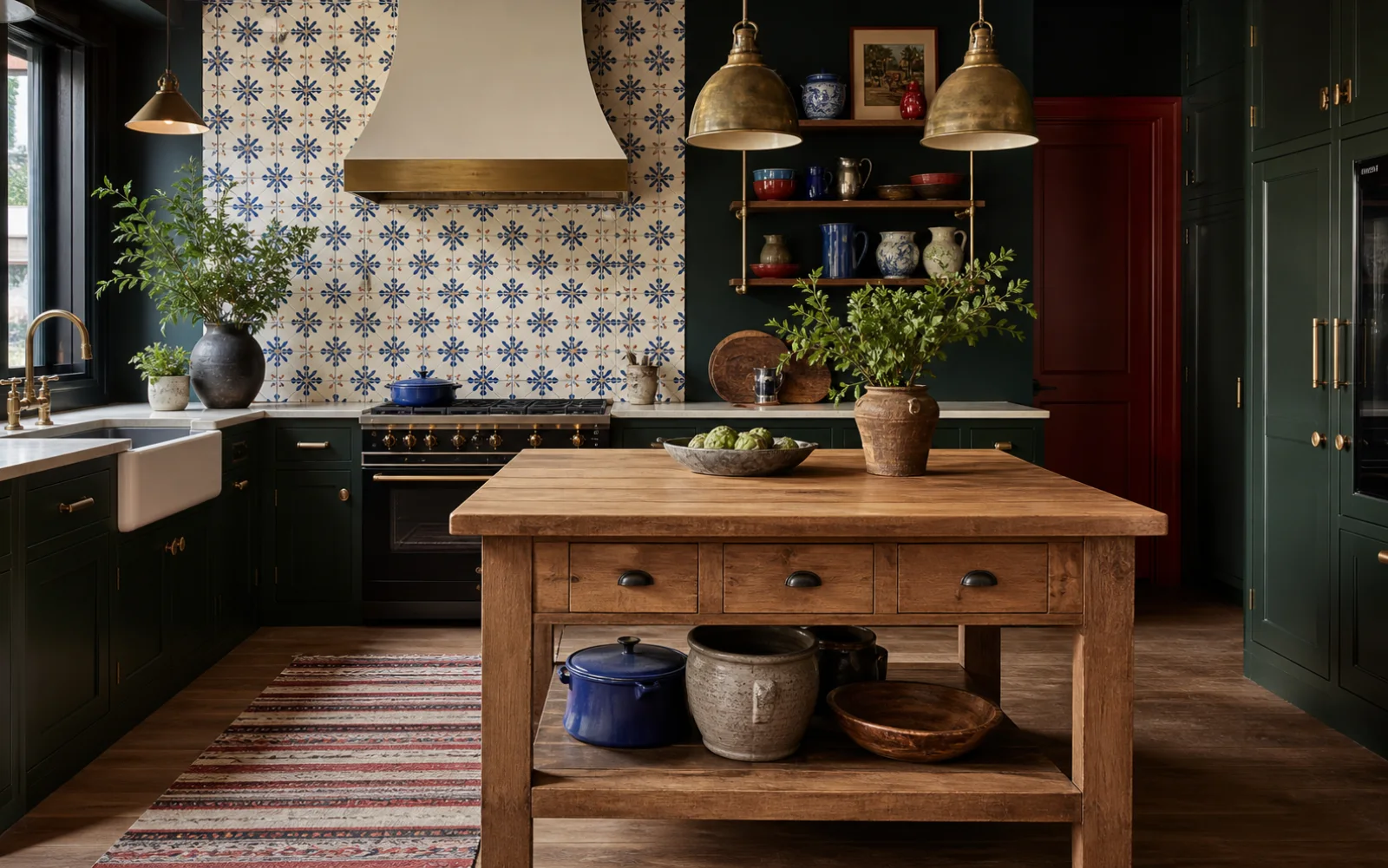
A dark architectural anchor for cabinetry or one large piece of furniture.
A bright but earthy accent best repeated in curtains, stripes and small art notes.
Natural grain gives dense color schemes a consistent, useful foundation.
Assign indigo, forest, rust or another deep hue to the largest furniture or architectural plane.
Repeat two supporting colors across textiles, art and ceramics at different scales.
Walnut, oak, wool and pale plaster give saturated layers a consistent material base.
Leave ceilings, worktops, pathways or selected upholstery quiet so dense areas remain legible.
For this room, a few strong choices can carry the style better than adding more decor.
Concentrate books and art on storage walls while keeping the desk surface, monitor background and task-light zone clear. Confirm the work surface by dimensions, comfort and maintenance before selecting its decorative finish.
Begin with a meaningful anchor, extract three recurring colors and group objects into readable zones before adding another layer.
Begin with a meaningful anchor, extract three recurring colors and group objects into readable zones before adding another layer.
Begin with a meaningful anchor, extract three recurring colors and group objects into readable zones before adding another layer.
Use these checks to keep the maximalist character clear without compromising how the home office works.
Allow enough depth for equipment and forearm support rather than choosing only by silhouette.
Turn the desk perpendicular to strong daylight or add an adjustable shade.
Combine a limited display zone with closed files and cable management.